It was a long travelling day. We flied to Dallas and then to Leon Guanajuato. Met our first guide Mr Aaron Trejo who took us to a hotel near the airport for rest. When we arrived to Holiday Inn Express & Suites it was almost 1:00 am. Although our luggage was to check through to Mexico we had to pick them up in Dallas and put them in an area for transit luggage. So weird.
Day two 12 November Wednesday
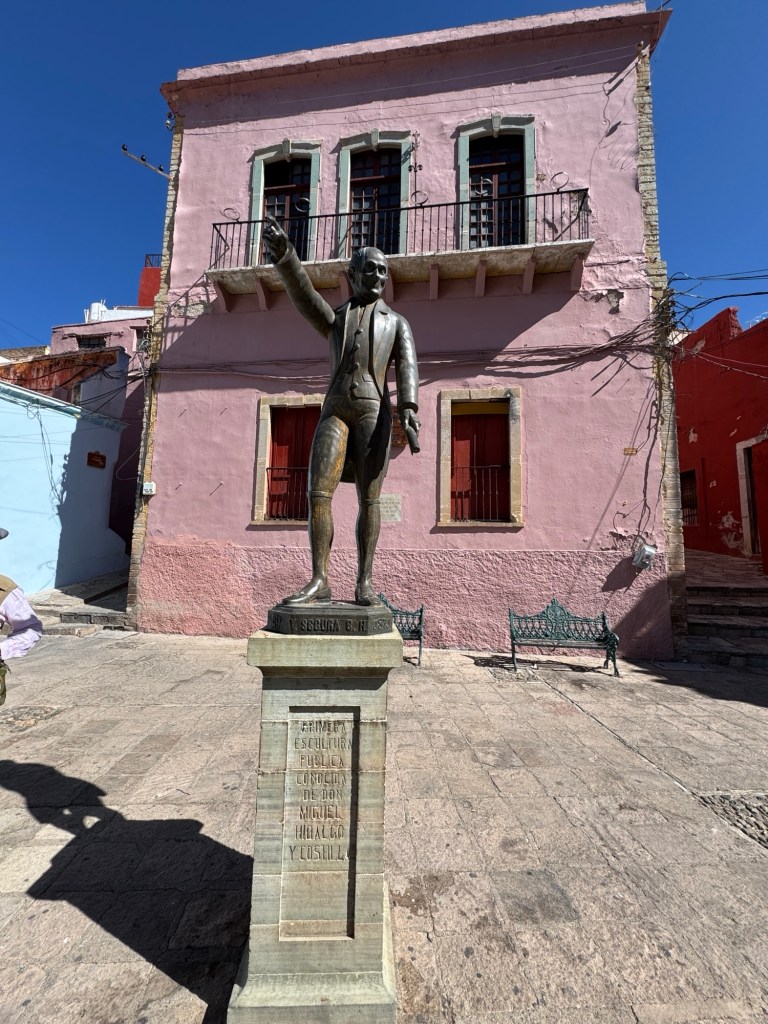
We start the city tour and first met the statue of Miguel Hidalgo y Costilla (1753 – 1811). He is known as the “Father of Mexican Independence.”
He was a Catholic priest in the town of Dolores. On September 16, 1810, he delivered a famous speech known as the “Grito de Dolores” (Cry of Dolores), calling for the end of Spanish rule and triggering the Mexican War of Independence. Then September 16th is celebrated as Mexico’s Independence Day. The state of Hidalgo in central Mexico is named after him.
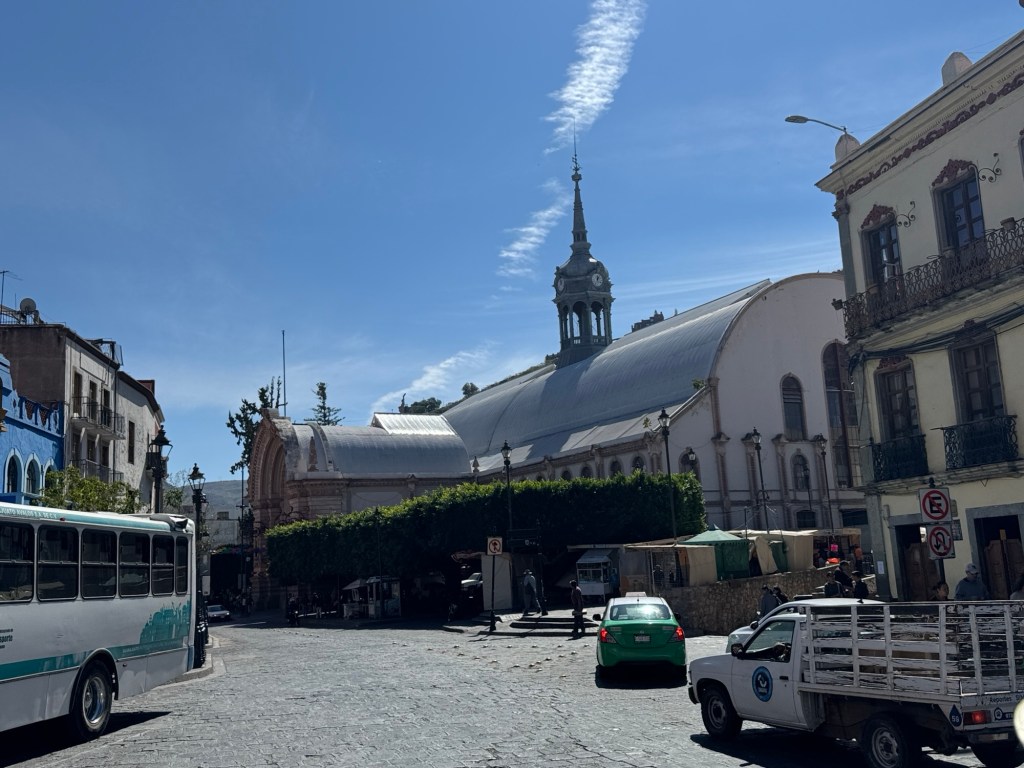
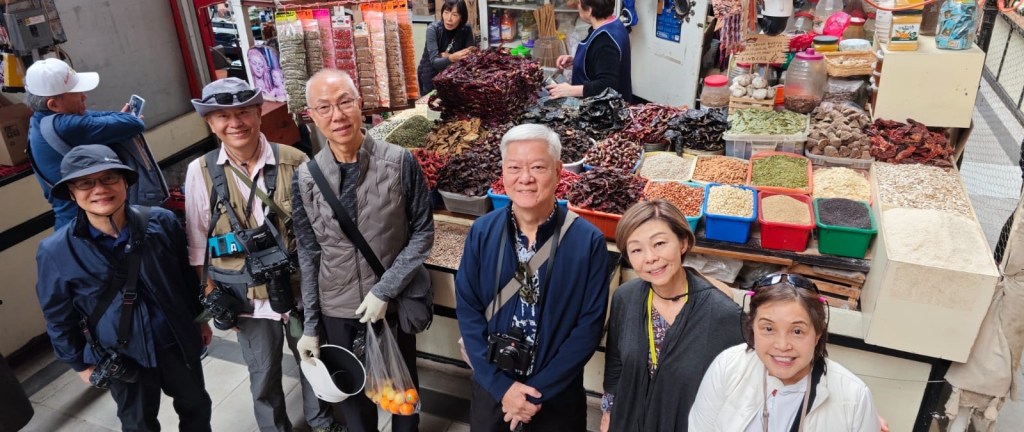
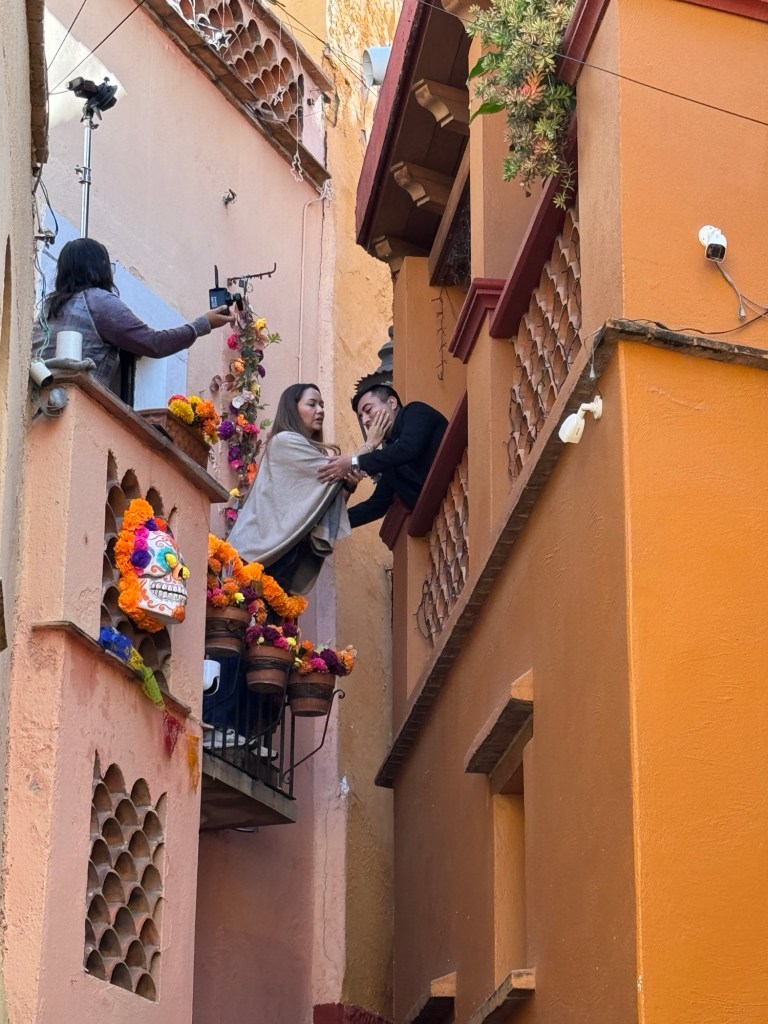
Central marketChilly shoppingAlley of Kisses
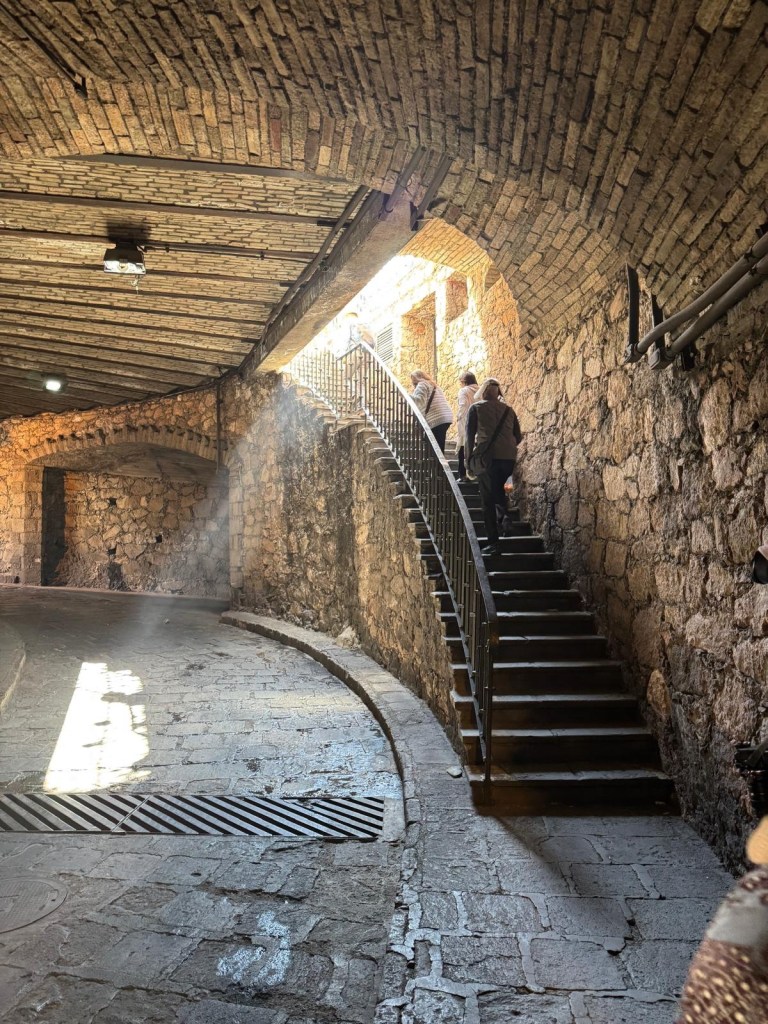
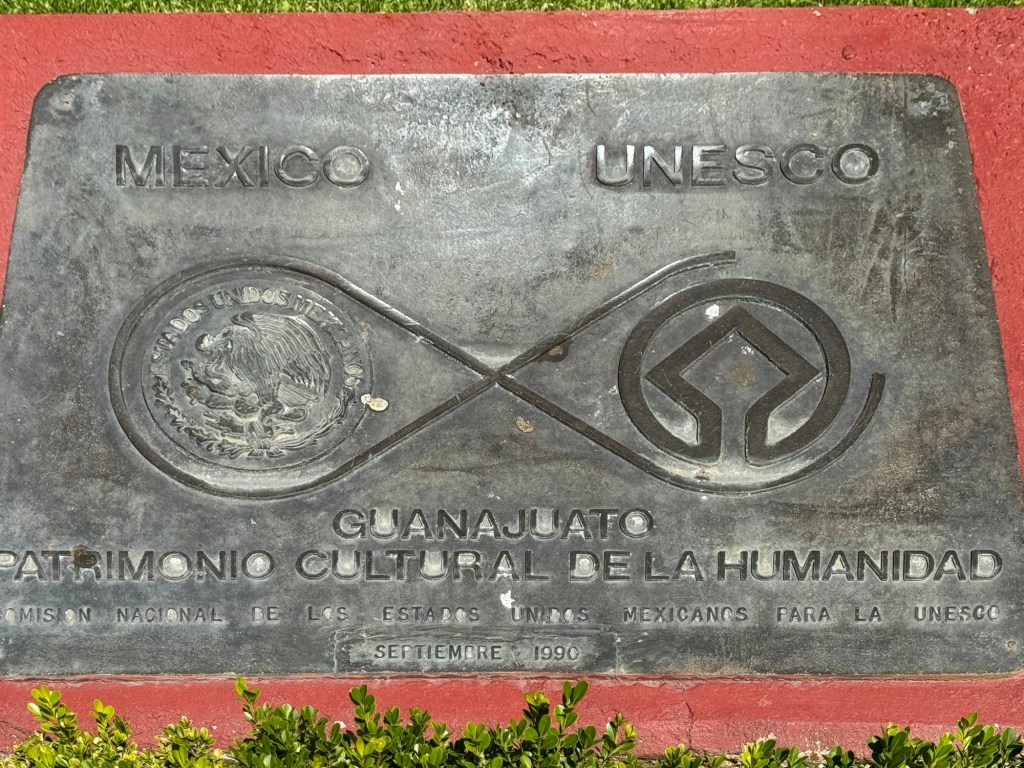
The city of Guanajuato is famous for its extensive tunnels that solve the city traffic problem while offering a unique historical feature. The silver mine was in the mountain but the city was built in a steep river ravine. The old river ran through the present city centre. It flooded frequently and after a devastating flood in 1905, the city made a drastic decision to divert the river. Starting in the 1960s, engineers dammed and diverted the river into a new canal outside the city. They then covered over the old riverbed and paved it, creating the first major tunnel and the underground roadway now known as Miguel Hidalgo Avenue. The system has grown to include numerous spurs and connections, totaling over 8 km of tunnels. The historic town of Guanajuato together with the adjacent mines was inscribed as a UNESCO World Heritage Site since 1988.
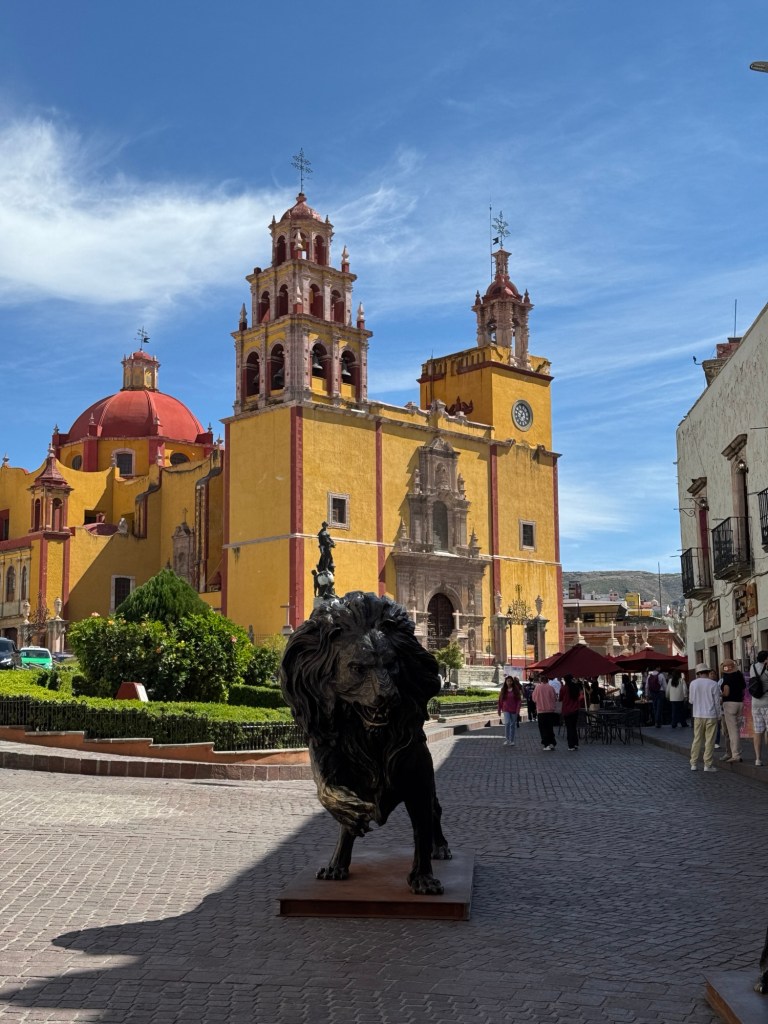
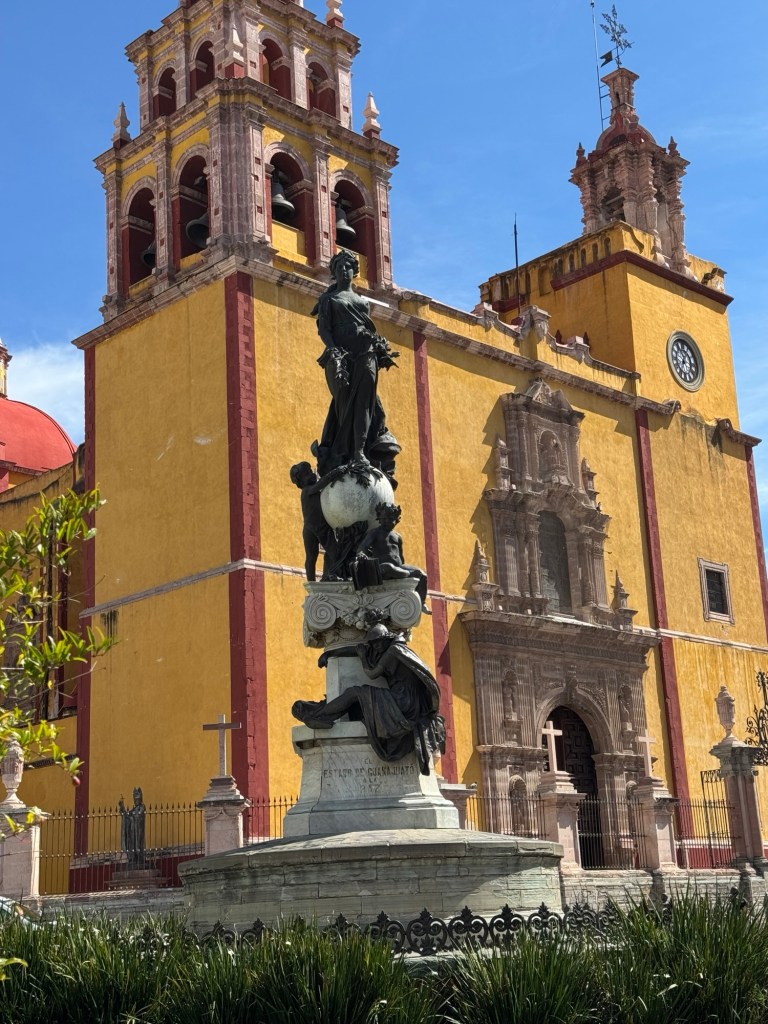
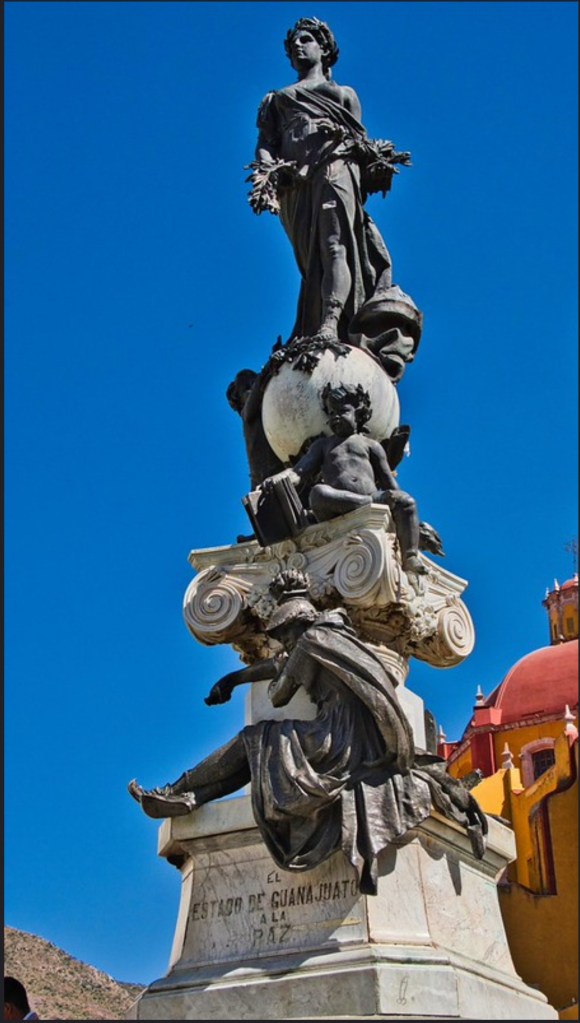
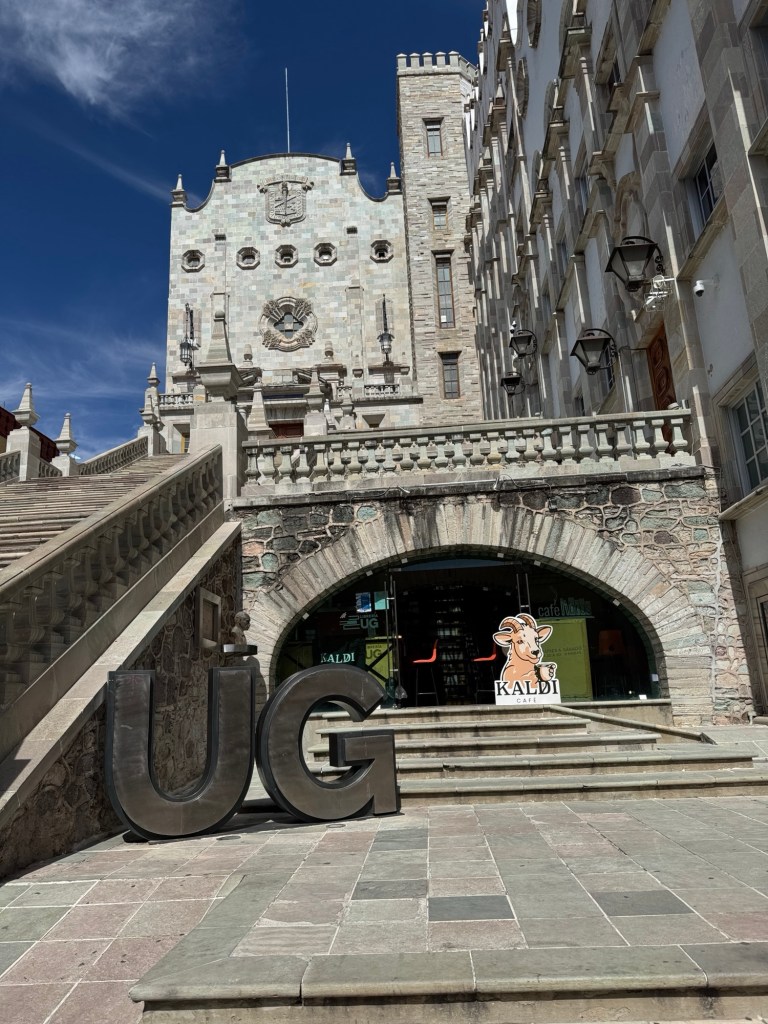
Basílica Colegiata de Nuestra Señora de Guanajuato, a landmark of the cityPeace and knowledge over warThe Monument of Peace was erected in 1897 in Centro Guanajuato Plaza de la Paz (Plaza of Peace). It is the work of Mexican sculptor Jesús Conteras (1866 -1902) The bronze sculpture is a laureate woman holding laurel branches that symbolize triumph or victory. There is also a boy with an apron referring to the industry and another little laureate holding the book of wisdom. Below, between a small marble column, sits a despondent Mars, the Roman god of war. There is also a broken sword and a cannon.University of Guanajuato
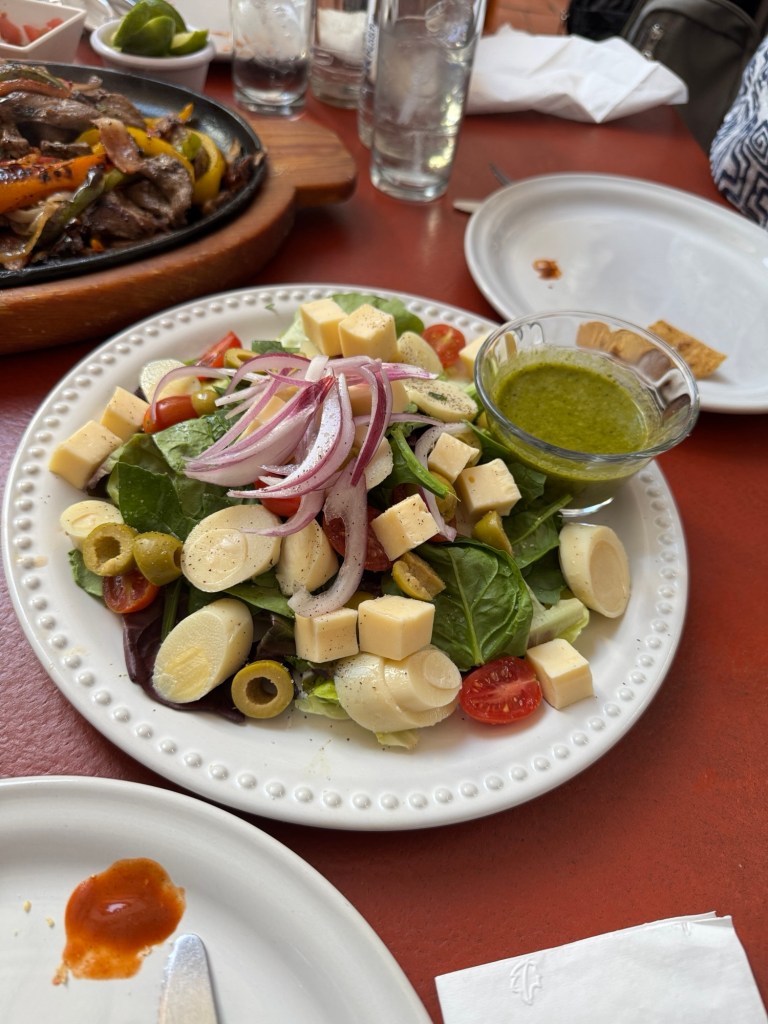
We had lunch in a near by restaurant
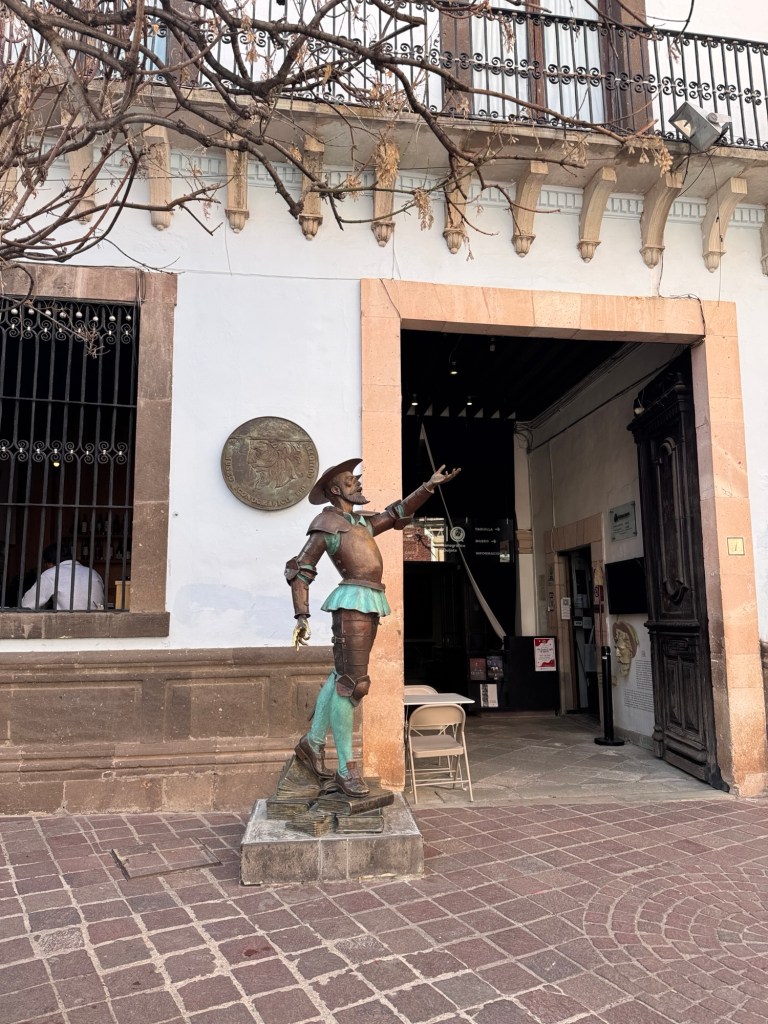
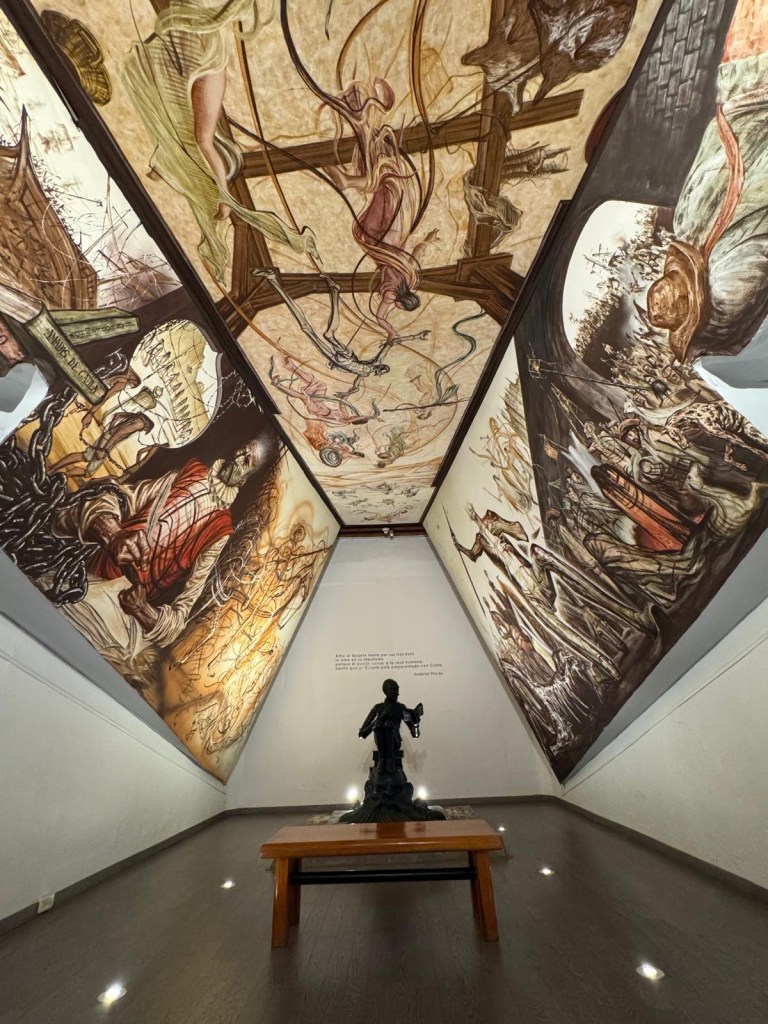
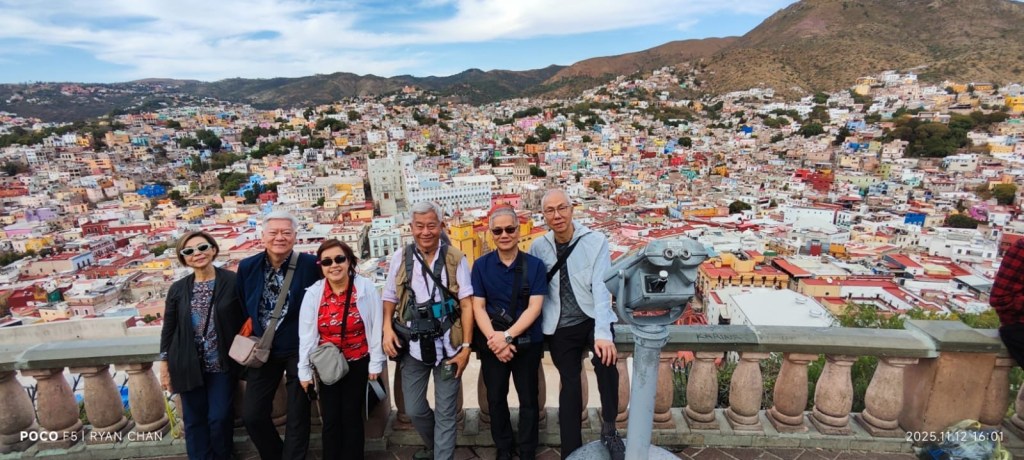
In the afternoon we visited the Don Quixote Museum and then took a short car trip to a hilltop to have a panoramic view of the city
Small museum Not much exhibits but some room were nicePanoramic view of the city
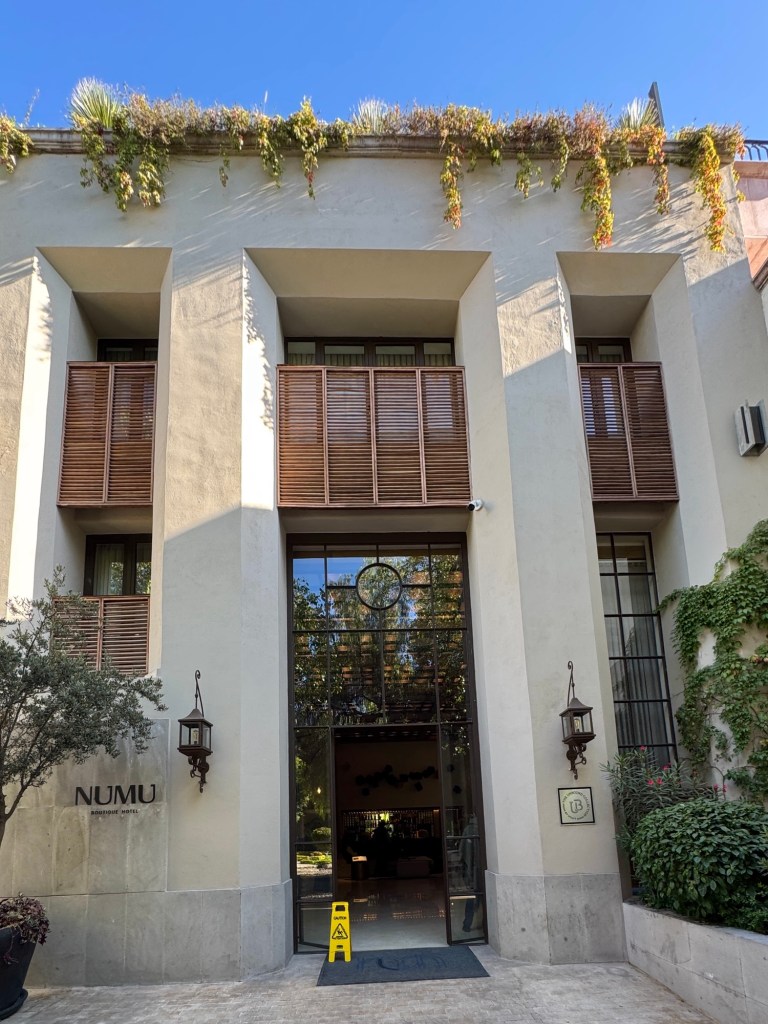
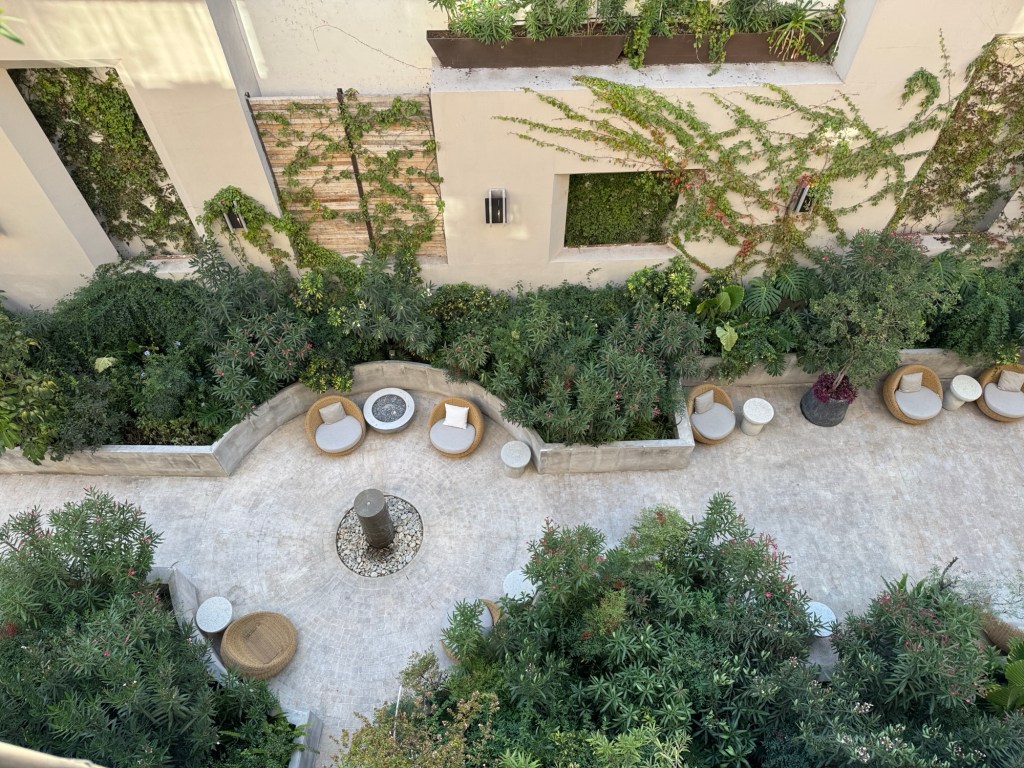
Then we took an hour drive to San Miguel and checked in a lovely Numu Boutique Hotel and had dinner there.
Day 3 November 13 Thursday
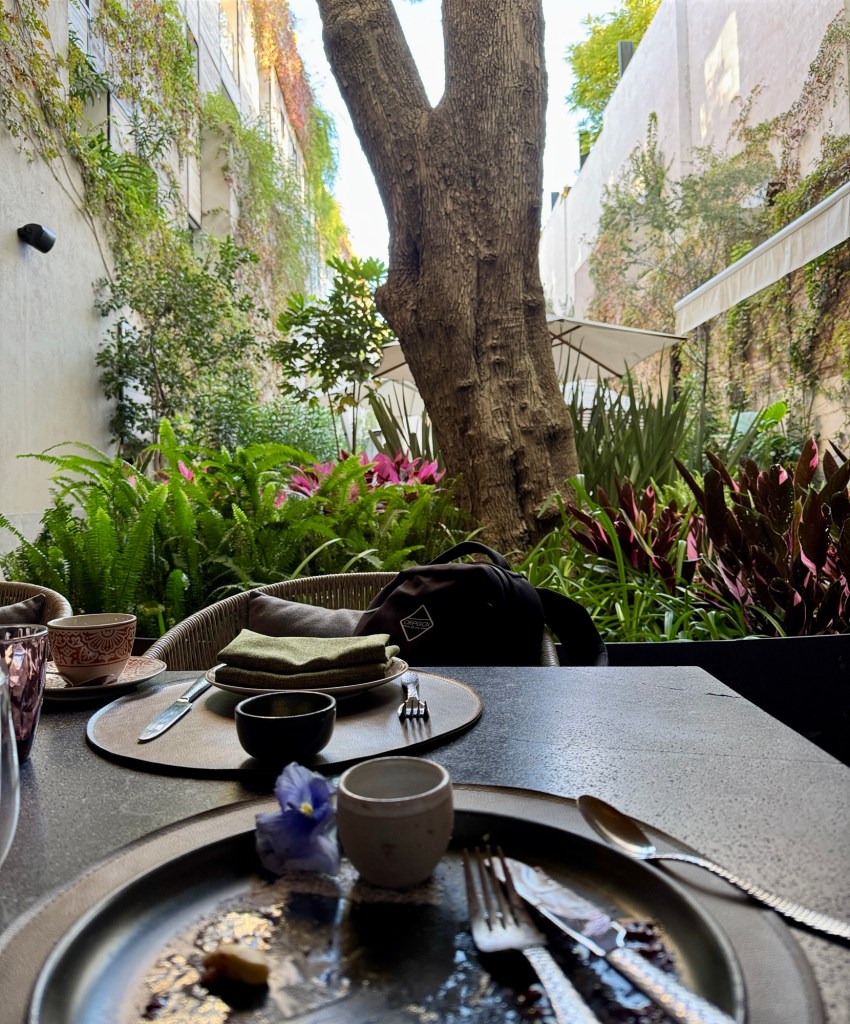
We had breakfast in the hotel but it was outdoor and in the morning it was only 7 degrees. It was better after they turned on the heaters.
Garden breakfast in the freezing morning
San Miguel city tour, the old town is also a UNESCO World Heritage site.
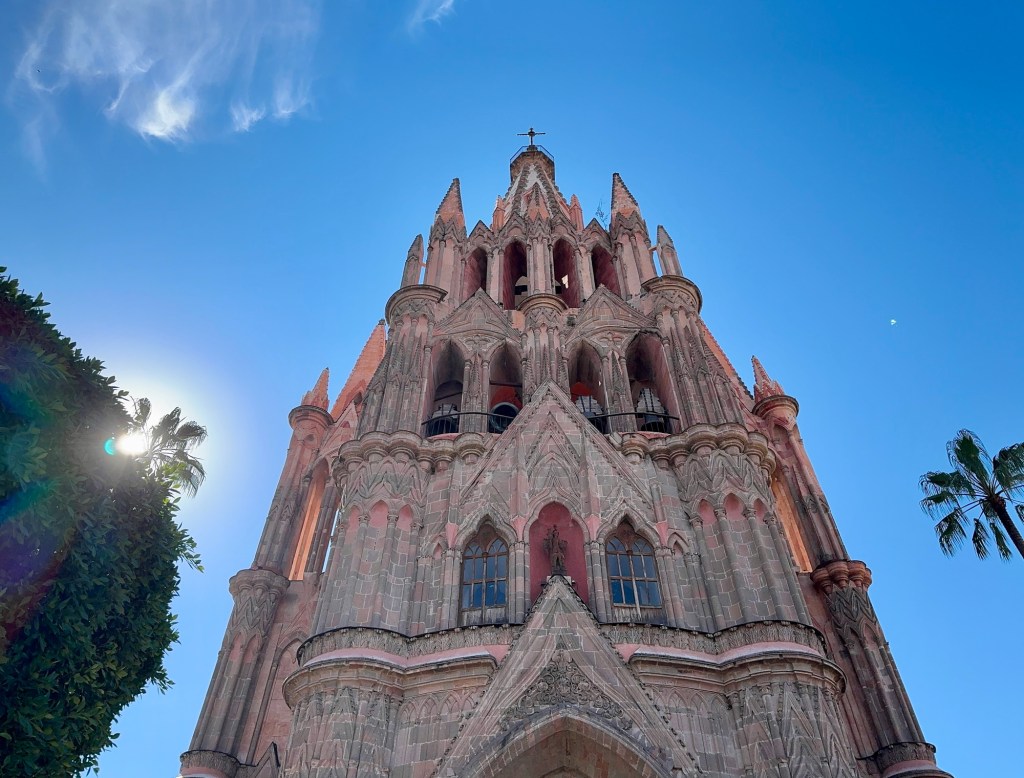
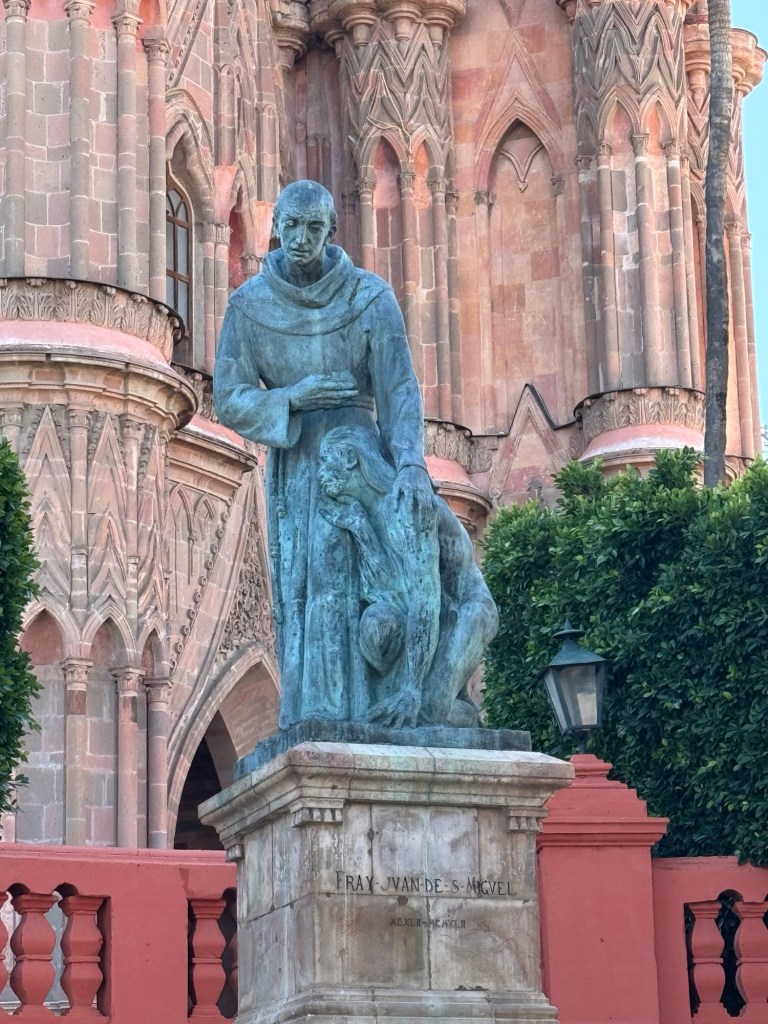
San Miguel Archangel Parish, known for its distinctive neo-Gothic facade and tall spires made of pink quarry stone. Stature of San Miguel and a local people. Mexican do not like this one as the local appeared like an ape
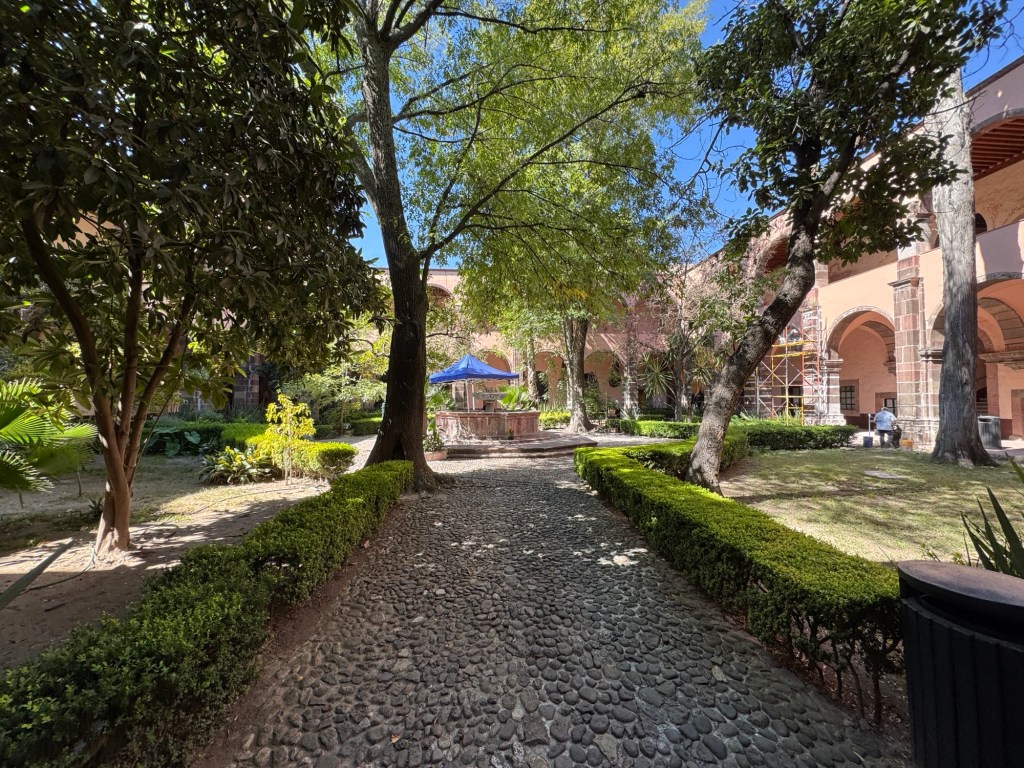
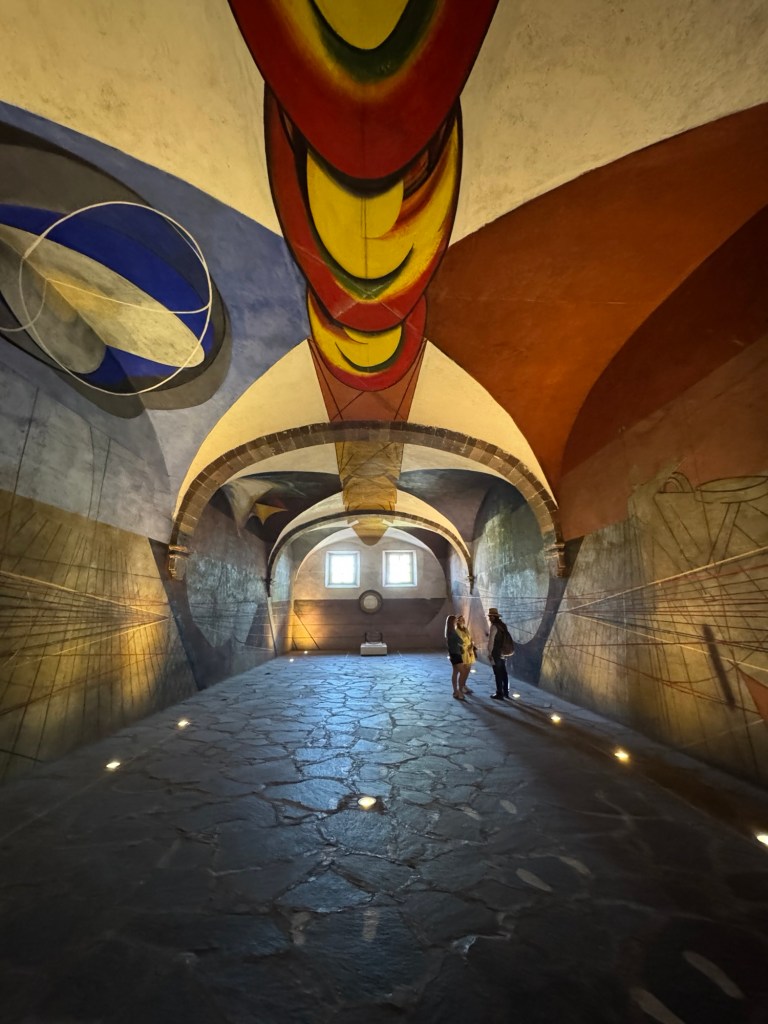
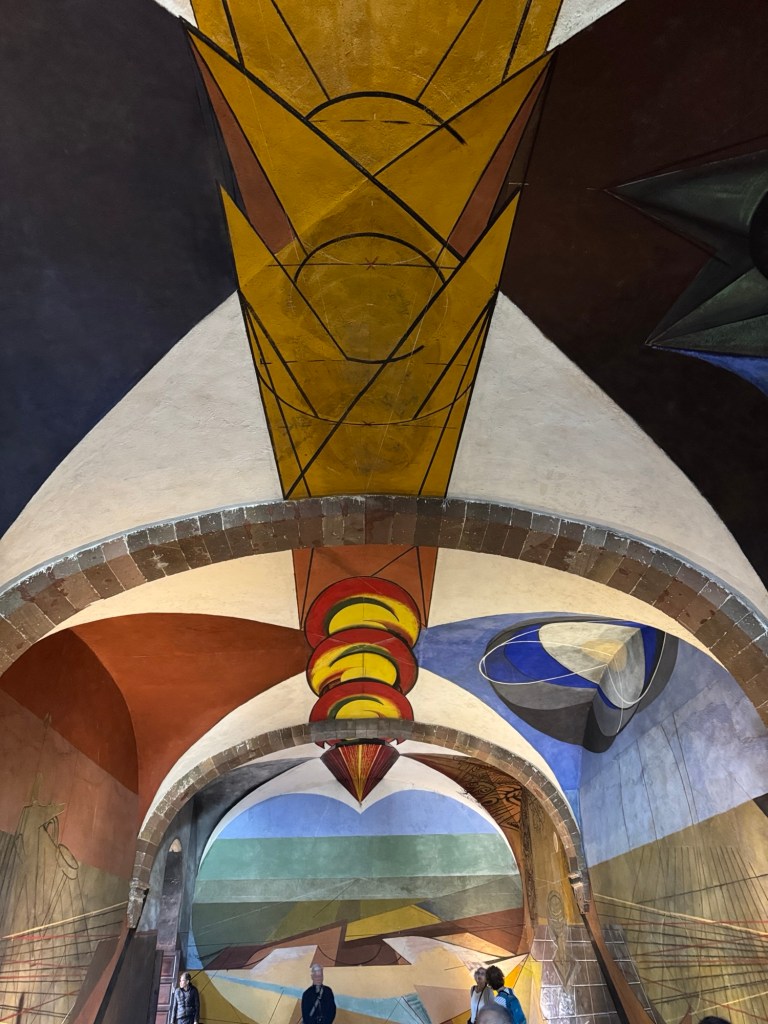
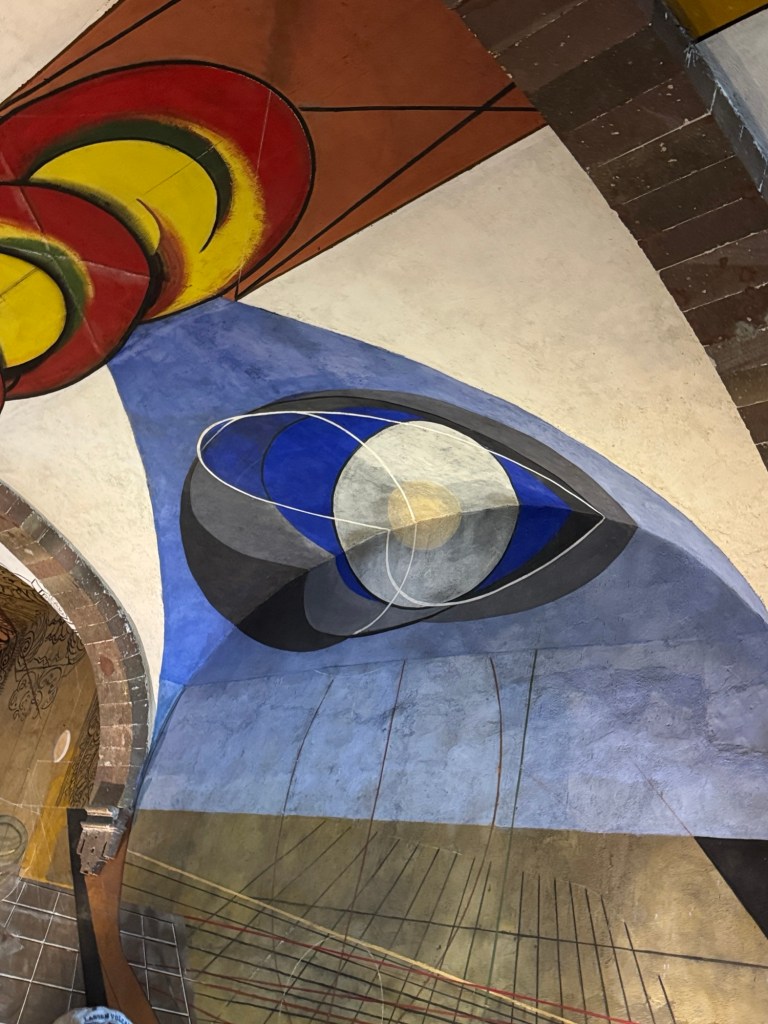
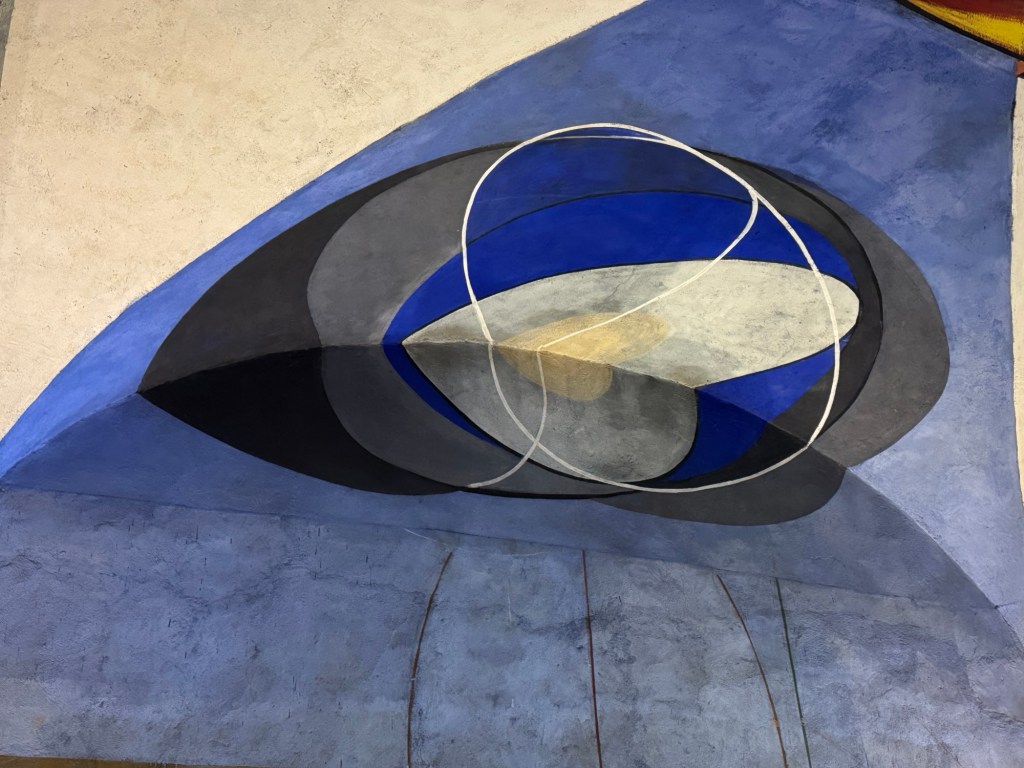
Next we visited the Ignacio Allende’s House which was a formal convent with a lustrous garden. Now it is a cultural centre and art school. A major feature is an unfinished mural by the celebrated Mexican muralist David Alfaro Siqueiros.
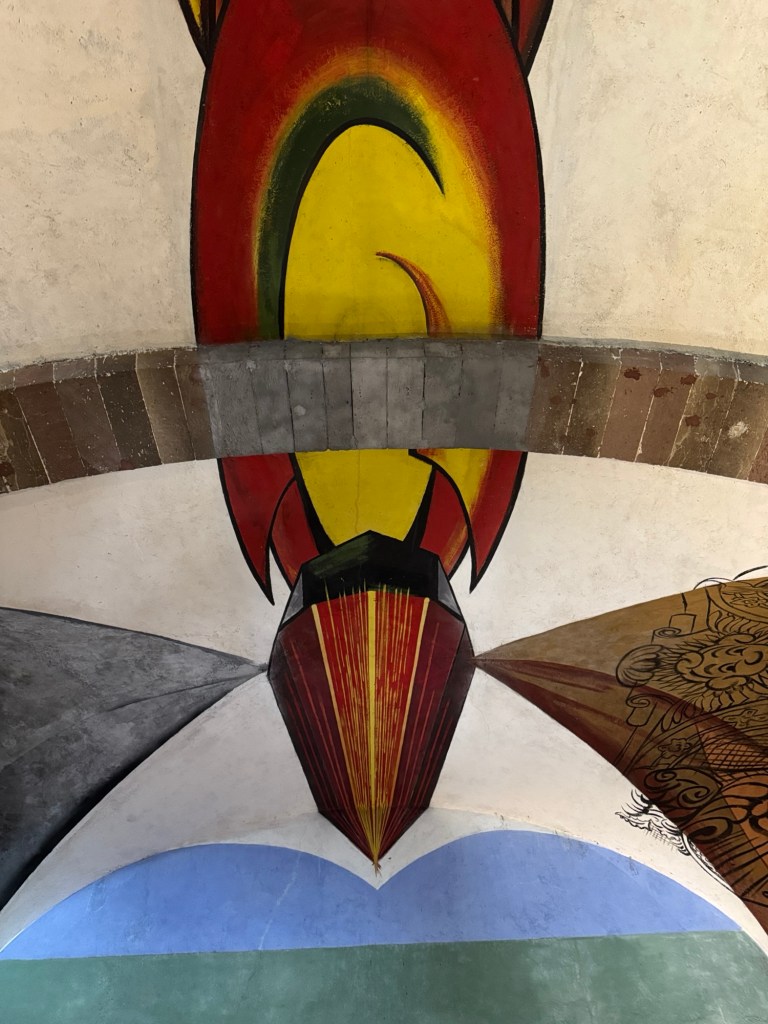
The unfinished mural by SiqueirosHe enjoyed playing with image twisting which appeared different from different angles. Here the tip of the rocket looks like a coffinBut here the tip looks like a diamond Another image here is a perfect circle But as you walk along the room it slowly turns to a heart
Continued city tour
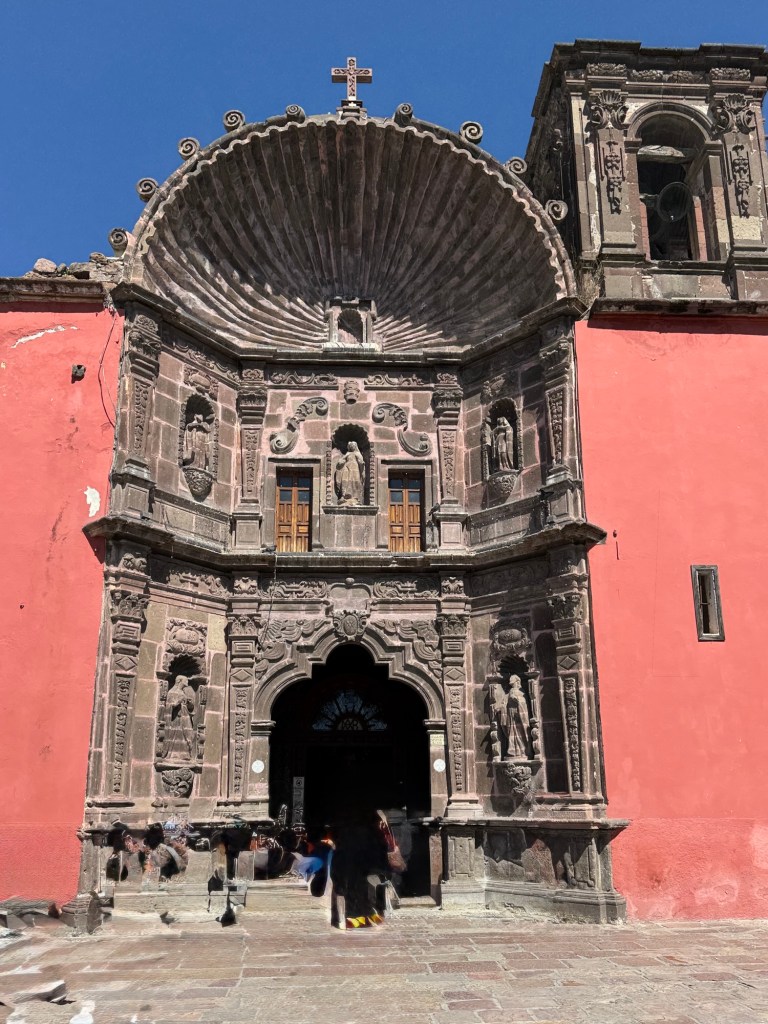
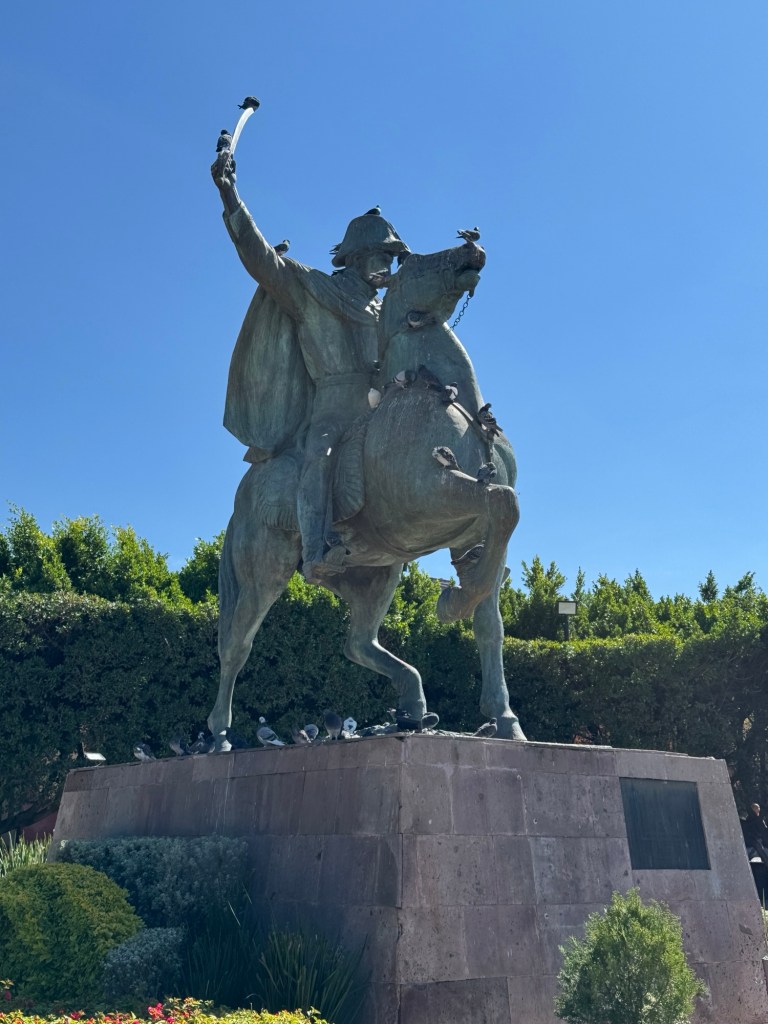
Templo de Nuestra Señora de la Salud (Temple of Our Lady of Health) . The unique facade features a large, scallop-shell archway above the main entrance, a prominent example of the Churrigueresque architectural style. This is an equestrian statue of Ignacio Allende located in the central plaza (El Jardín) of San Miguel de Allende, Mexico. He was a key figure and martyr of the Mexican War of Independence.
Lunch in a near by restaurant
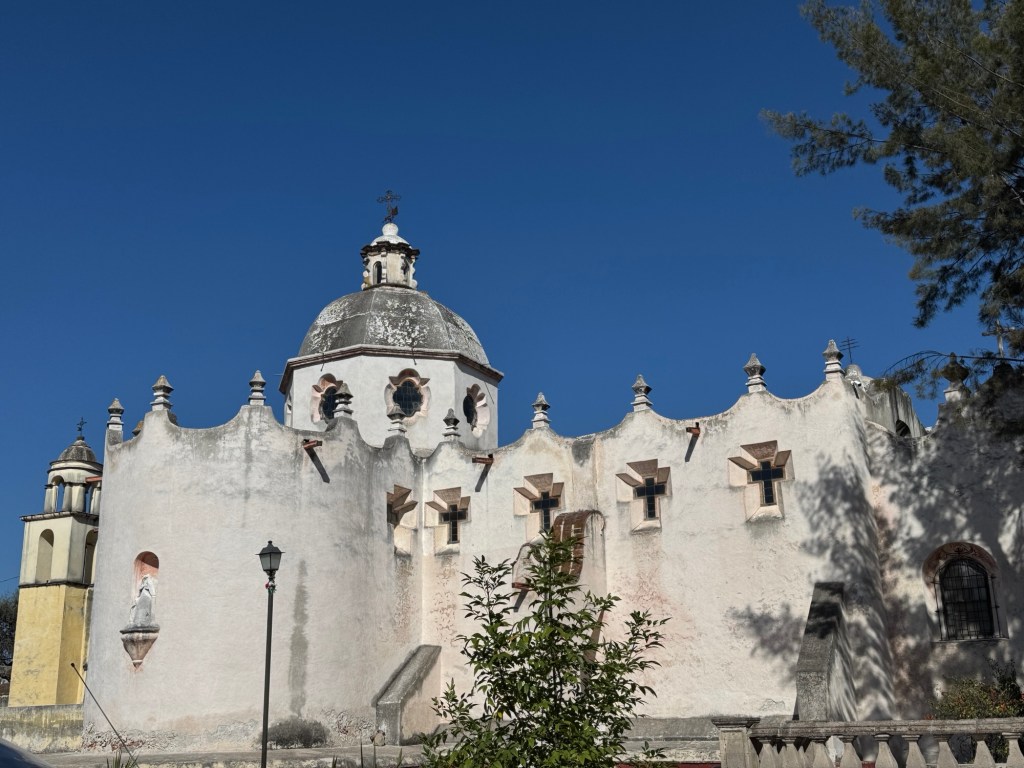
Continued city tour in the afternoon and visited the Sanctuary of Jesús Nazareno de Atotonilco. The Sanctuary, officially called the Santuario de Dios y de la Patria (‘Sanctuary of God and Country’) is part of a World Heritage Site (2008) along with the historic center of San Miguel de Allende.
The outer plain and tall wall gives a fortress appearance
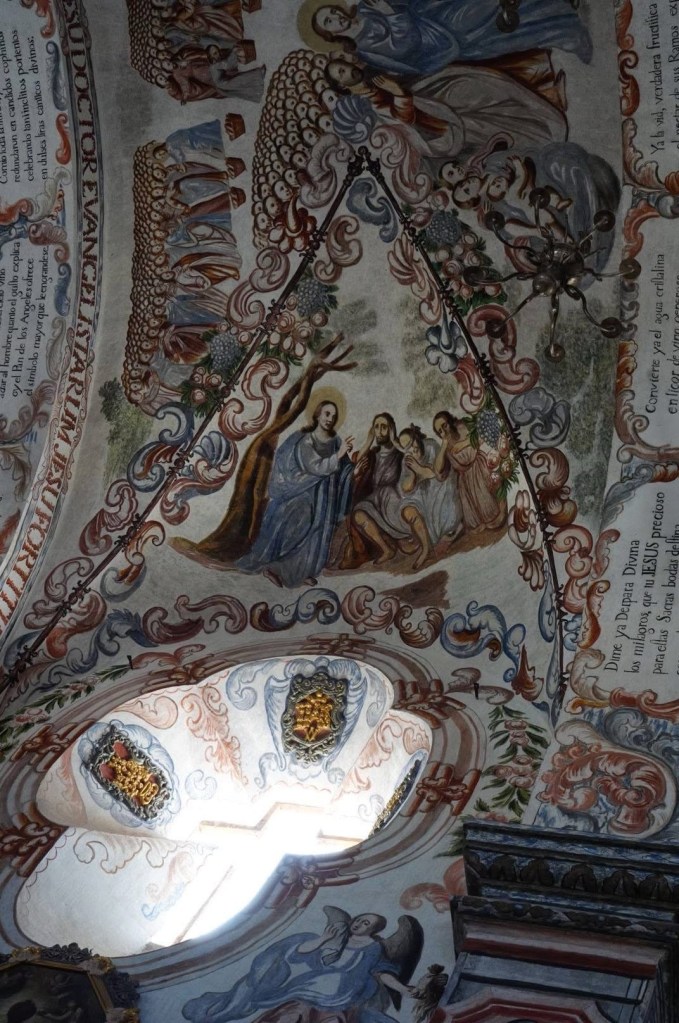
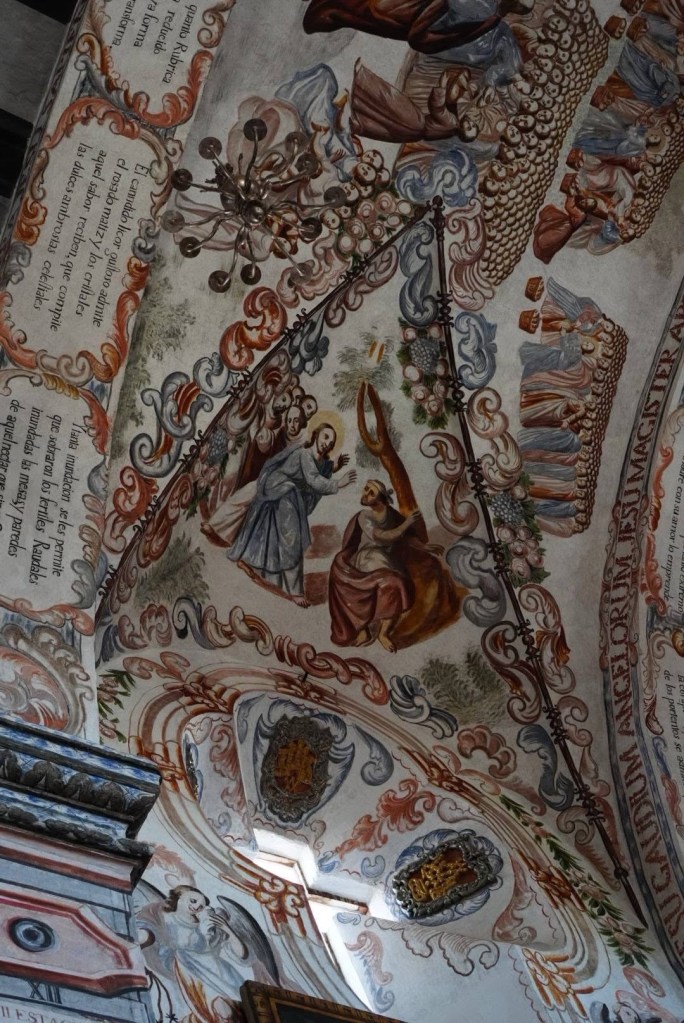
Interior
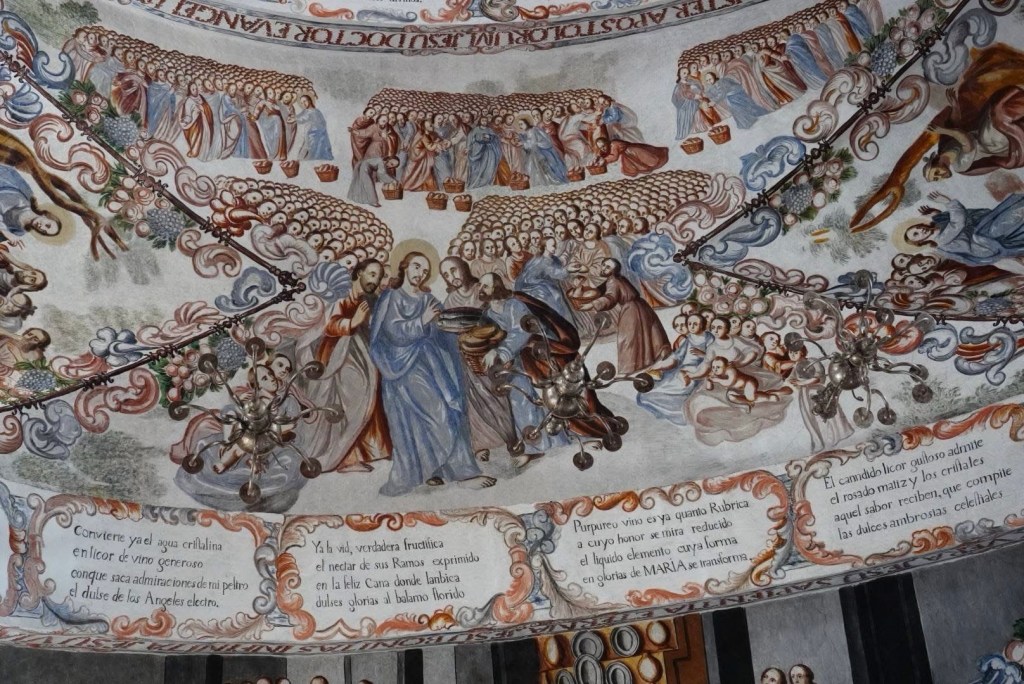
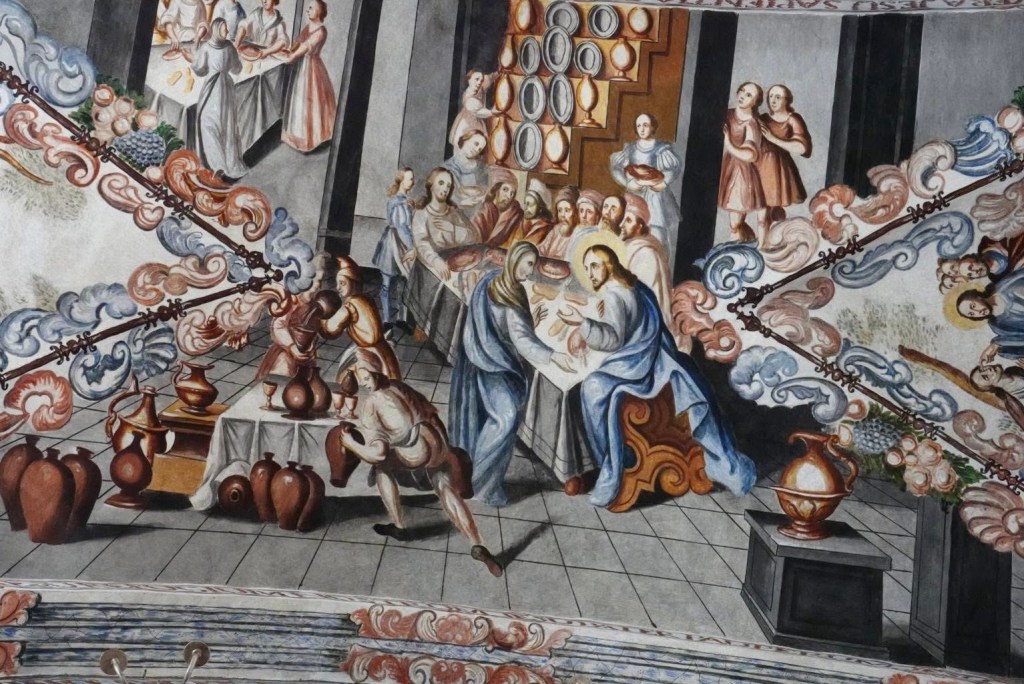
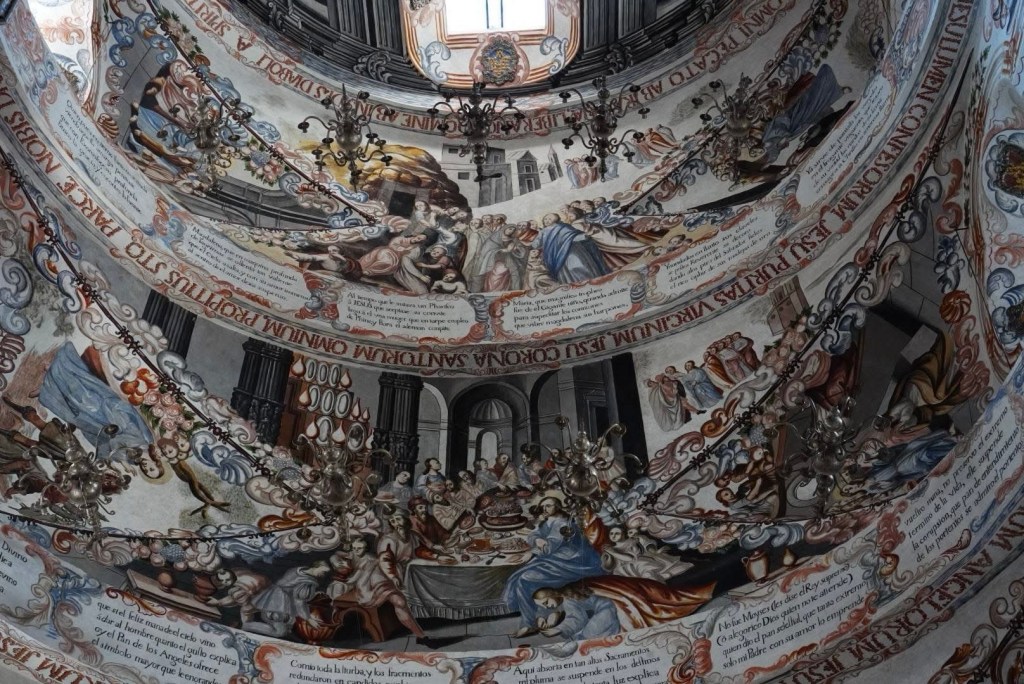
The walls and ceilings of the interior are nearly entirely covered in mural work, sculpture, inscriptions and oil paintings in a style called Mexican folk Baroque, although indigenous influence can be seen. Because of the complicated murals the sanctuary is called the Sistine Chapel of America or the Sistine Chapel of Mexico.
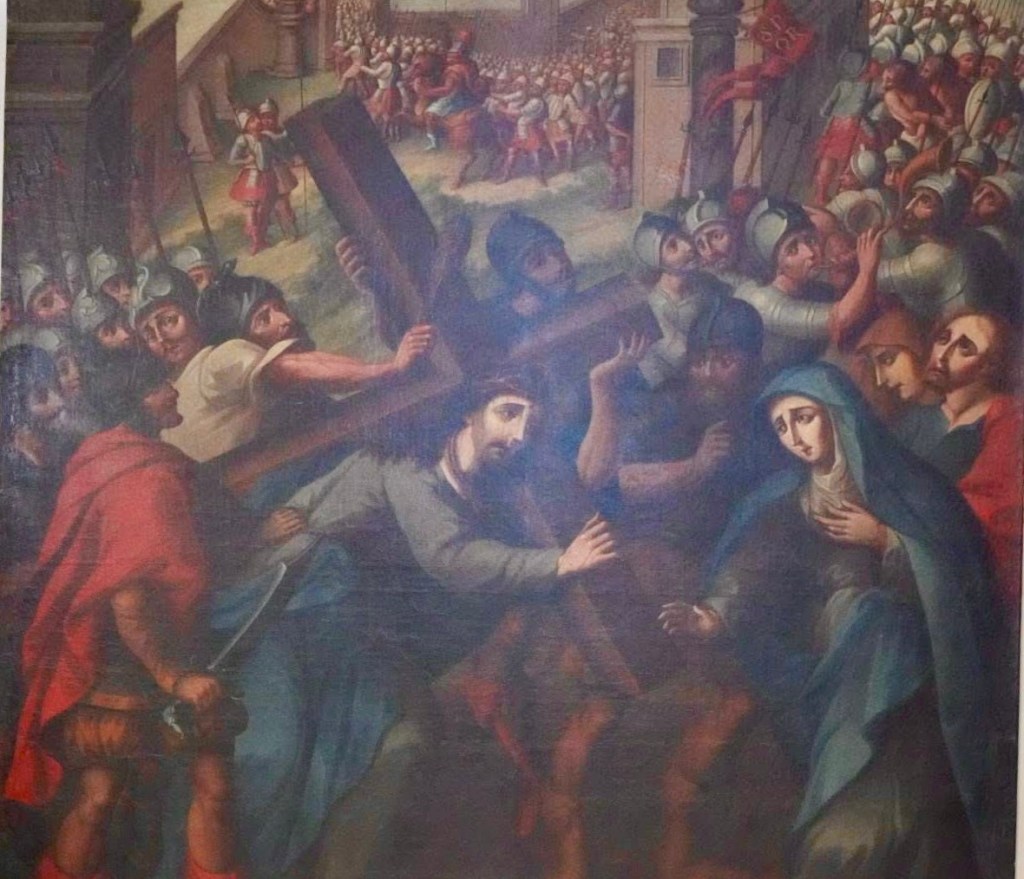
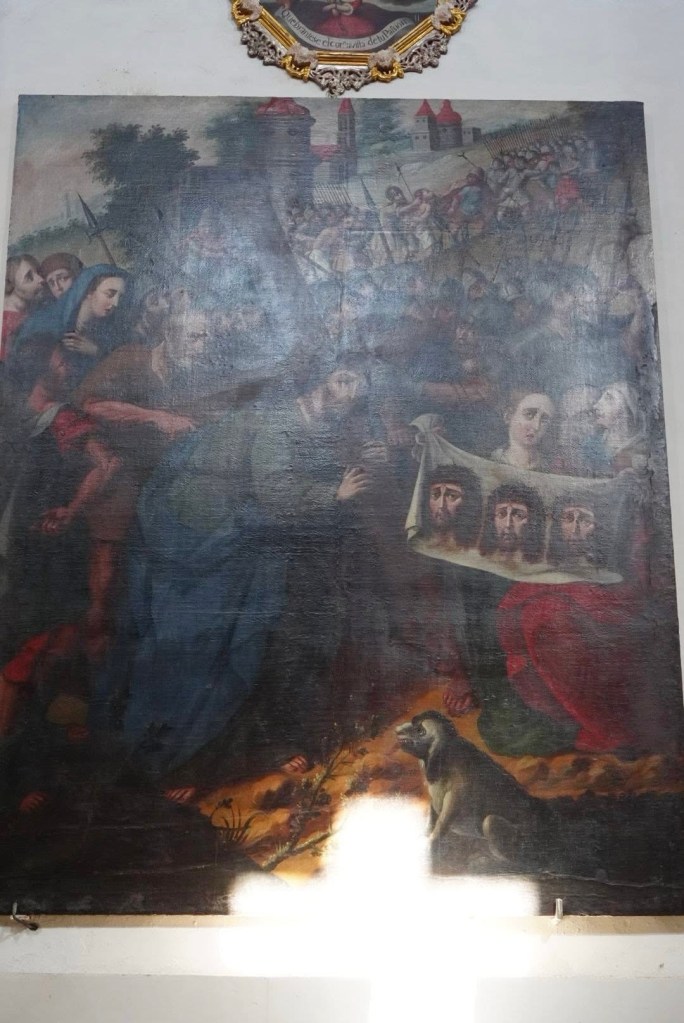
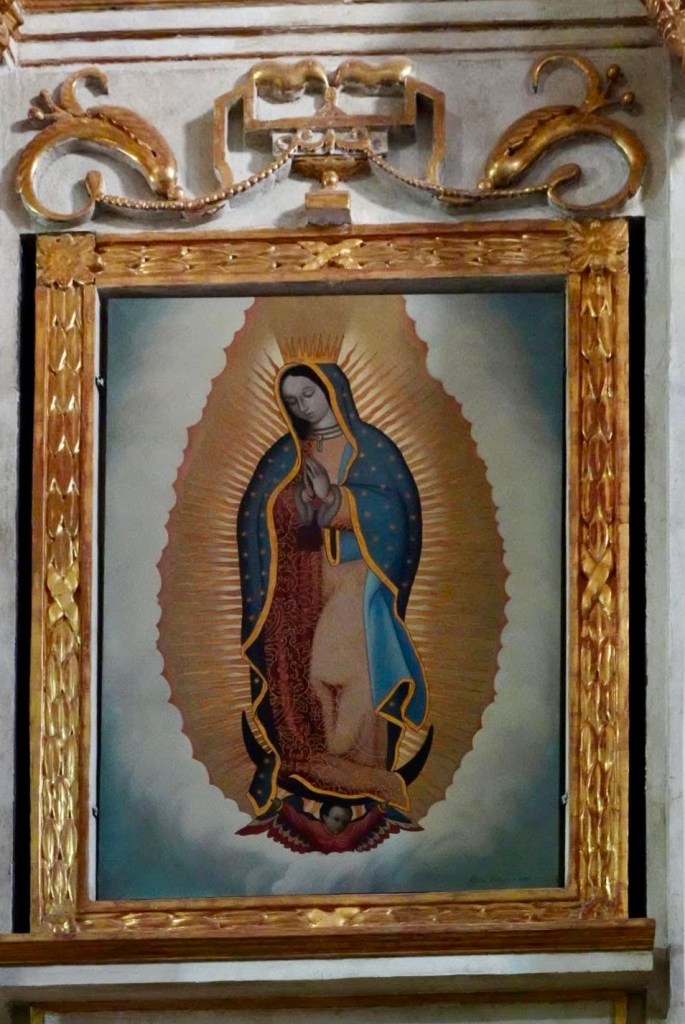
Judgement day. Jesus blessed the good guys The frustrated and desperate bad guys Turning water to wineHard working vs Gluttony and Pleasure Last supperJesus on the way of the CrossIn this painting of Jesus on the way of the Cross a lady held a Mandylion with 3 head images of Jesus. Normally one head image Mandylion is more common and this kind of 3 head image Mandylion is usually seen in Russia Orthodox Church. The image is of the iconic Roman Catholic image of Our Lady of Guadalupe, also known as the Virgin of Guadalupe. It is Mexico’s most popular religious image and can be seen almost in every church. The outer cloak has star pattern representing the sky. The inner cloak has plant pattern representing the earth. Below a boy holds both cloaks signifying unification of the sky and earth.
We had dinner in a restaurant about 10 minutes walk from Numu Hotel. A guy from the tourist group brought us to and back, so nice
Day 4 November 14 Friday
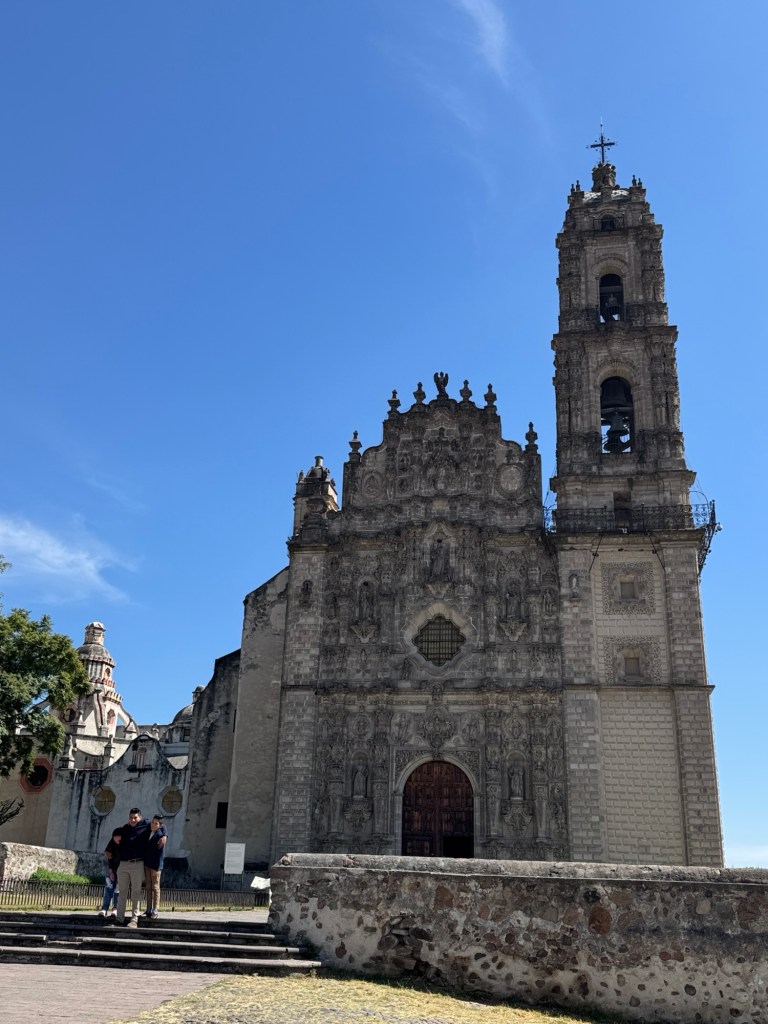
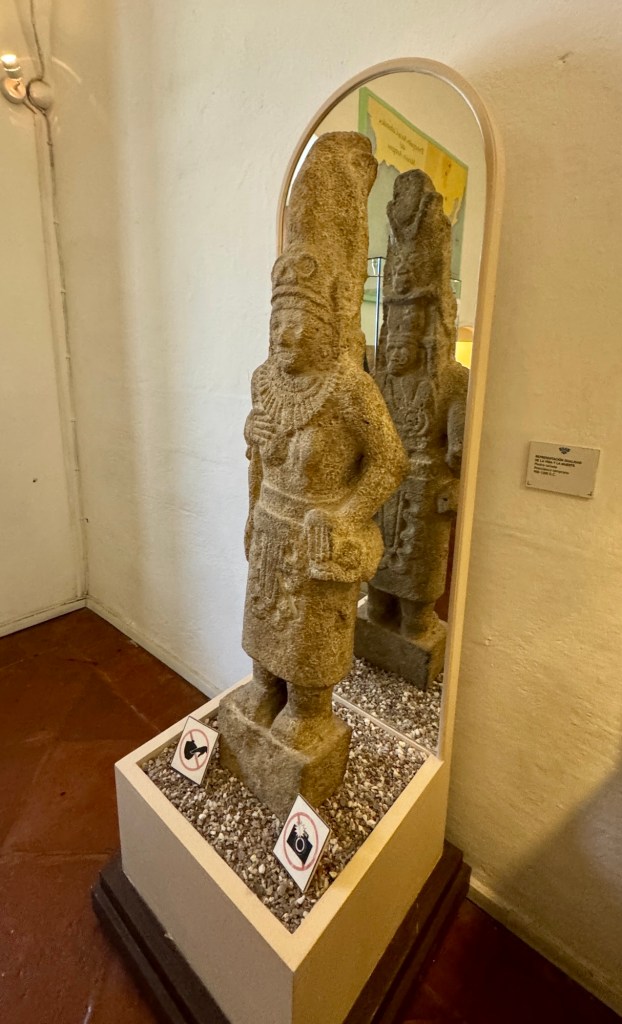
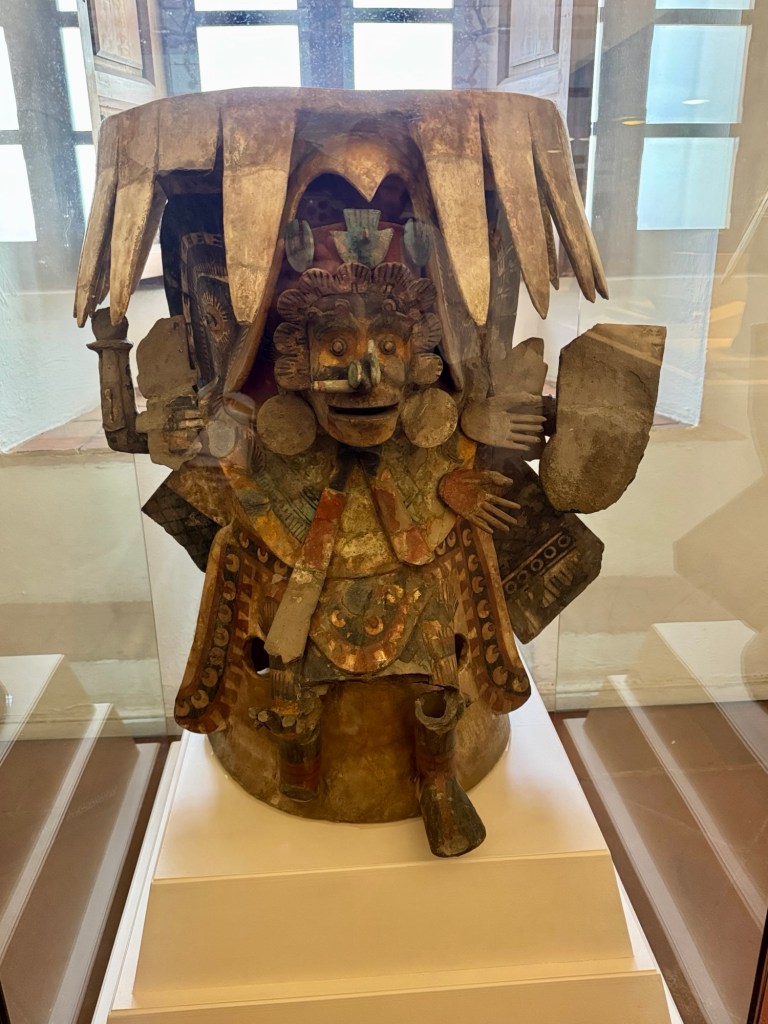
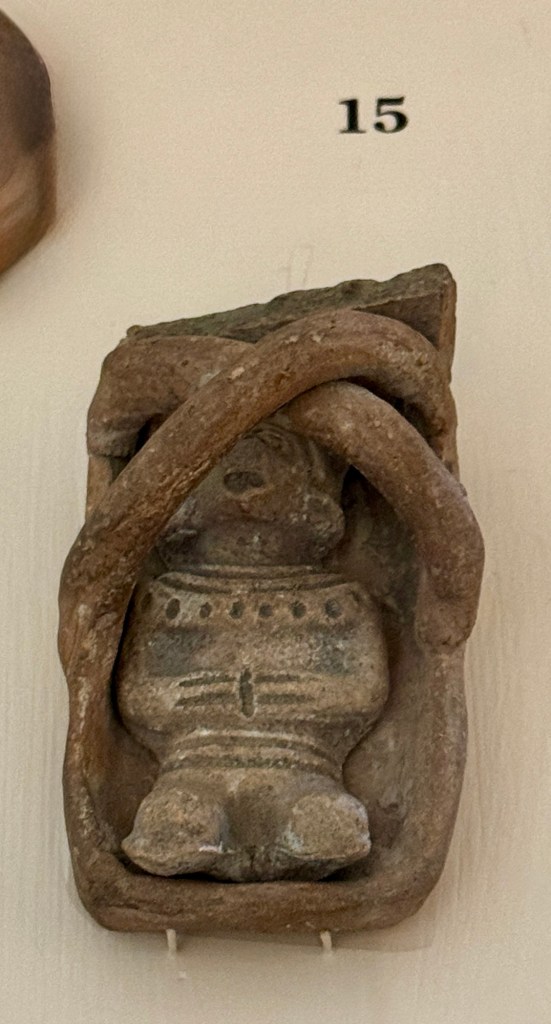
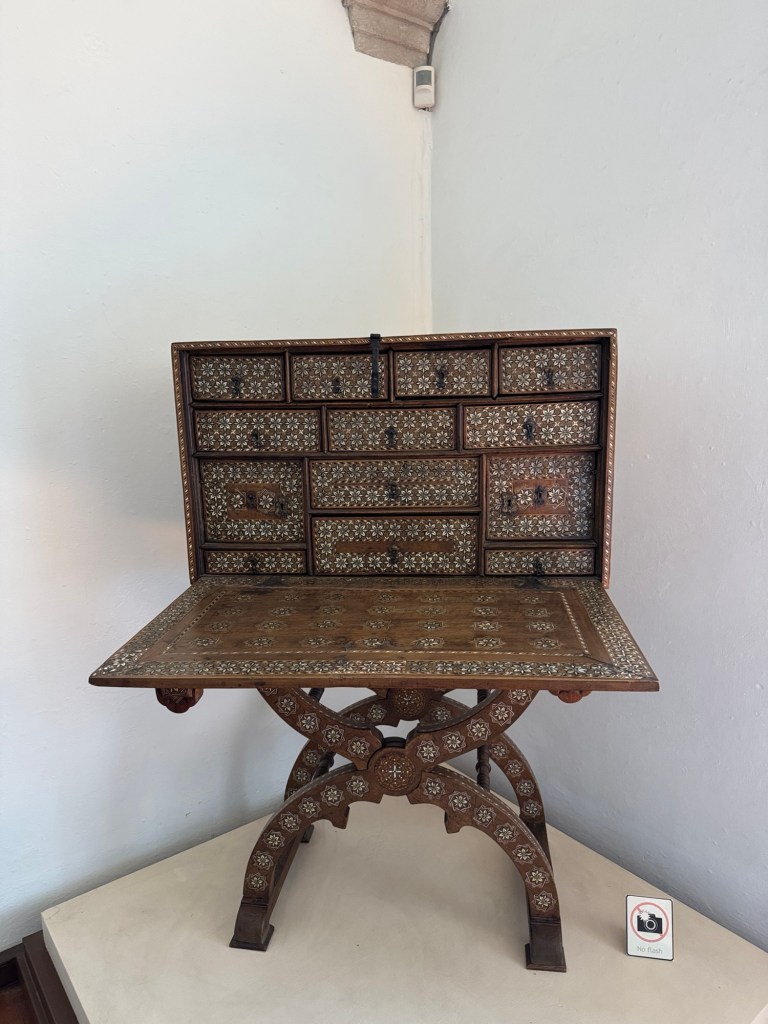
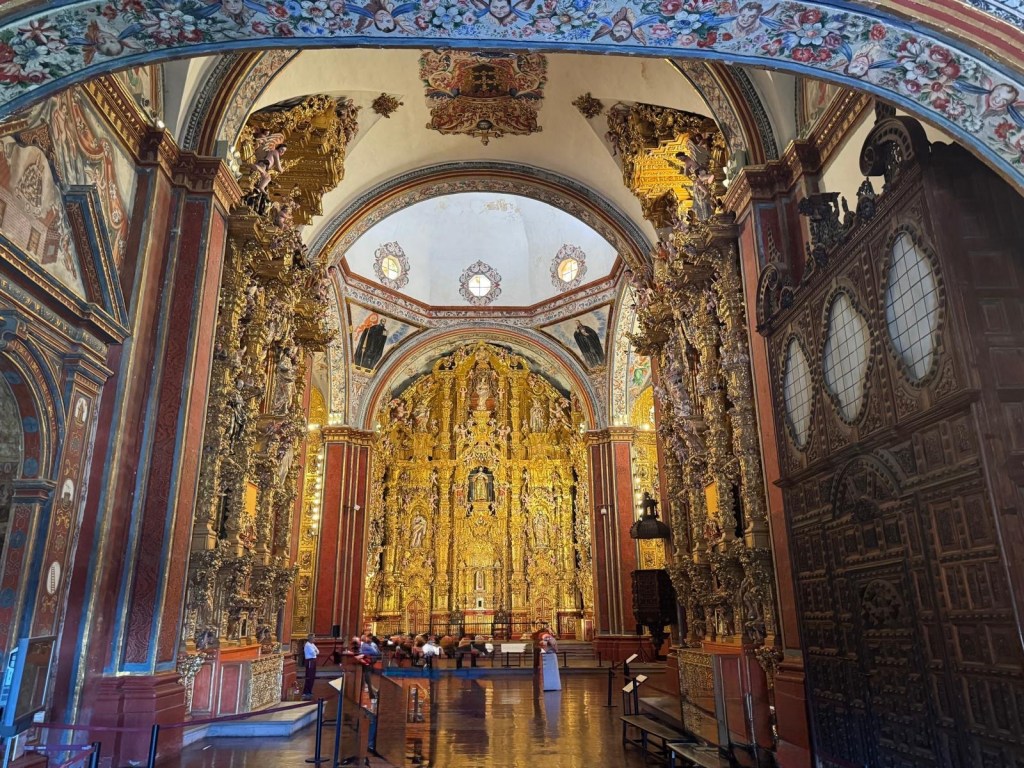
San Francisco Javier Church Quite a nice museum, only one floor so spread through a large areaThis goddess is holding a skull representing TT he duality of life and deathWhat a nice brazier 炭盤 Baby cradle At first sight I thought this furniture has inlaid of shells 螺鈿。But no, the inlaid are bone and silver.
We had lunch in an outdoor restaurant with life music. Although we didn’t ask the singers to come to our table we still had to tips them
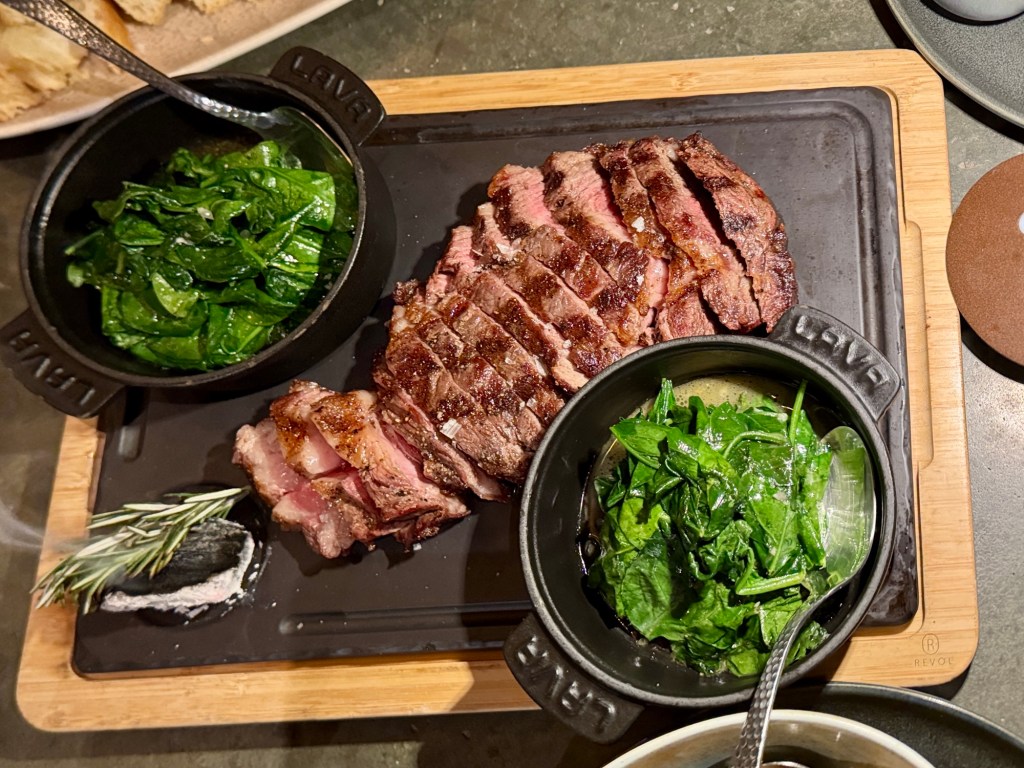
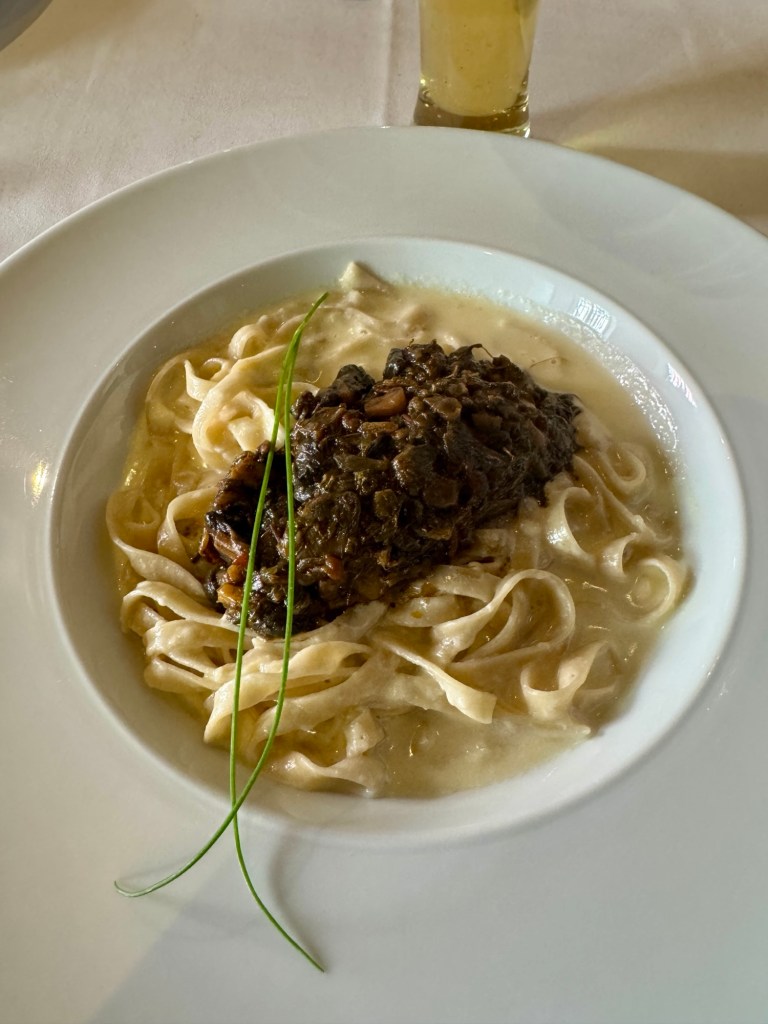
In the afternoon we had a long ride to Mexico City and supposed to visit the Teotihuacan Pyramids of the Sun and Moon. However there was a traffic accident with casualties resulting in severe road blocked so we decided to skip it and went all the way to Mexico City and checked in the Marriott and had dinner in the Italian Restaurant. We thought we could use the US $100 credit but it turned out that this restaurant was not run by Marriott!But anyway it was a good Italian meal.
The capital city is very modern, nice and safe, far beyond my image of Mexico from the movies!
Day 5 November 15 Saturday
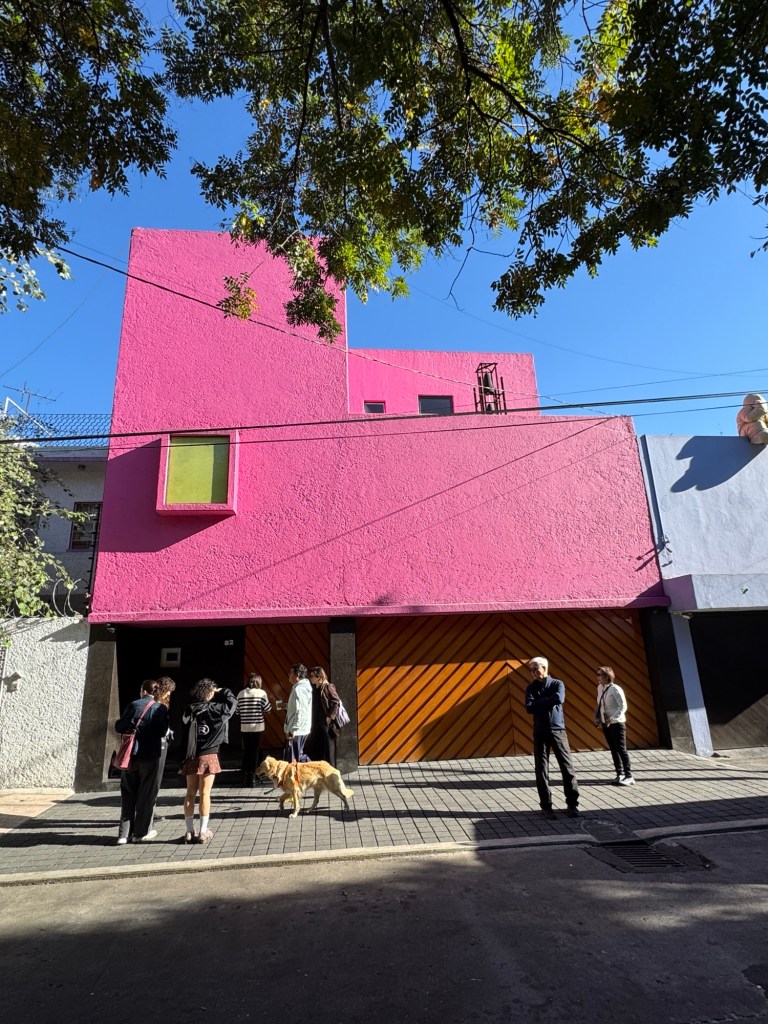
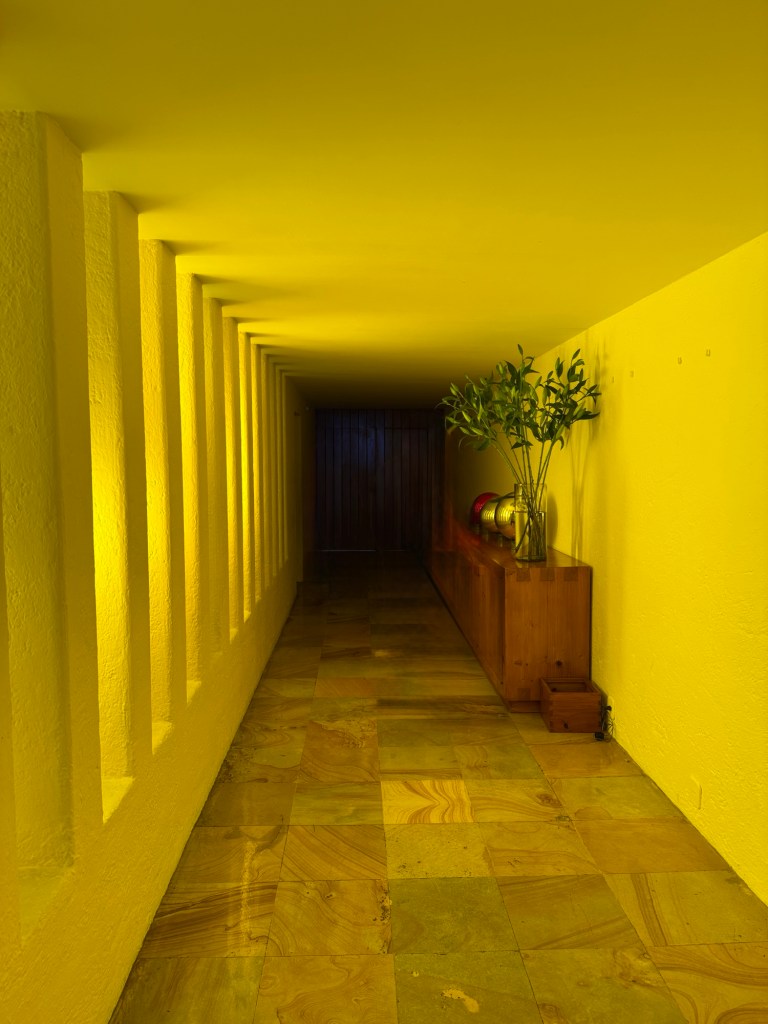
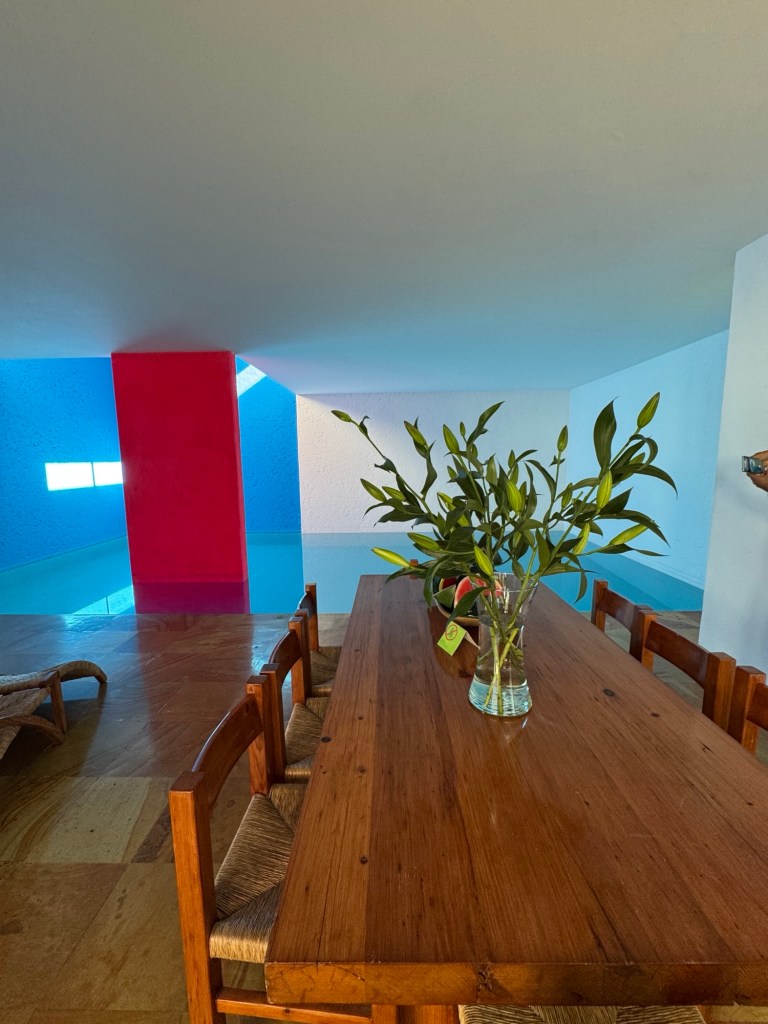
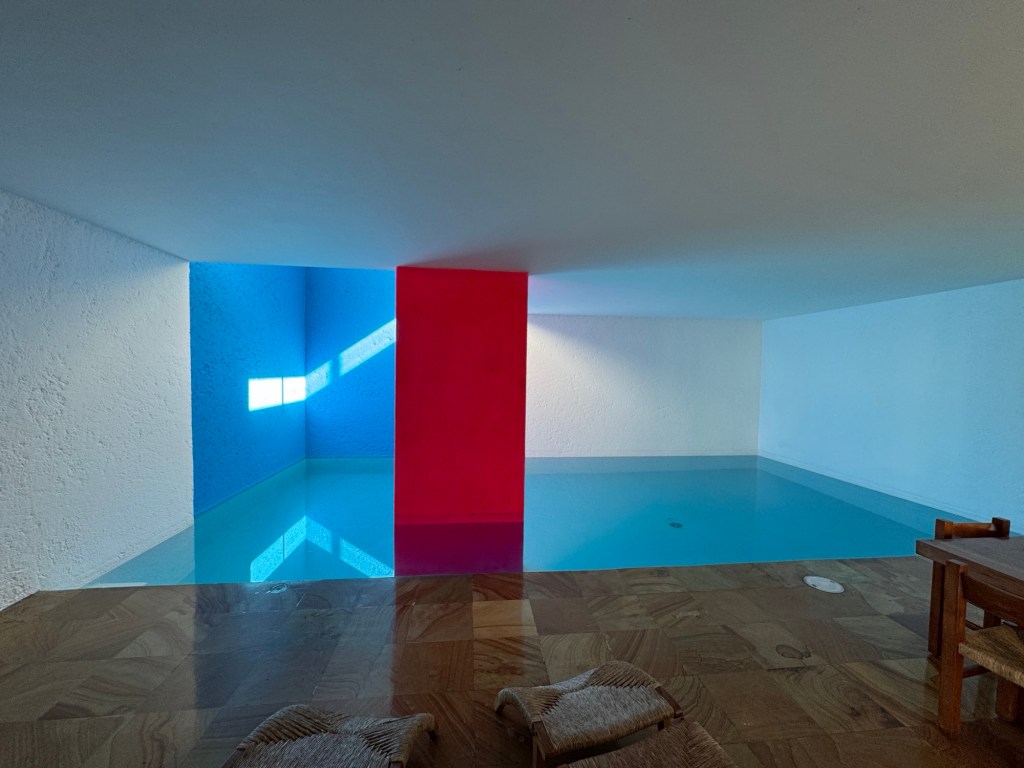
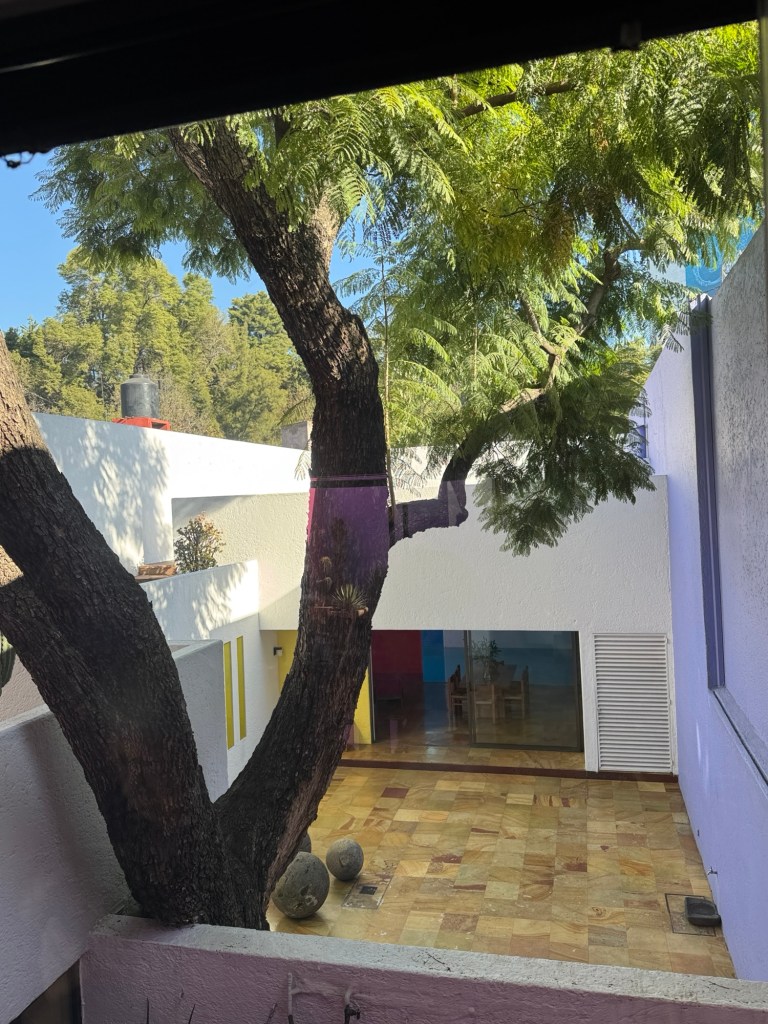
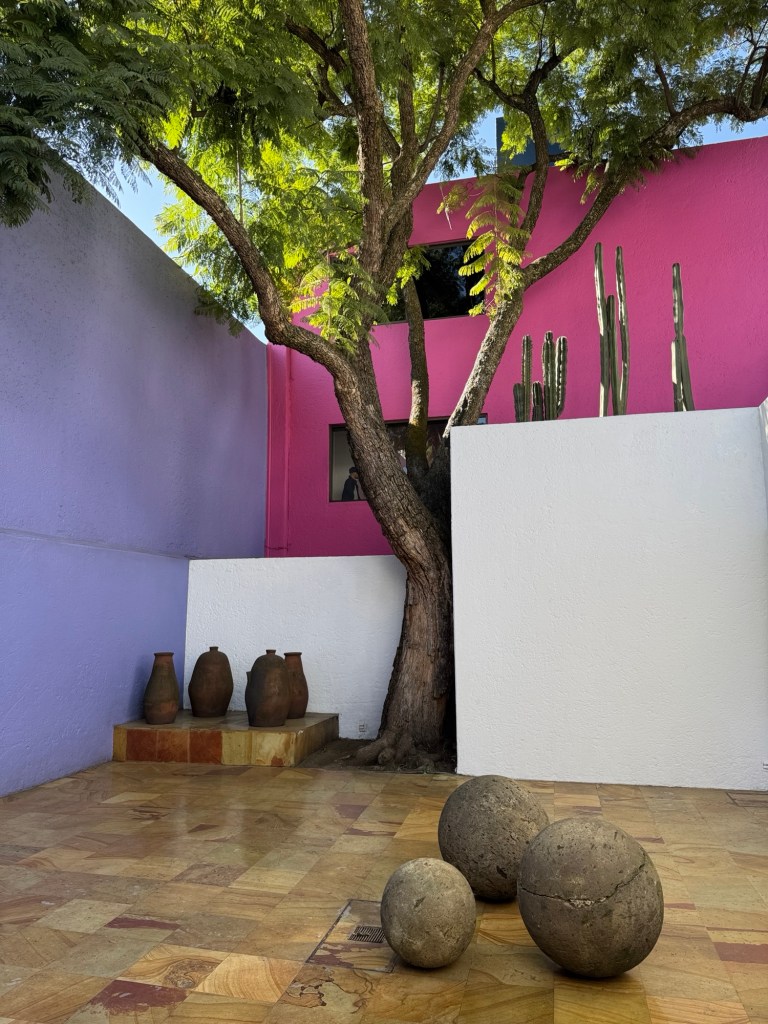
We met our second guide Mr. Alfredo Hernandez in the morning and went to Casa Gilaedi house which is a private residence designed by the legendary Mexican architect Luis Barragán. It is significant because it is his last completed work (built 1976-1977). The clients were the Gilardi family, and they approached the 76-year-old Barragán with a specific challenge: to design a house around an existing large jacaranda tree and to incorporate a swimming pool for entertaining. Barragán’s mastery of color is on full display. A stunning, almost surreal vibrant pink wall anchors one end. Then there is the bright yellow corridor. The pool itself is a luminous blue, and light filters in through wooden slats, creating reflections that dance on the pure white walls and ceiling. This room is considered one of the most photographed interiors in modernist architecture.
PinkYellow Pool is just next to the dinner room. Guest can step inside while having a drink Reflecting of light on the white wall of the pool

The original jacaranda tree, safely preserved in the garden . It’s not a conventional open-plan house but a careful manipulation of space to ensure privacy
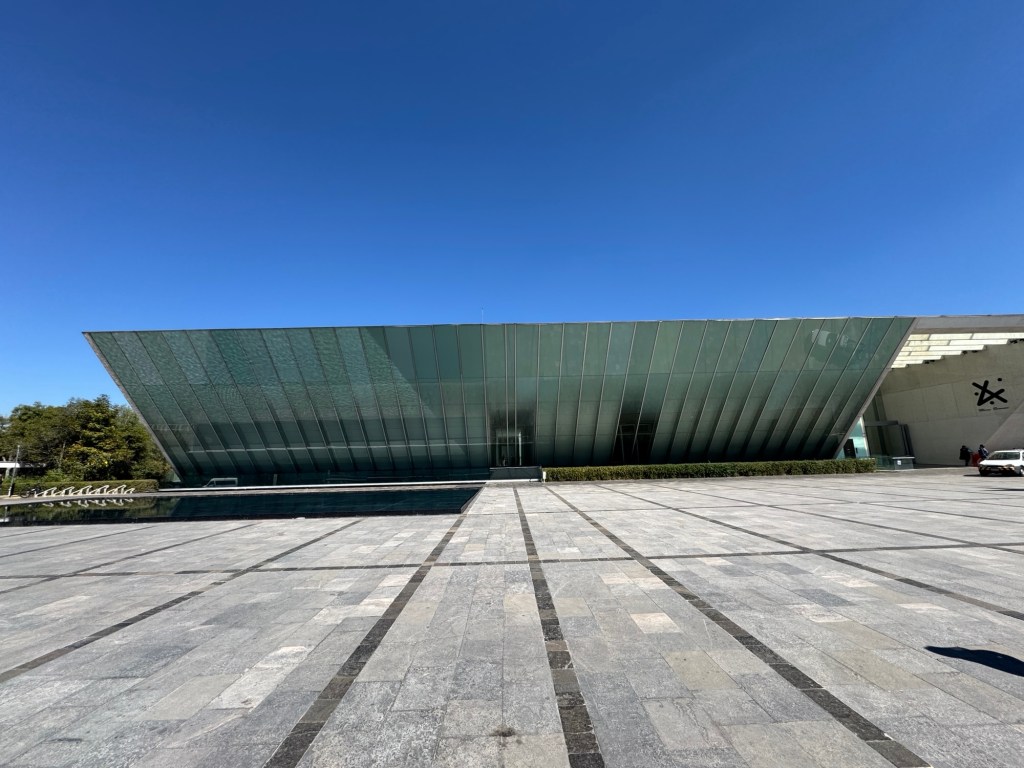
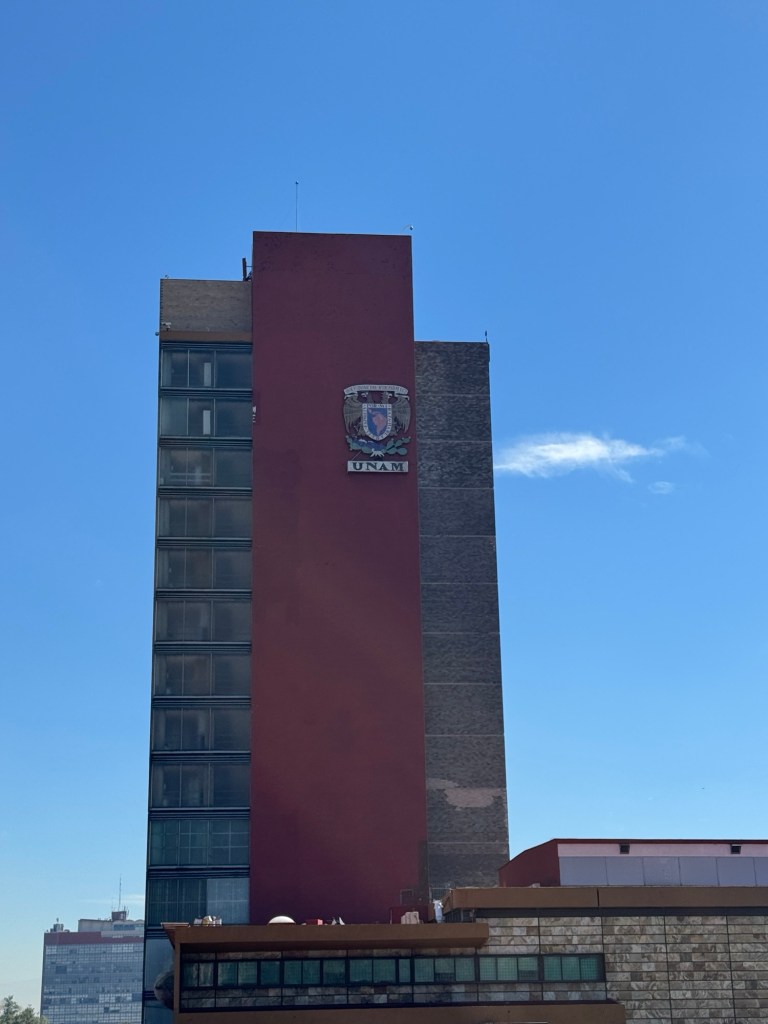
Then we went to the University of Mexico, very nice environment and beautiful. University study in Mexico is basically free, quite a surprise. Alfredo is an alumni.
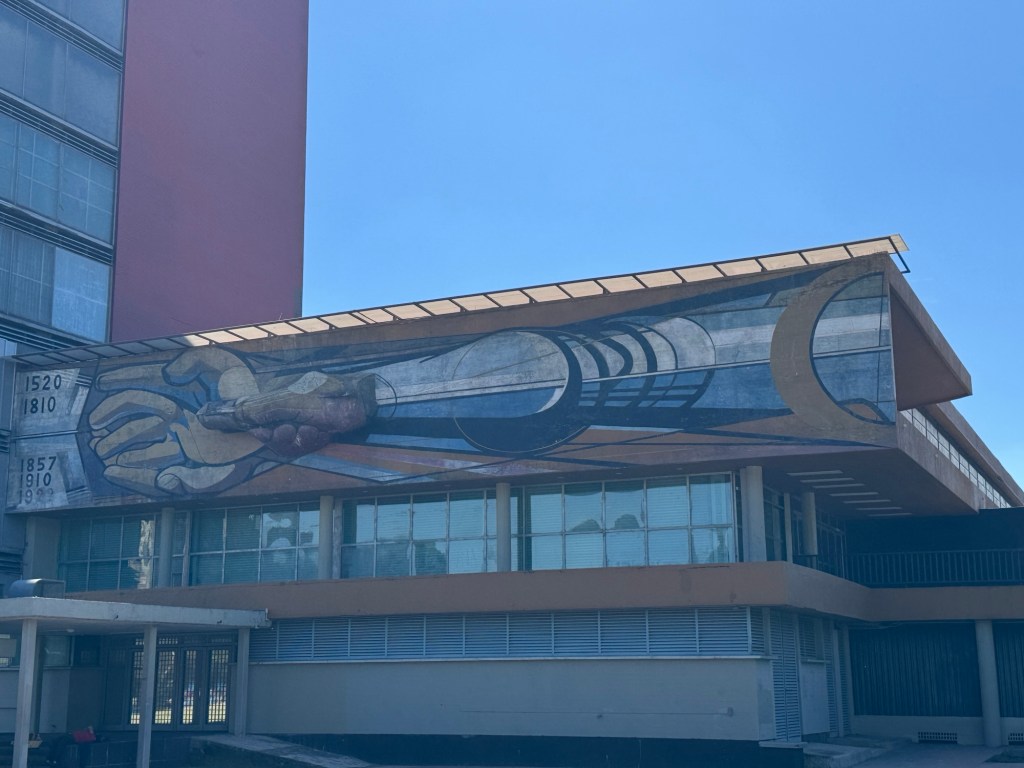
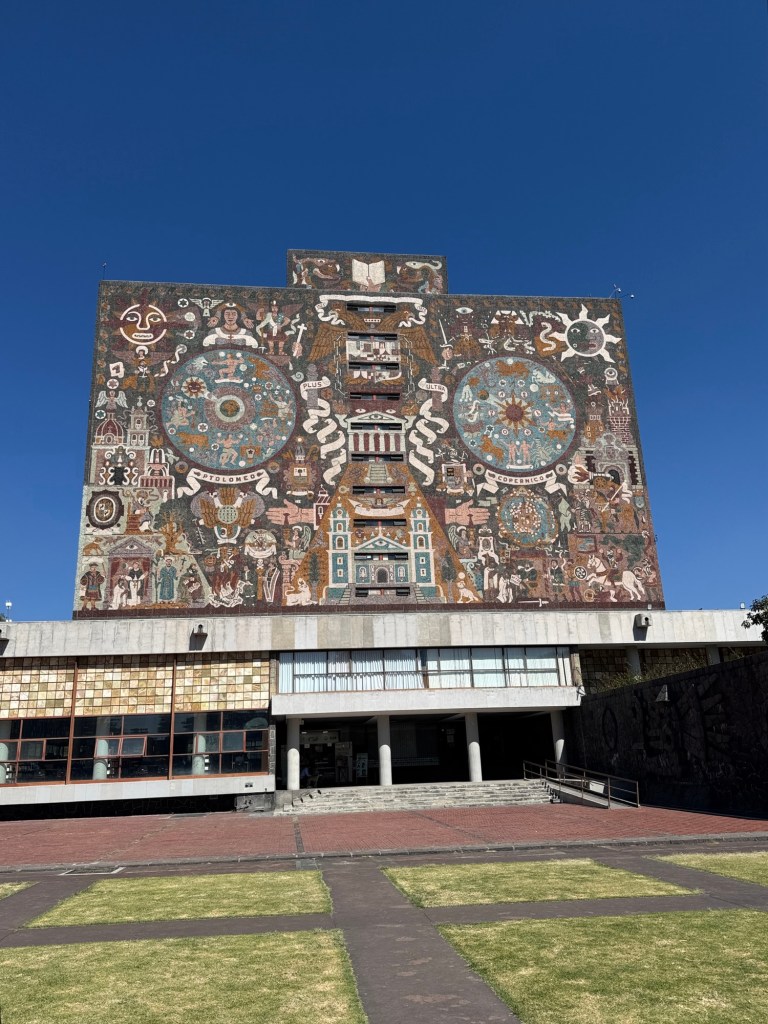
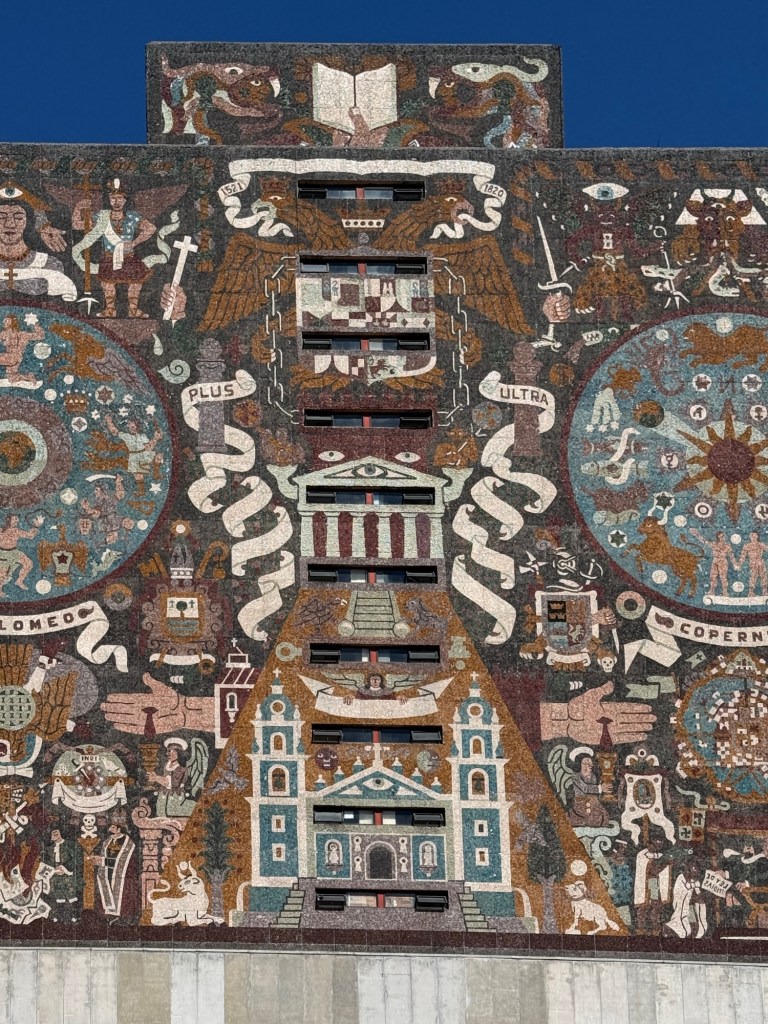
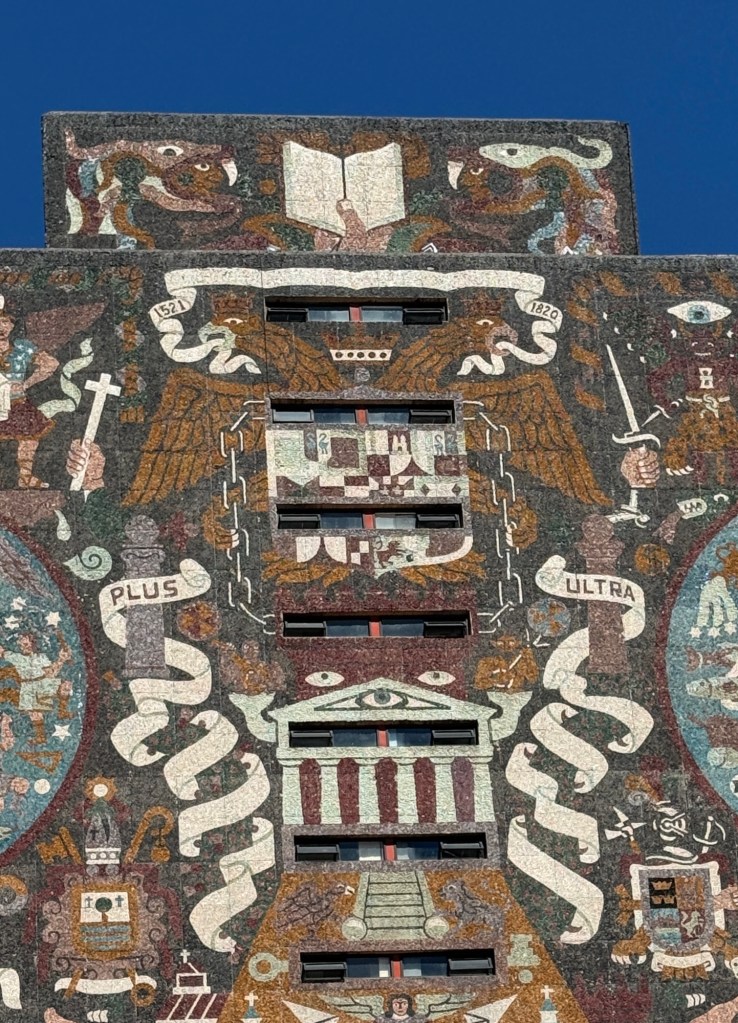
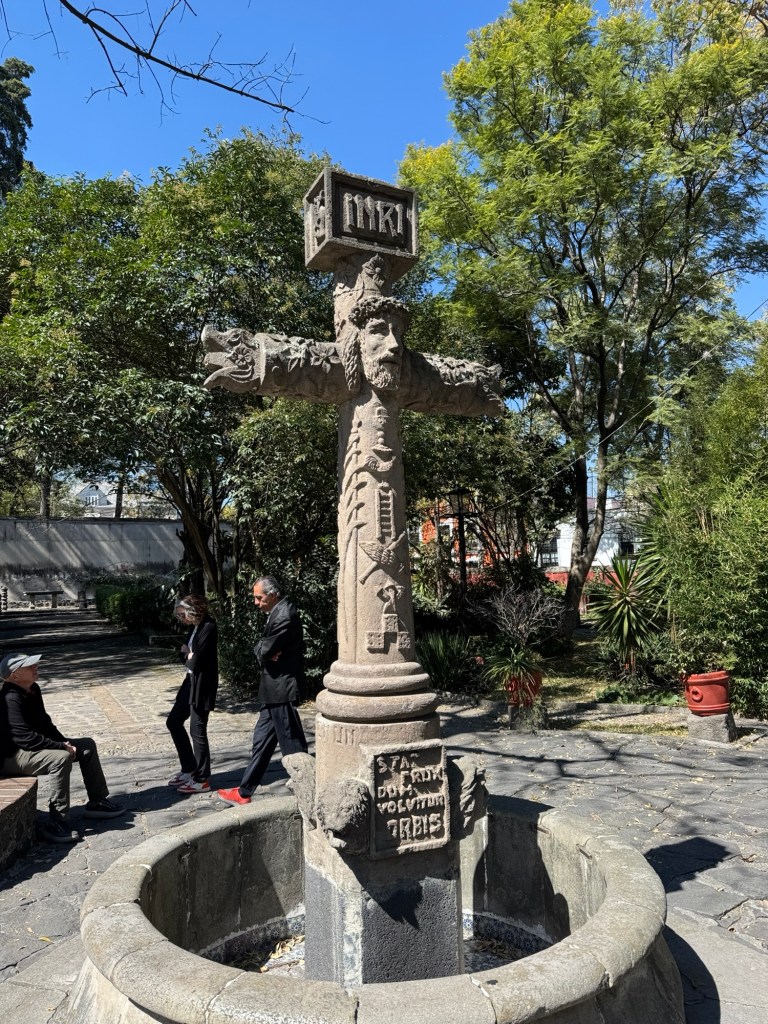
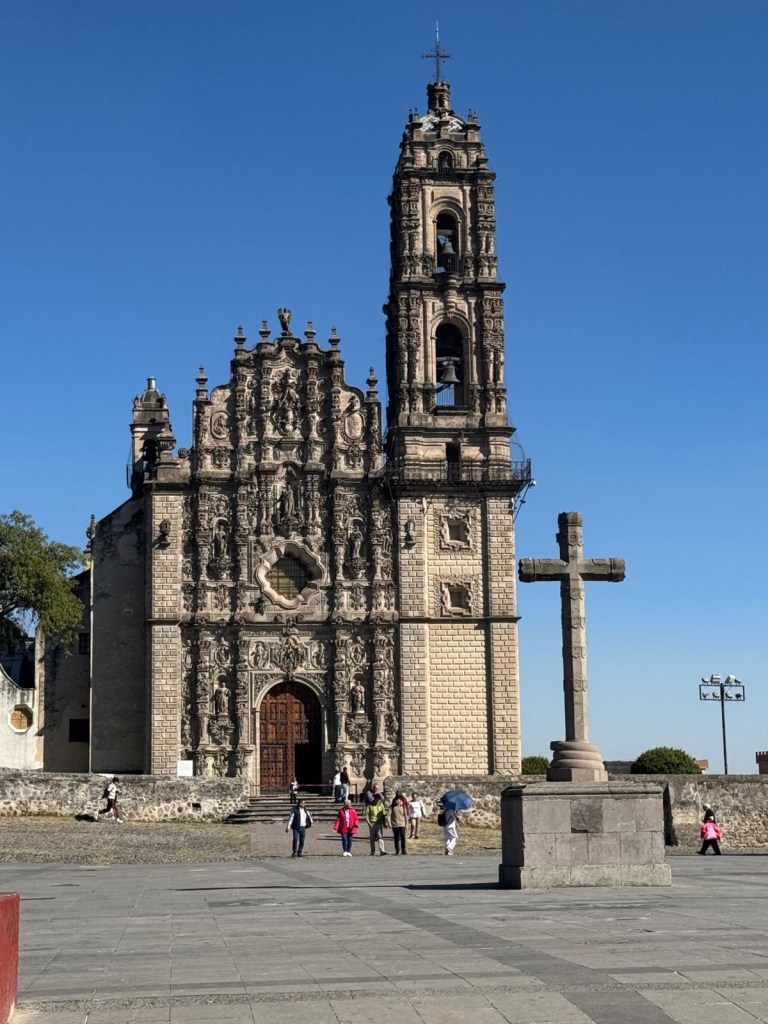
UNAM Universidad Nacional Autonoma de Mexico National Autonomous University of Mexico. It is considered to be the best university in Mexico Obviously another art work by David Alfaro SiqueirosThe Central Library, opened in 1956, is renowned for its massive, four-sided mosaic mural created by the artist and architect Juan O’Gorman. The outside murals are entirely built from stone tiles, which were brought from different places in Mexico. The colors seen in the mural are the natural colors of the tiles, not paint, which O’Gorman chose in order to create an artwork that would endure the passage of time in an outdoor setting.The middle part showed a western church signifying Spanish colonial period. Above it is the Plus Ultra. According to mythology, the Pillars of Hercules (which represent the promontories at the Strait of Gibraltar, marking the end of the known world for ancient Greeks and Romans) bore the warning Non plus ultra. This served as a warning to sailors not to travel beyond that point into the unknown Atlantic Ocean, as it was believed nothing existed there but danger or the edge of the world. Then after Columbus, non plus ultra became plus ultra. In Mexico, “Plus Ultra” carries three distinct layers of meaning: 1. A Symbol of Colonialism: A historical reminder of Spanish conquest and empire. 2. A Symbol of Heroism and Motivation: A modern, widely recognized pop culture import from My Hero Academia, meaning to push past your limits. 3. A Symbol of Excellence: A classic Latin motto used by institutions and businesses to signify ambition and superior quality.Above Plus Ultra is the Eagle and Snake, coat of arms of Mexico and 1521-1820 is the period under Spanish rule. This is a photograph of a historic stone cross located in the churchyard of the San Jacinto Church. At top INRI is short form of 4 latin words: Jesus of Nazareth King of the Jews. The cross is highly decorated with carvings, including a face of Christ at the center and the inscription “STA. CRUX DUM VOLVITUR ORBIS” on the base. It is a Latin phrase meaning “The Cross stands while the world turns”. The Iglesia de San Francisco Javier (Church of San Francisco Javier) is a significant example of Novohispanic Baroque (Churrigueresque) architecture
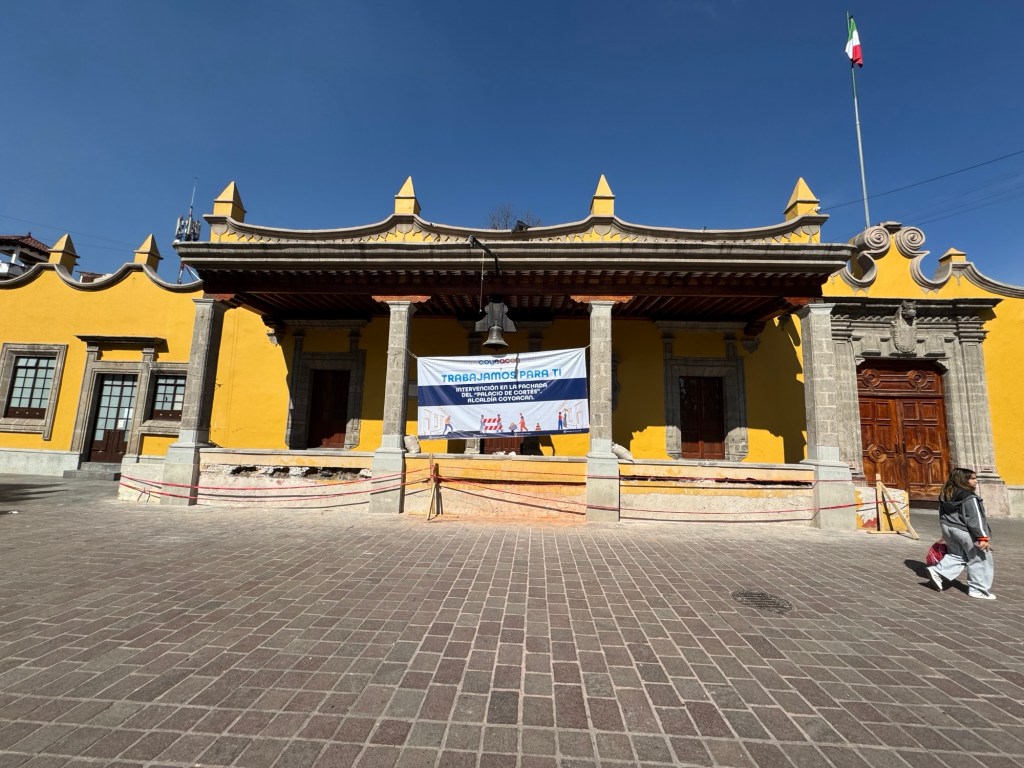
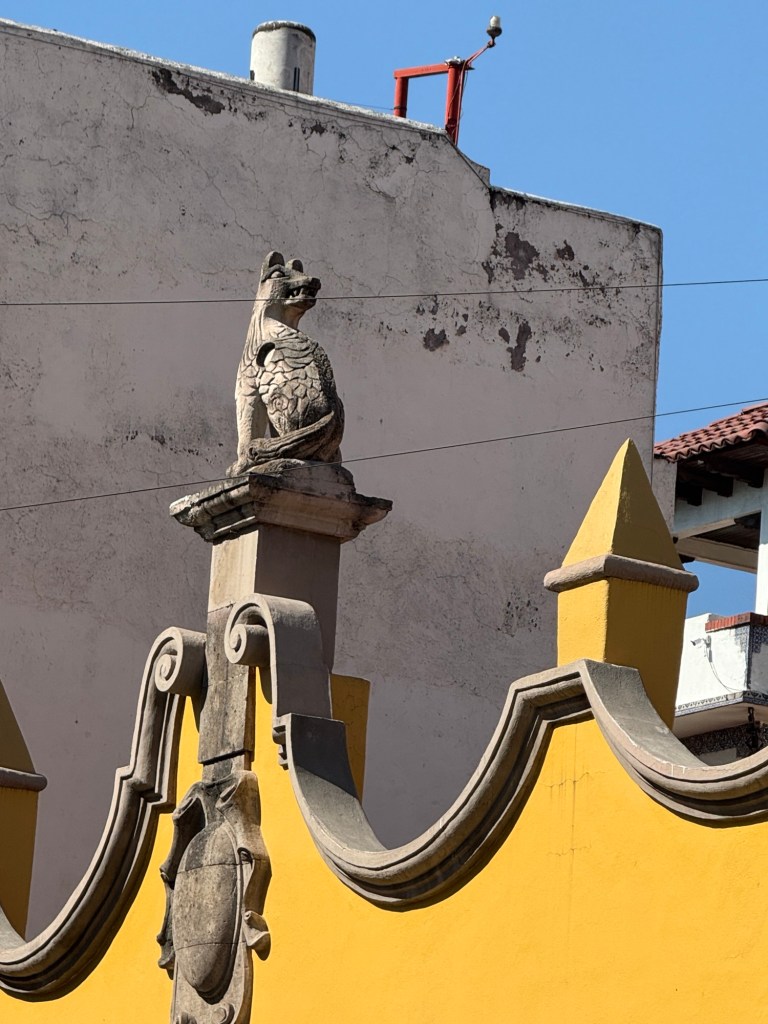
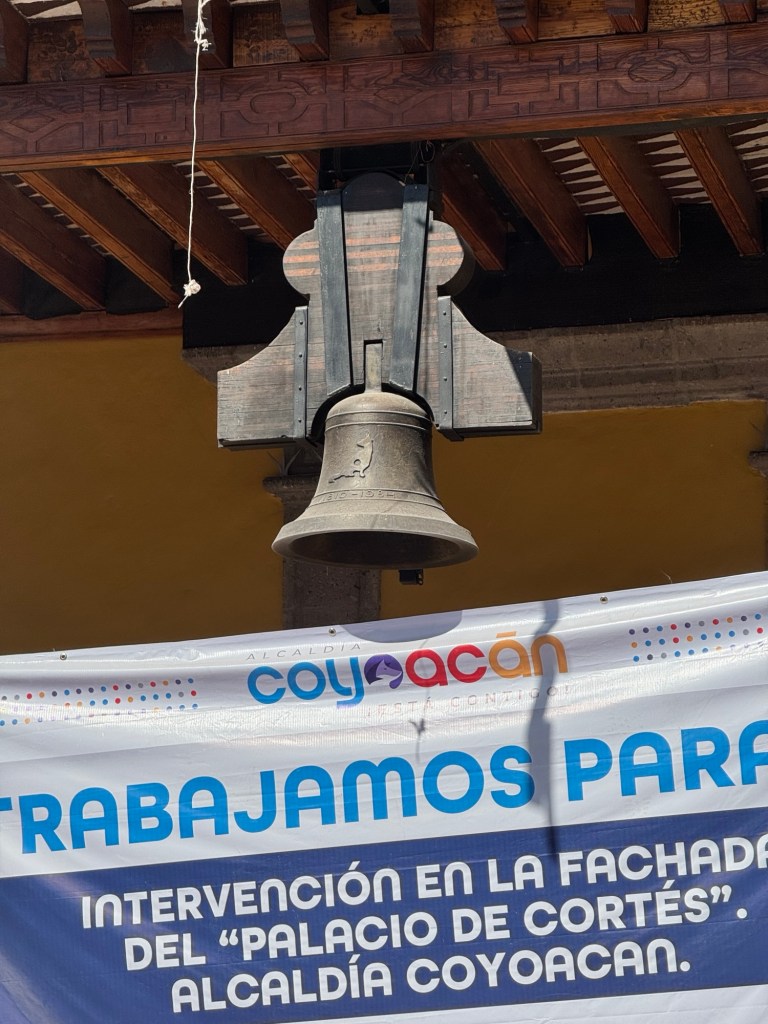
City tour continued to a market selling fine artefacts by the locals. Then we visited the old palace.The word coyote is derived from the word coyotl, from the language used by the Azetecs known as Nahuatl.
The image shows the historic building in Coyoacán, Mexico City, commonly known as the Palacio de Cortés or Casa de Cortés. Coyoacan means the place for coyotl so there is coyote everywhere Coyote appears even on the bell
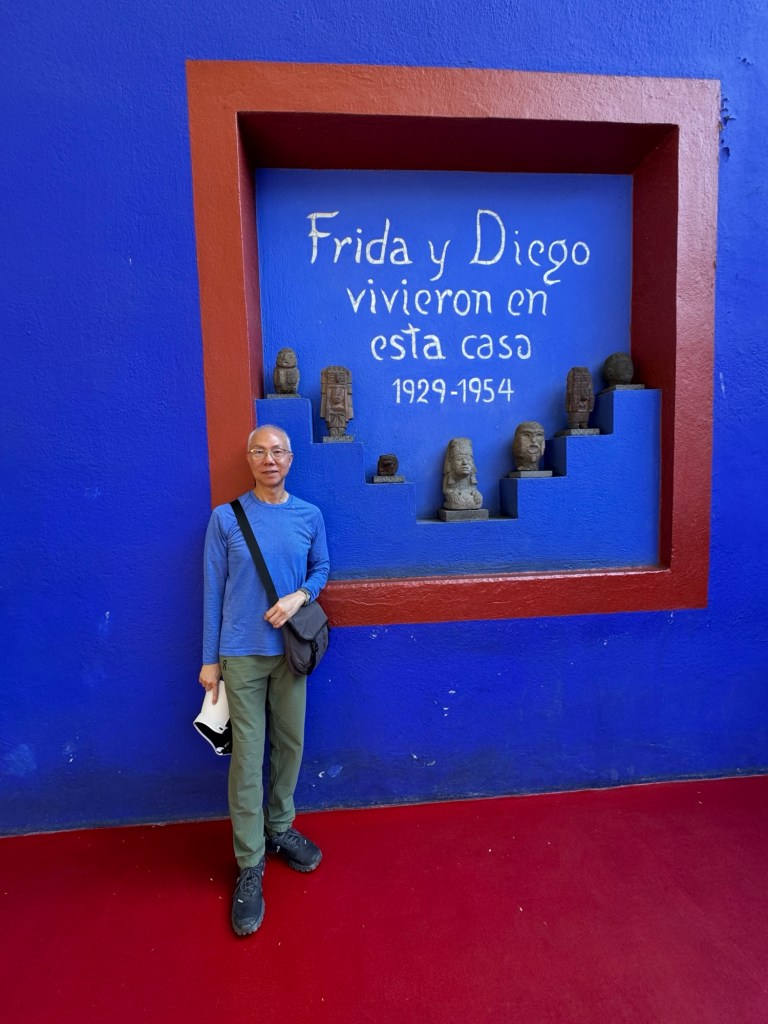
We had lunch in a very local market so we dared not try the seafood. Worst of all we couldn’t have a good rest during and after the lunch. We altered the itinerary a bit in order to catch up for the Teotihuacan Pyramids so we went to the Blue House in the afternoon.
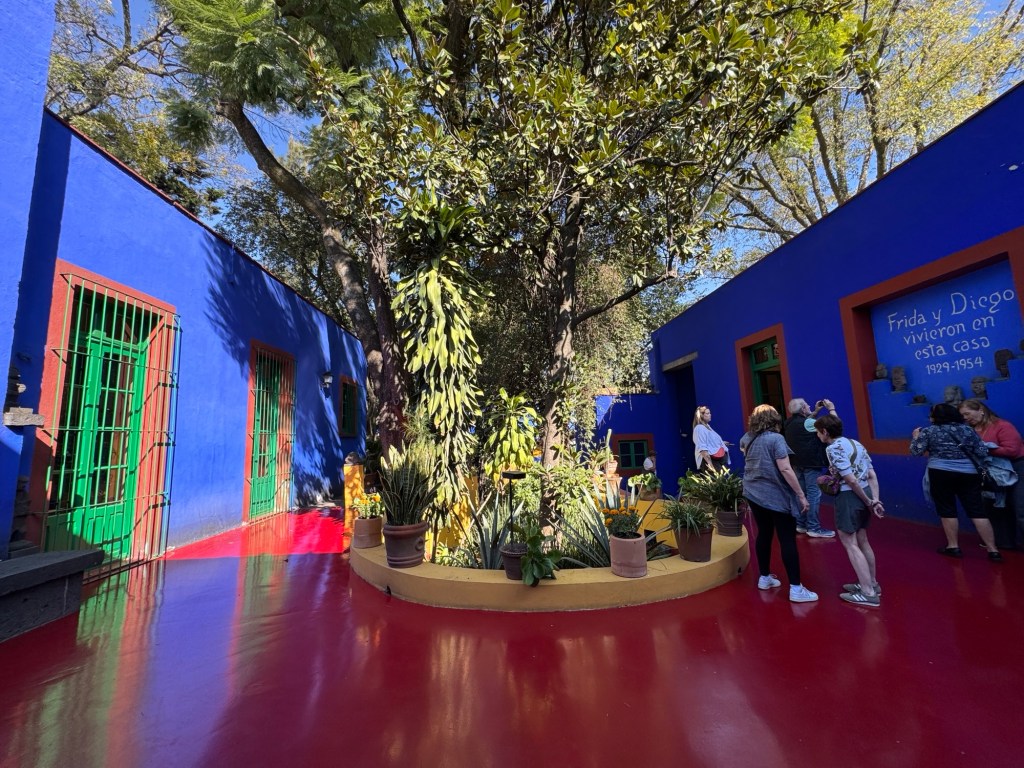
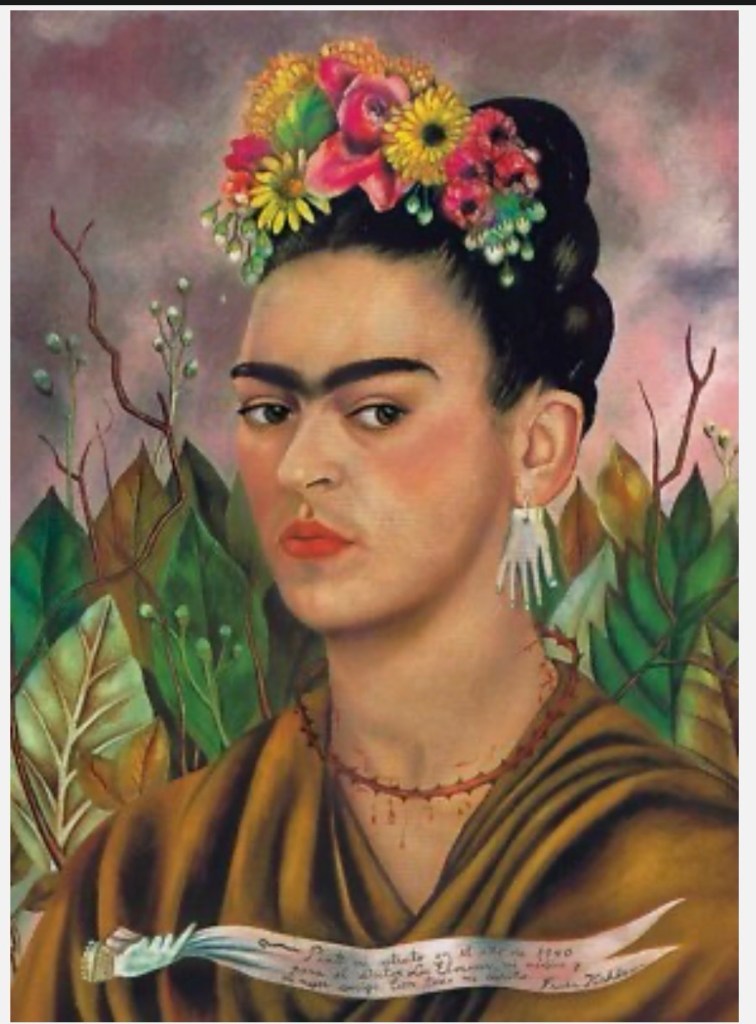
Frida Kahlo was a famous female artist in Mexico known for her self portrait and works inspired by the nature and artifacts of Mexico. She married another great Mexican artist Diego Rivera at the age of 22 and Diego was 43 years old. Her parents famously referred to the union as a marriage between “an elephant and a dove” due to the difference in their size and status (at the time, Diego was world-famous; Frida was an unknown amateur)
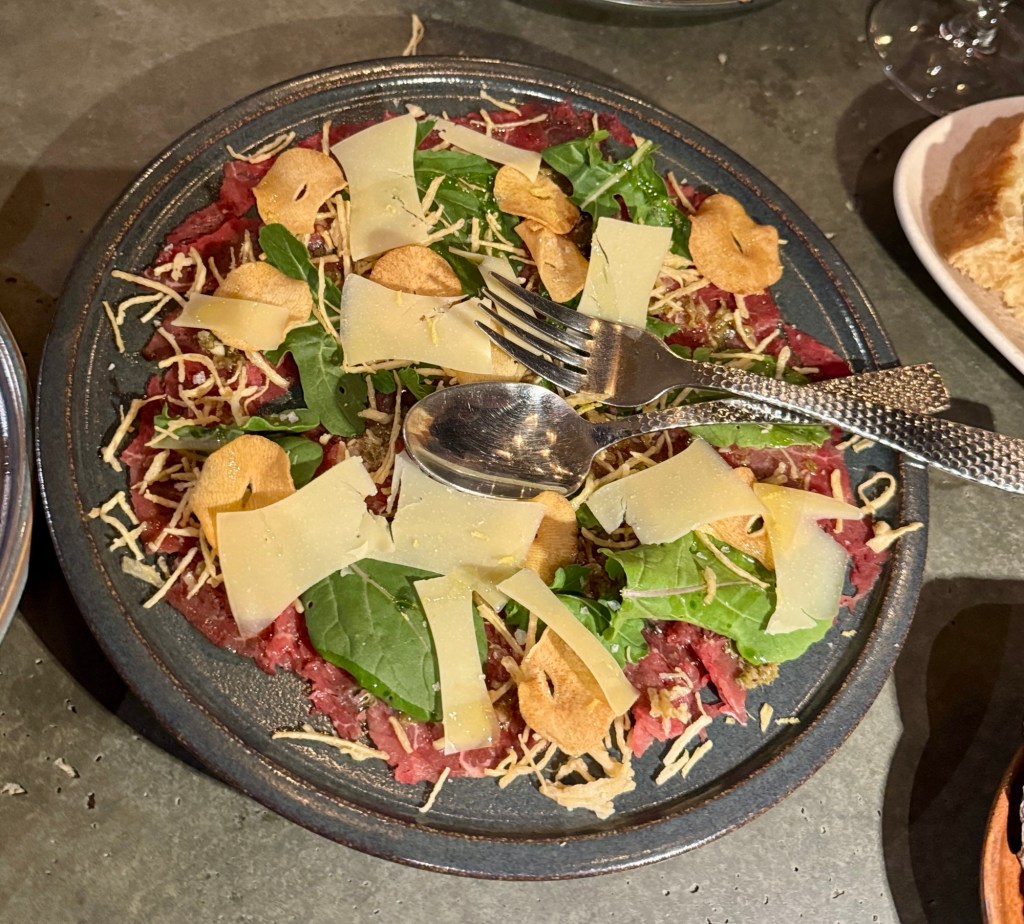
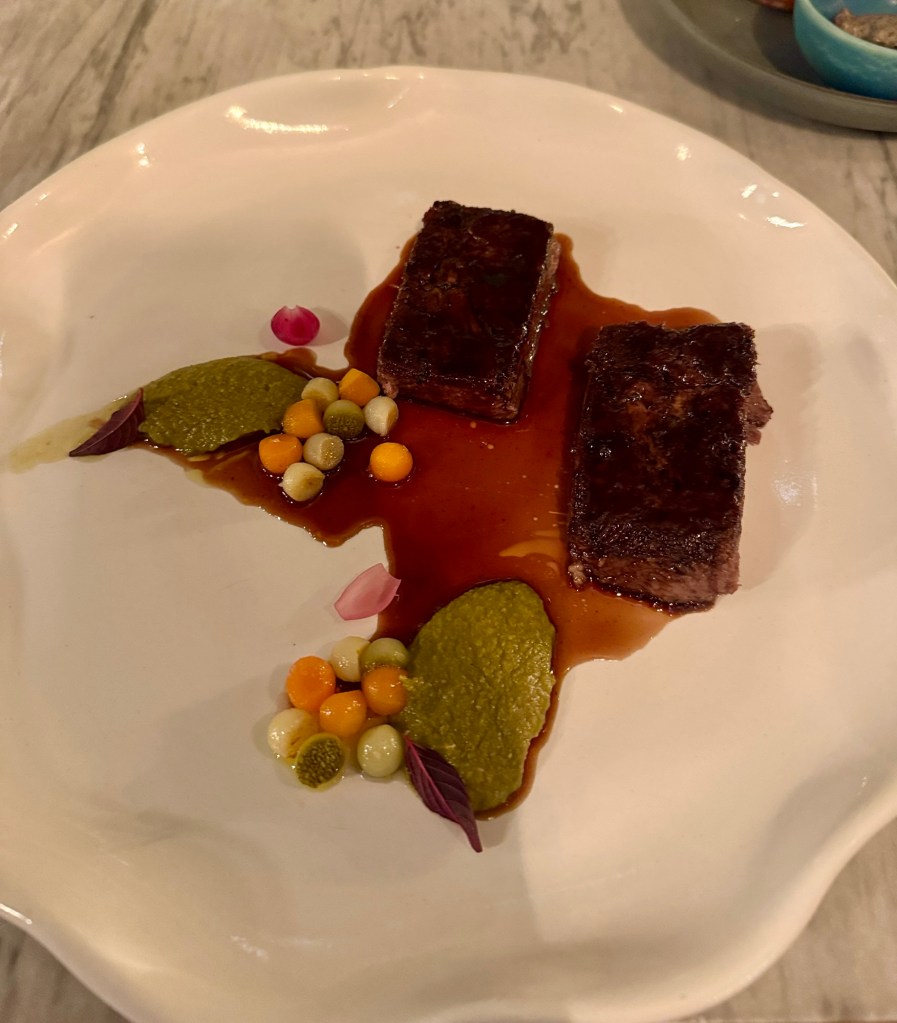
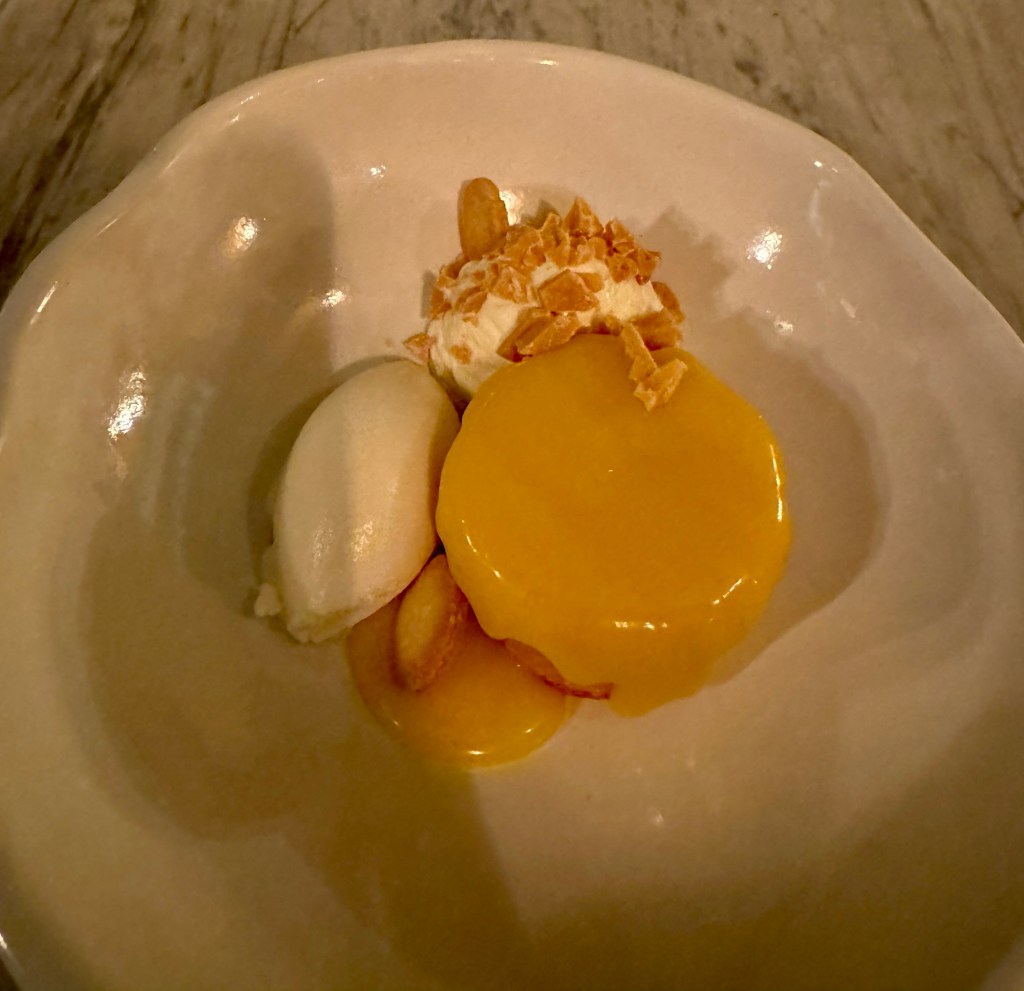
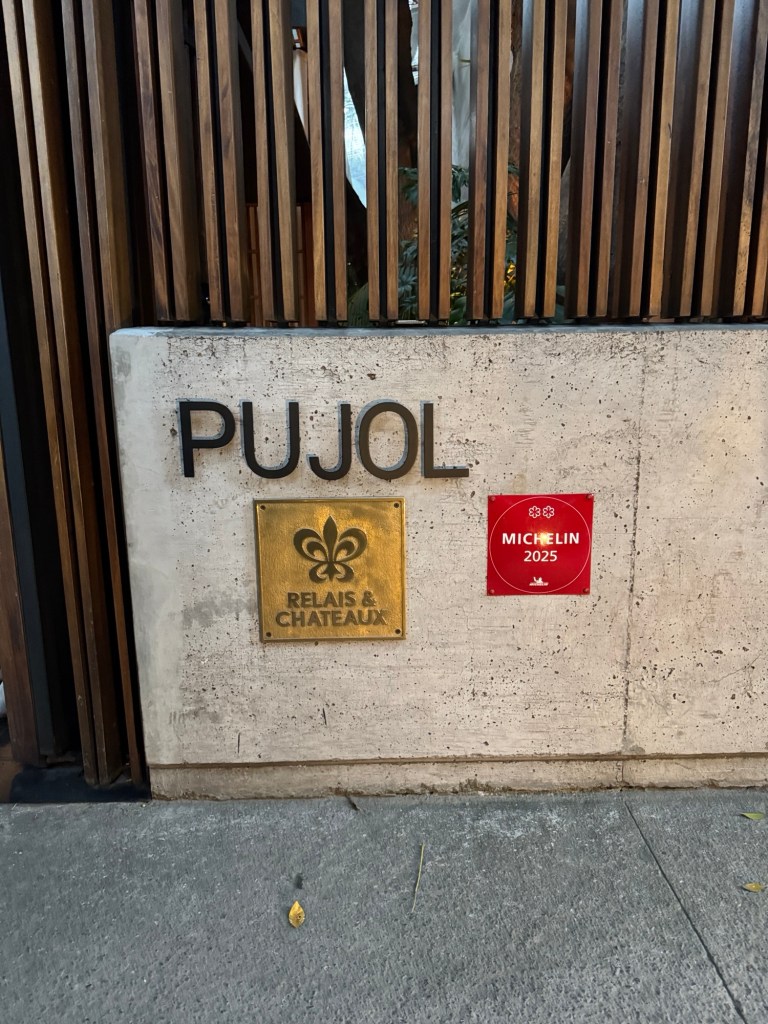
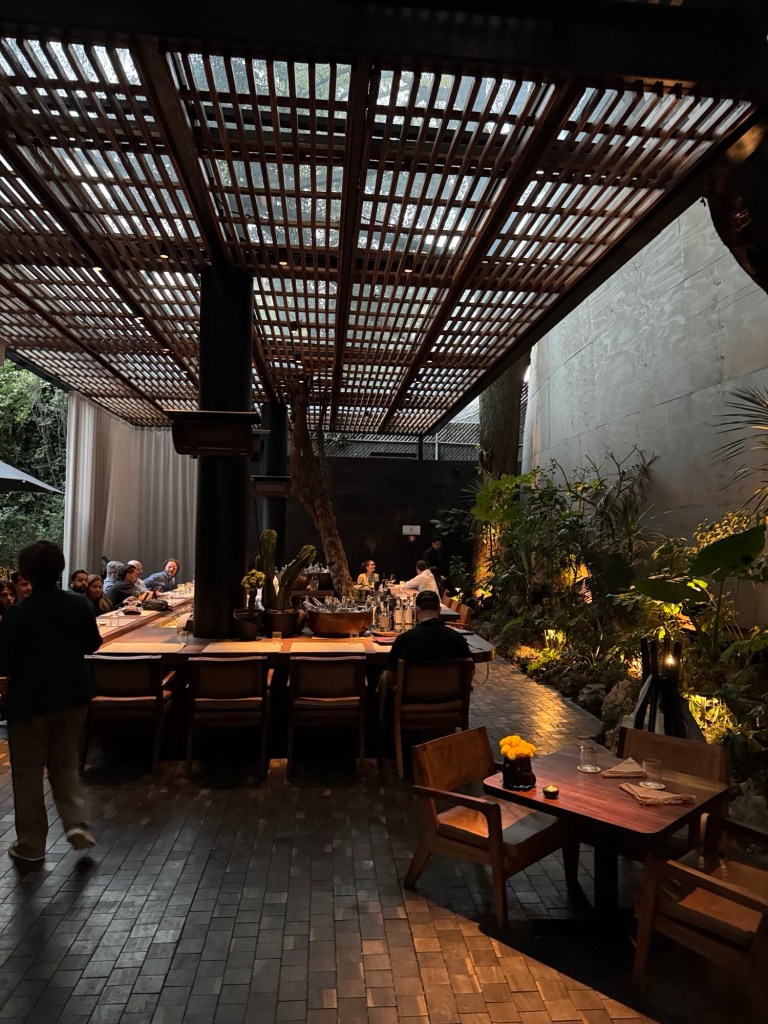
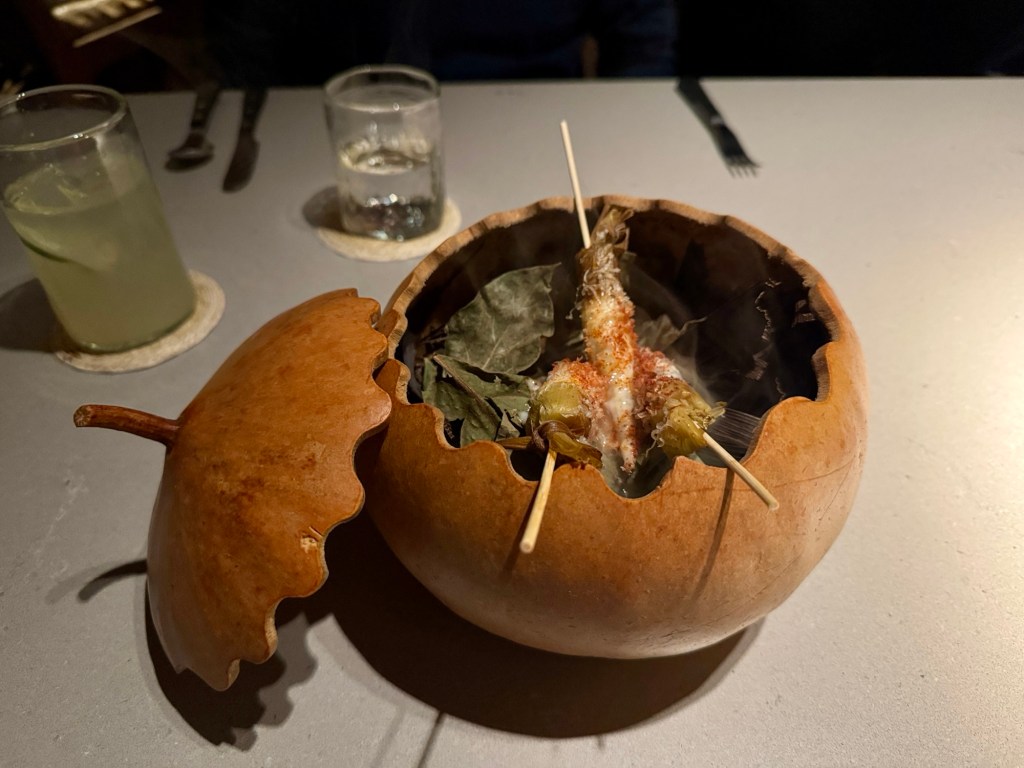
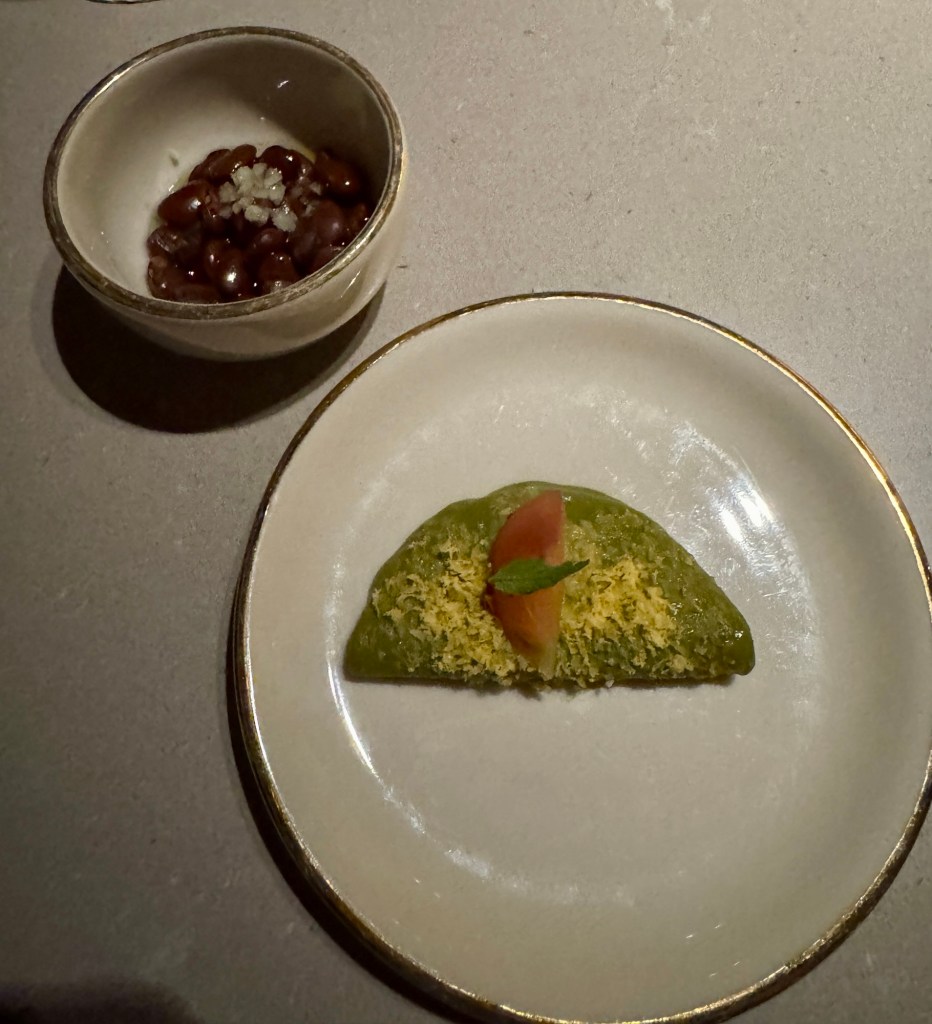
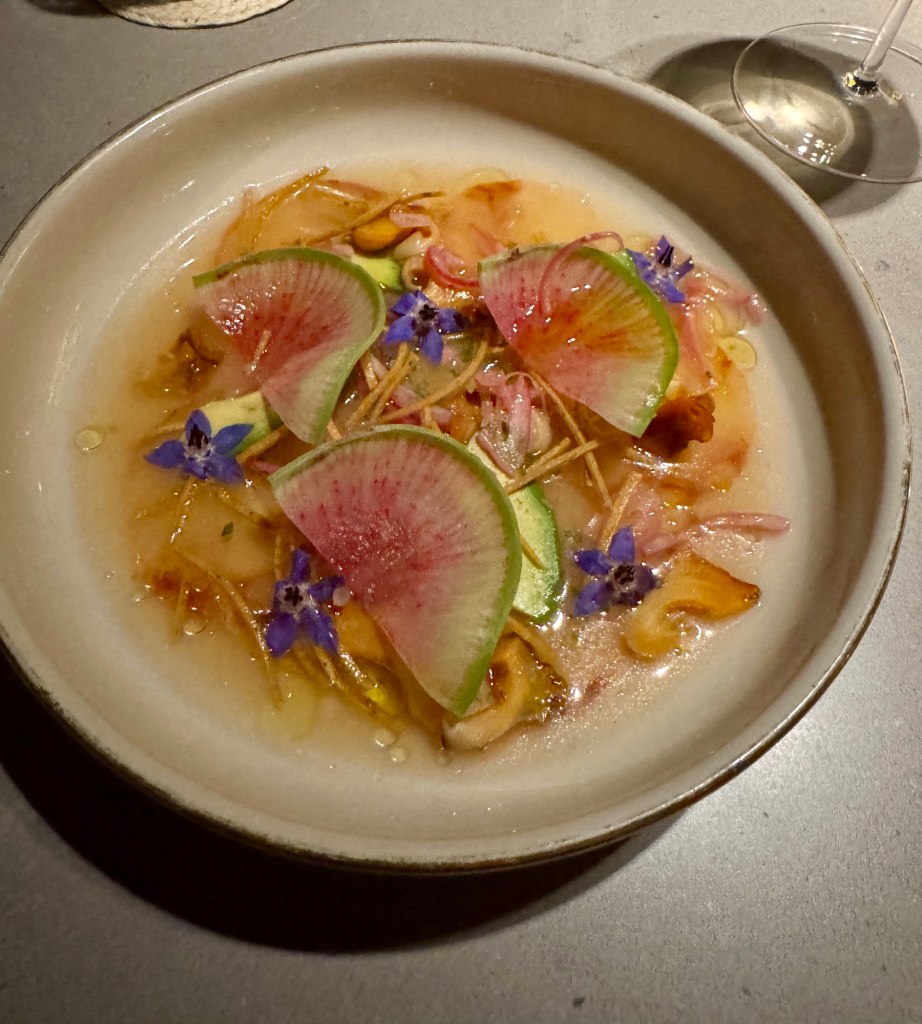
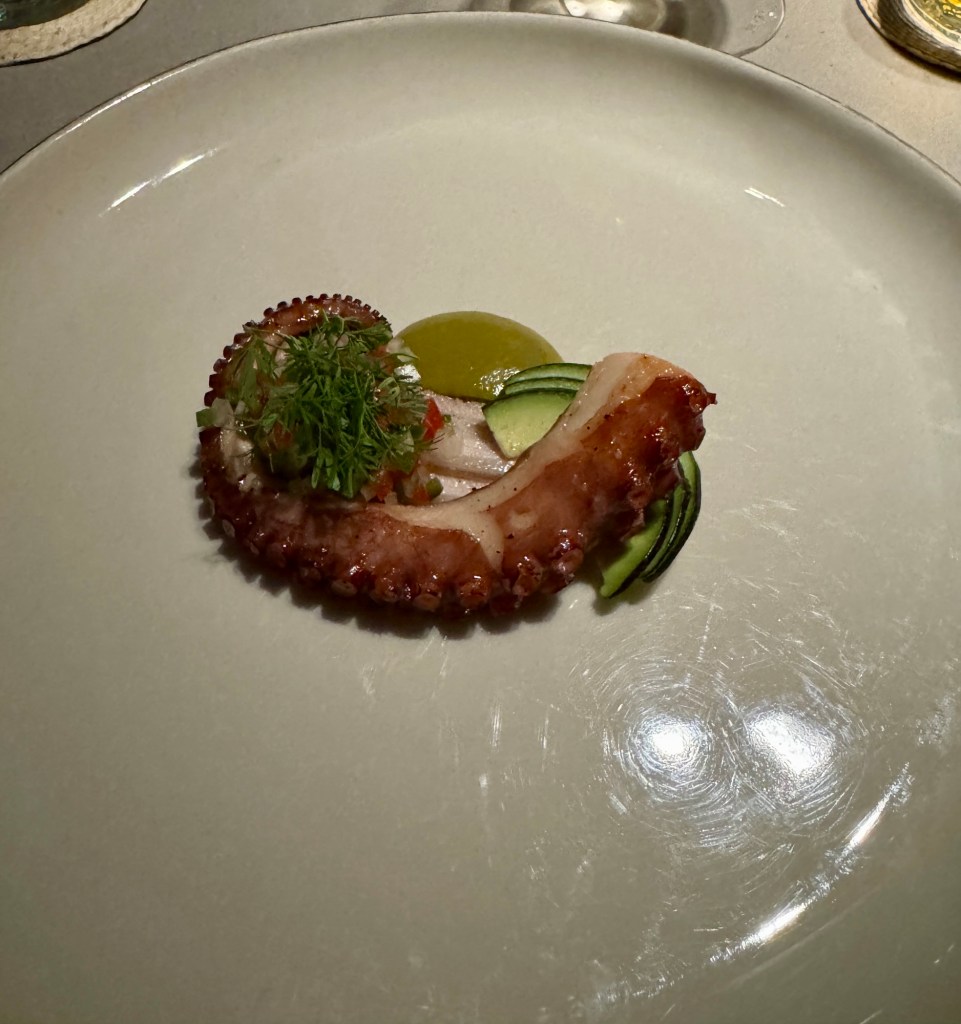
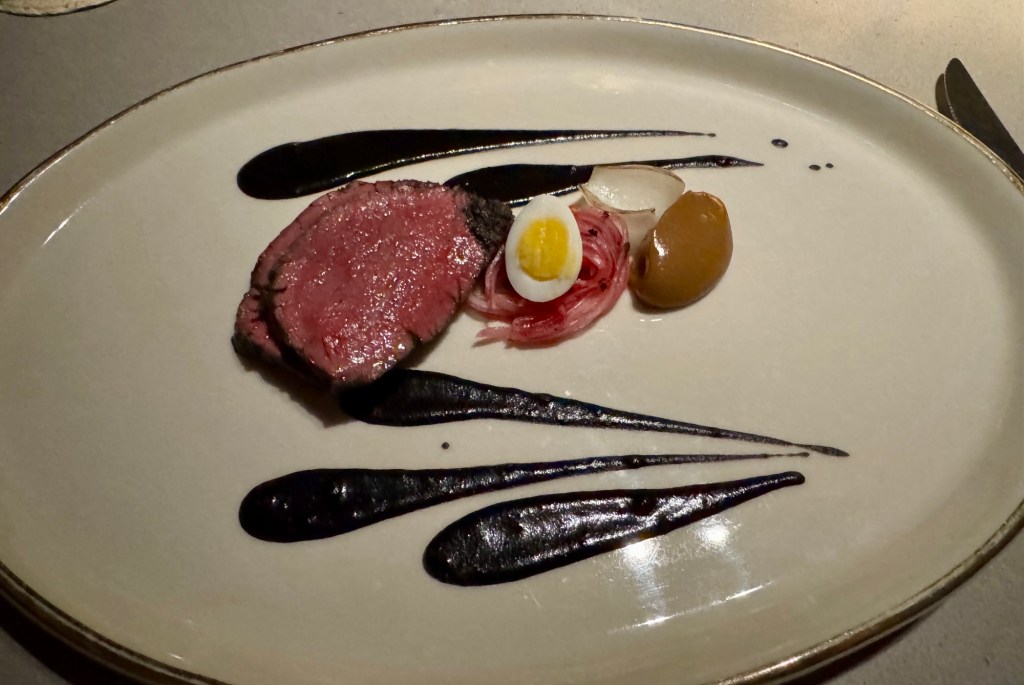
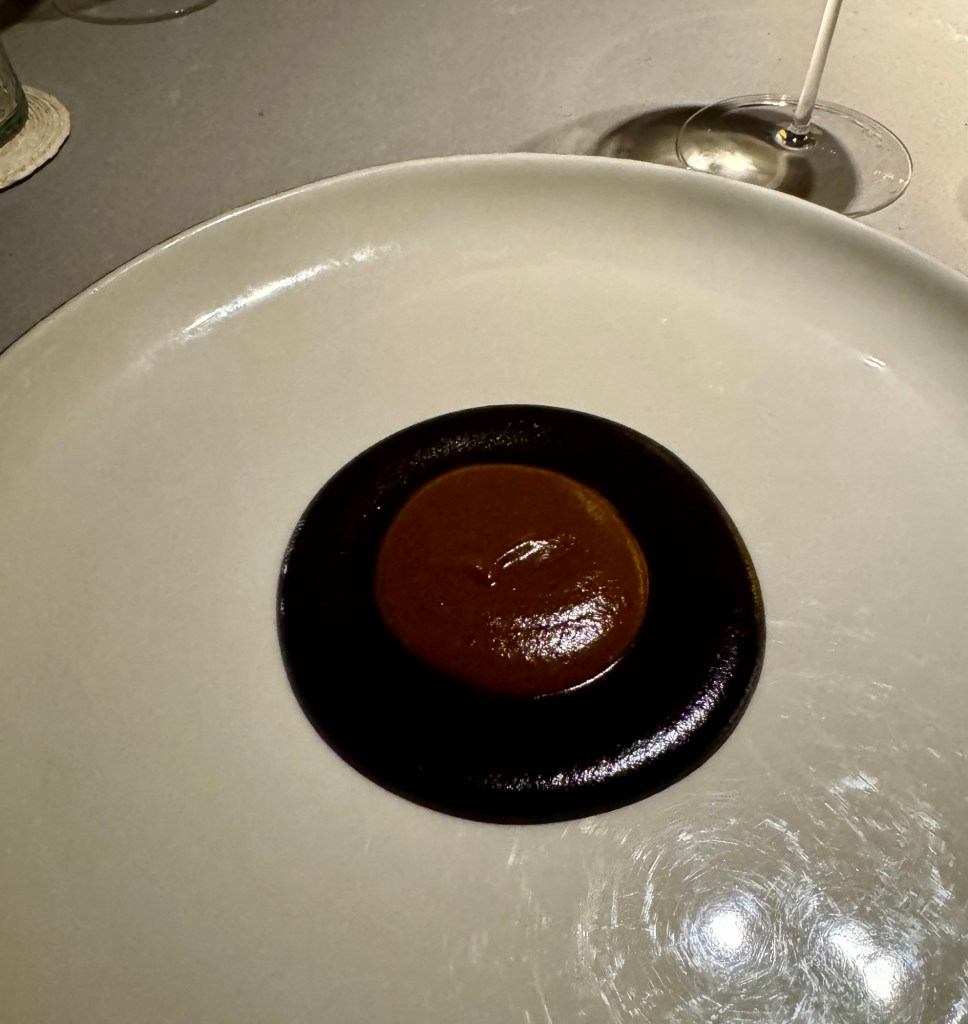
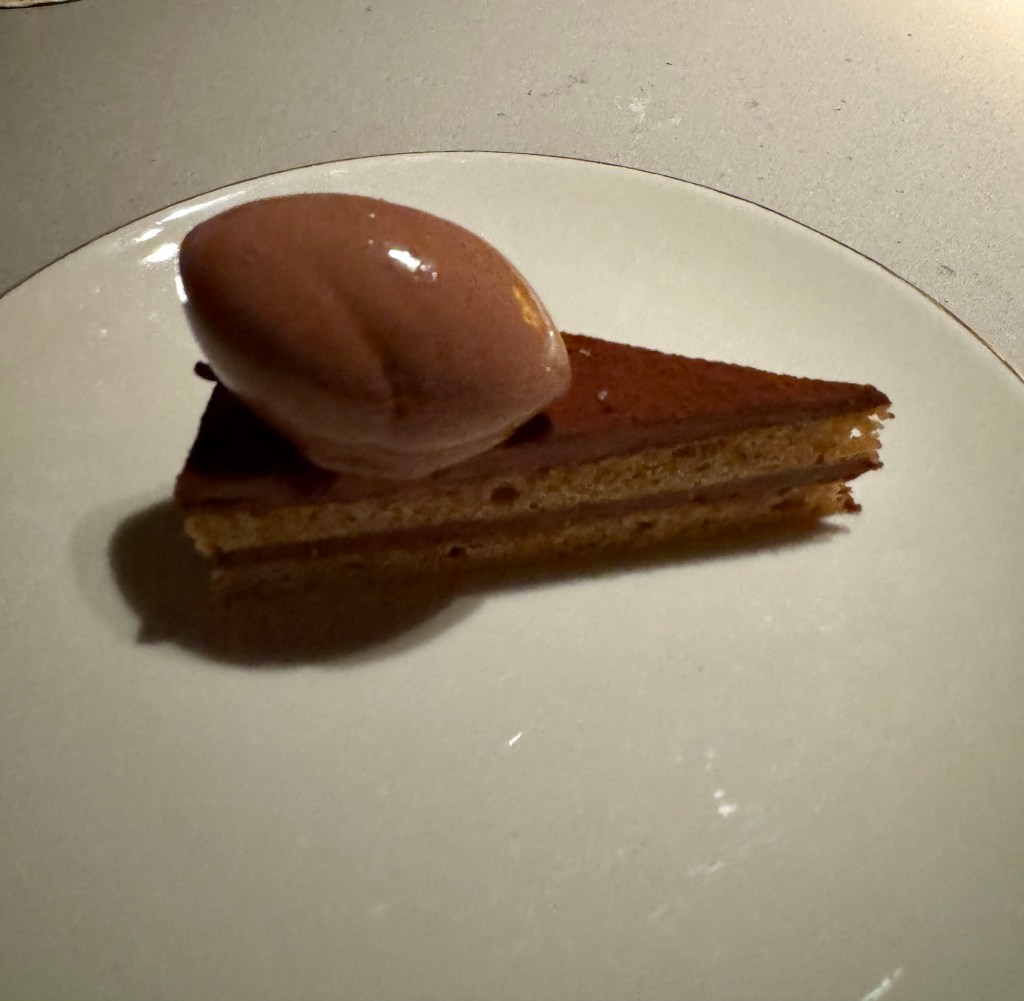
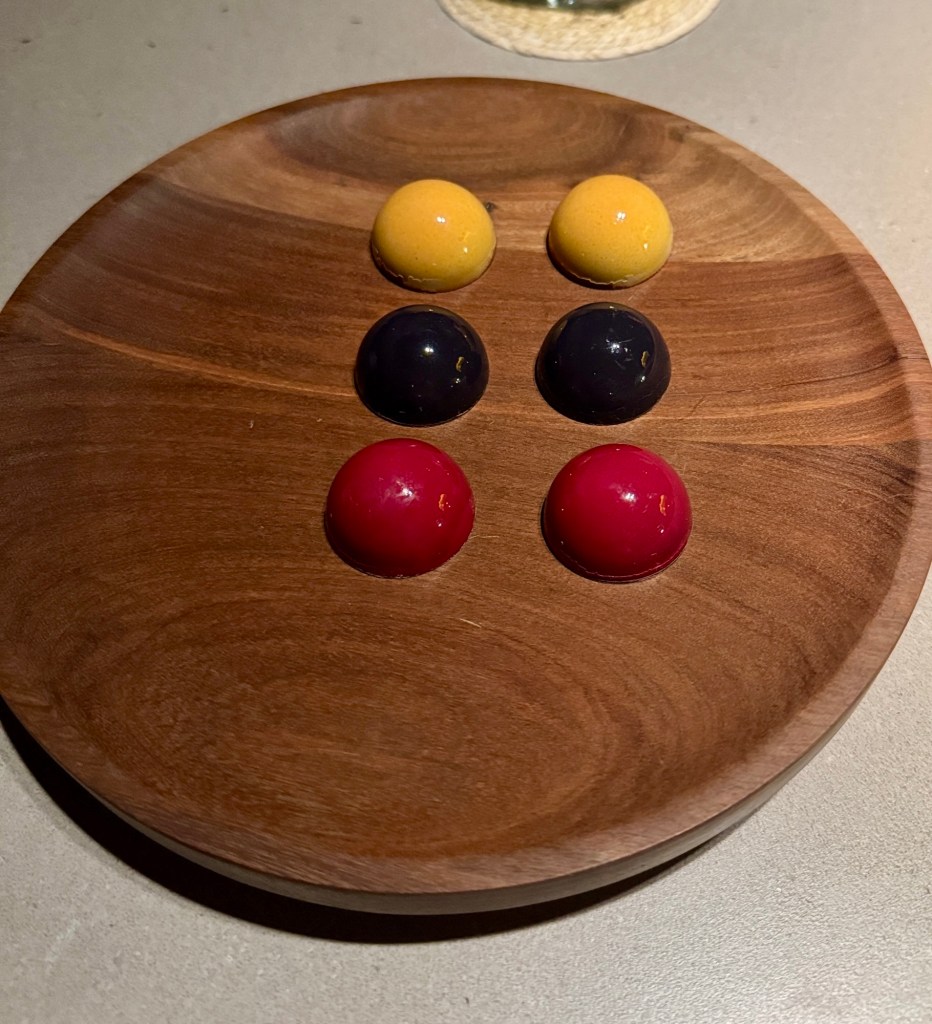
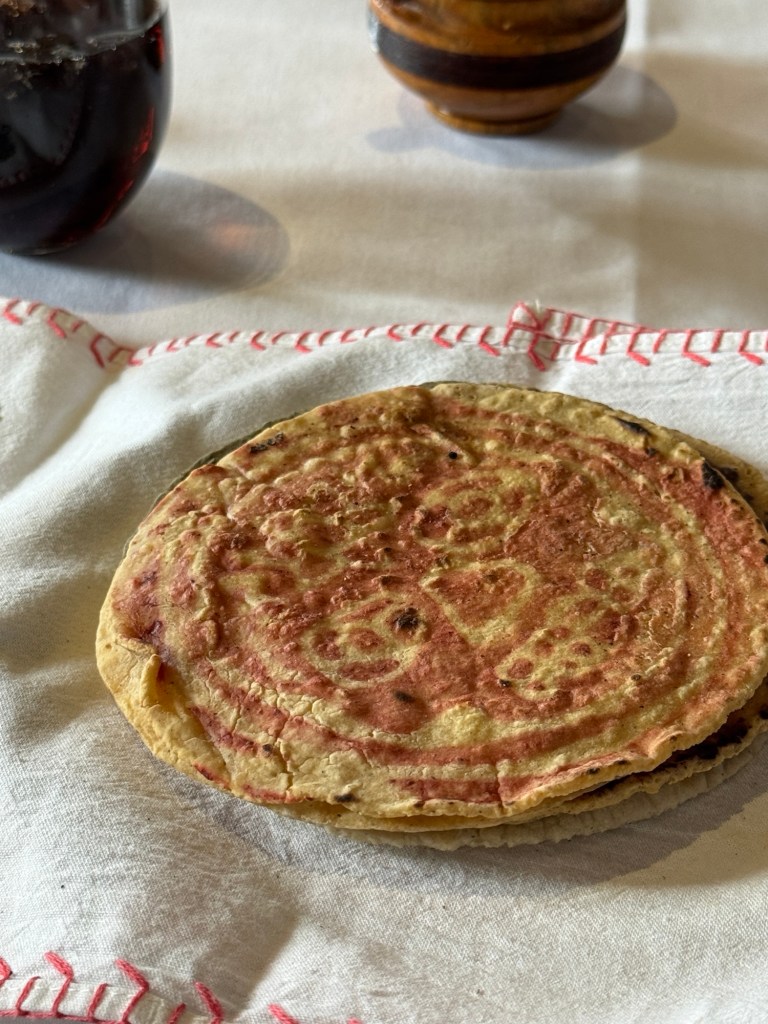
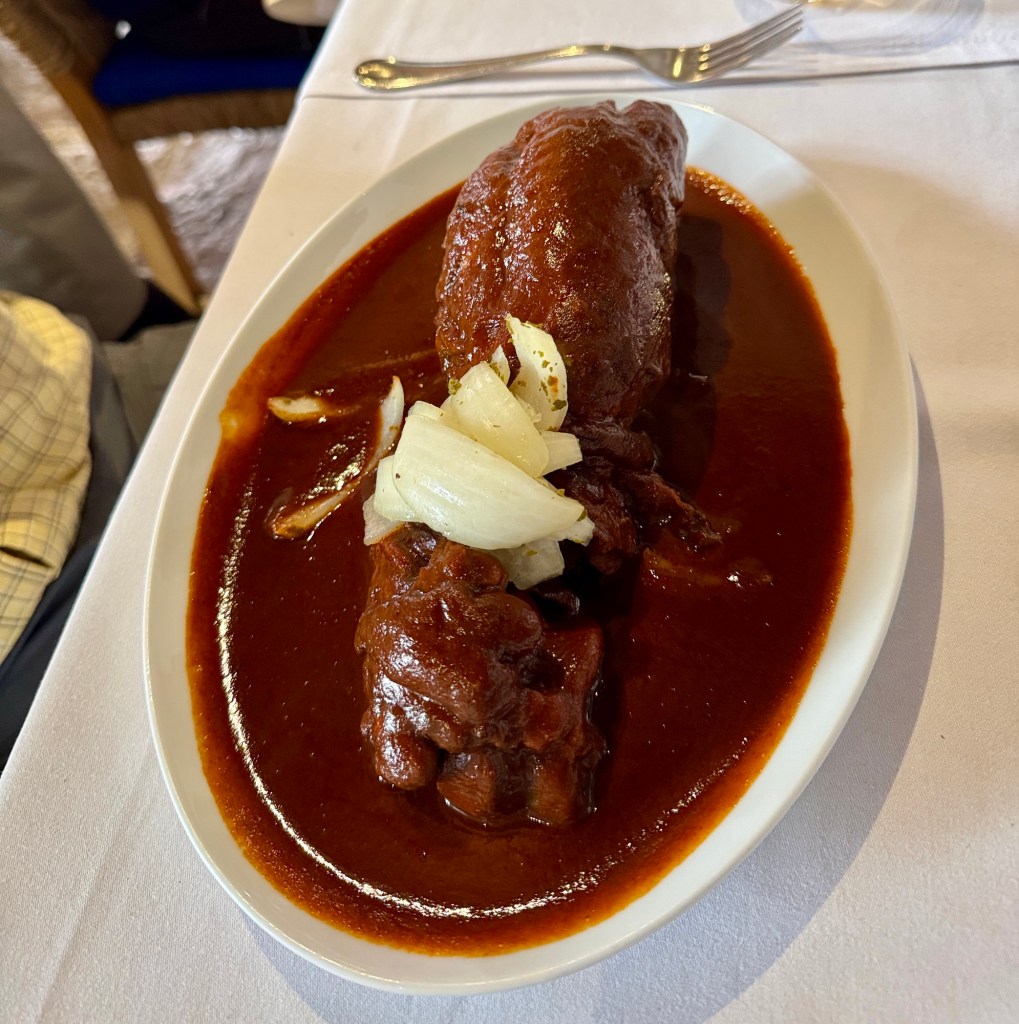
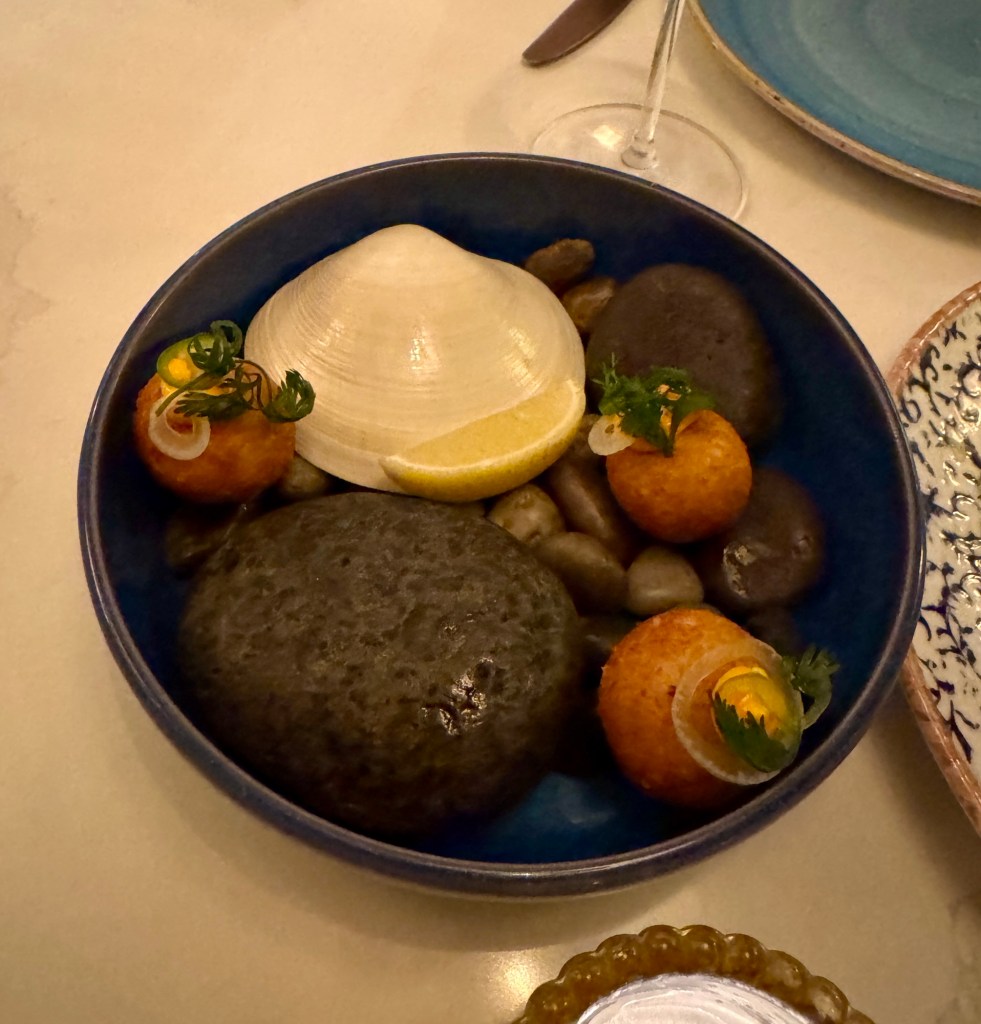
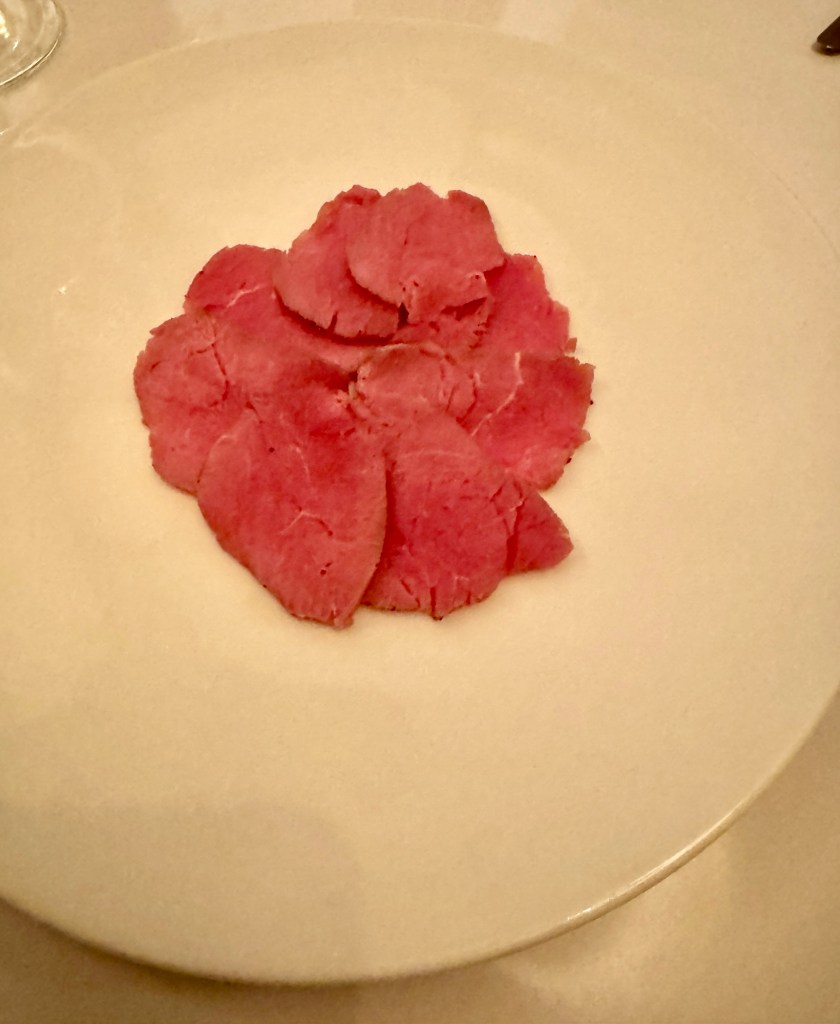
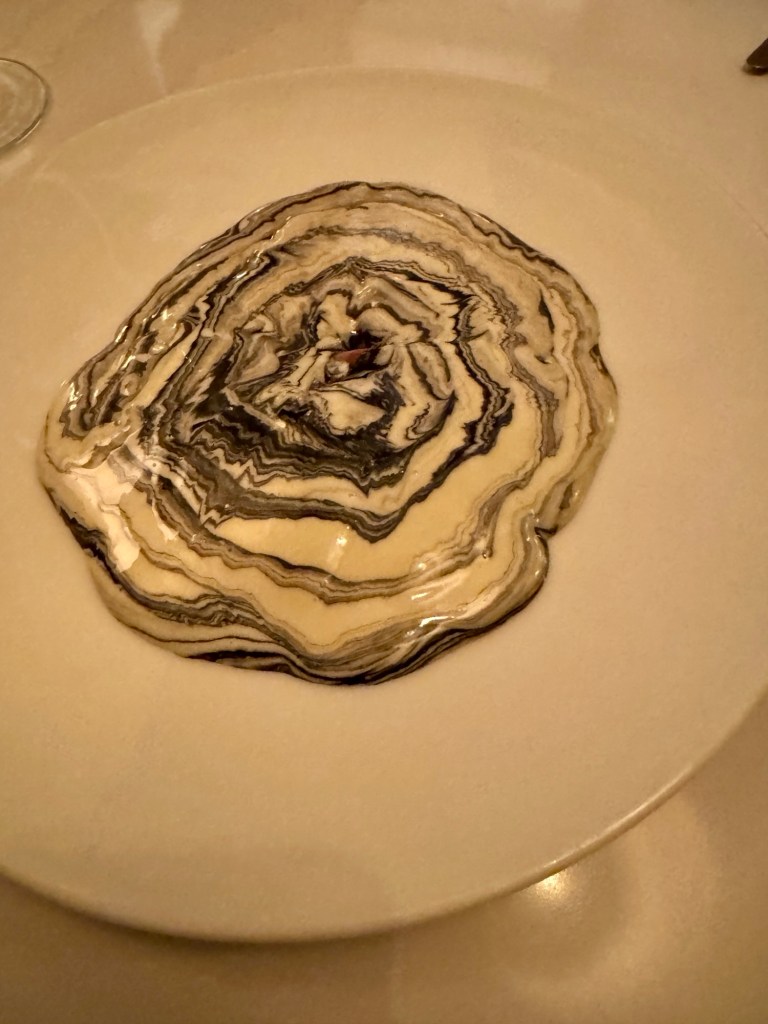
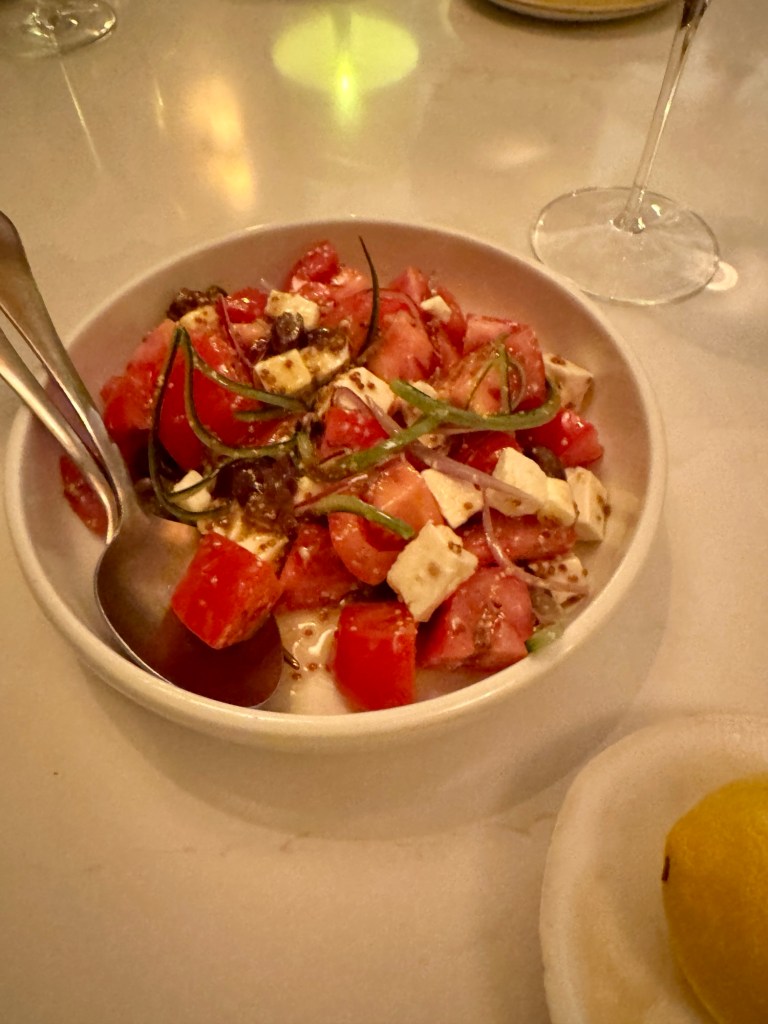
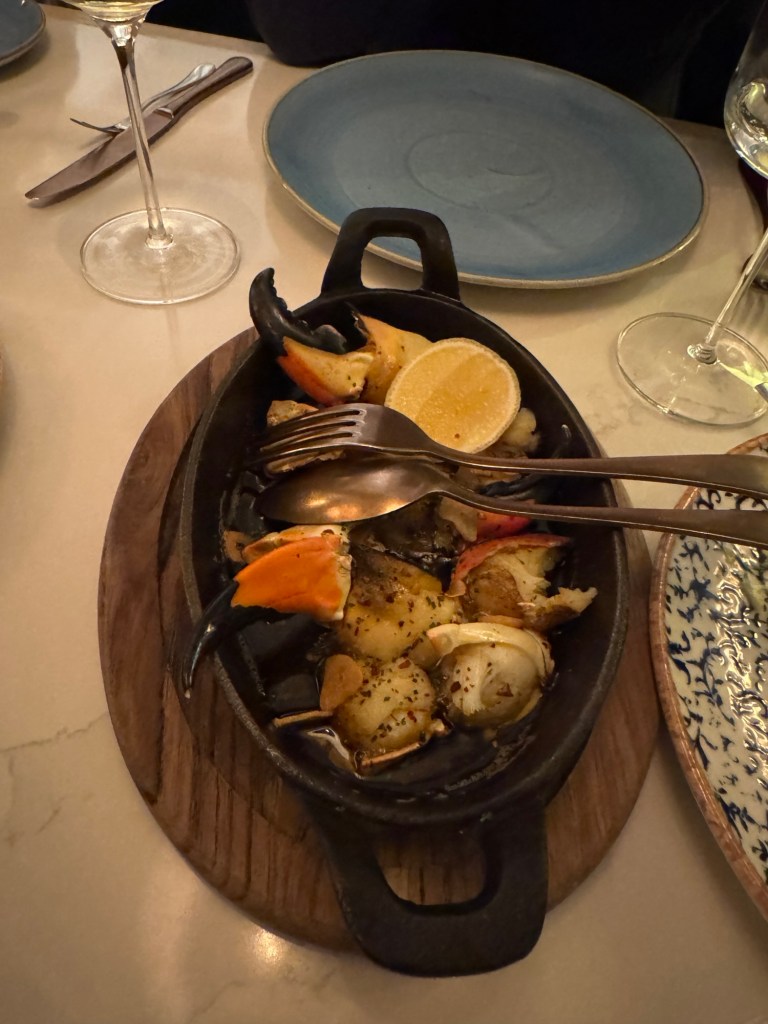
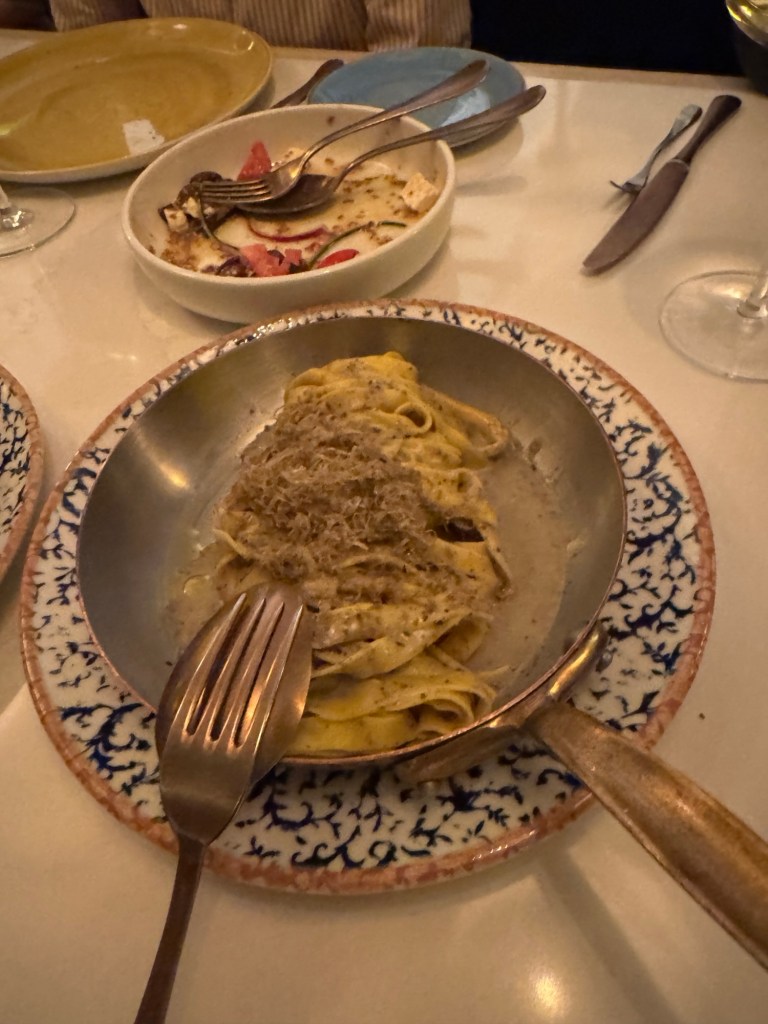
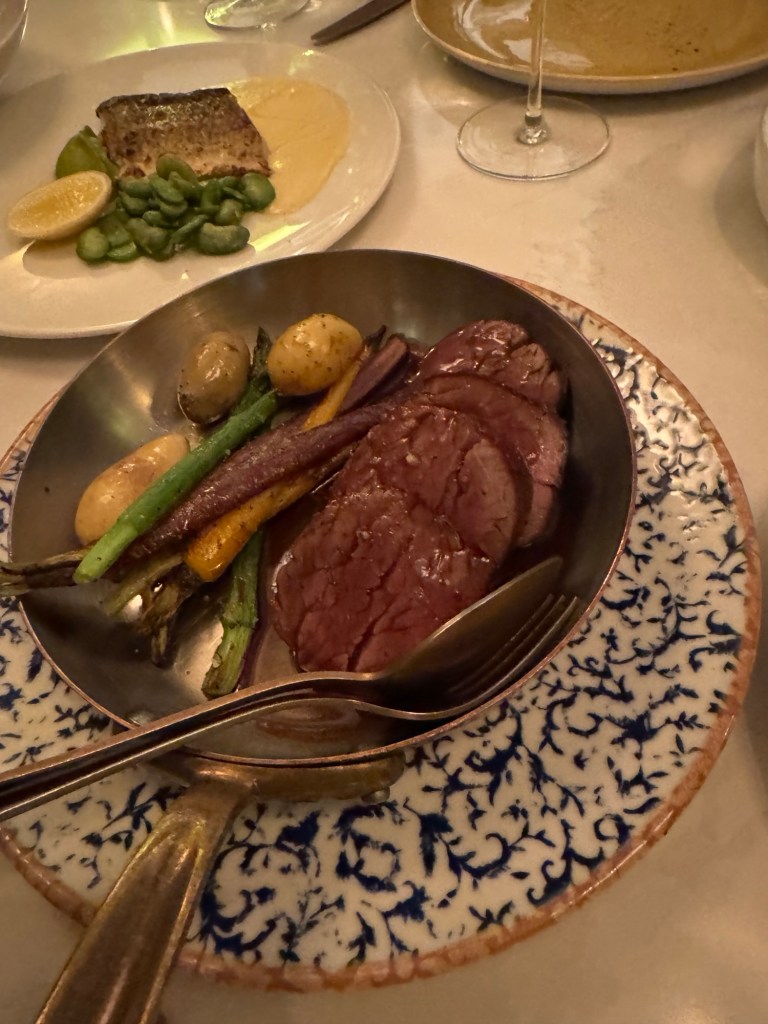
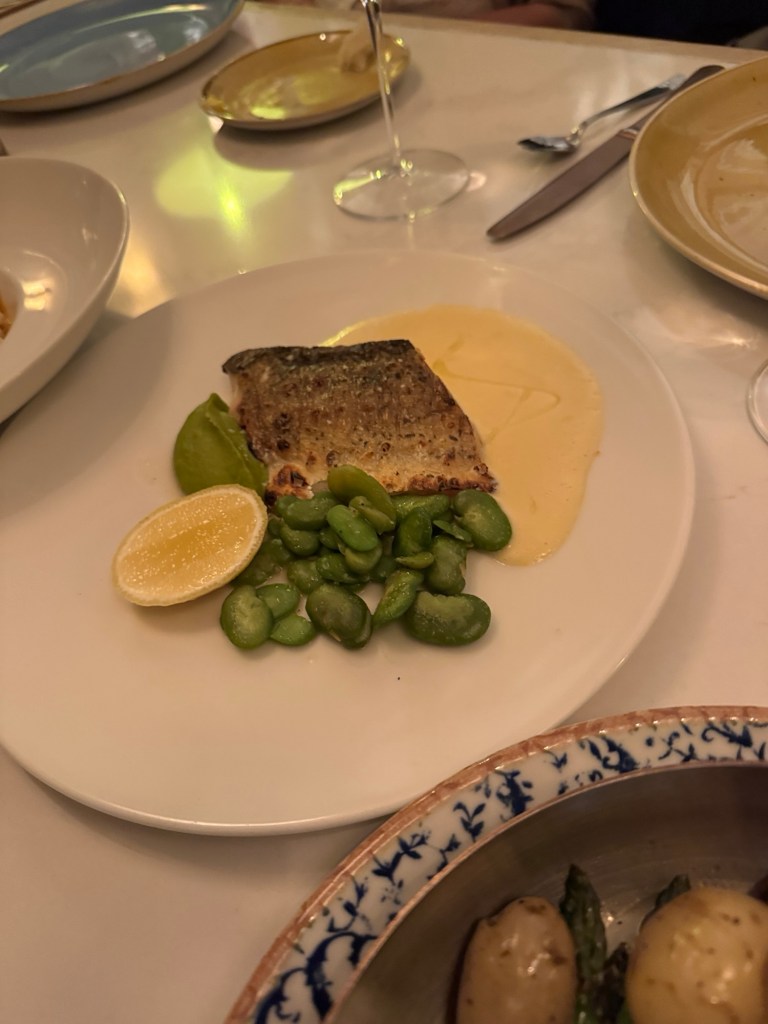
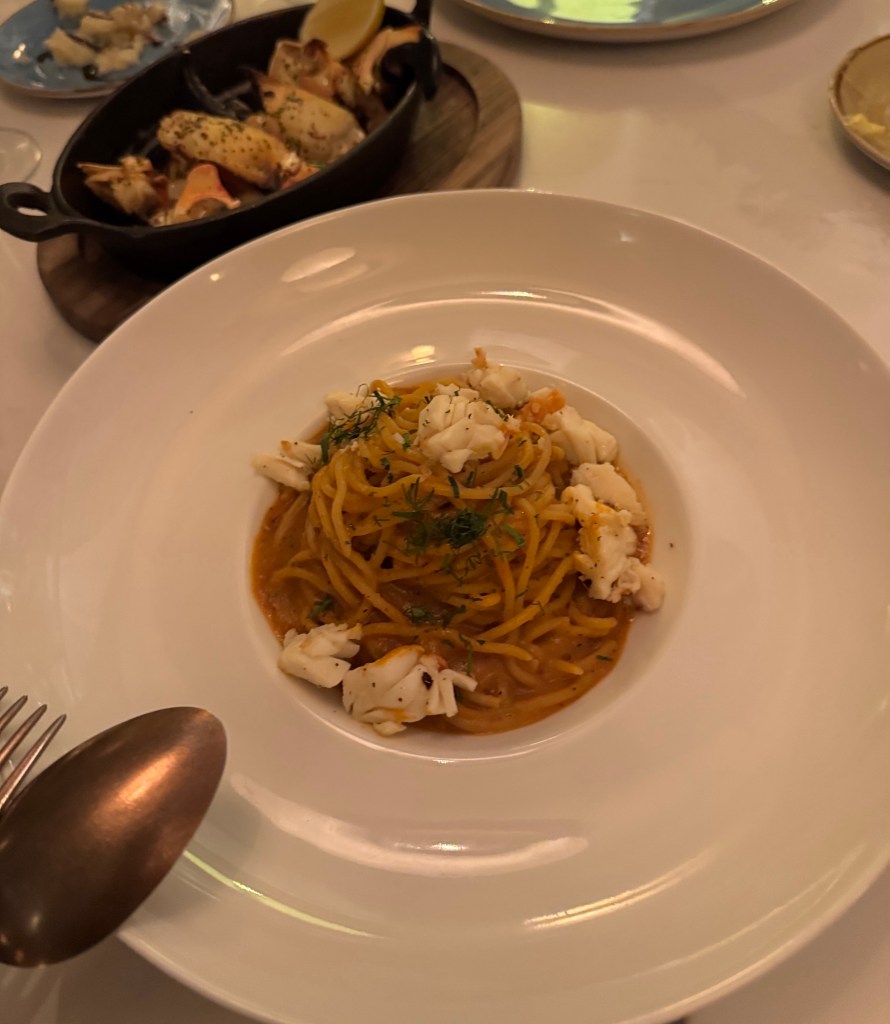
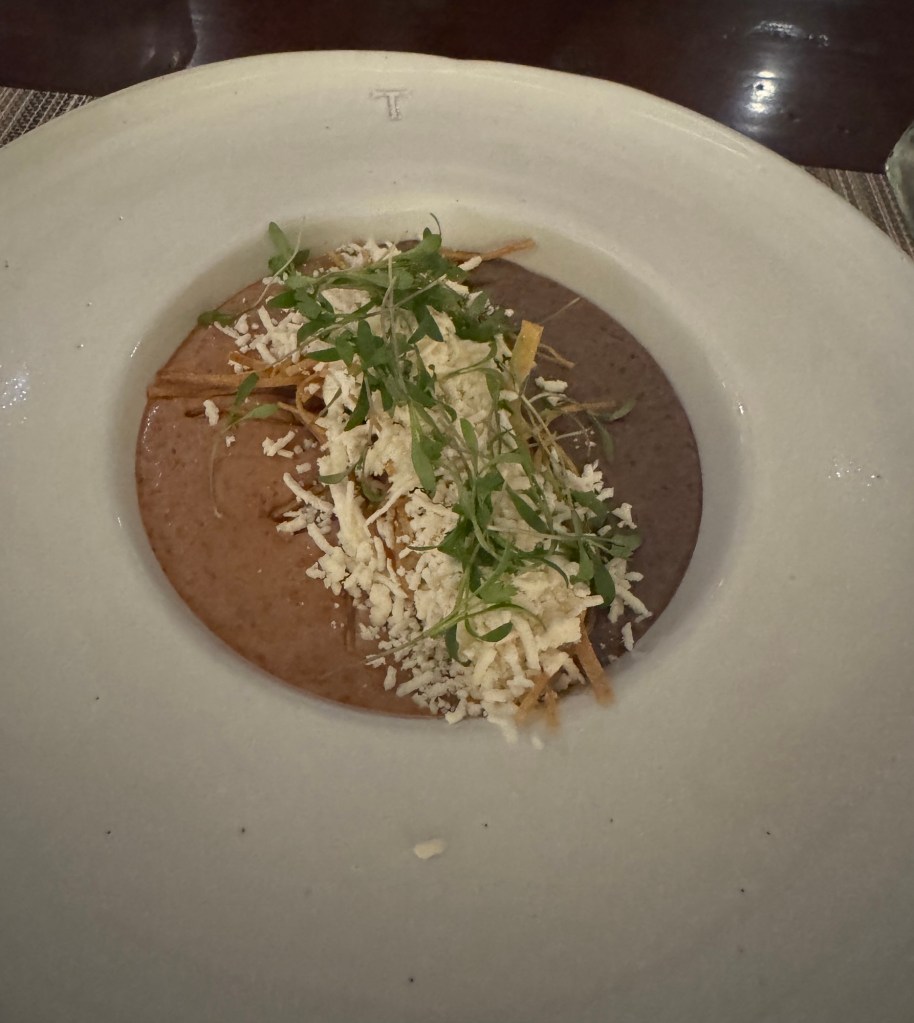
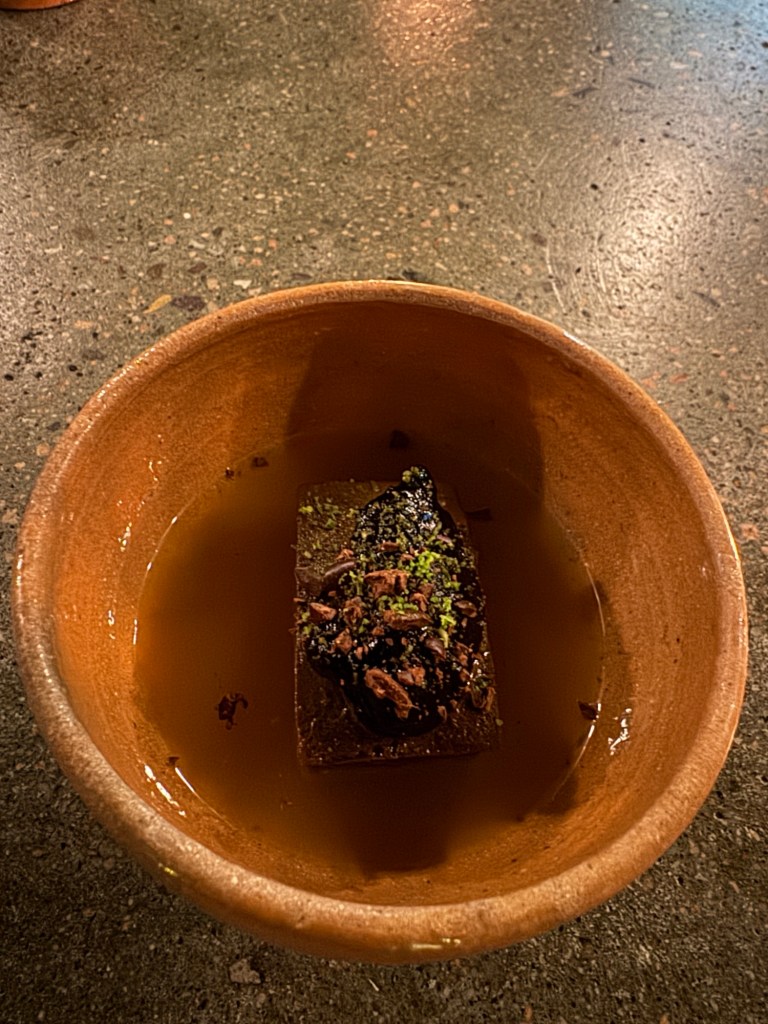
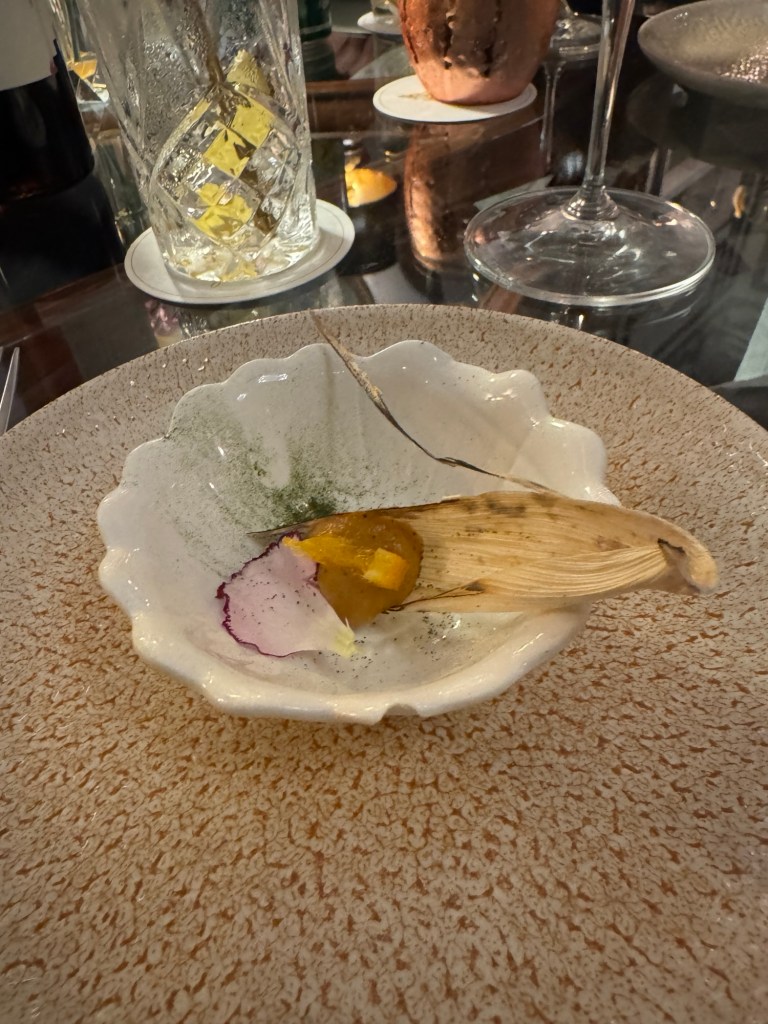
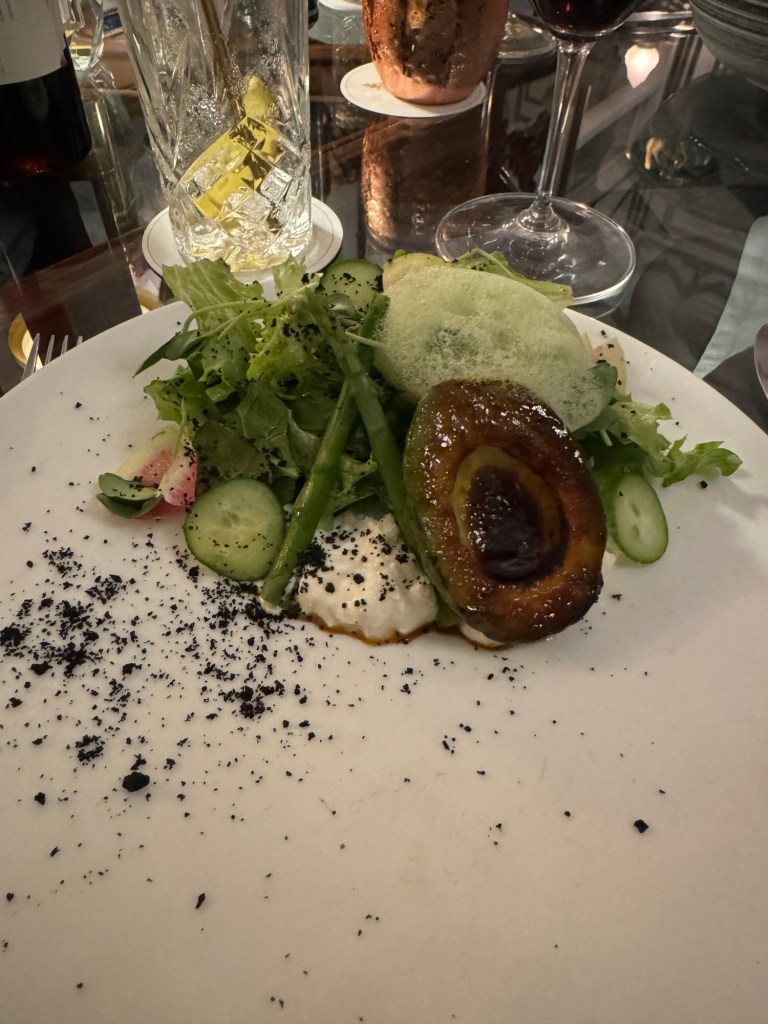
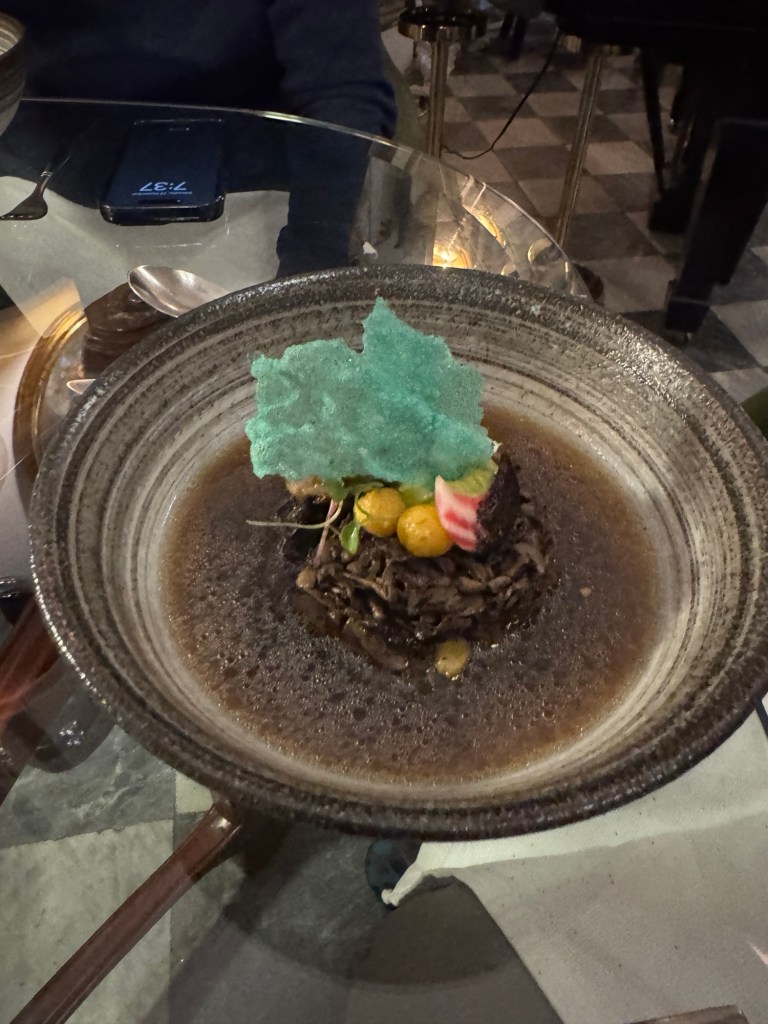
We had dinner in Pujol, a 2 star Mexican restaurant and in the World’s 50 best restaurants list. The restaurant start service in the afternoon and dinner from 6-9 and after 9, so three shifts! Food is good and we believe we had the best Mole here but still no one likes it!
Even the best mole is not appealing to us
Day 6 November 16 Sunday
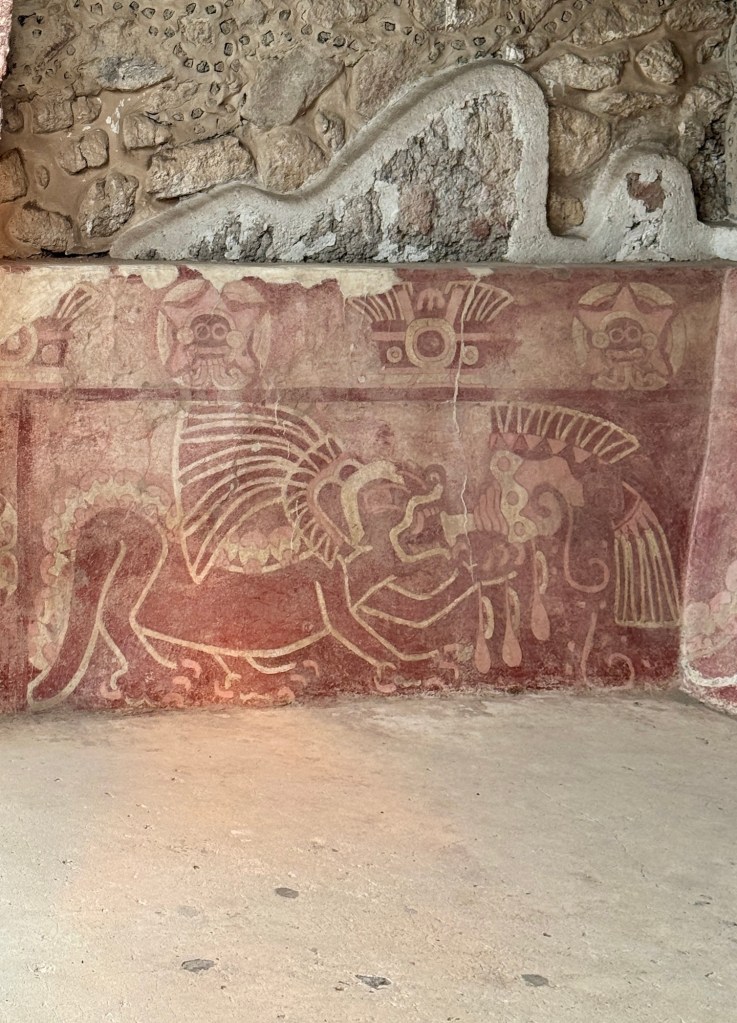
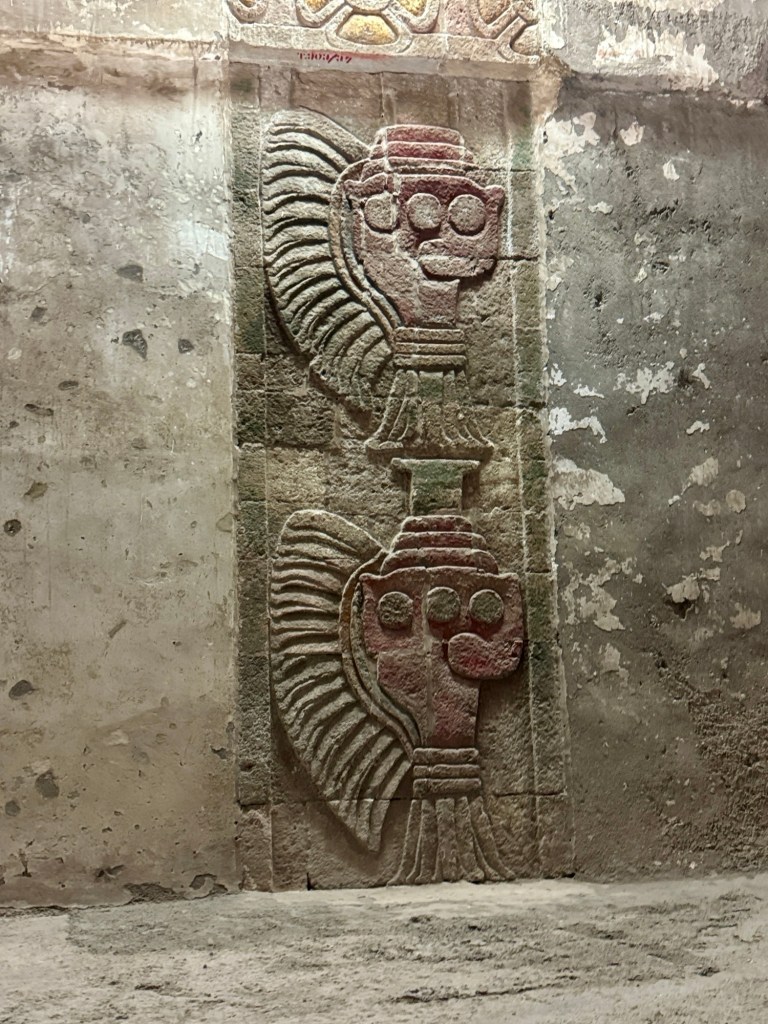
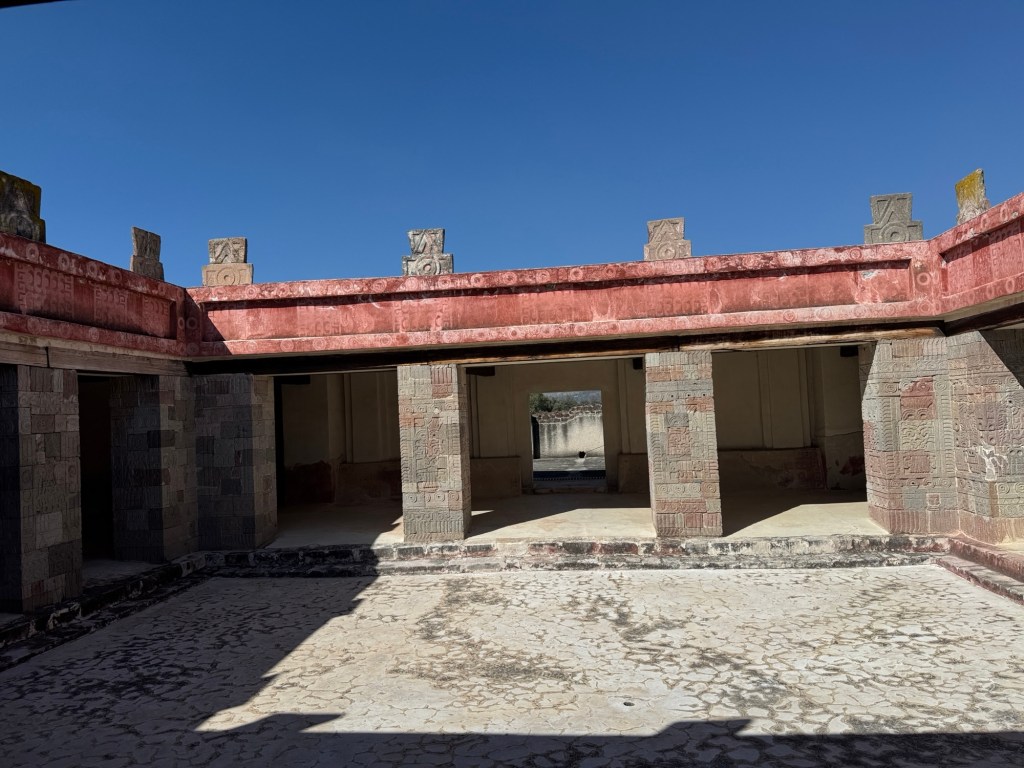
We went back to Teotihuacan to see the pyramids. First we saw some murals in the Jaguar Palace, awesome.
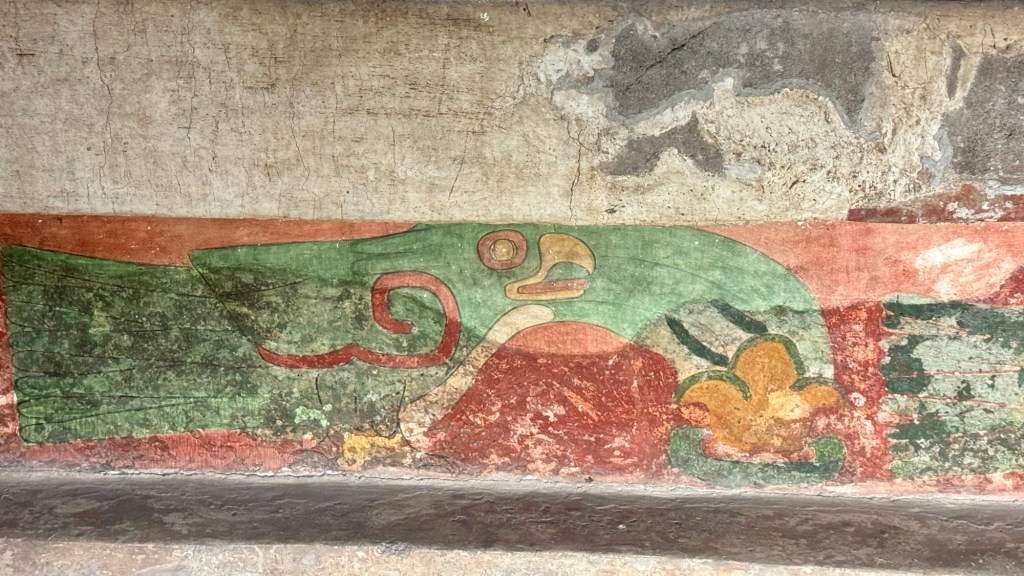
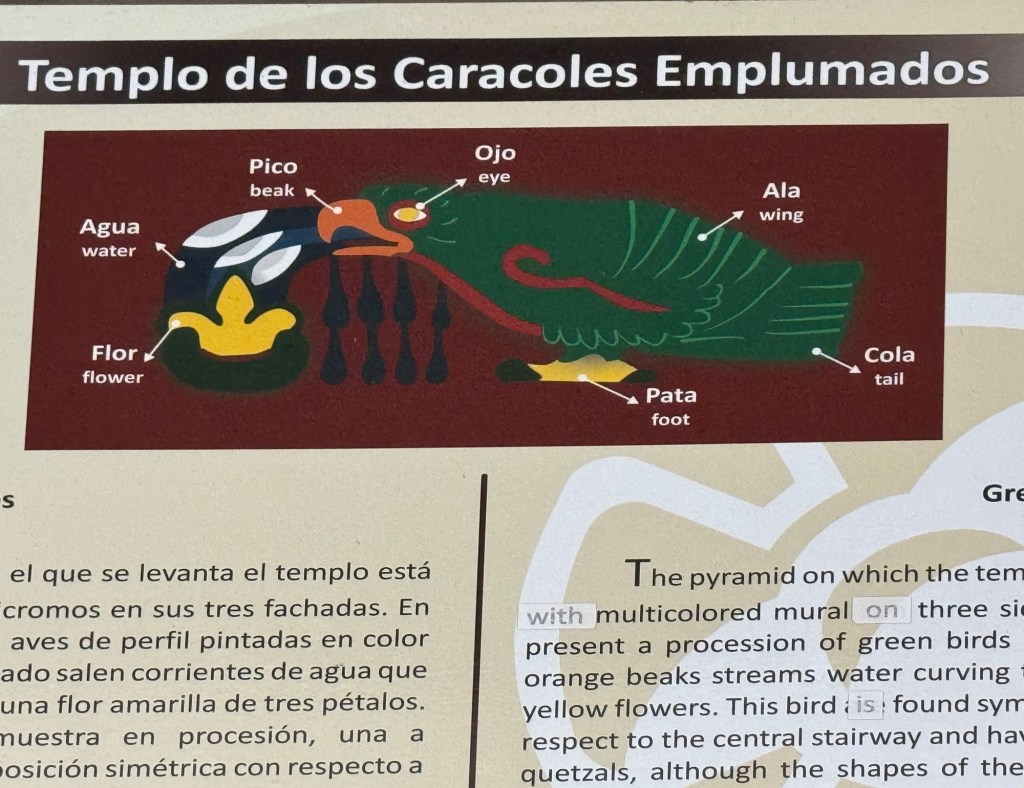
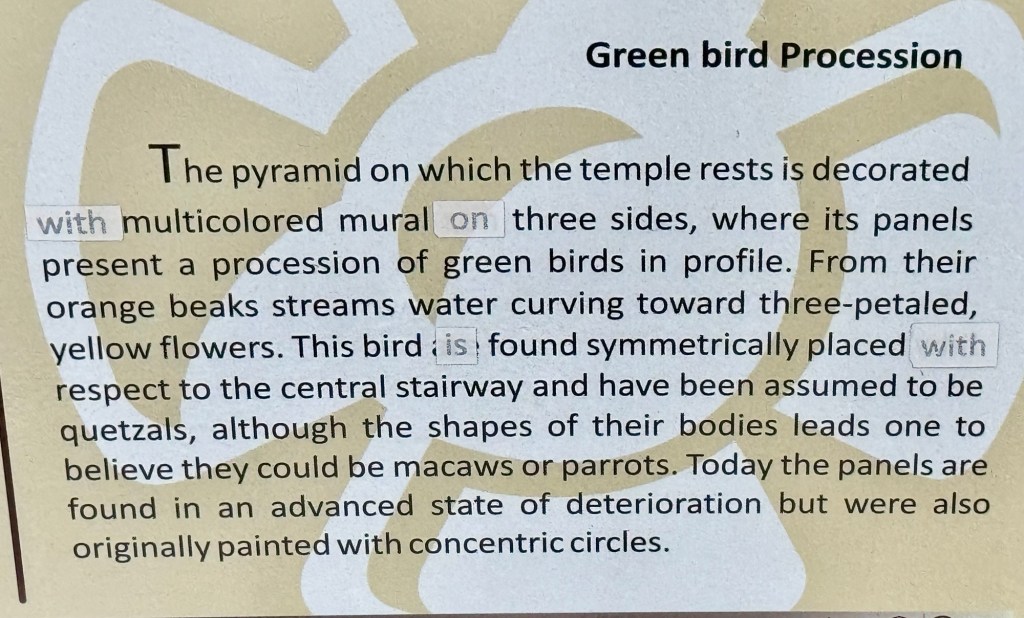
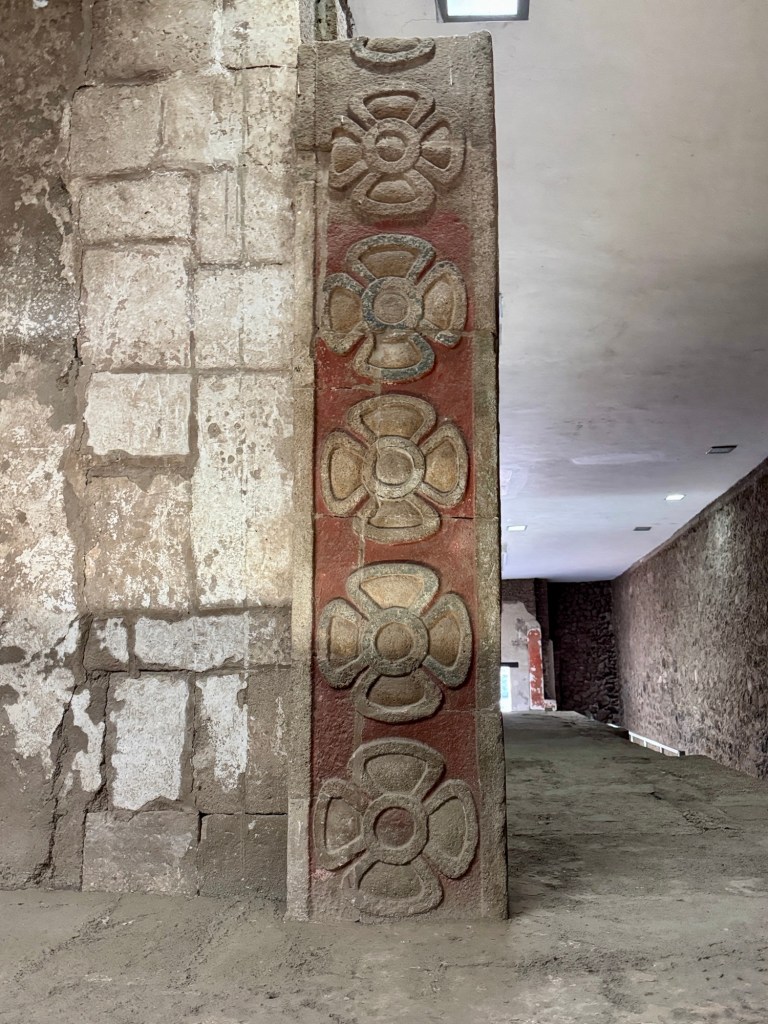
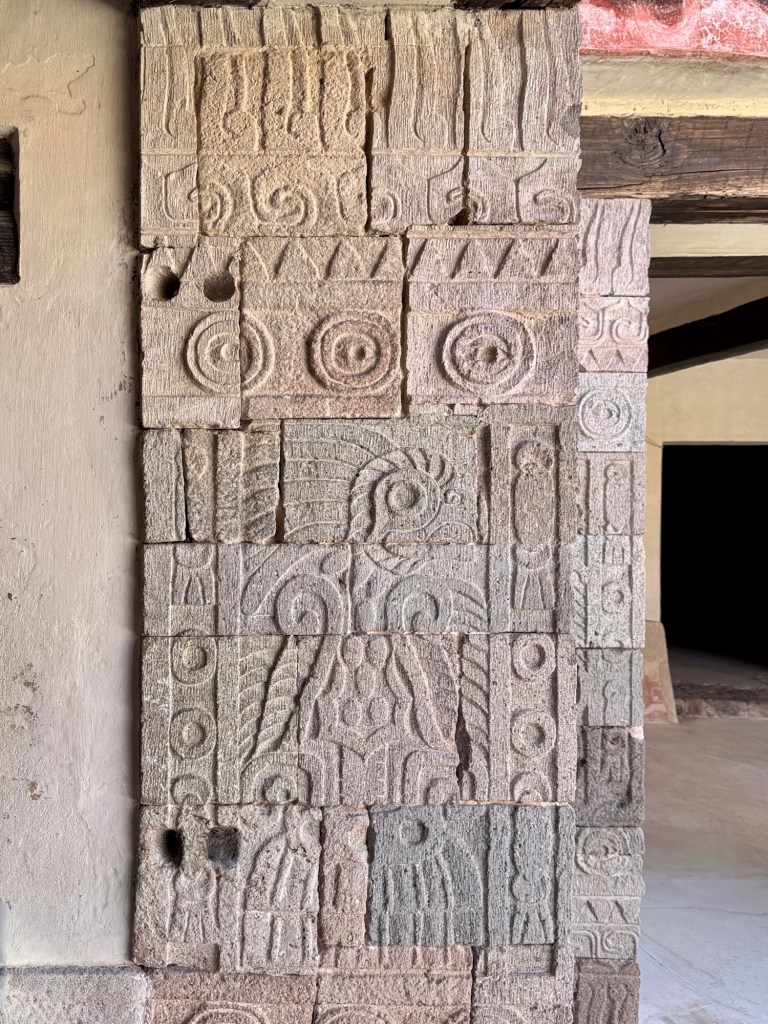
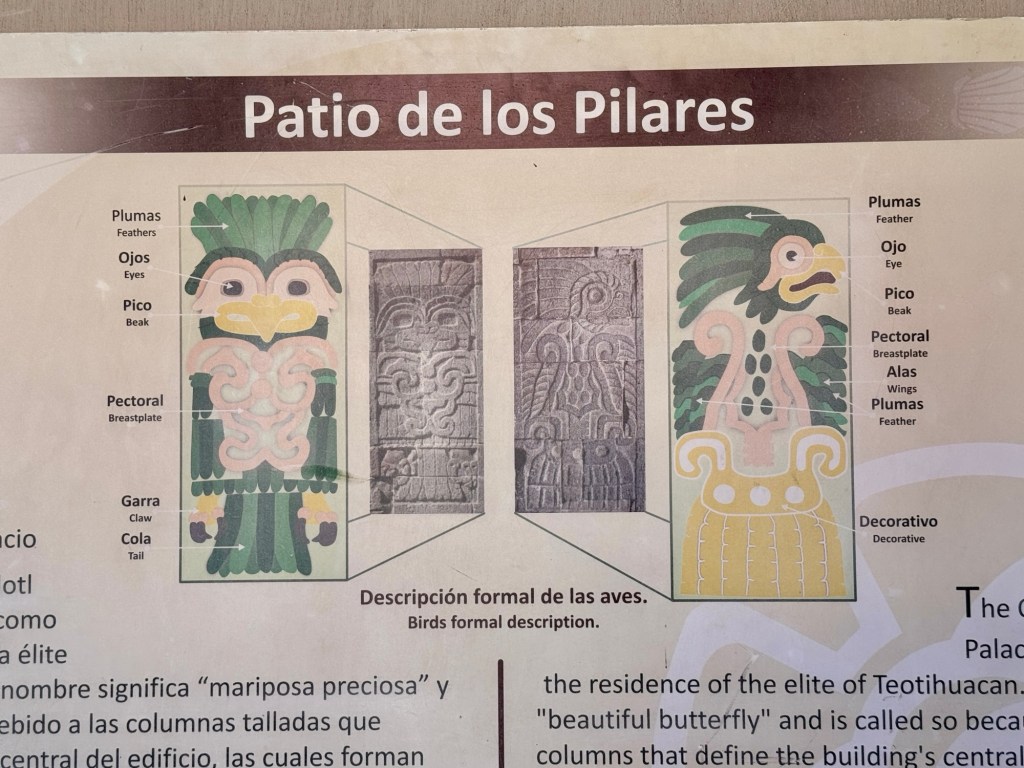
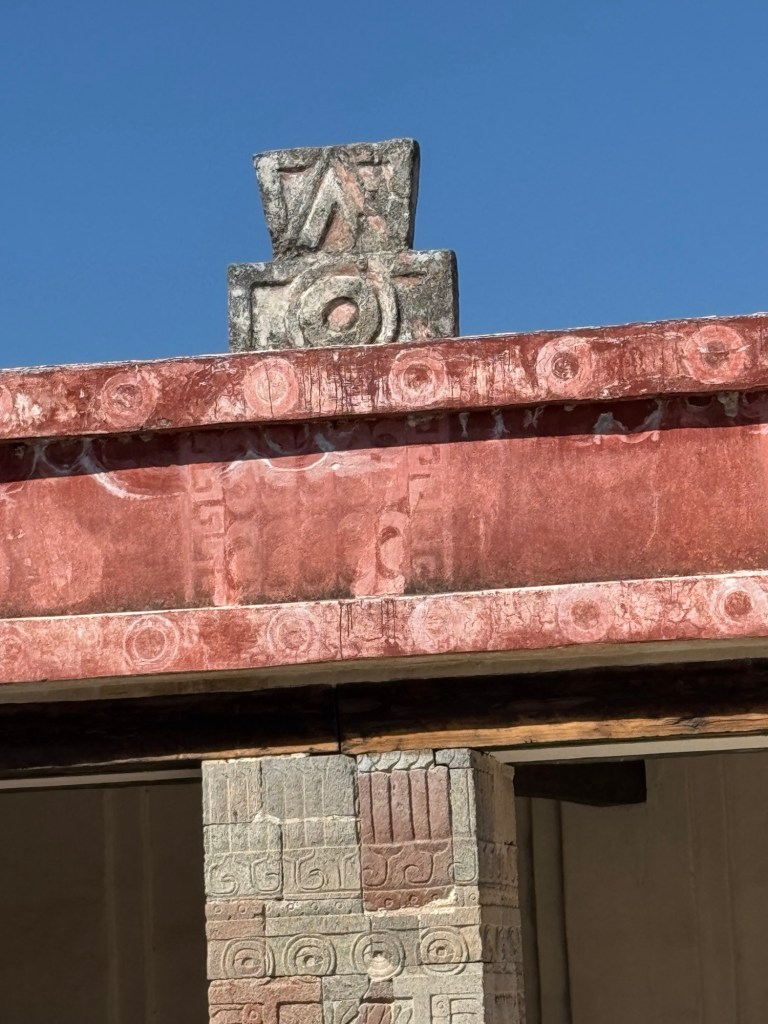
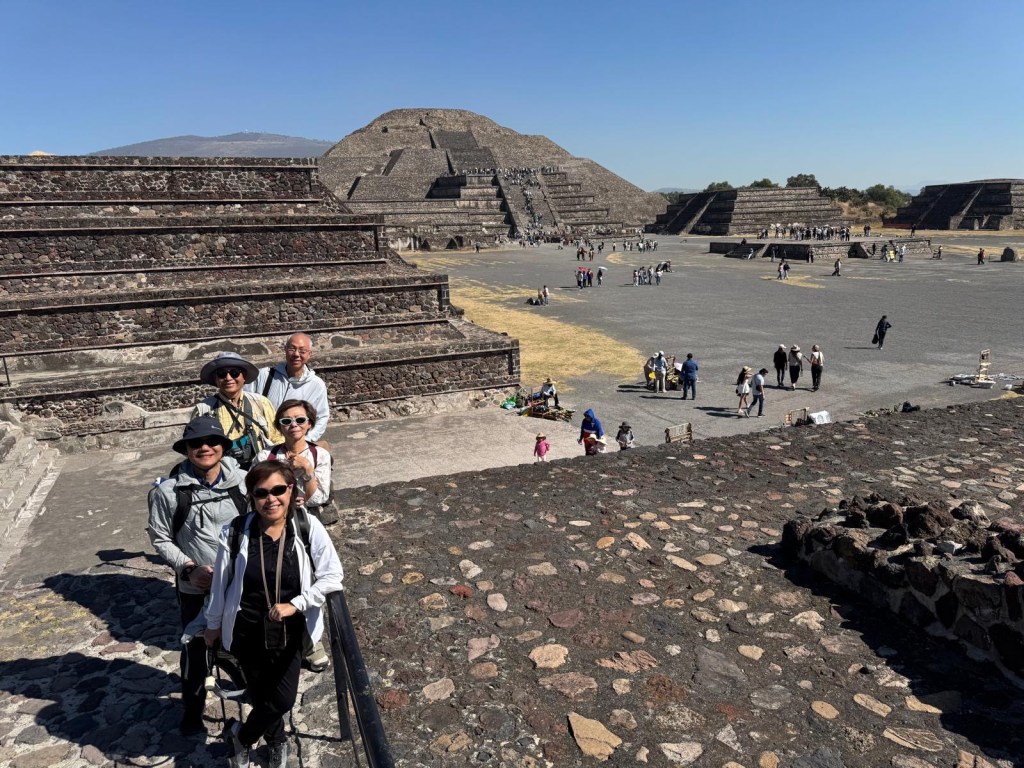
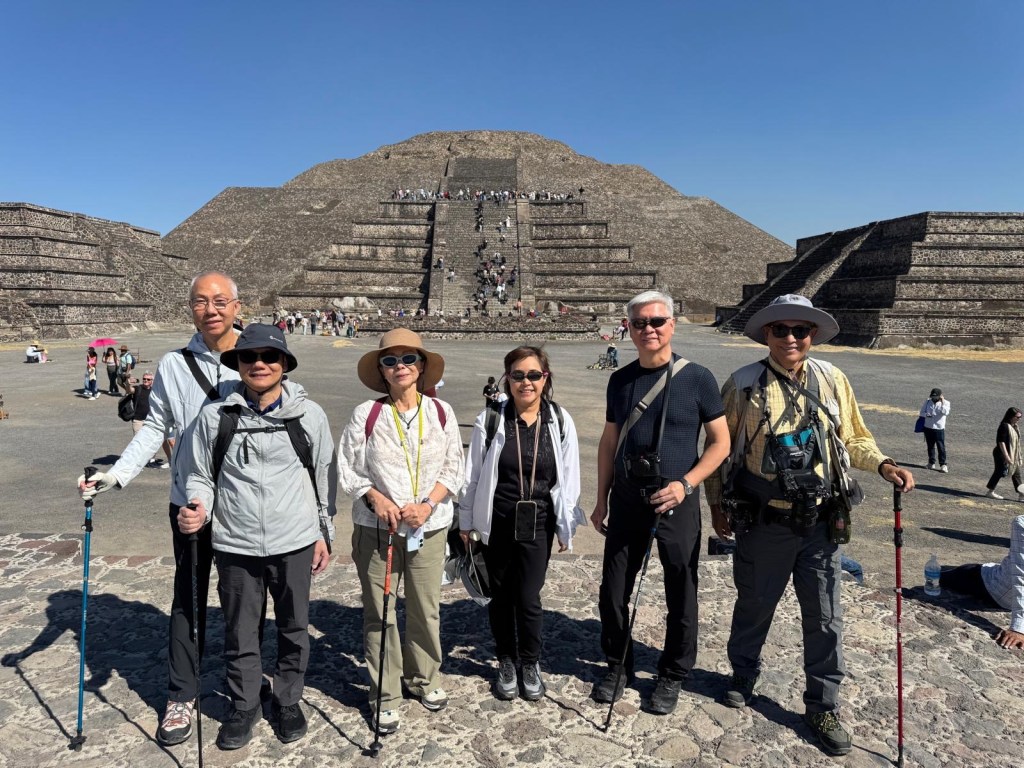
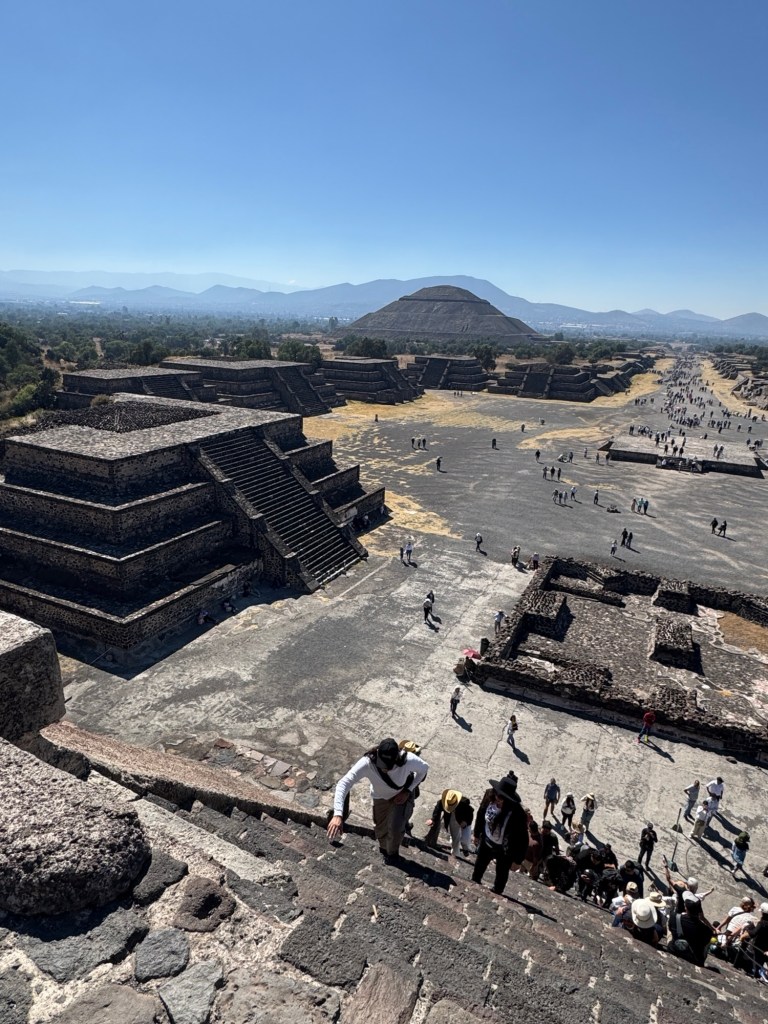
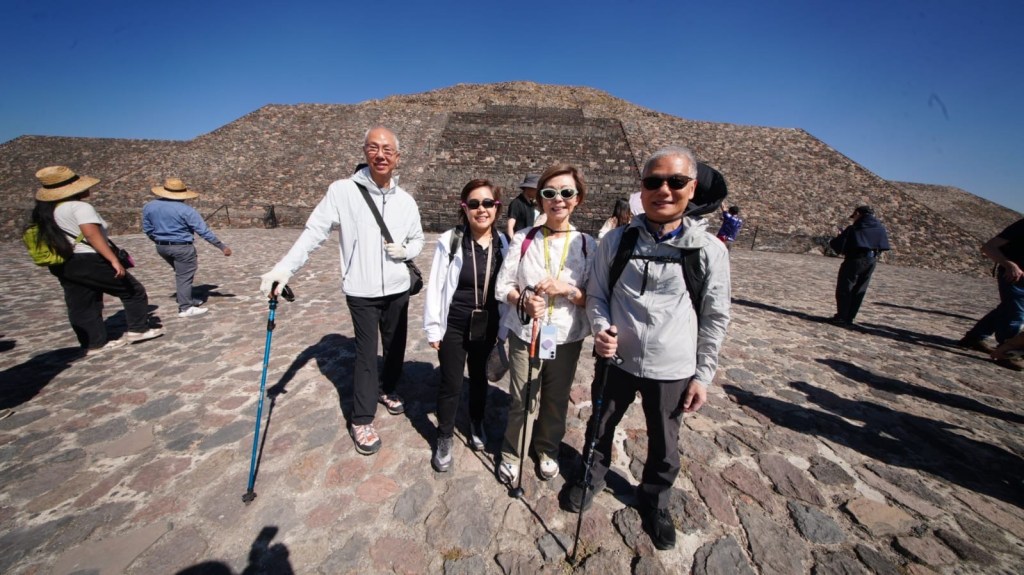
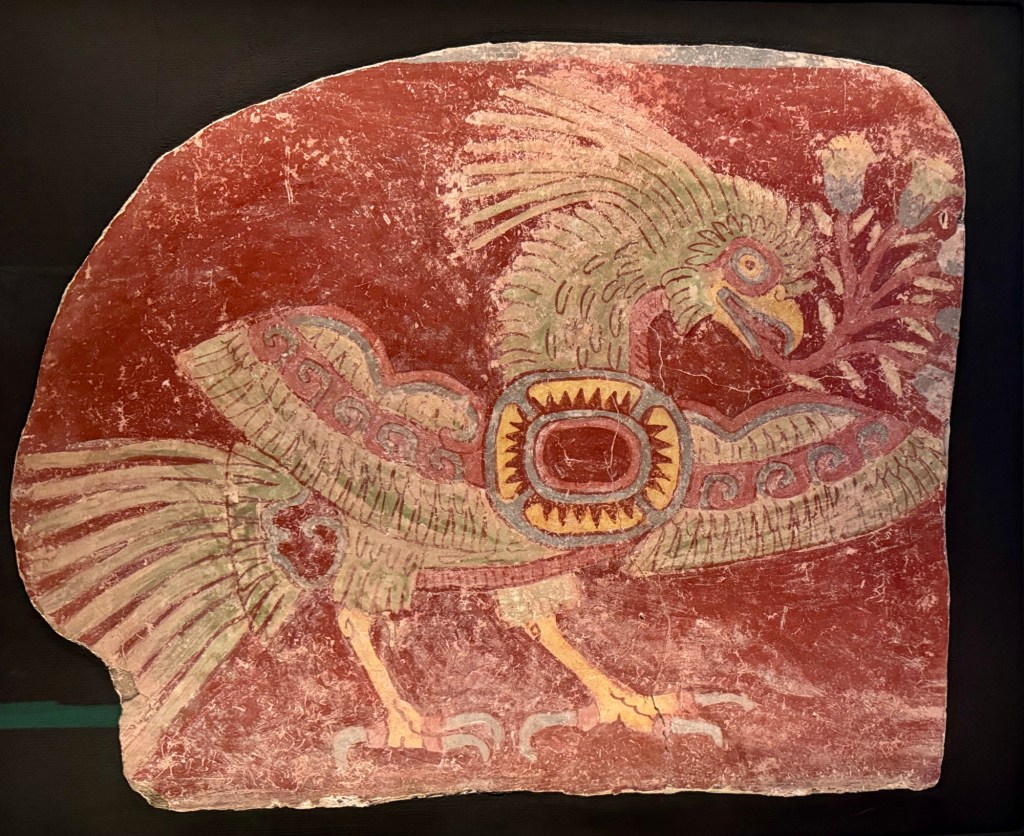
The jaguar, adorned with a large feathered headdress or plume, was being fed from a jug or vase. Part of a conch shell was visibleThe green bird likely a quetzals was watering a plant. Water is essential for agriculture. The four-petaled flower motif, often referred to as the chalchihuitl symbol, is a significant Mesoamerican icon associated with water, preciousness, and the center of the worldConch shellBird and Butterfly However the notes says it was a bird man with bird head and the chest (pectoral) of a man. I had asked Alfredo and he said it was butterfly rather than pectoral.Decoration in the roof, the triangular pointed pattern represents fire and the circle represents water Entrance to the pyramids The Moon Pyramid View from top of the moon pyramid, can see the Sun Pyramid at the far end. From top of the Moon Pyramid, walking up there was a little challenge
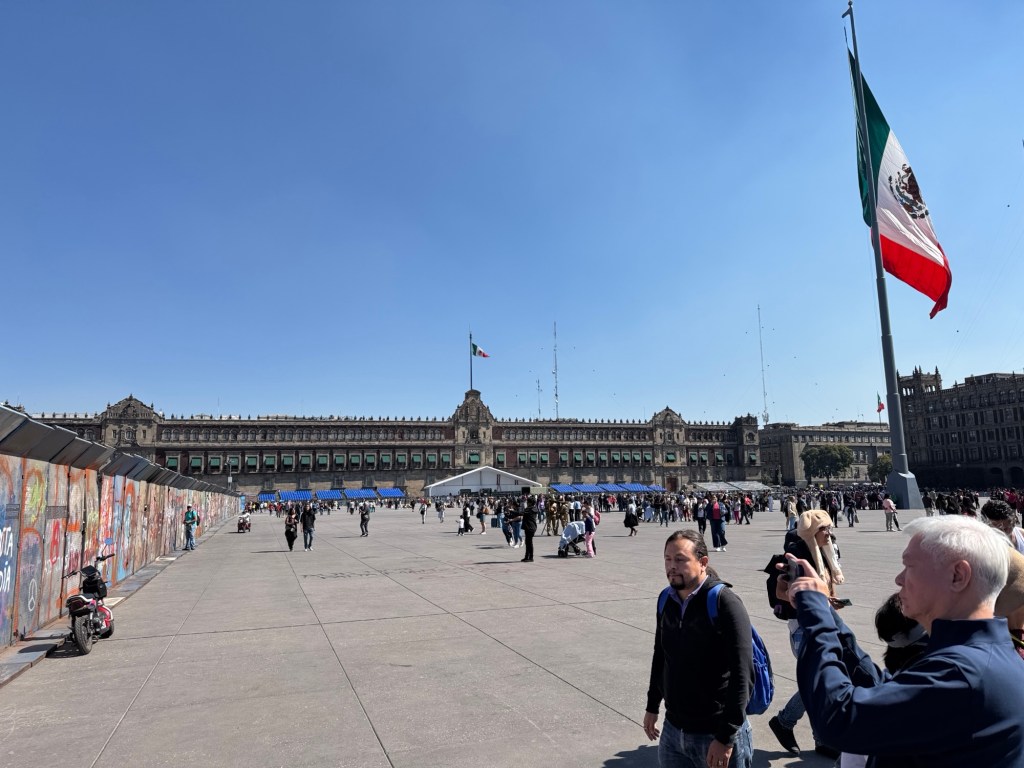
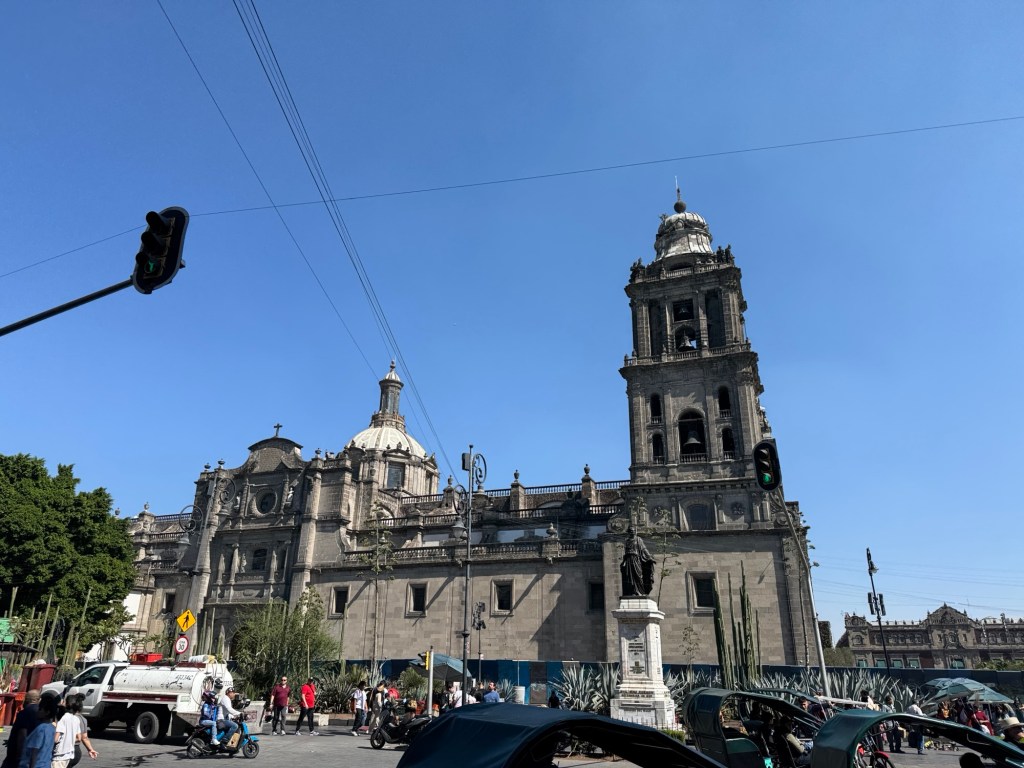
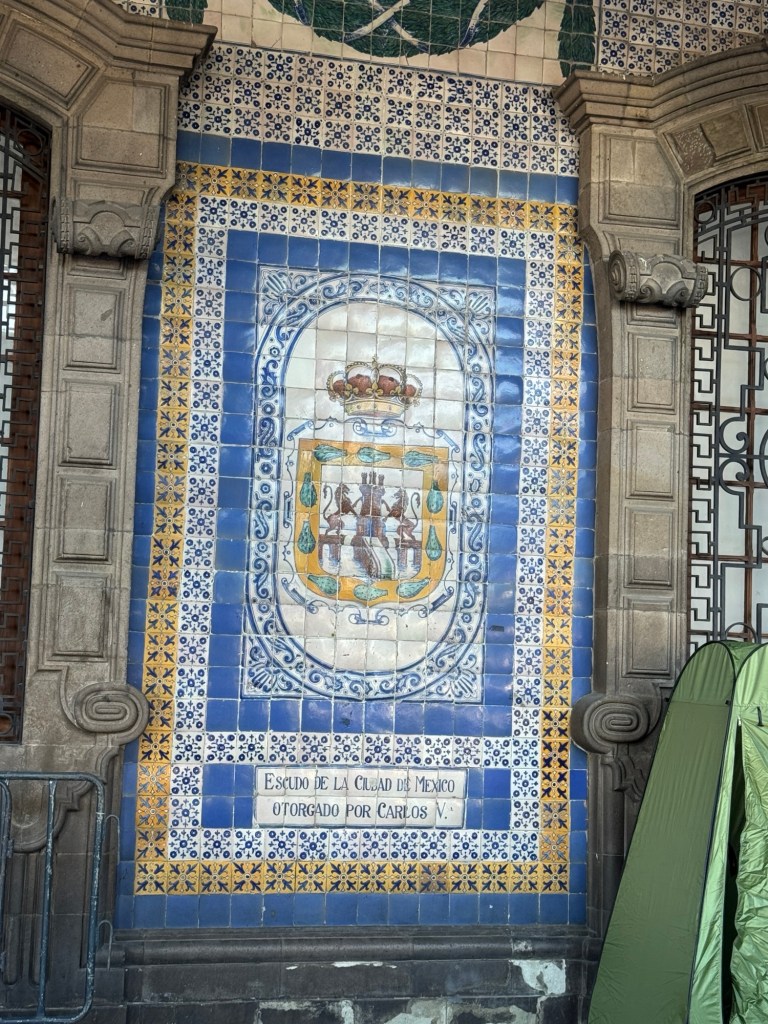
Later in the morning we visited the Zocalo, the Main Square where we had to change our itinerary to avoid a protest.
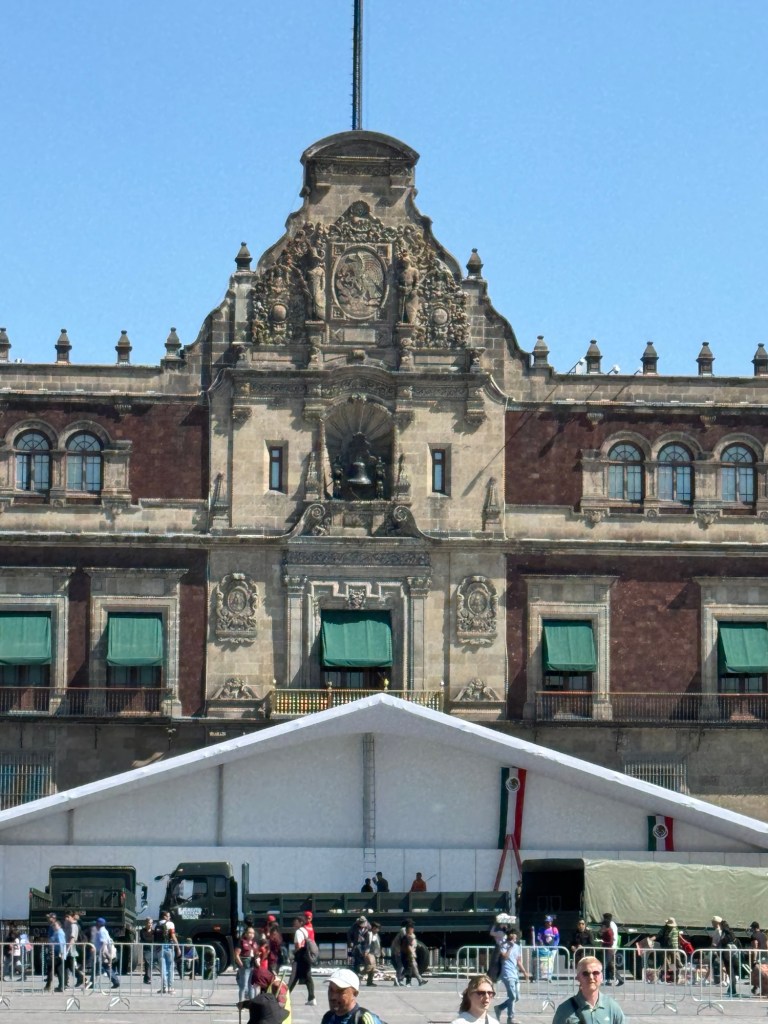
National PalaceCould still see the barricades and army trucks from yesterday Metropolitan Cathedral of the Assumption of the Most Blessed Virgin Mary into Heaven
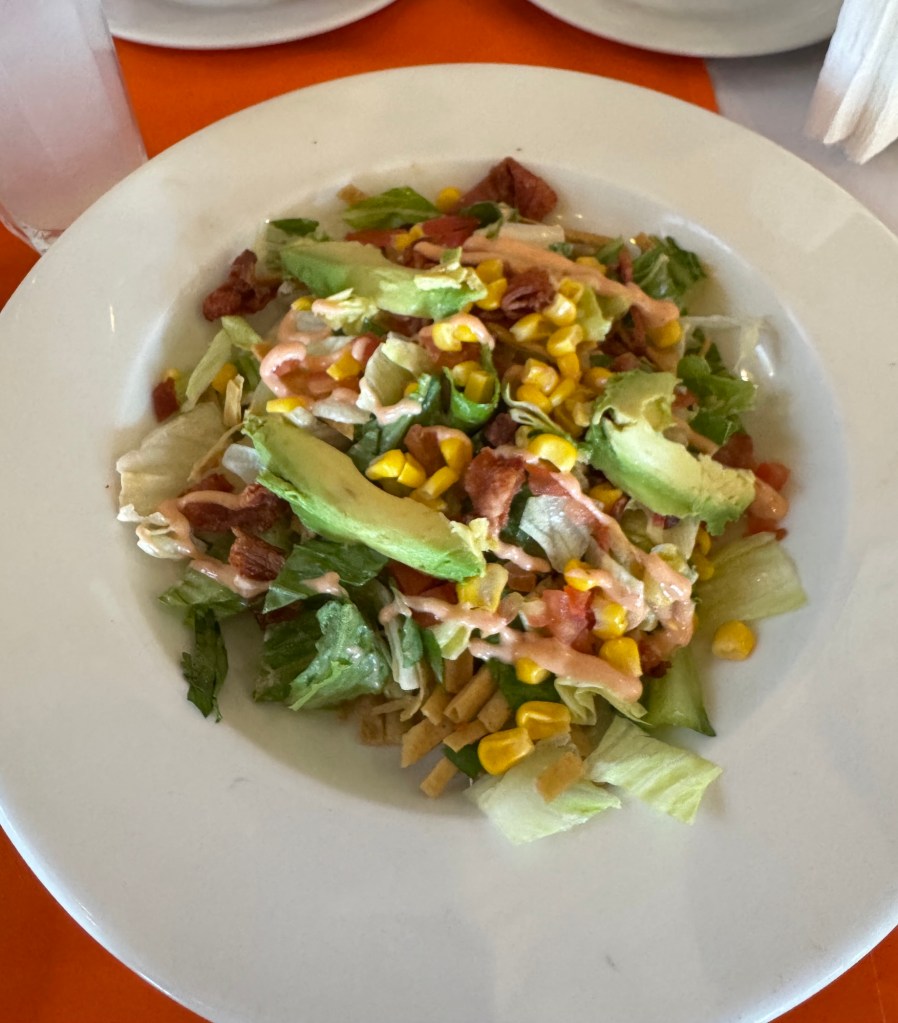
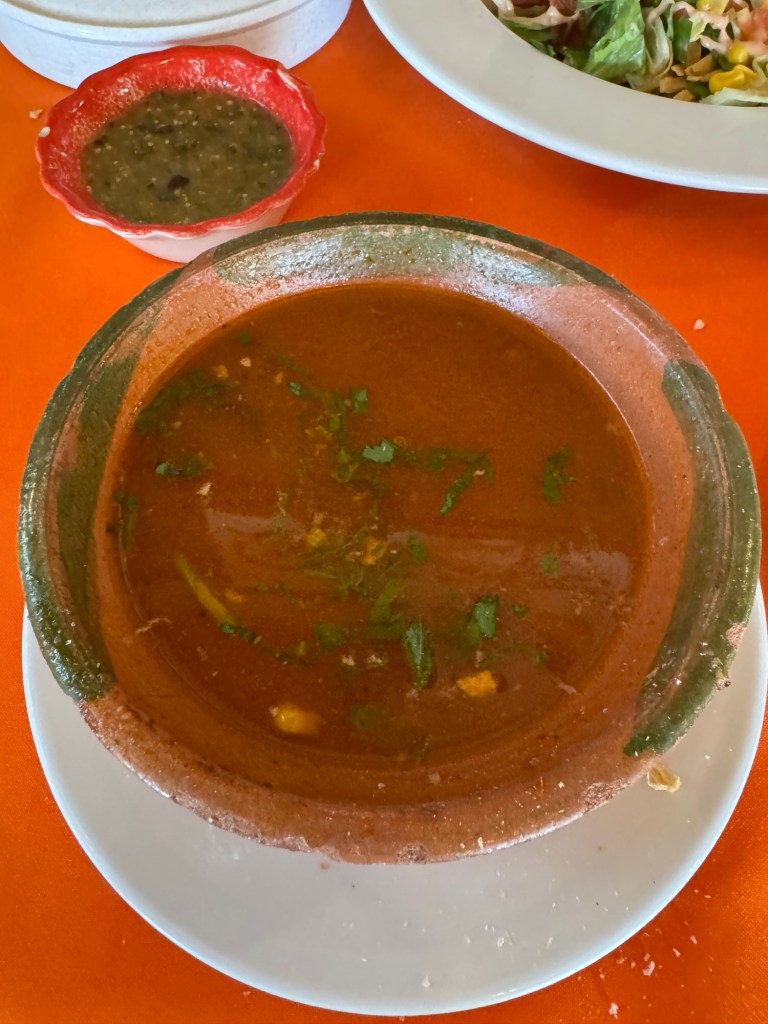
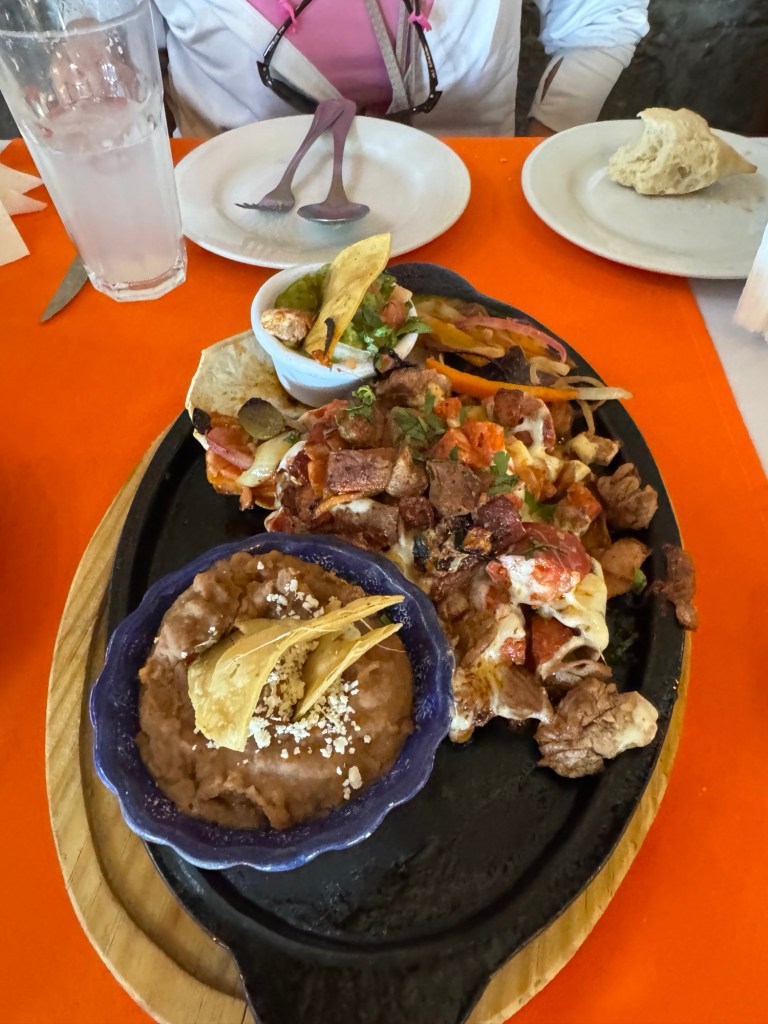
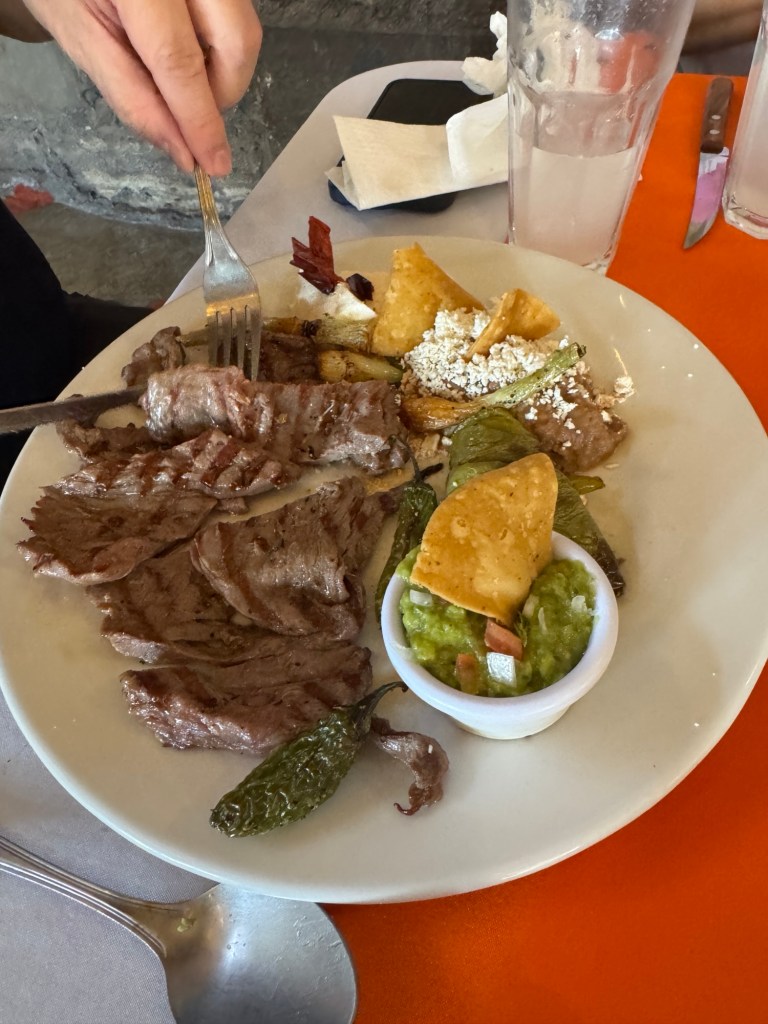
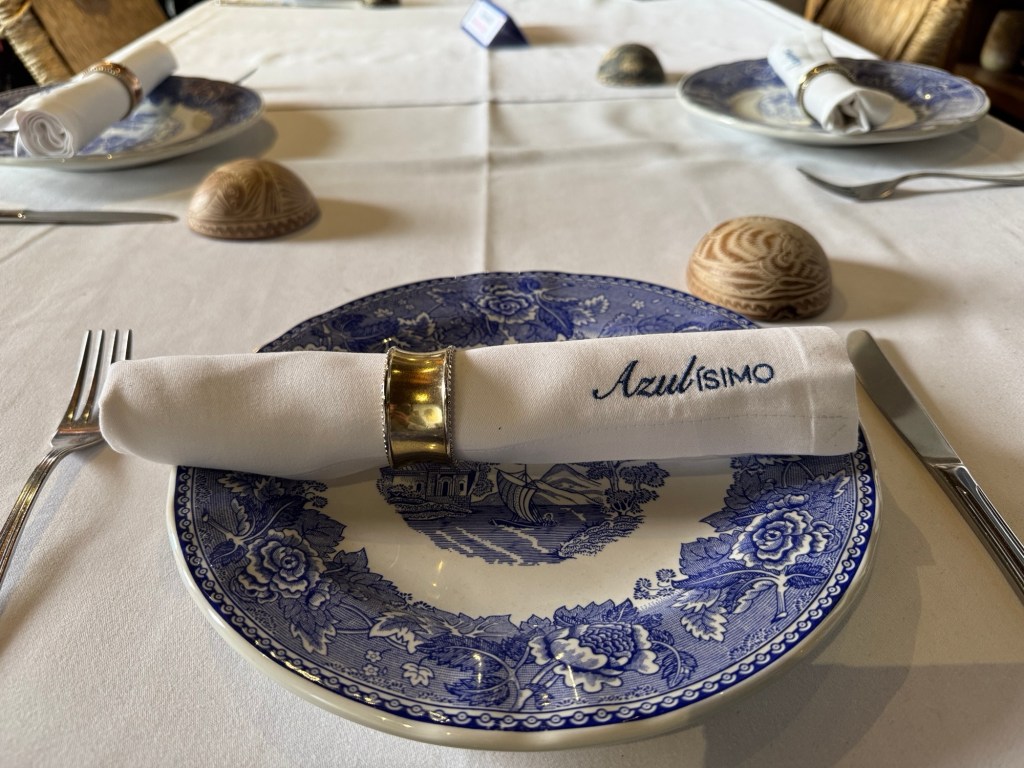
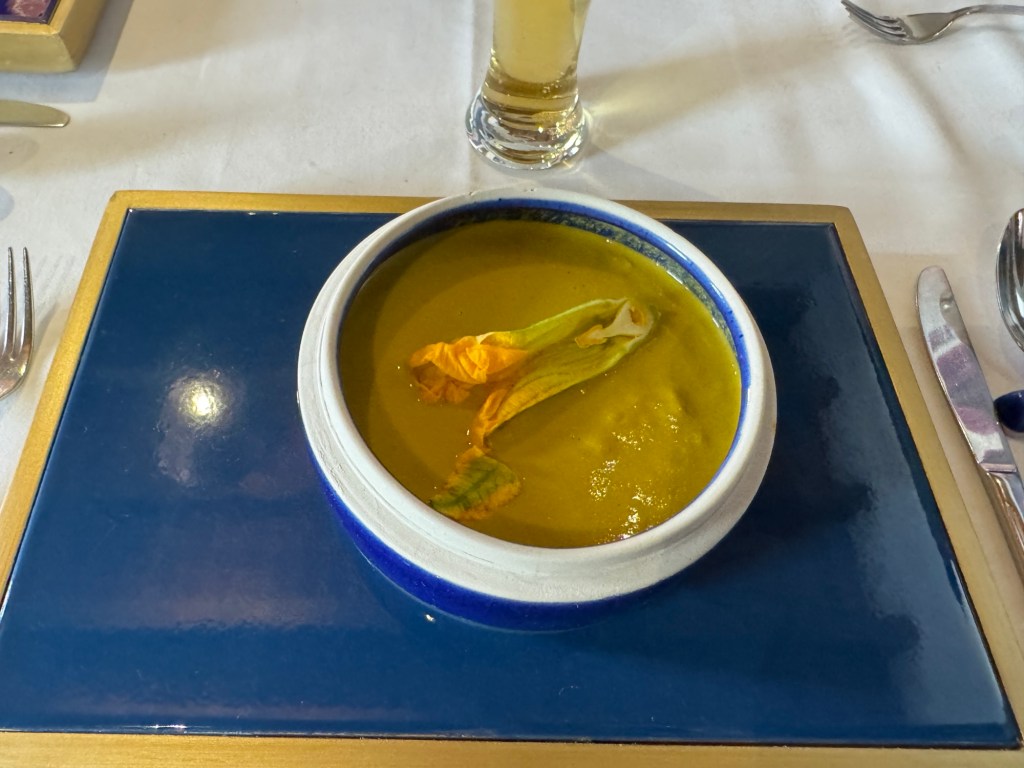
Then we had lunch in a very nice restaurant close by. It was a particularly good lunch. May be Alfredo compensated us for the food stall yesterday.
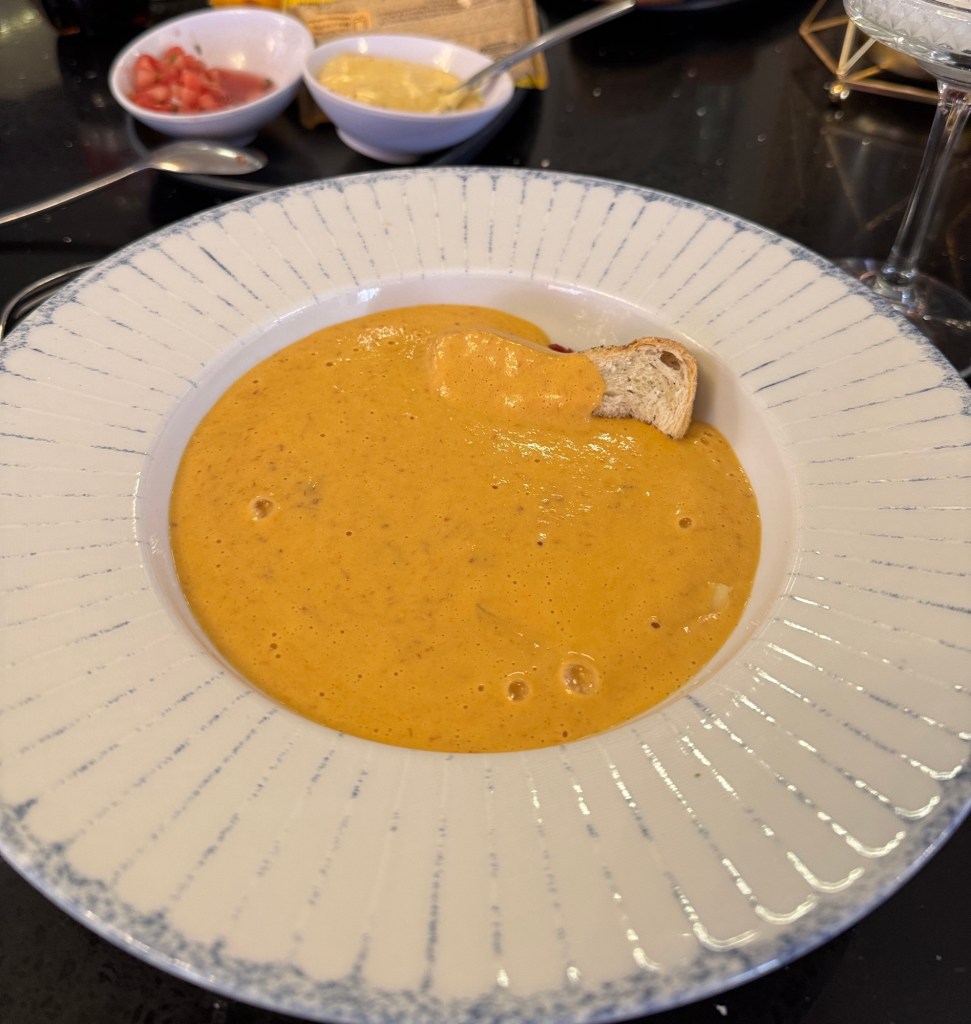
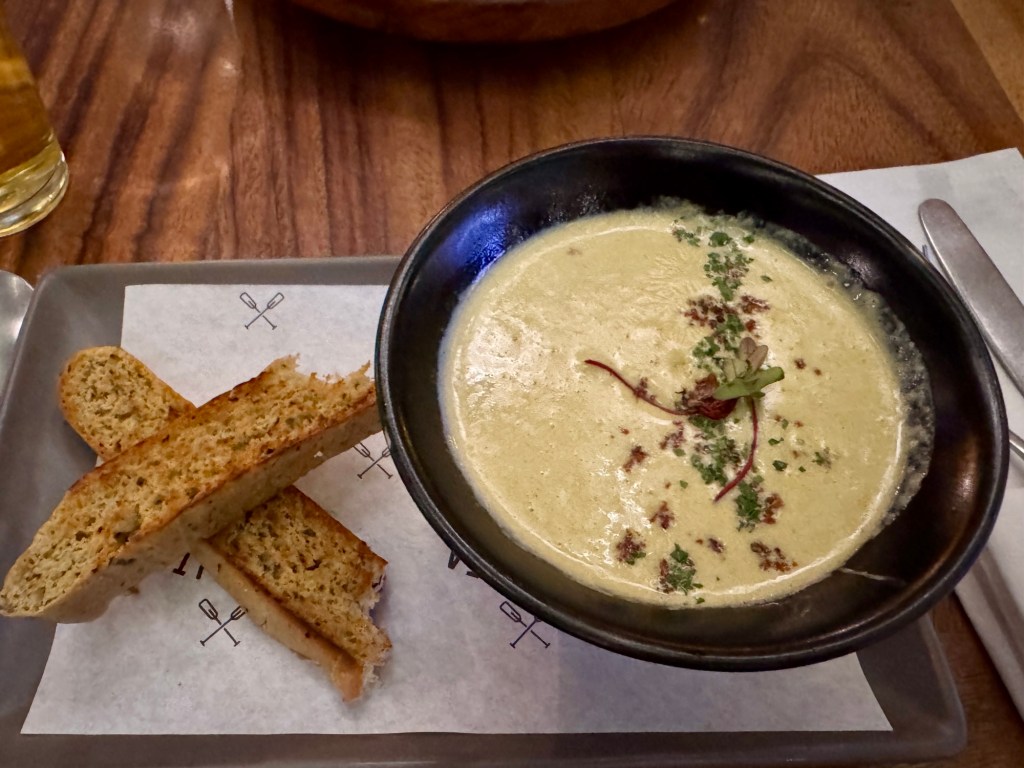
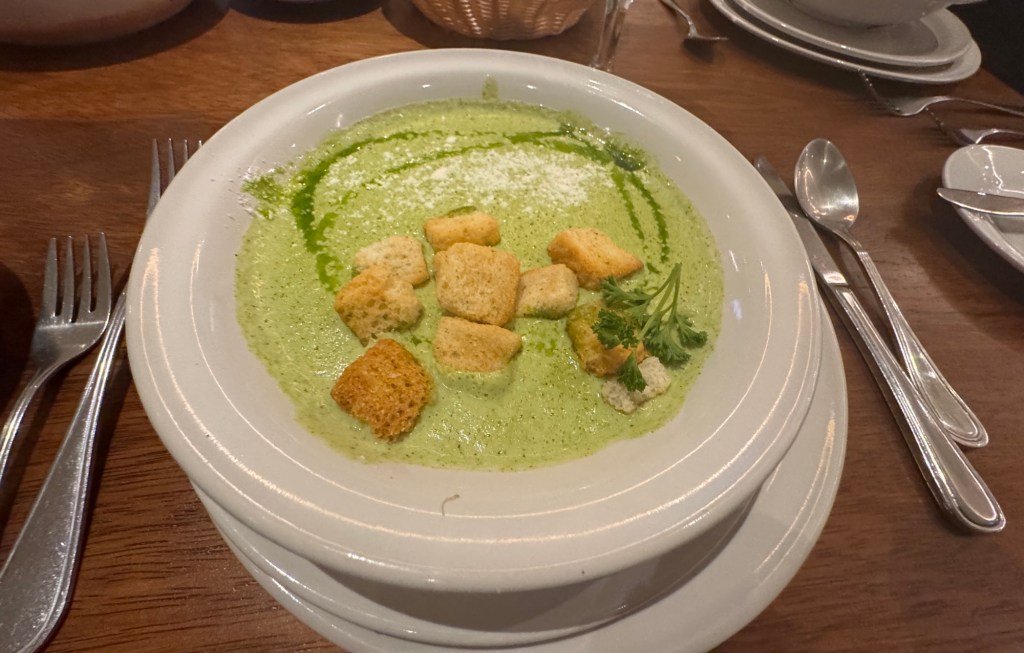
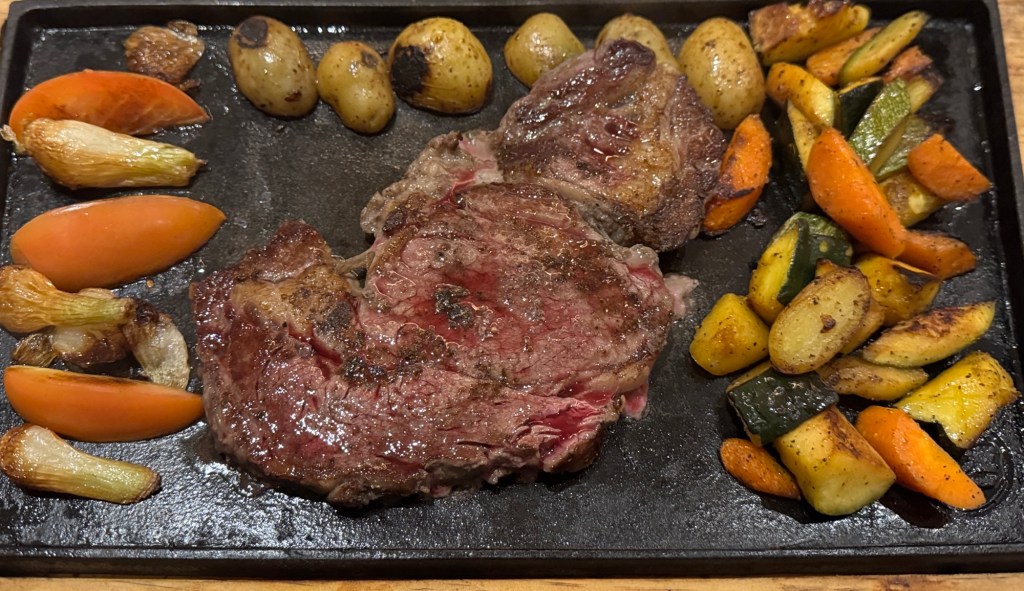
Pumpkin soup with pumpkin flowerGigantic pork leg
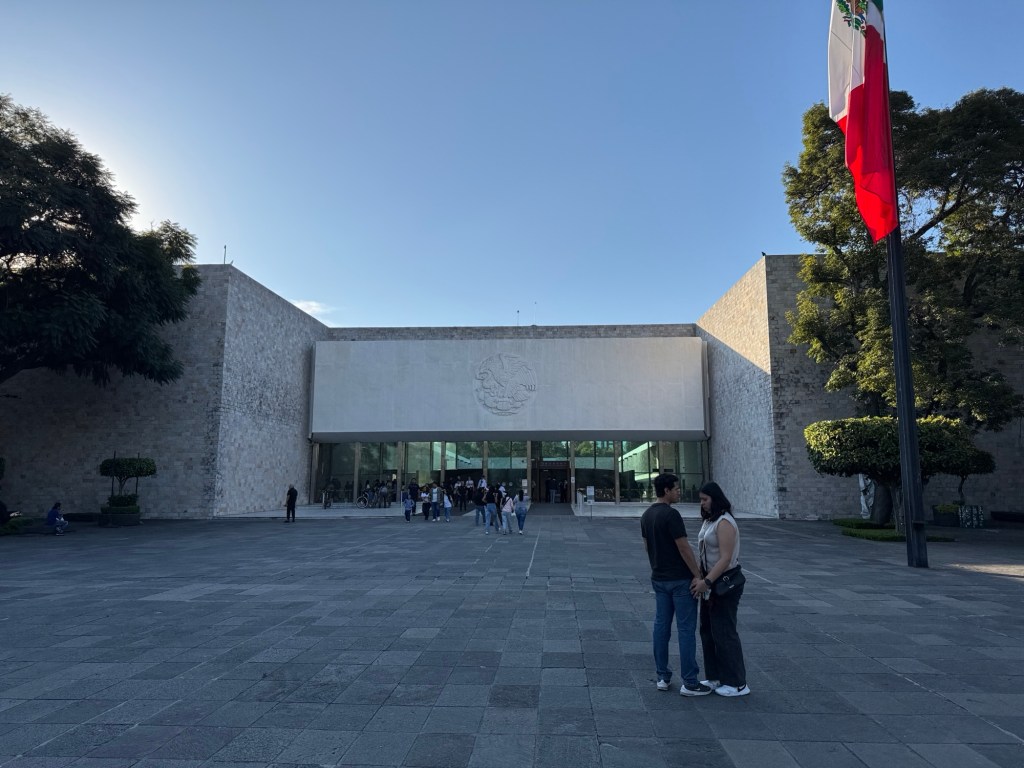
In the afternoon we visited the National Museum of Anthropology. There was so many treasures and although we spent a whole afternoon it was still not enough.
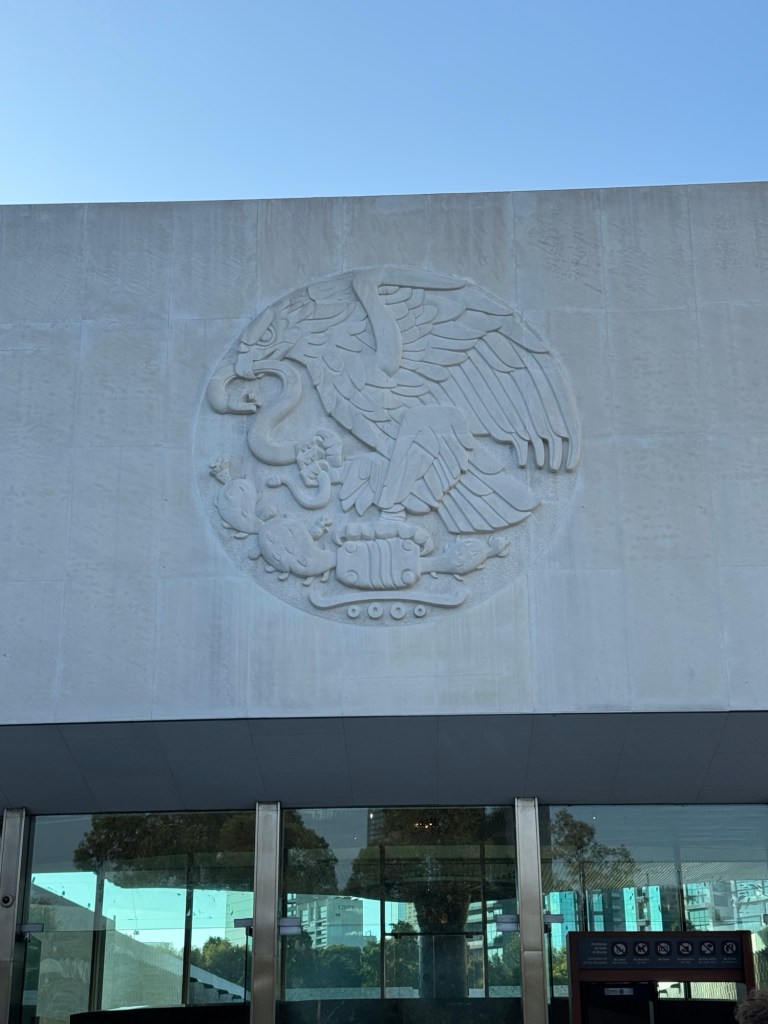
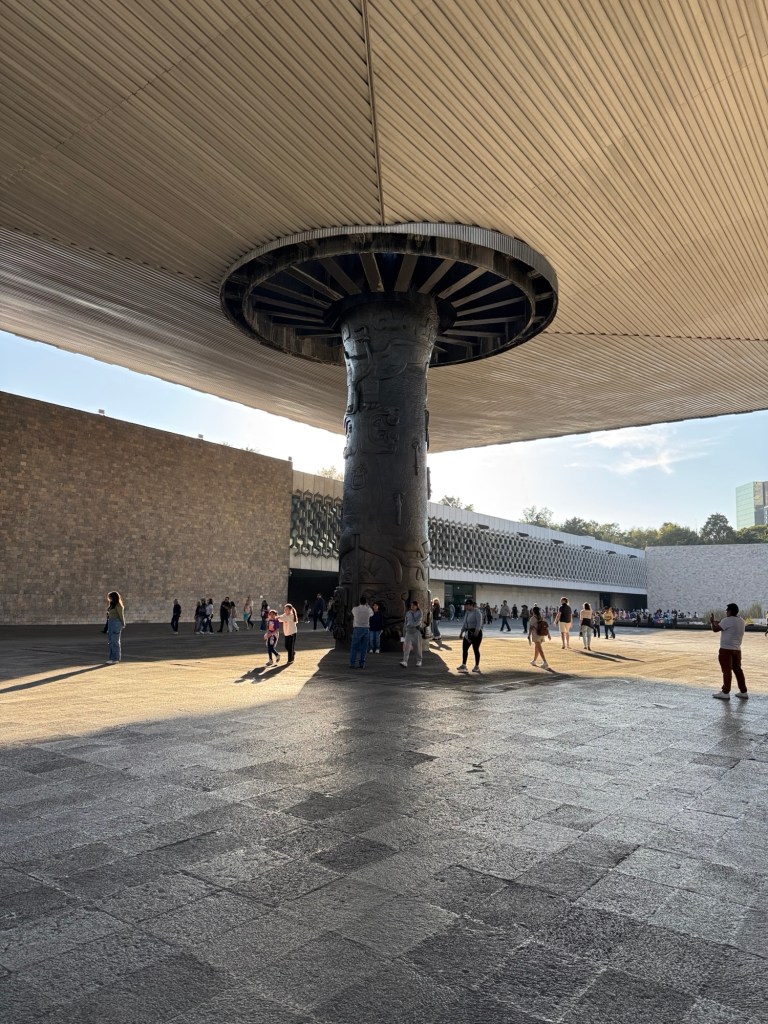
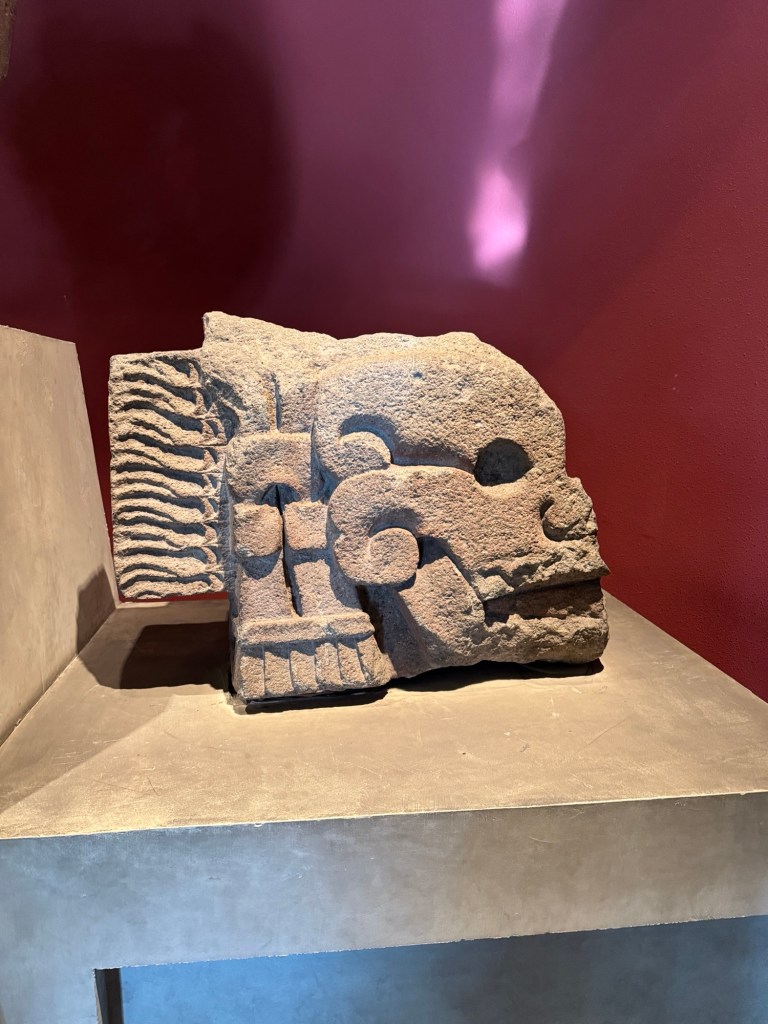
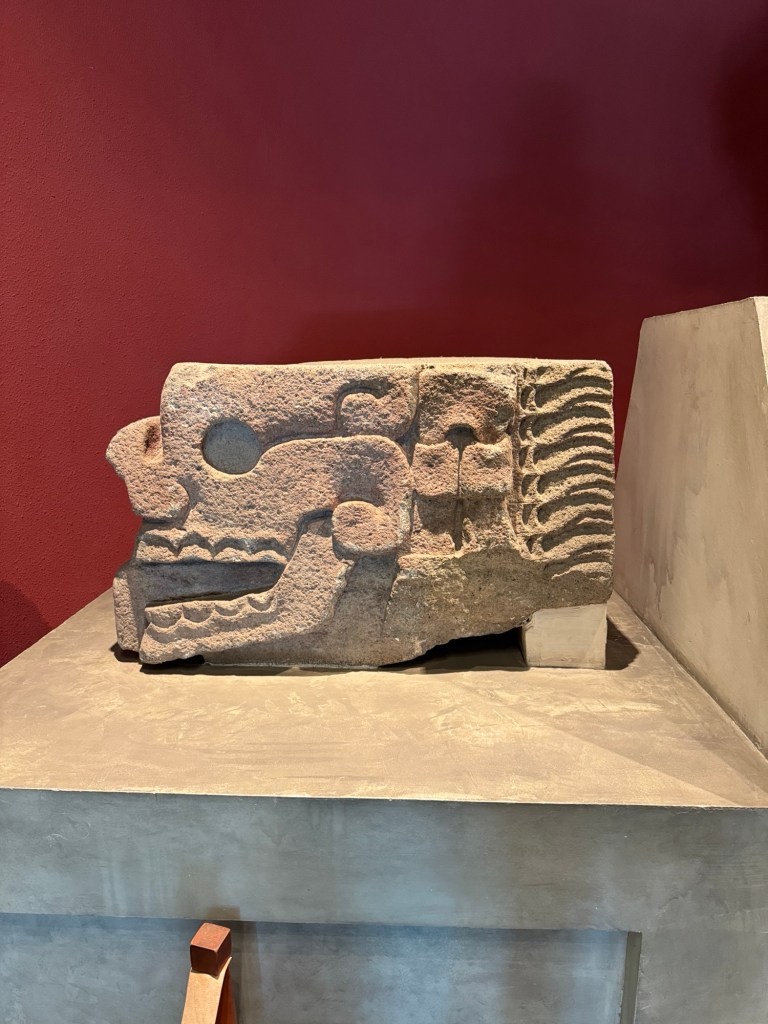
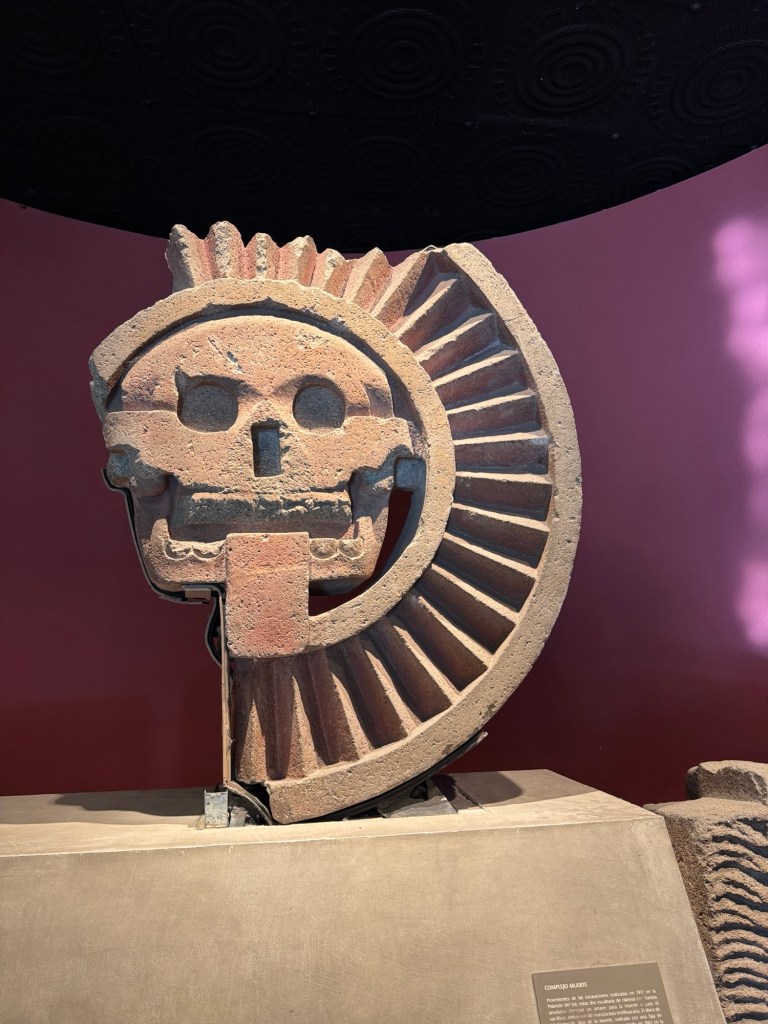
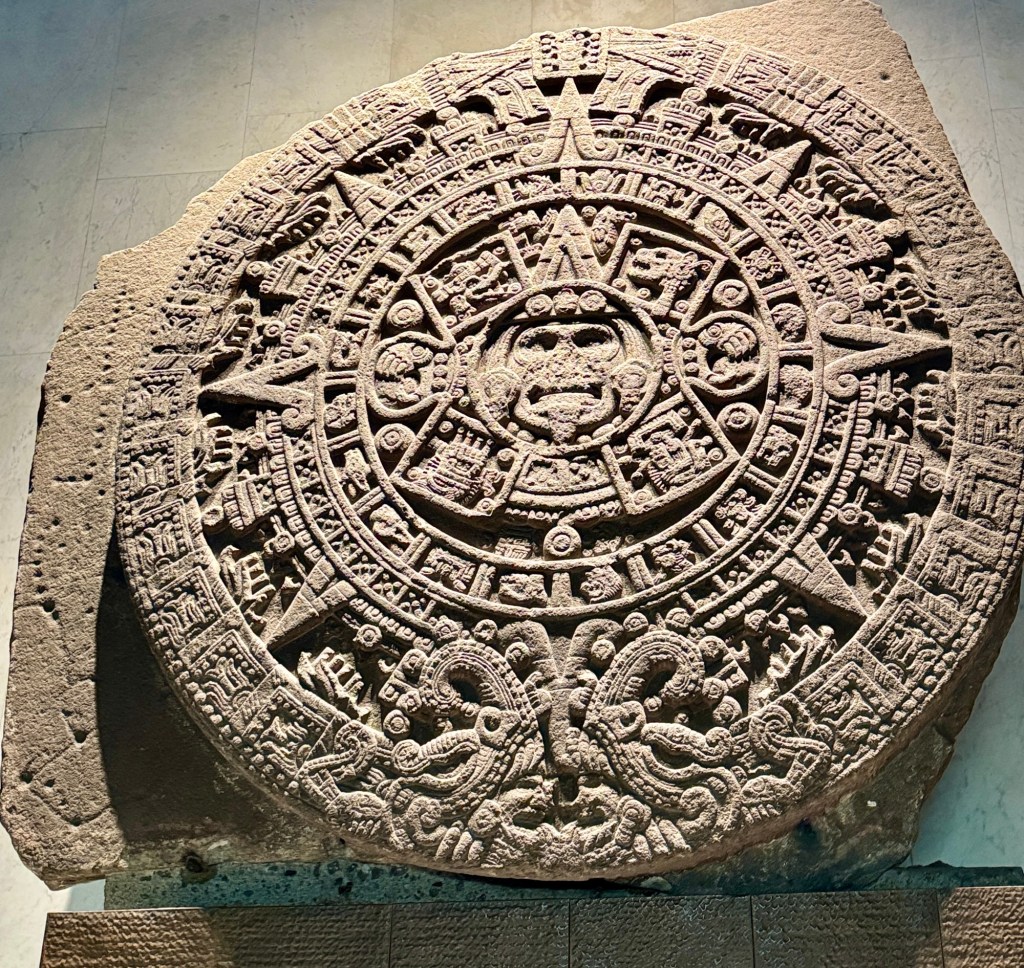
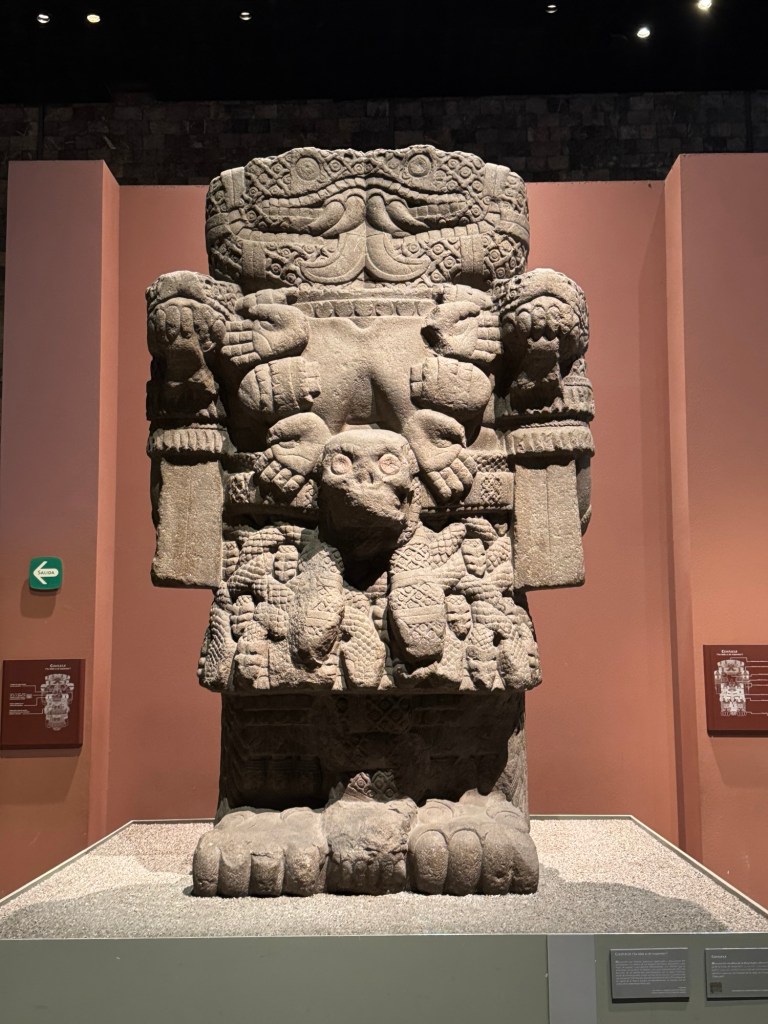
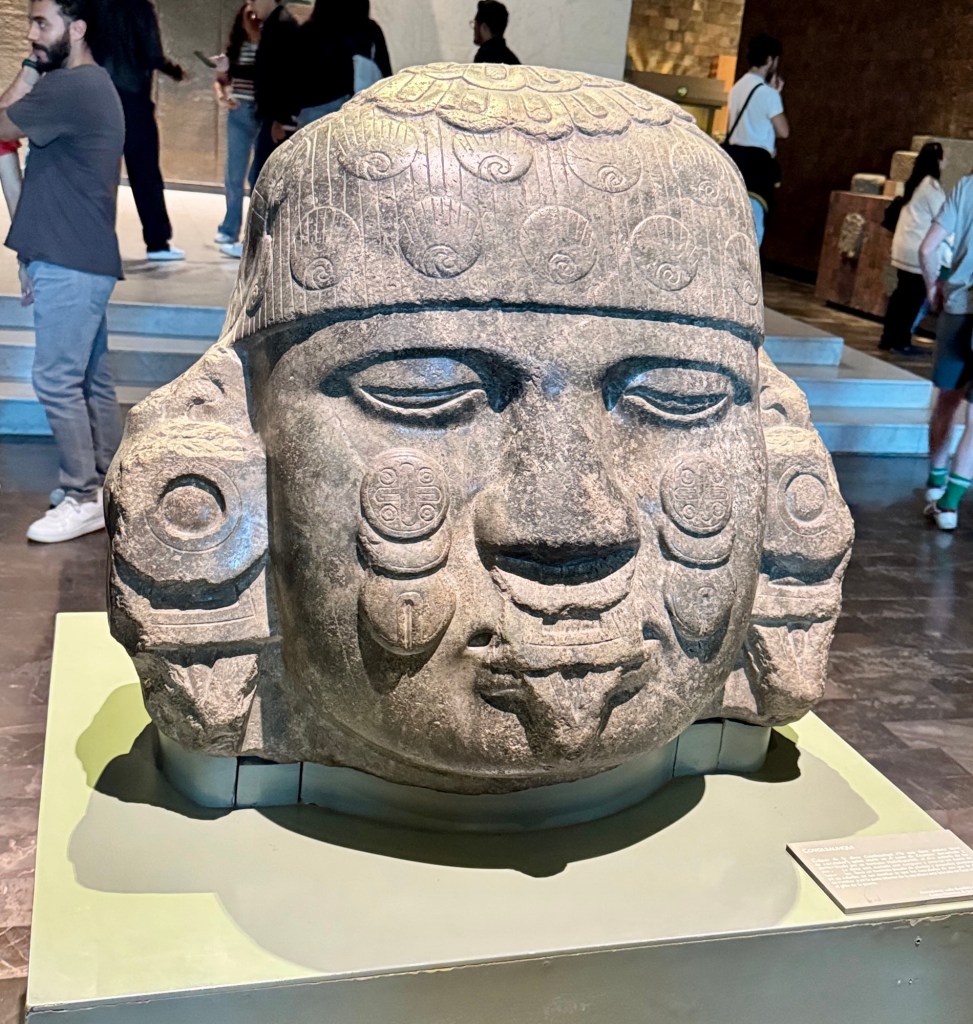
Eagle and snake on a cactus, symbol of Mexico This huge platform is only supported by a single pillar, very impressive. It was built in 1964! These 2 sculptures were excavated from the Sun Pyramid representing death or human sacrifice The disk of death, depicting Mictlāntēcutli, the Aztec god of death and ruler of the underworld in Aztec mythology. This is the famous Aztec Sun Stone, also known as the Calendar Stone. Carved from a single piece of basalt during the late 15th century, the monolith weighs over 24 tons. The intricate carvings depict aspects of Aztec mythology, cosmogony, and the sun god Tonatiuh at its center. This is Coatlicue, mother of earth, a colossal stone sculpture 8 feet tall. She has 400 sons representing the stars and a daughter, the moon goddessThis is the moon goddess, together with her 400 brothers went to kill their mother, after knowing her miraculous pregnancy. However the baby Huitzilopochtli was born immediately and was full grown. He defeated them and decapitated the moon goddess. Huitzilopochtli is the sun god. This story depicts the fight between the sun and moon with stars, to bring day time after darkness. The rain god Chaac
We had dinner in a restaurant close to Marriott
Day 7 November 17 Monday
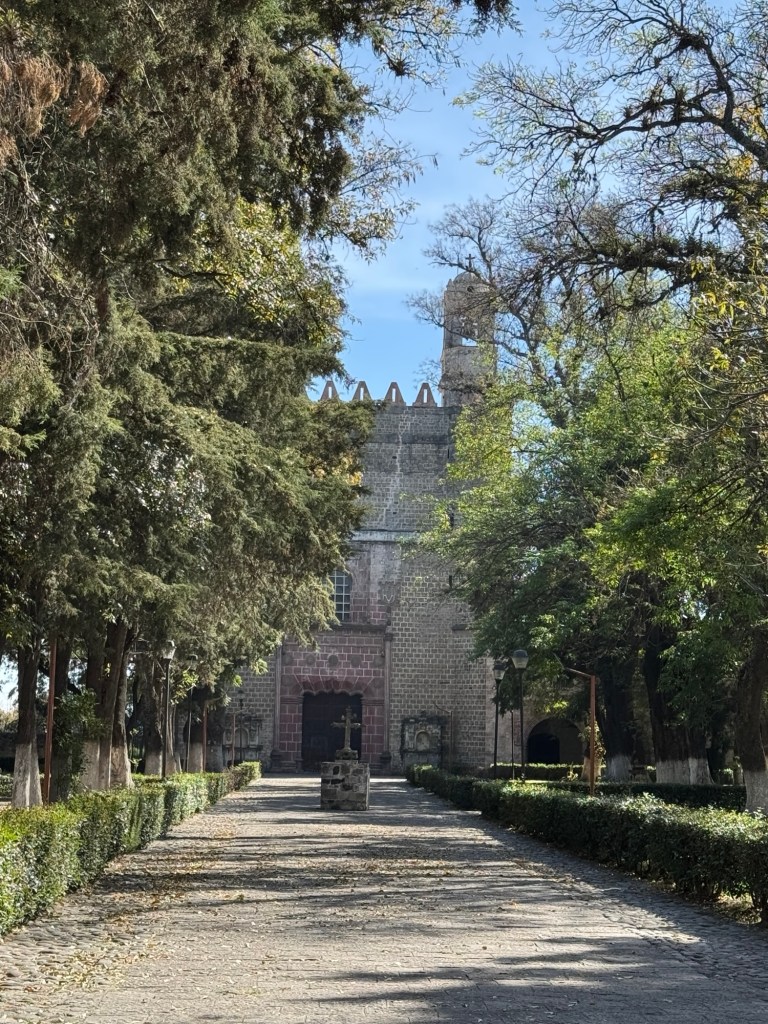
We left Mexico City to Puebla. On the way we went to Huejotzingo to see the San Miguel Exconvent (now a museum) but it was closed due to a festival.
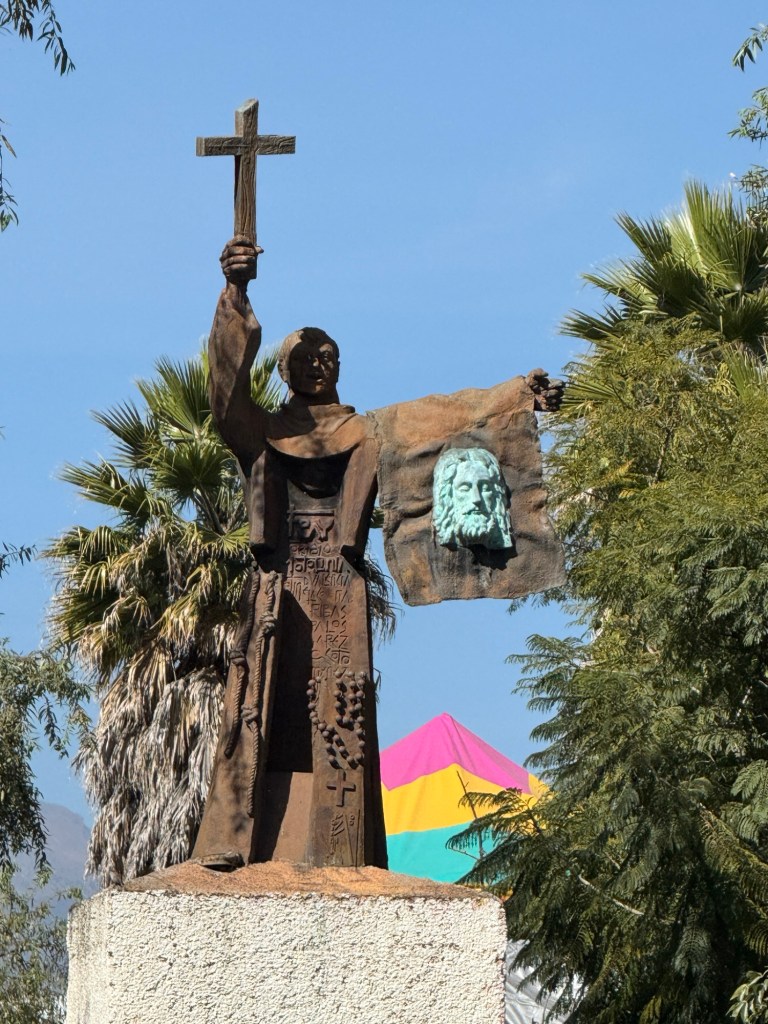
San Miguel ExconventNear by we saw a statue dedicated to the group of twelve Franciscan friars in May 1524. They are known historically as “The Twelve Apostles of Mexico.” And here was another Mandylion.
Then we reached Puebla
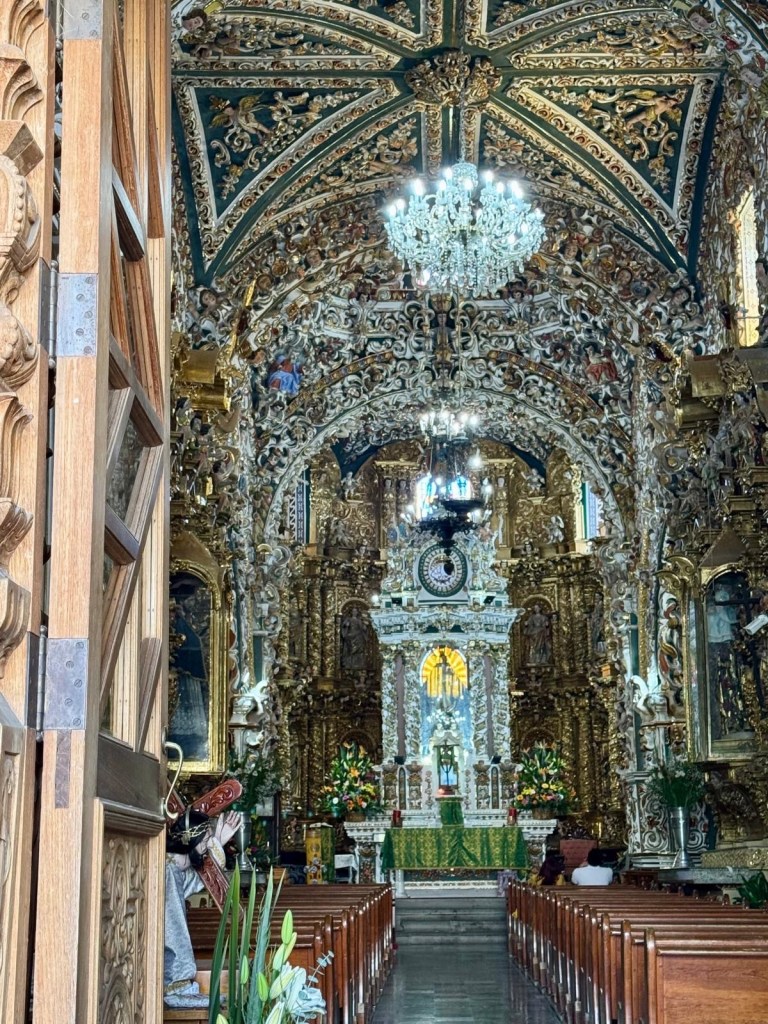
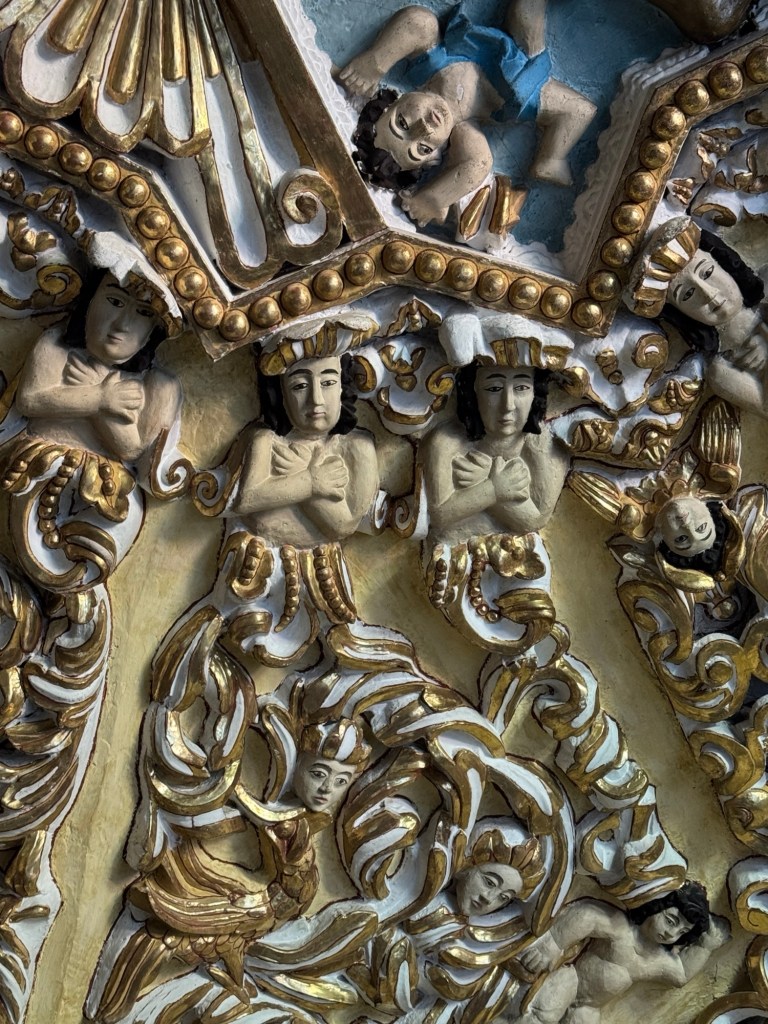
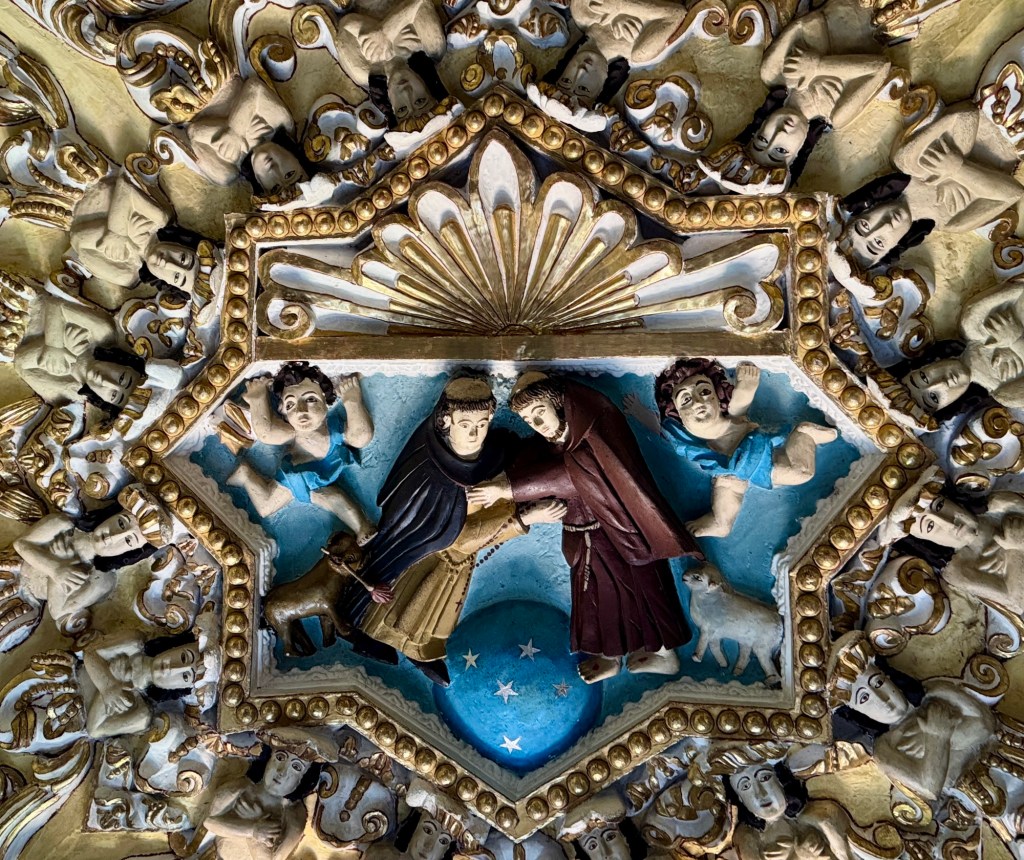
Church of Santa María Tonantzintla in PueblaThis church is a unique example of Mexican Baroque architecture, notable for its fusion of Christian and indigenous Nahua artistic elements. The interior is renowned for its vibrant, ornate plasterwork, described as horror vacui (a fear of empty space), covering every surface with figures, flowers, and fruits. But we were not allowed to take photos inside.
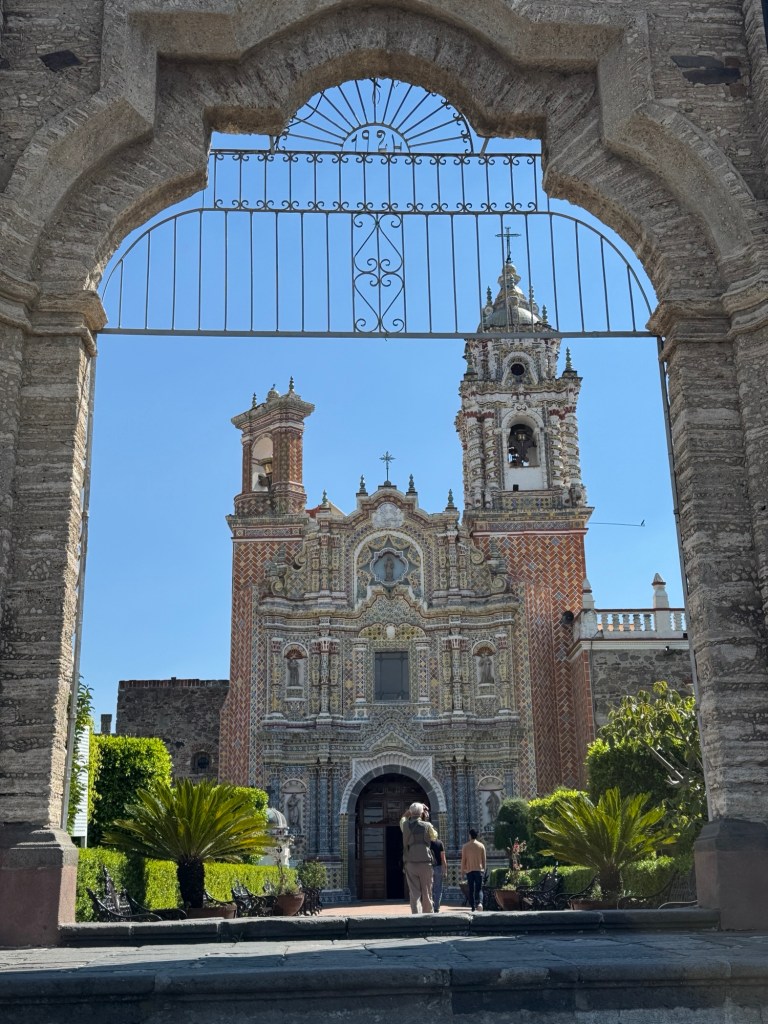
Luckily we could take pictures from the next church which also showed indigenous elements.
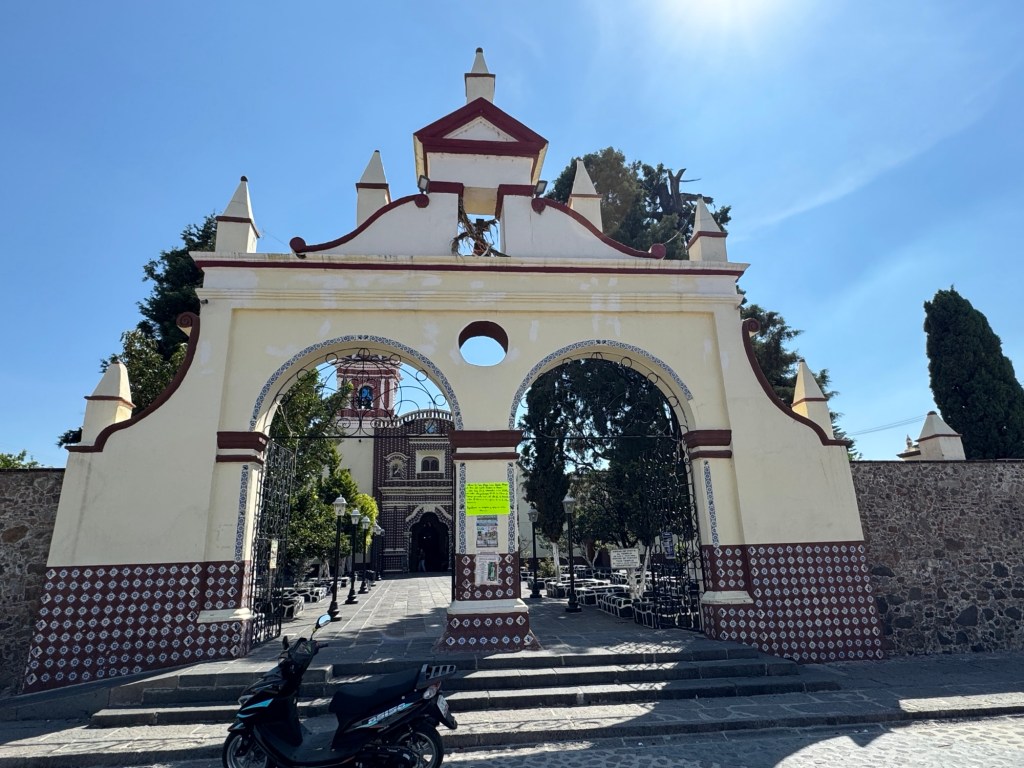
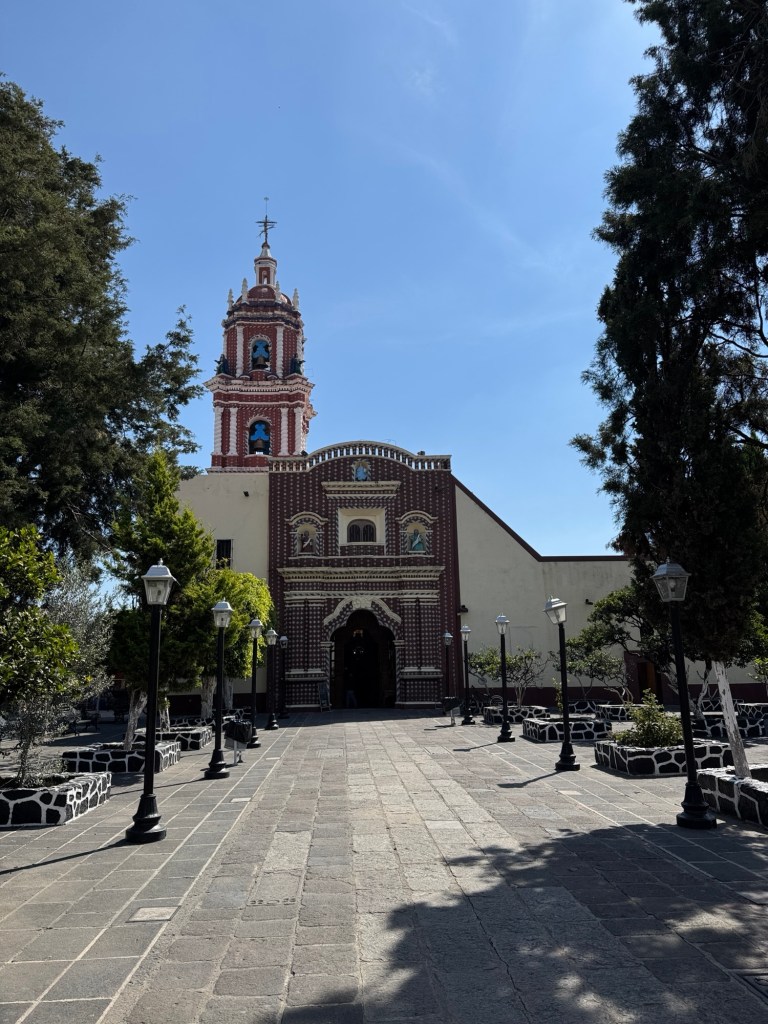
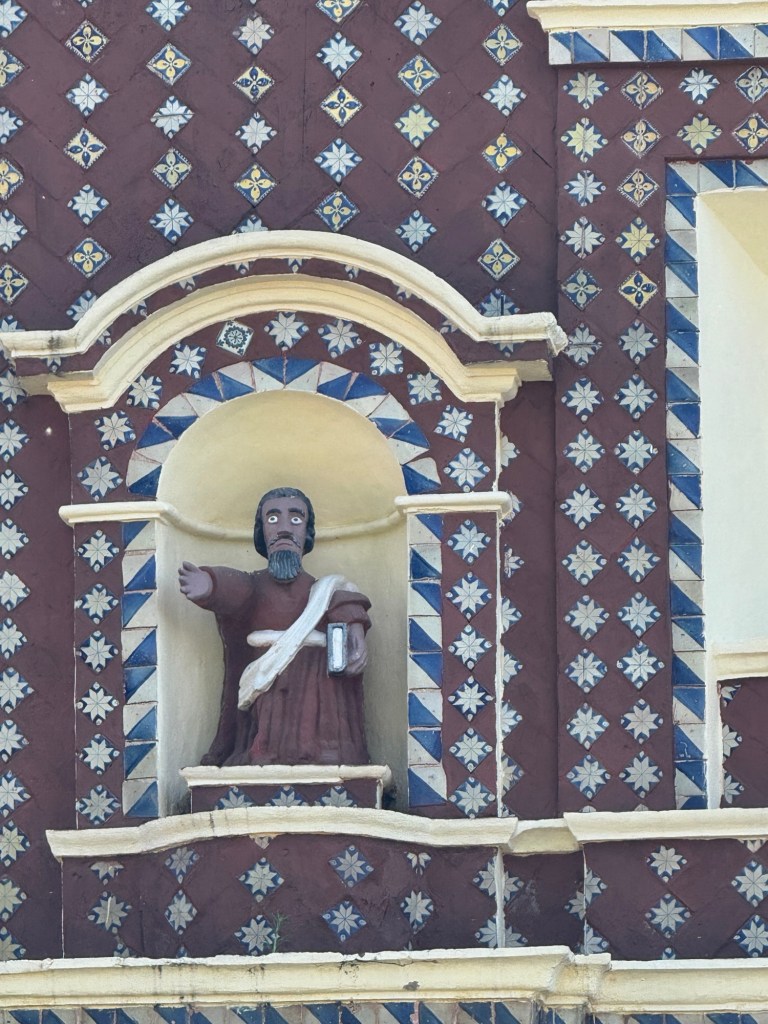
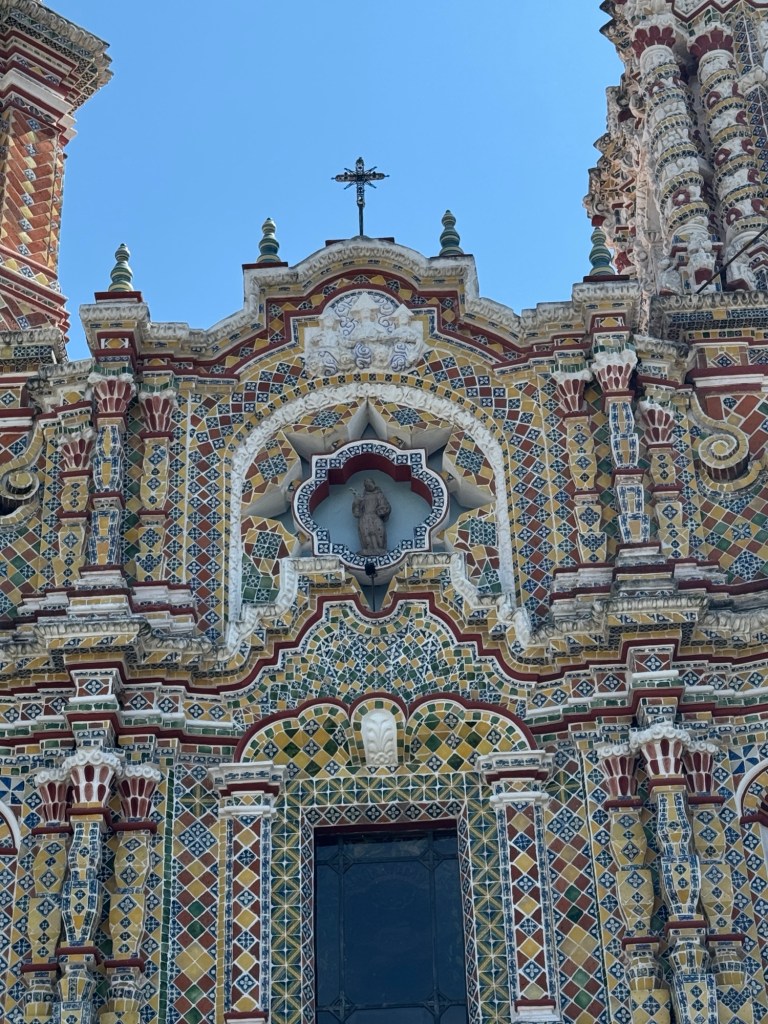
Church of San Francisco AcatepecIt is renowned for its spectacular facade entirely covered with vibrant, locally produced Talavera azulejo ceramic tiles, a unique example of Indigenous Baroque architecture. Fusion of Christian and indigenous Nahua artistic elements.
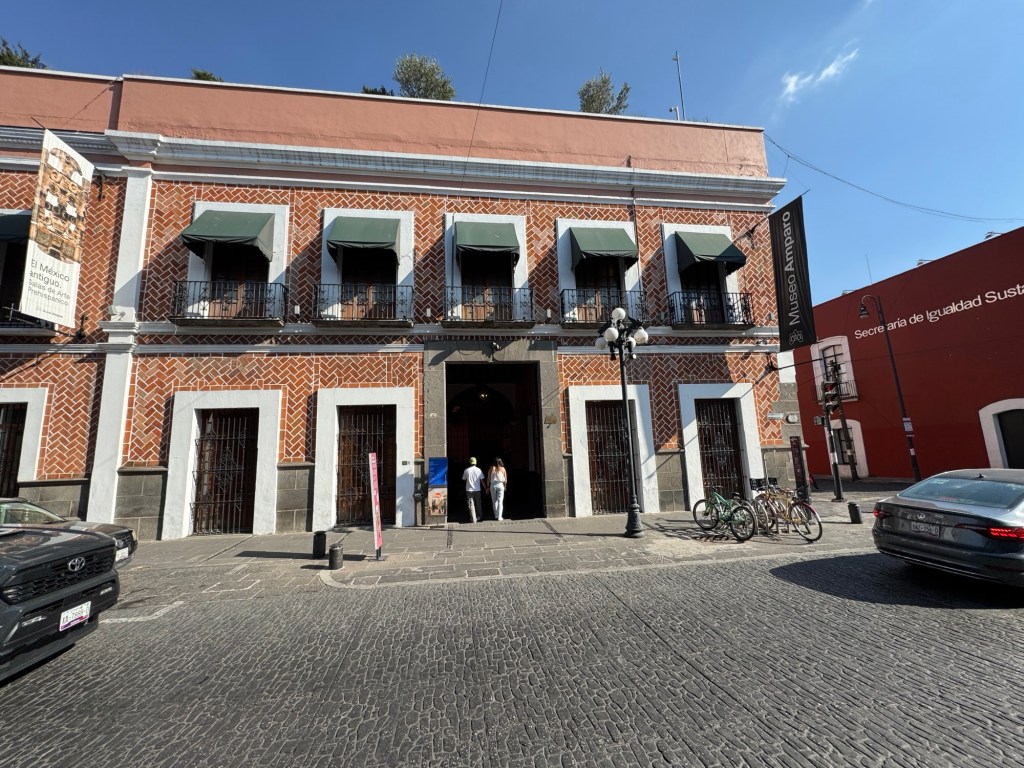
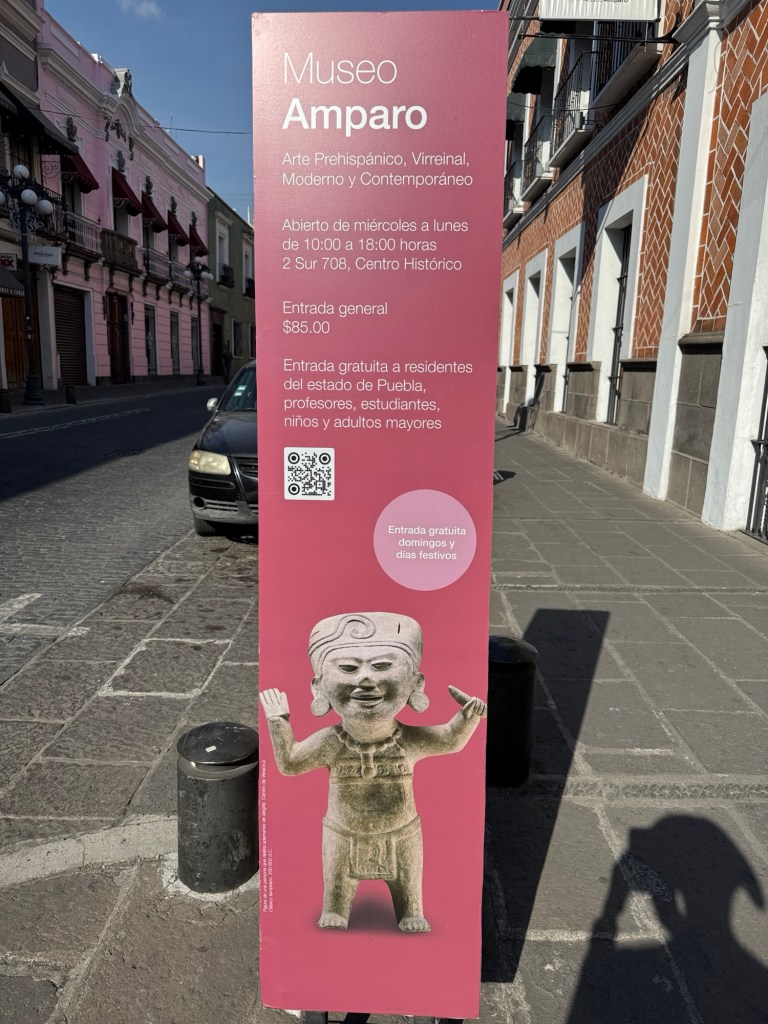
After lunch we went to visit the Museo Amparo, a nice museum with exhibits old and new but we only had time for the old ones.
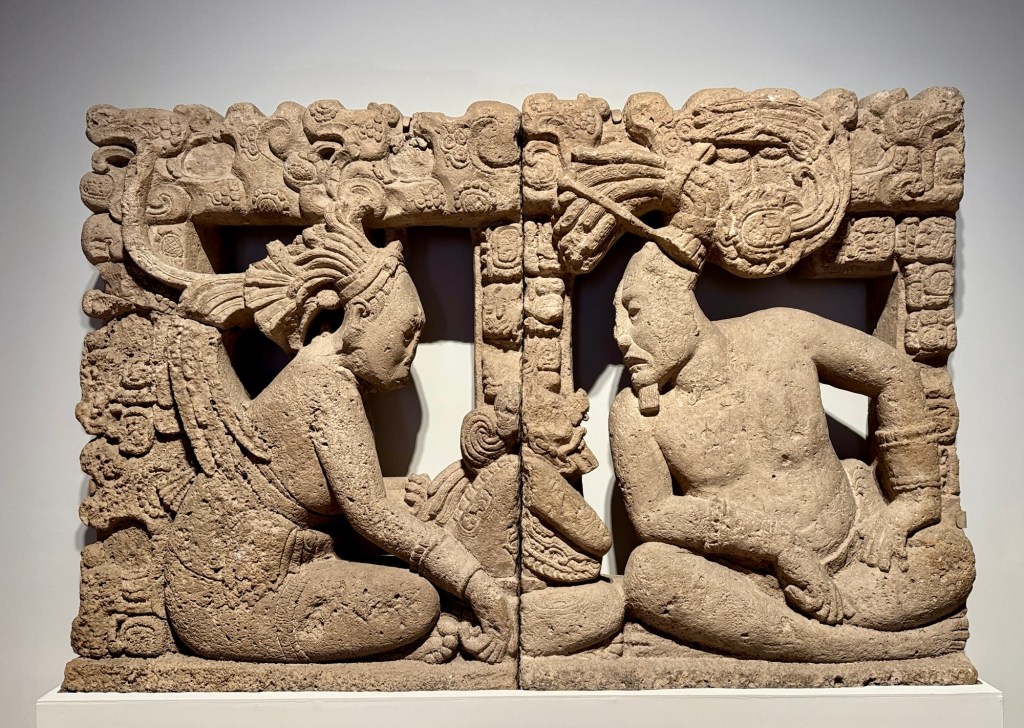
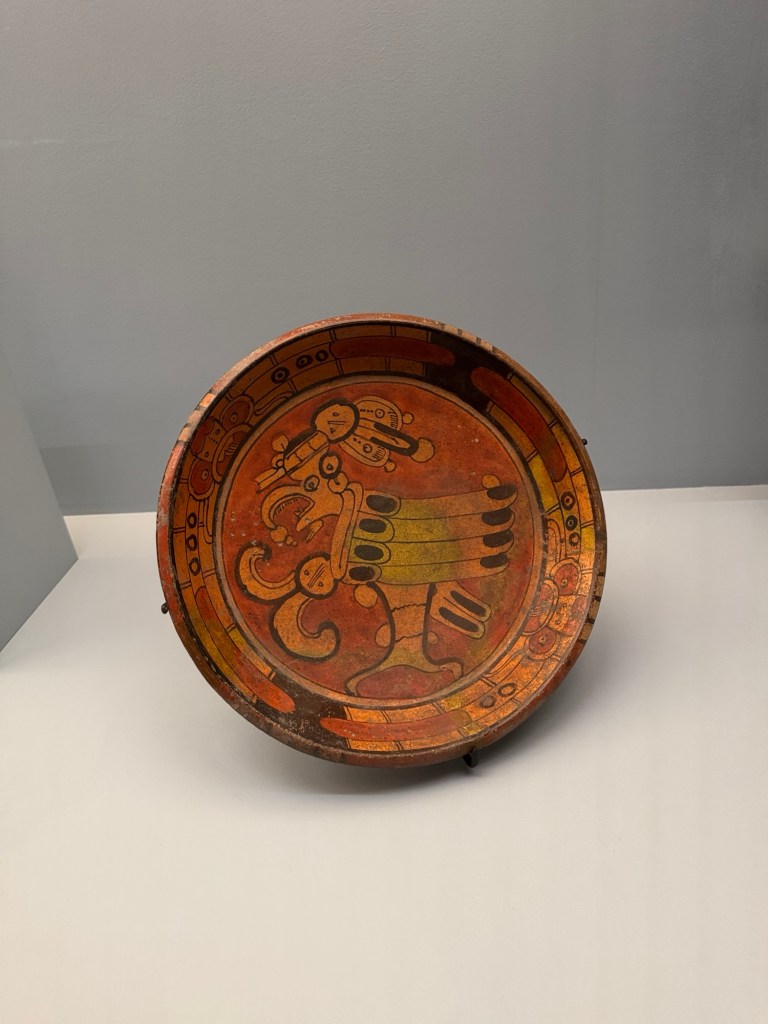
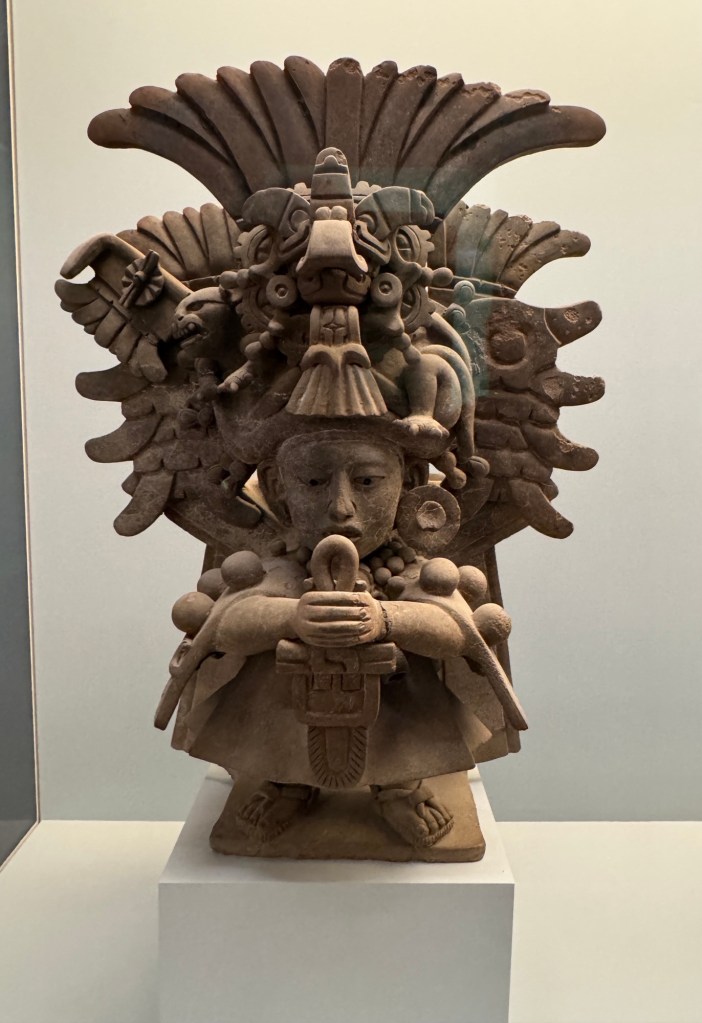
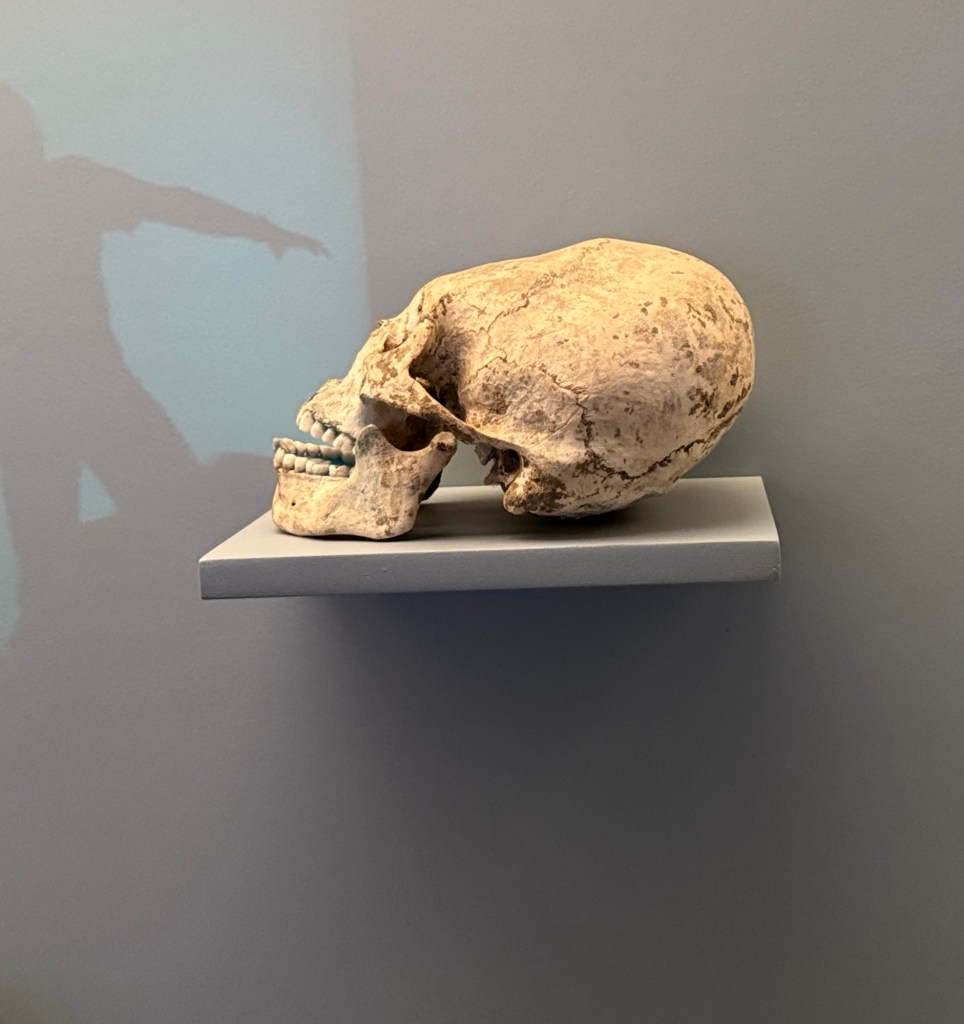
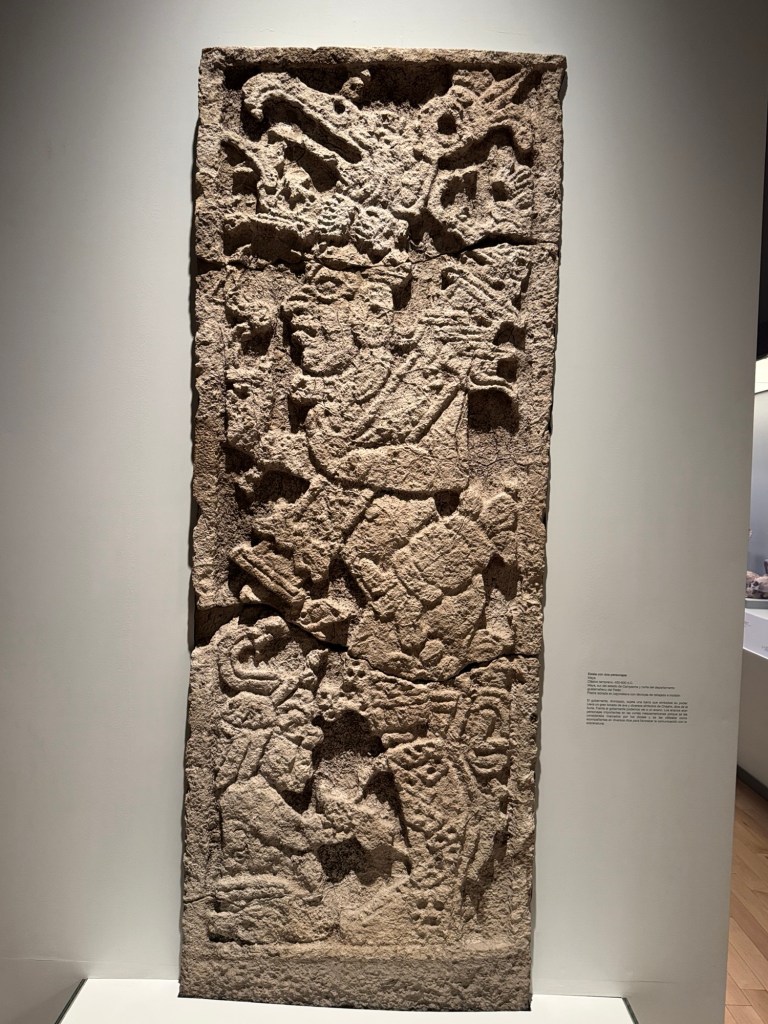
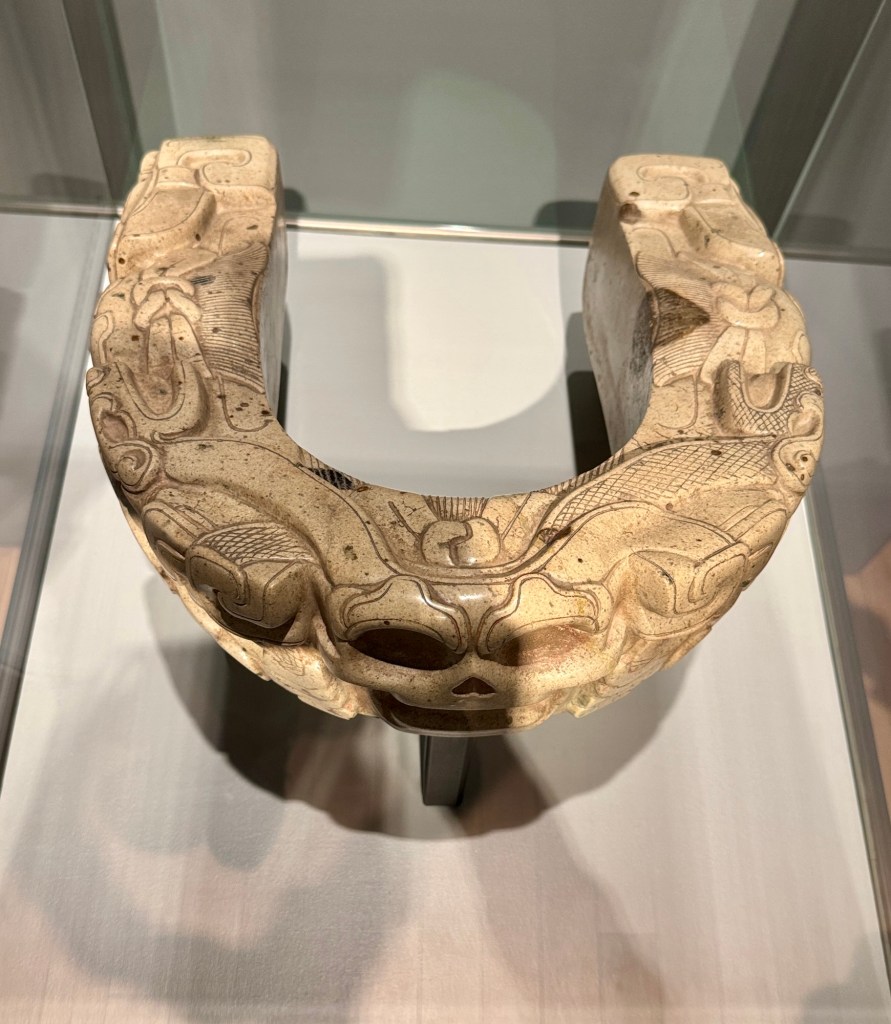
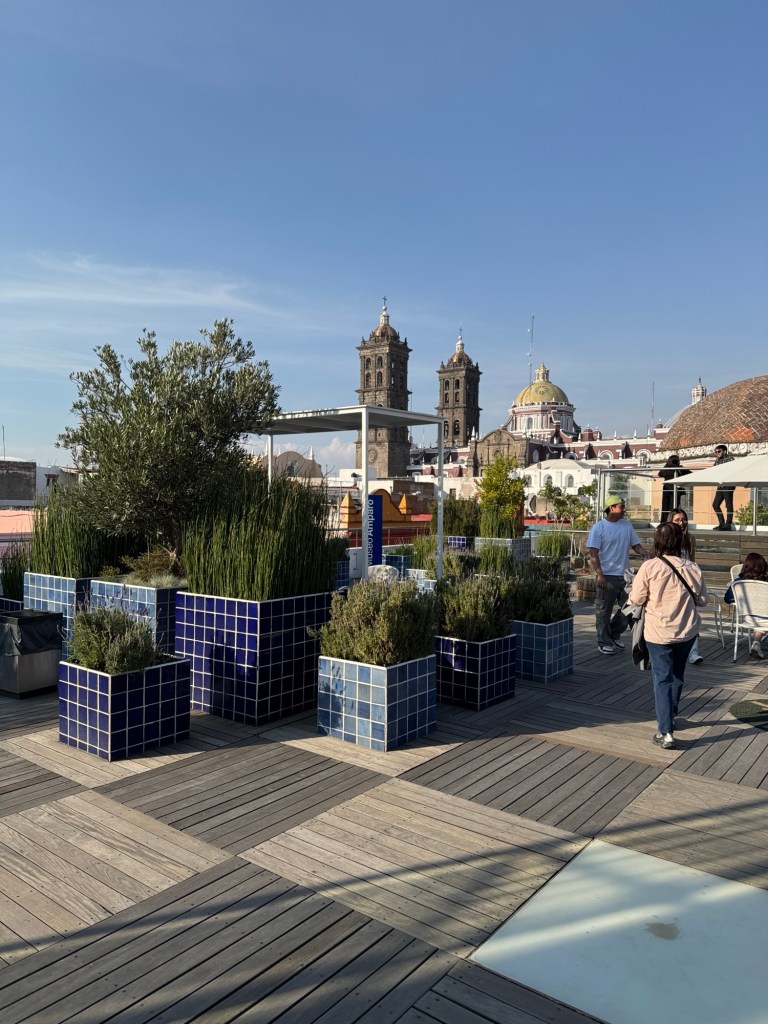
Throne back with a sovereign, a courtier (possibly a woman), and a deity in the center.Note the skull deformity which was a common practice among the nobles This plate also showed a bird watering a plant as in the Moon Pyramid mural Effigy vessel depicting a priest carrying a copal bag. From Zapotec, indigenous people of southern Mexico, primarily in OaxacaDeformed skull, evidence of a terrible practice among the MayaAgain a quetzal which we saw in Moon Pyramid. It was a sacred symbol in Mesoamerican cultures, often associated with liberty, nature, and divinity. This Stella showed a deified ruler holding a staff symbolizing his power. He wears a large bird headdress. In front of the ruler, is a dwarf. Dwarfs were important figures in Mesoamerican courts because they were considered marked by the gods and were used as companions in various rites to facilitate communication with the supernatural.Lucky that we saw this in the museum. Explanation below 👇The museum has a nice roof top cafe but unfortunately we didn’t have time for a coffee
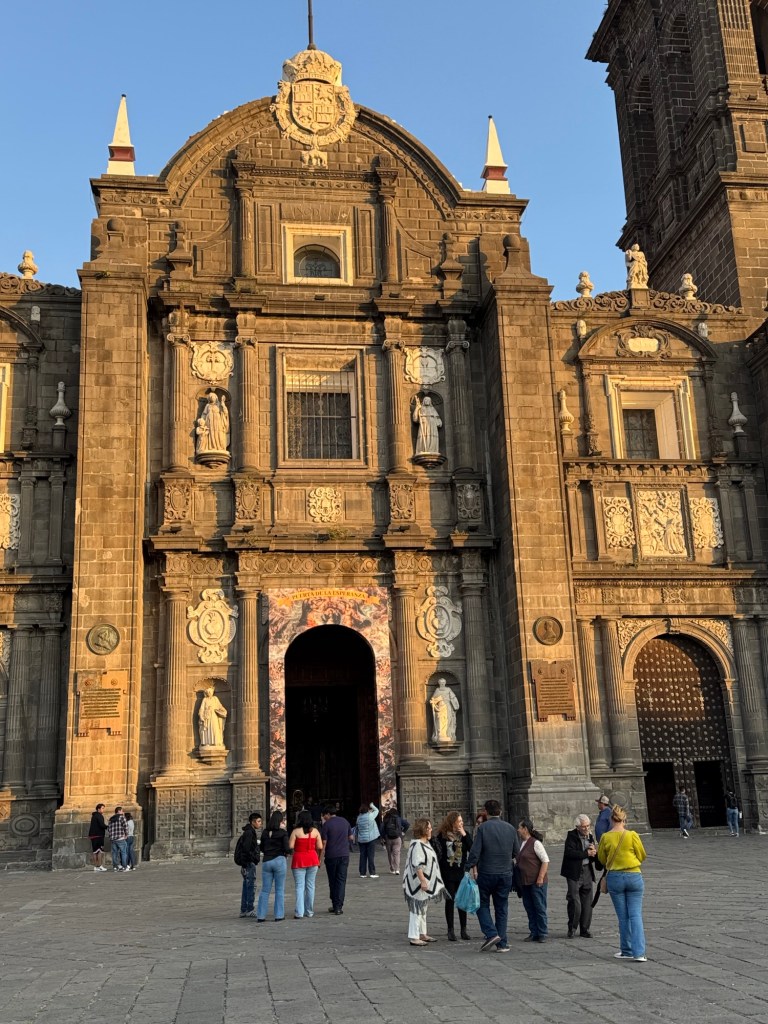
At dusk we visited the Puebla Cathedral
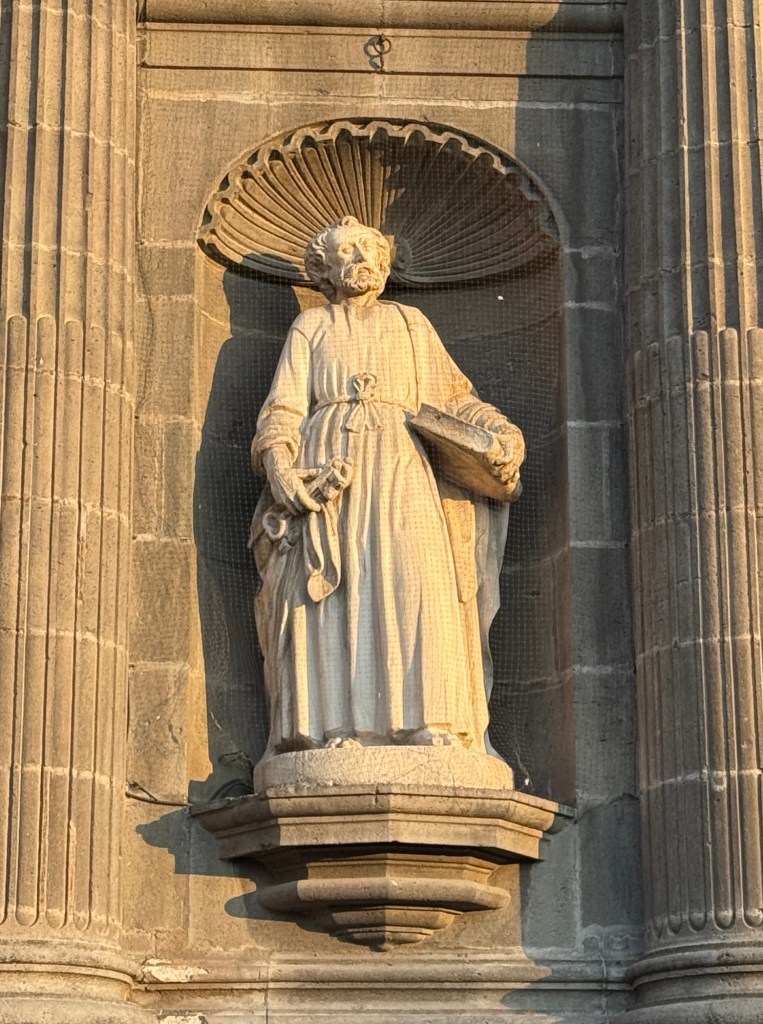
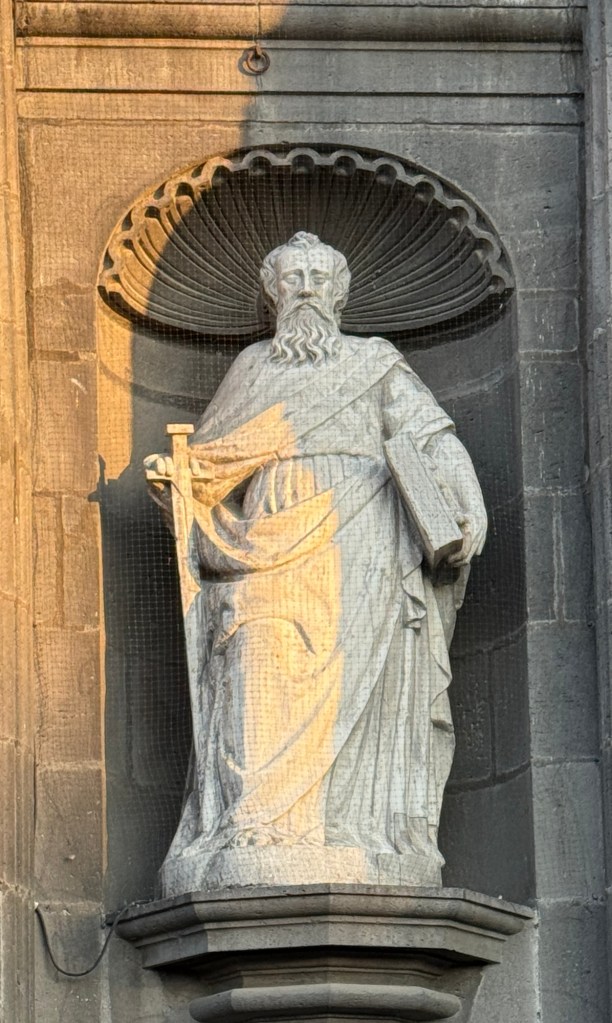
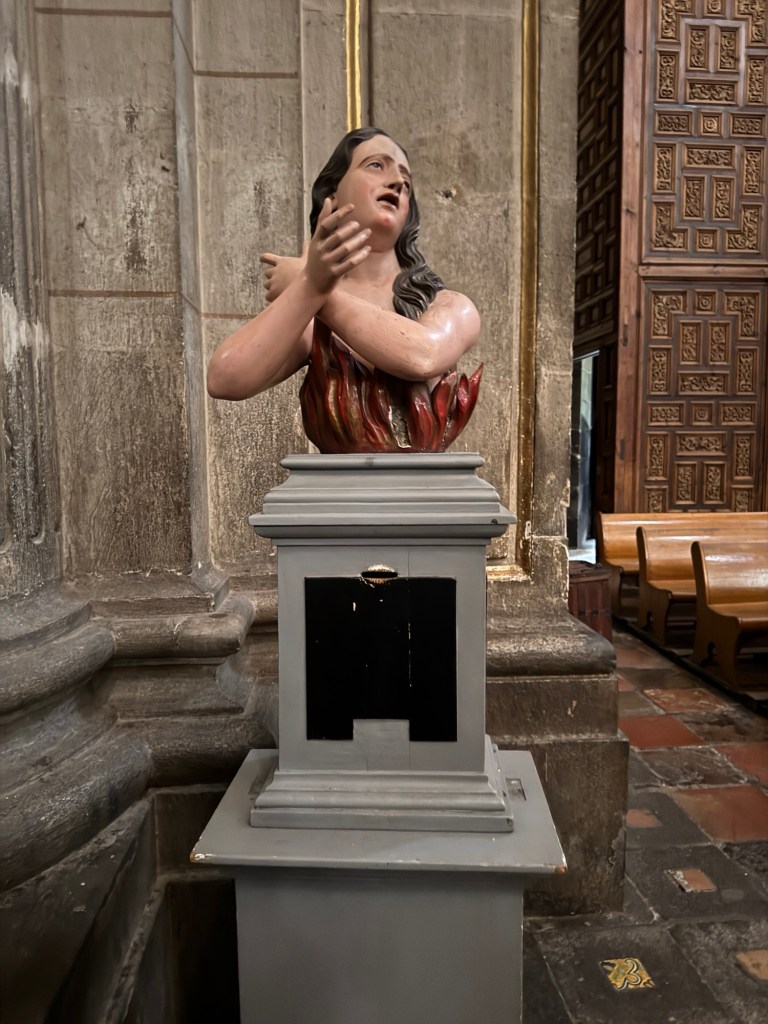
The glow of golden light is magnificent per seSt Peter holding a key and bookSt Paul holding a sword and bookA donation box inside. Above it is a woman suffering in hell, burned in fire. So donation or hell!
Dinner in our hotel, Puebla Banyan Tree
Day 8 November 18 Tuesday
We met our third guide Carlos Cirigo in the morning and started with the Church of Santo Domingo in the morning.
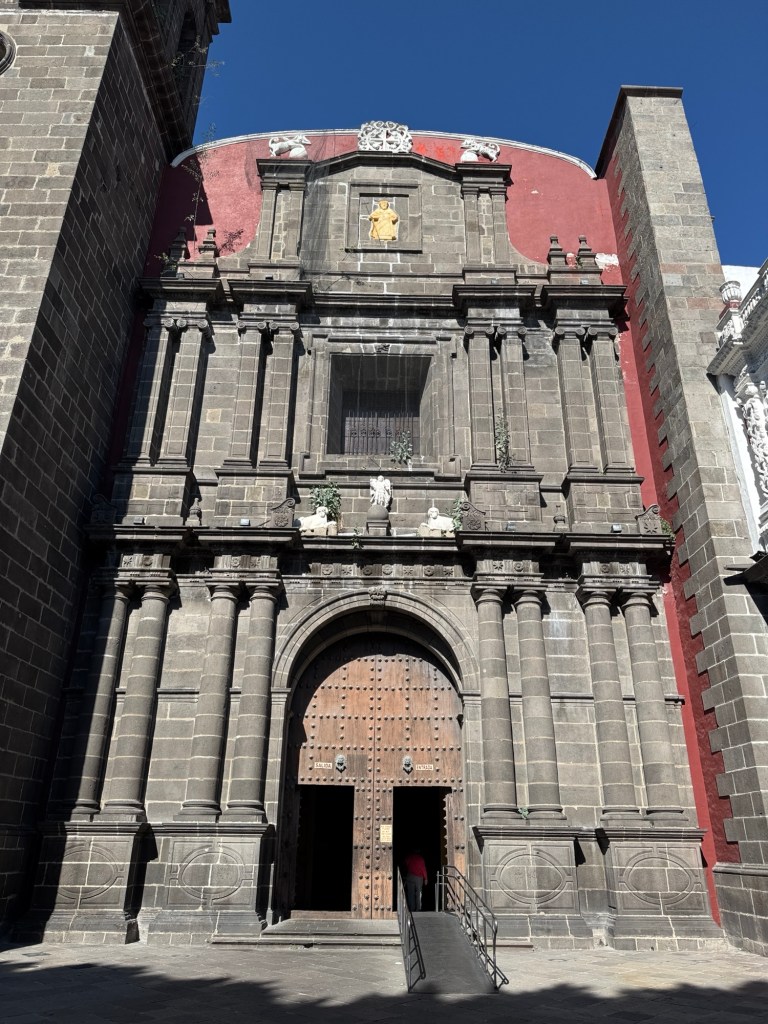
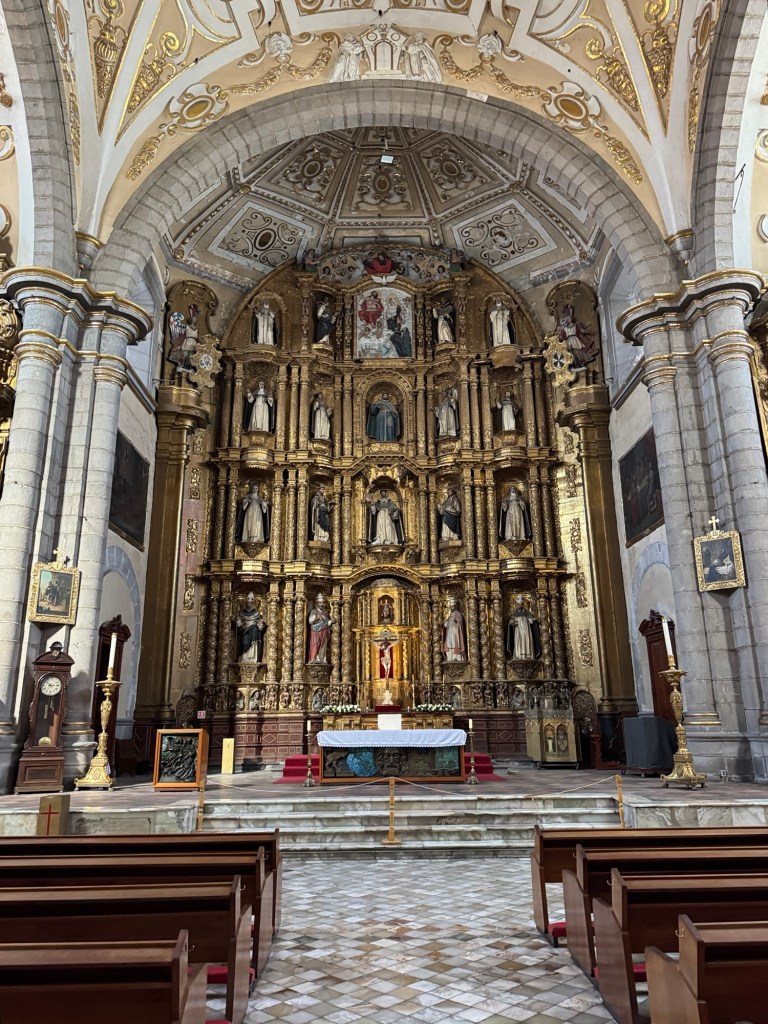
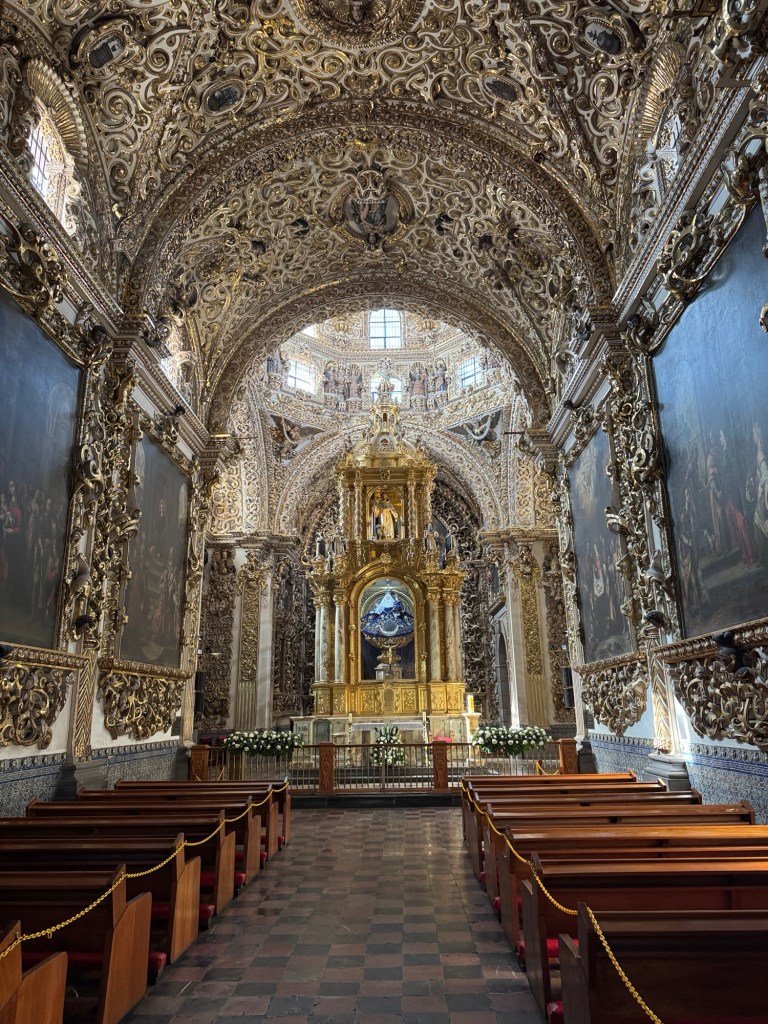
The church is a prominent example of the New Spanish Baroque architectural style. The exterior here is sober and built from gray stone.The interior is full of bright ornate Chapel of the Rosary, often called the “Eighth Wonder of the World” due to its lavish use of gold leaf.
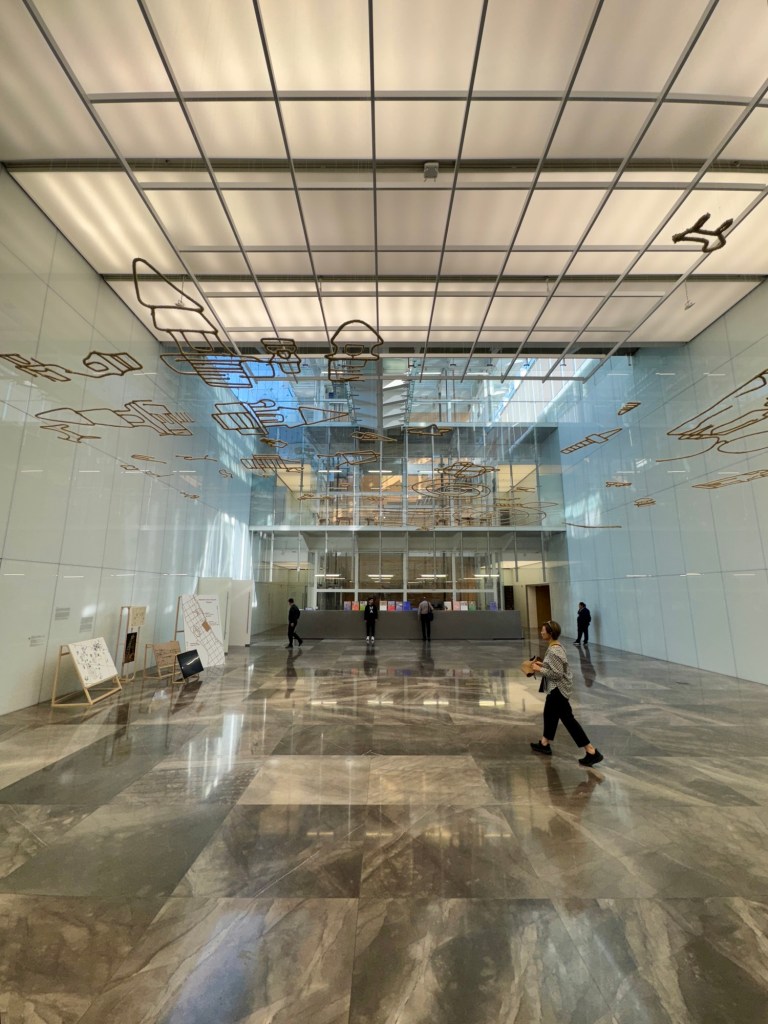
Next we went to the International Museum of the Baroque
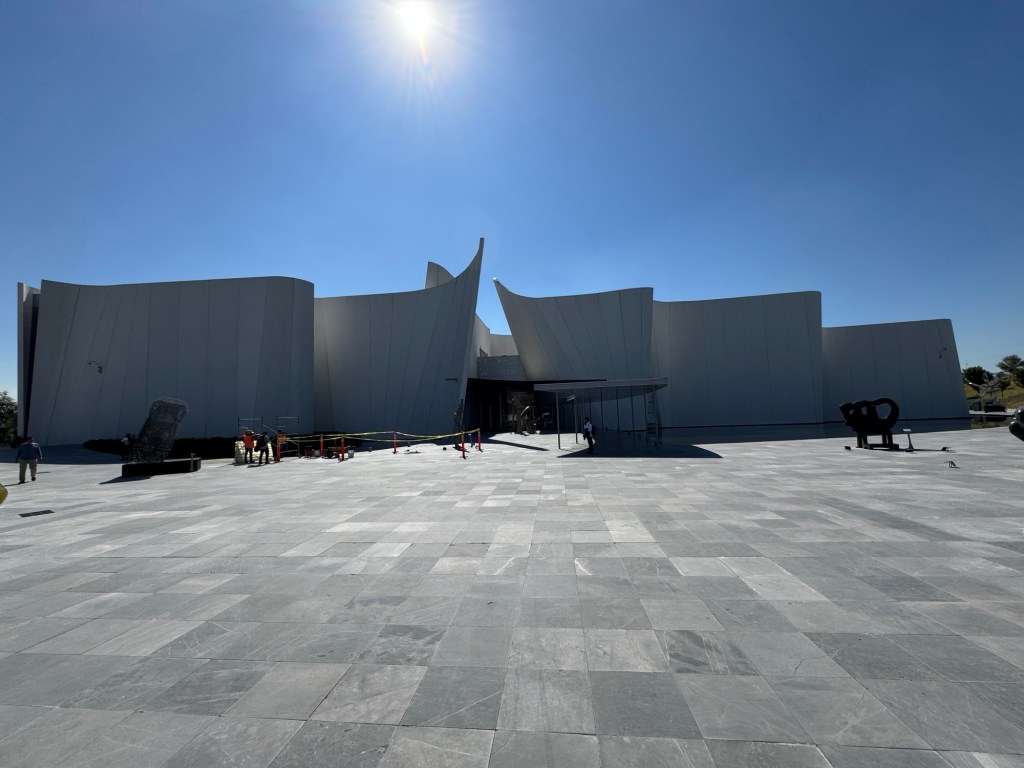
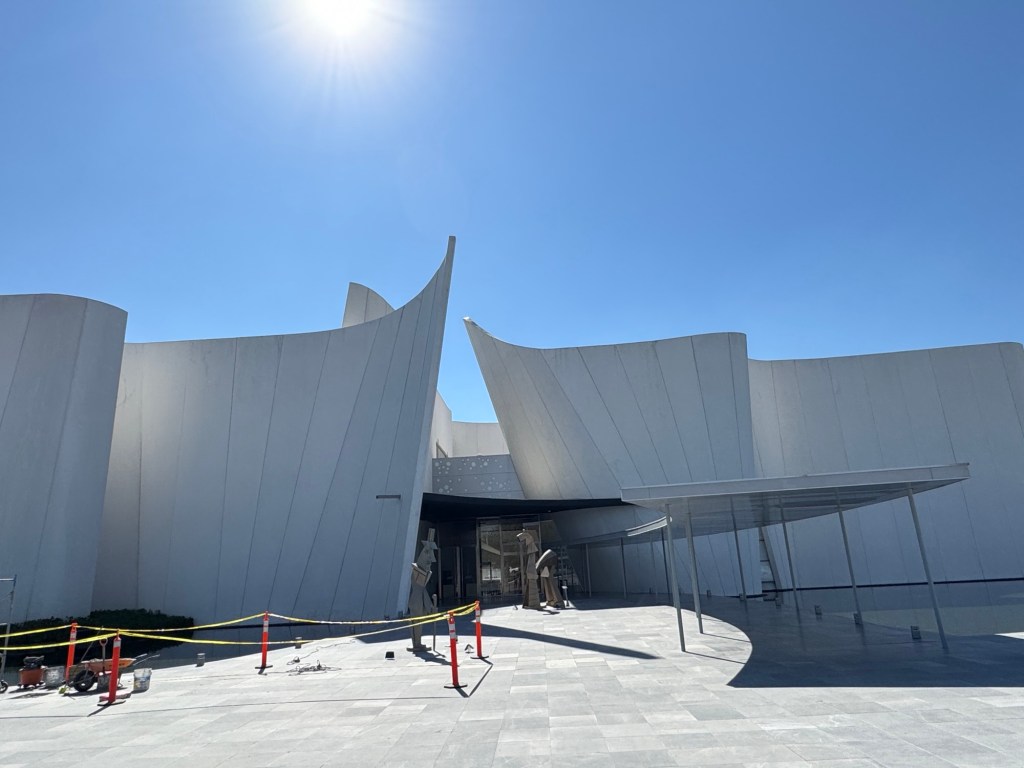
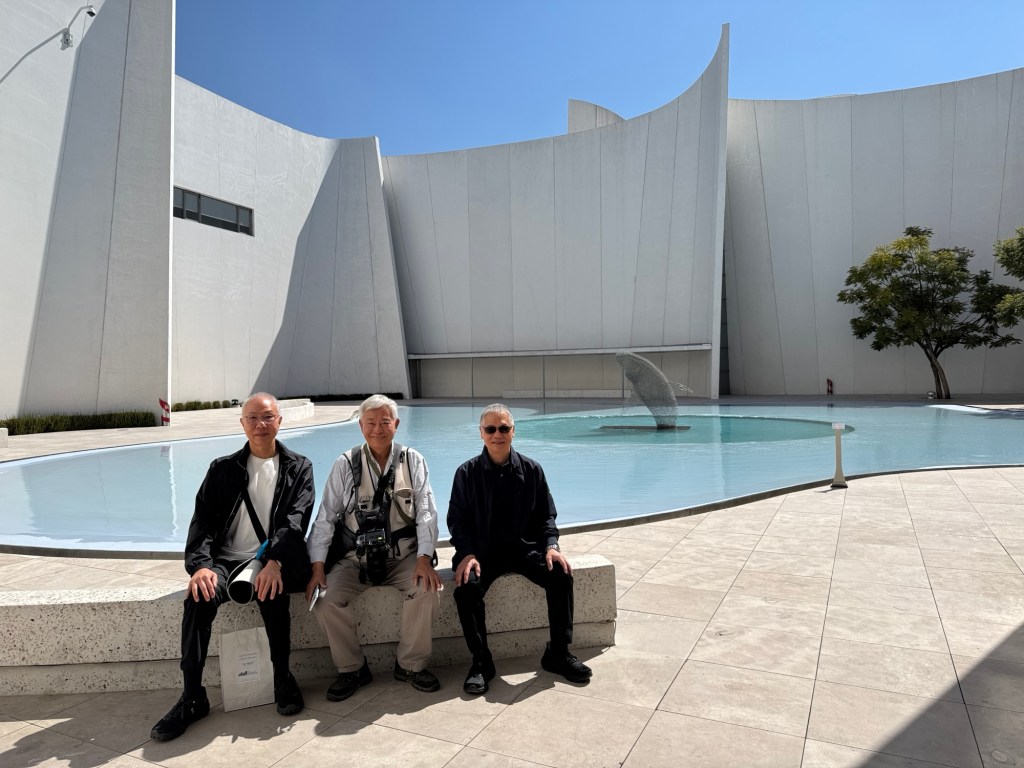
The museum was designed by the renowned Japanese architect Toyō Itō and opened on February 4, 2016. It is an art museum dedicated to the Baroque period, showcasing art, architecture, fashion, music, and theatre from that era.
The building is known for its striking, all-white, curved concrete walls that some describe as looking like paper stood on end.
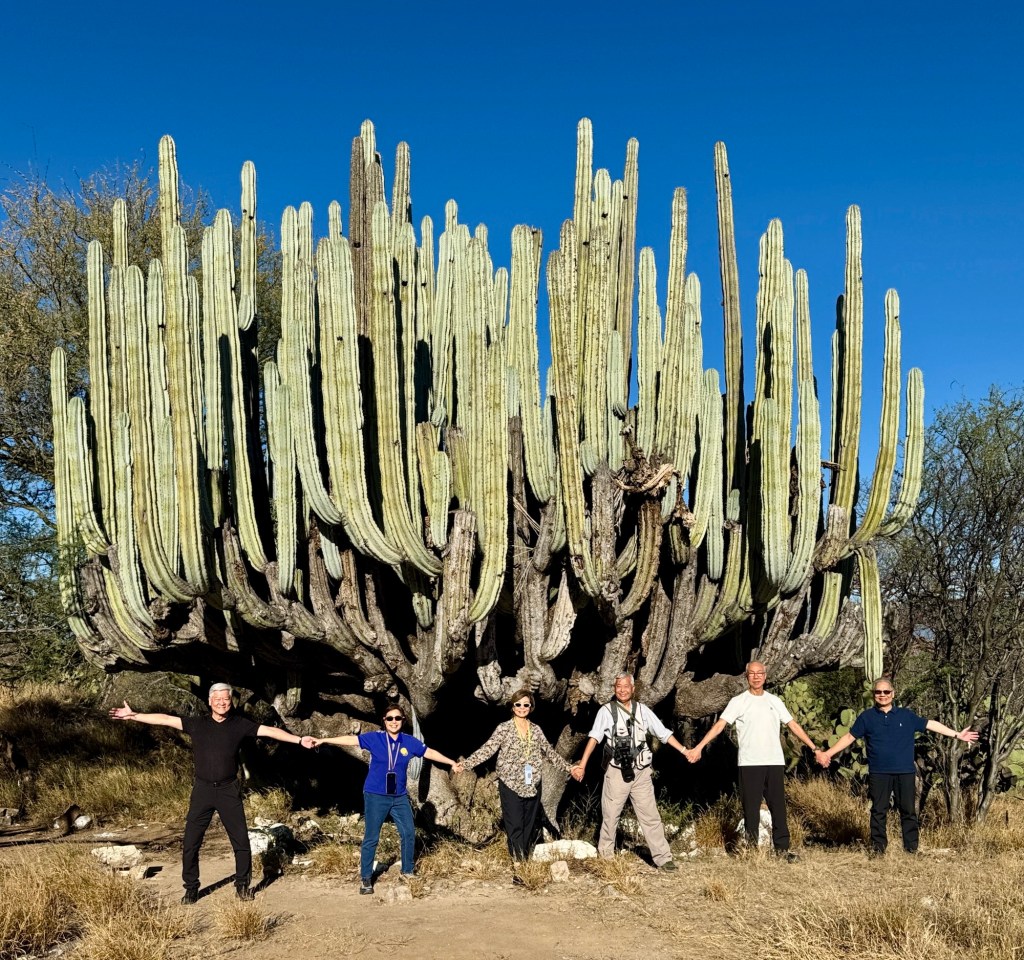
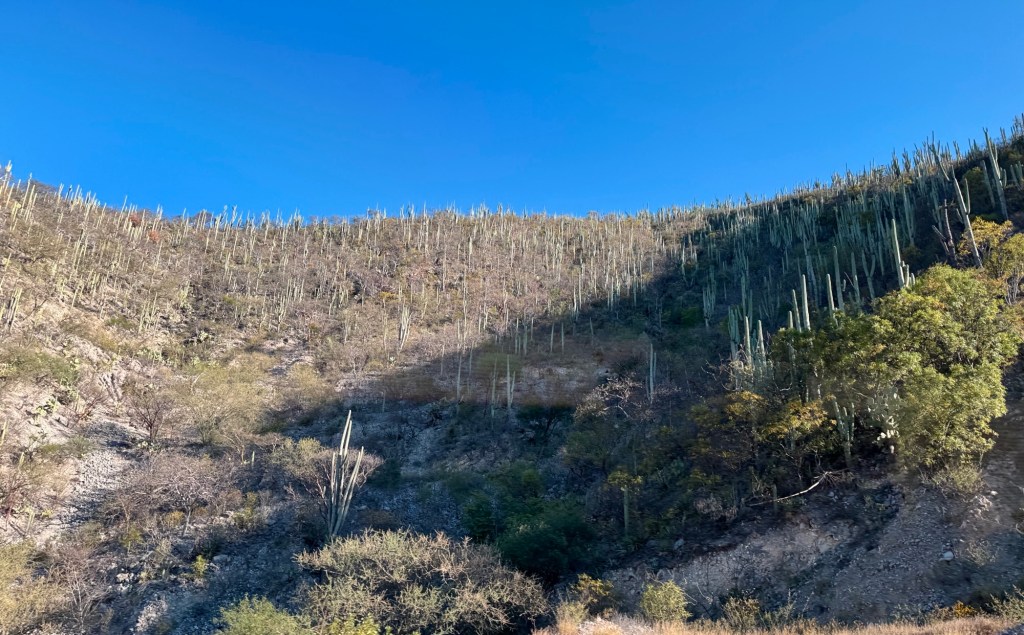
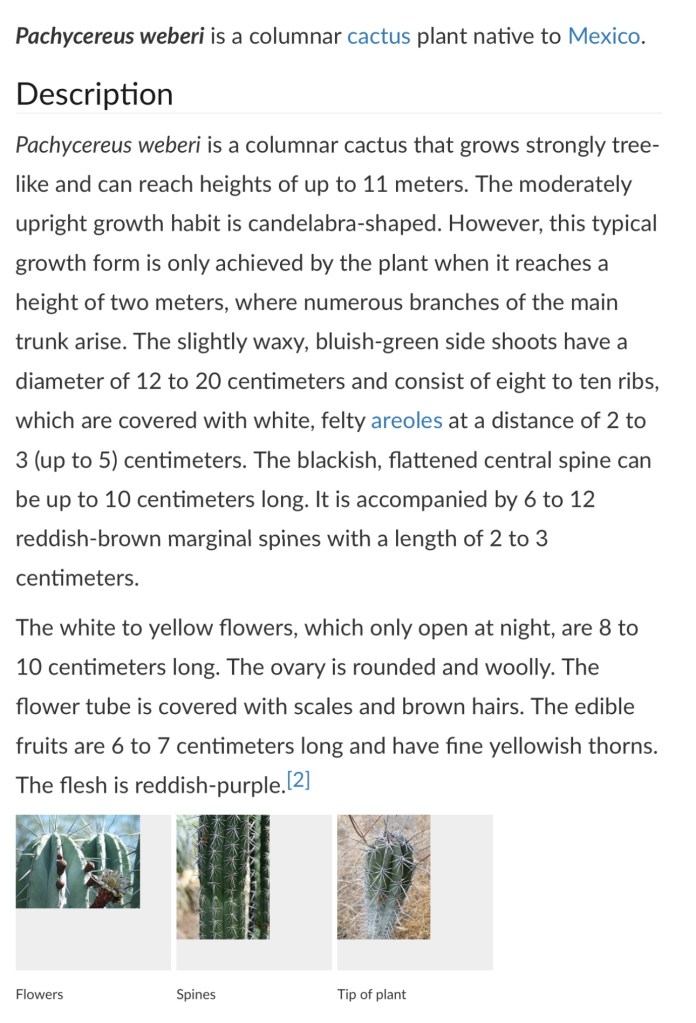
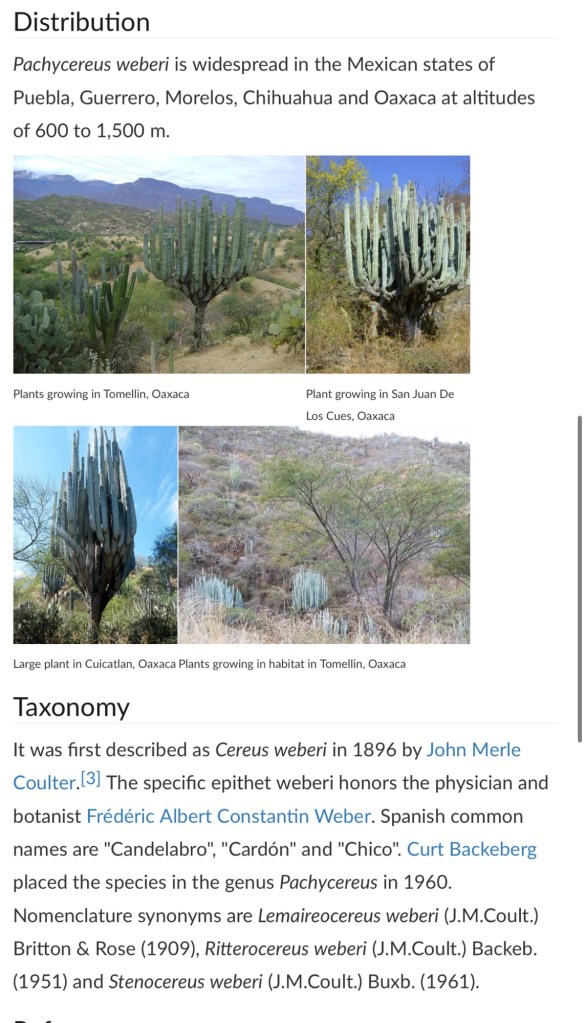
Then there was a long drive to Oaxaca. But on the way we could visit a 800 years old cactus. Its stem became wood like. So amazing to see this cactus.
Cactus jungle
In the evening we checked in the Grand Fiesta Americana Oaxaca and had dinner there.
Morning view of the hotel
Day 9 November 19 Wednesday
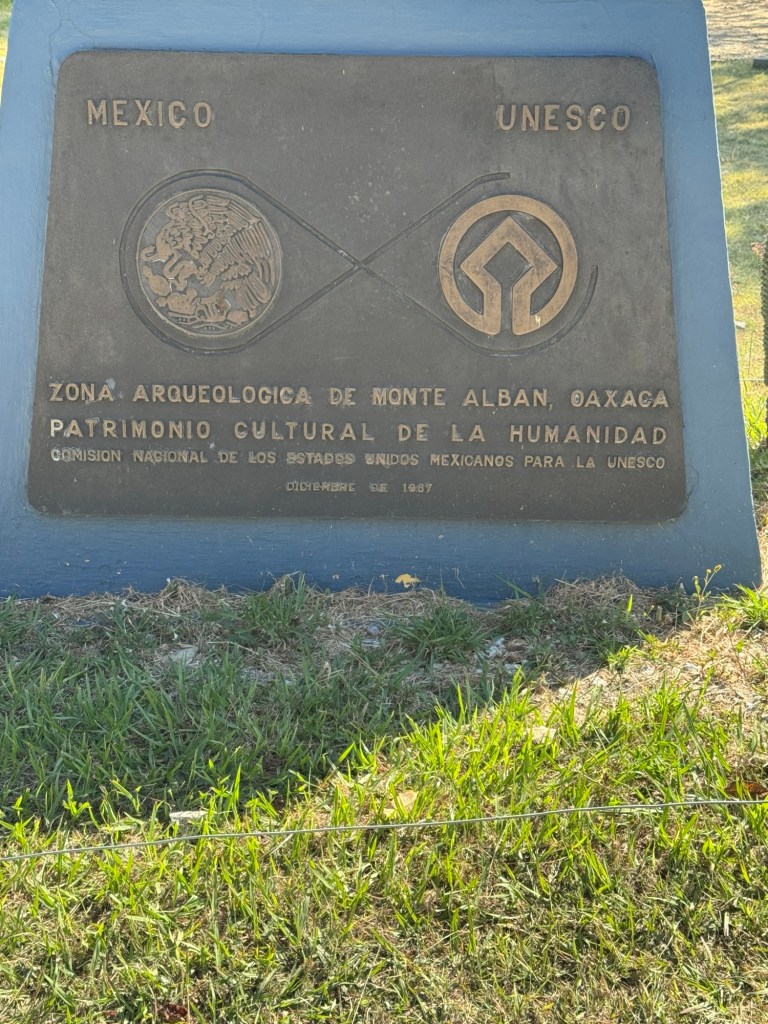
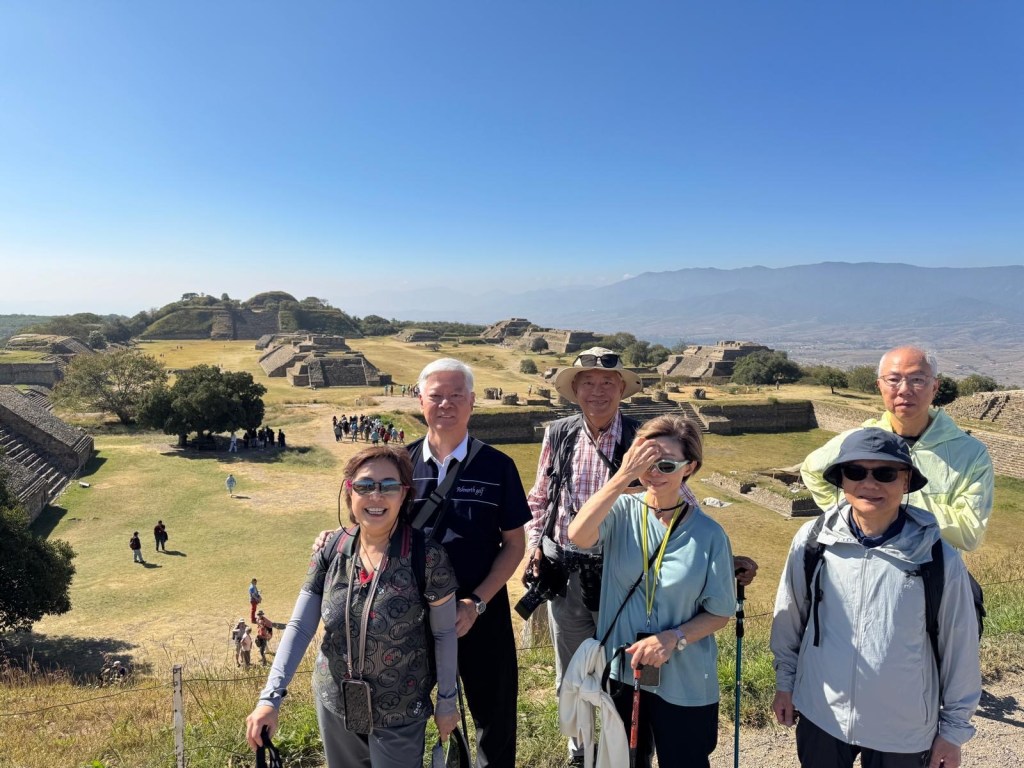
In the morning we went to Monte Alban, a World Heritage Site
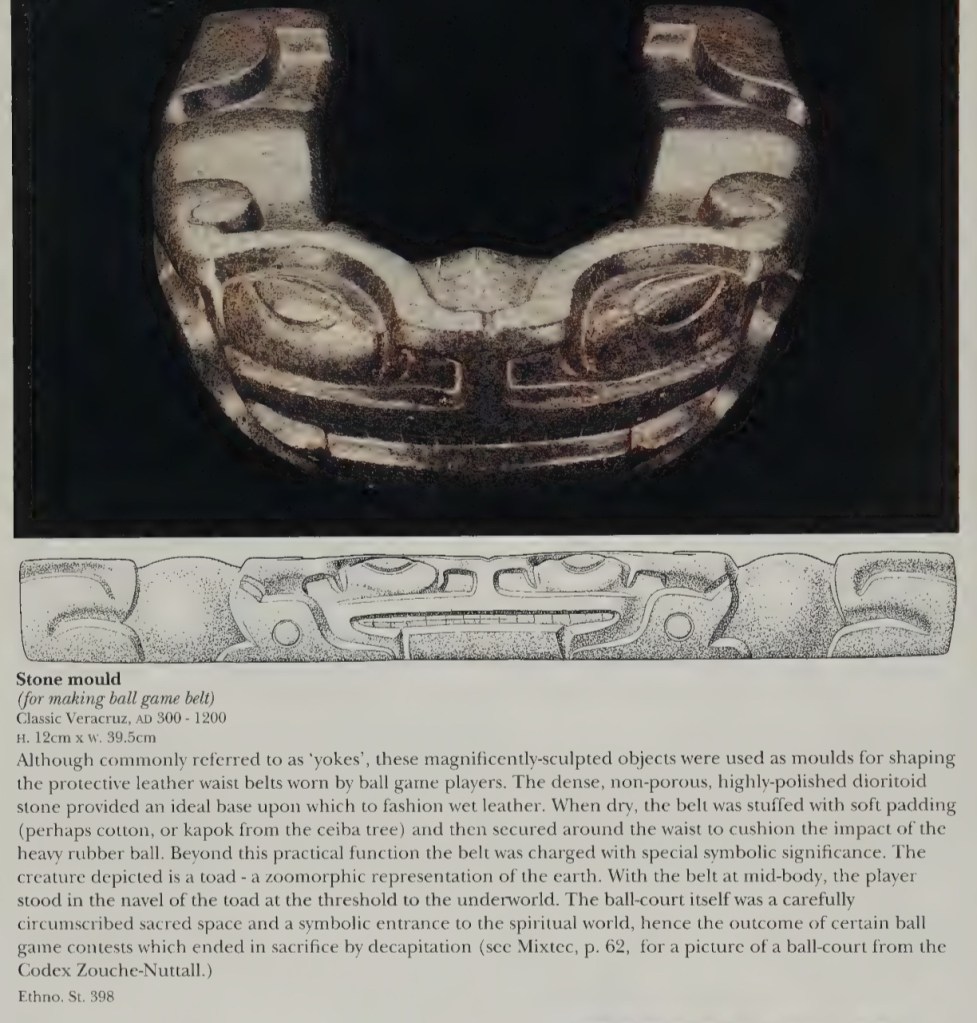
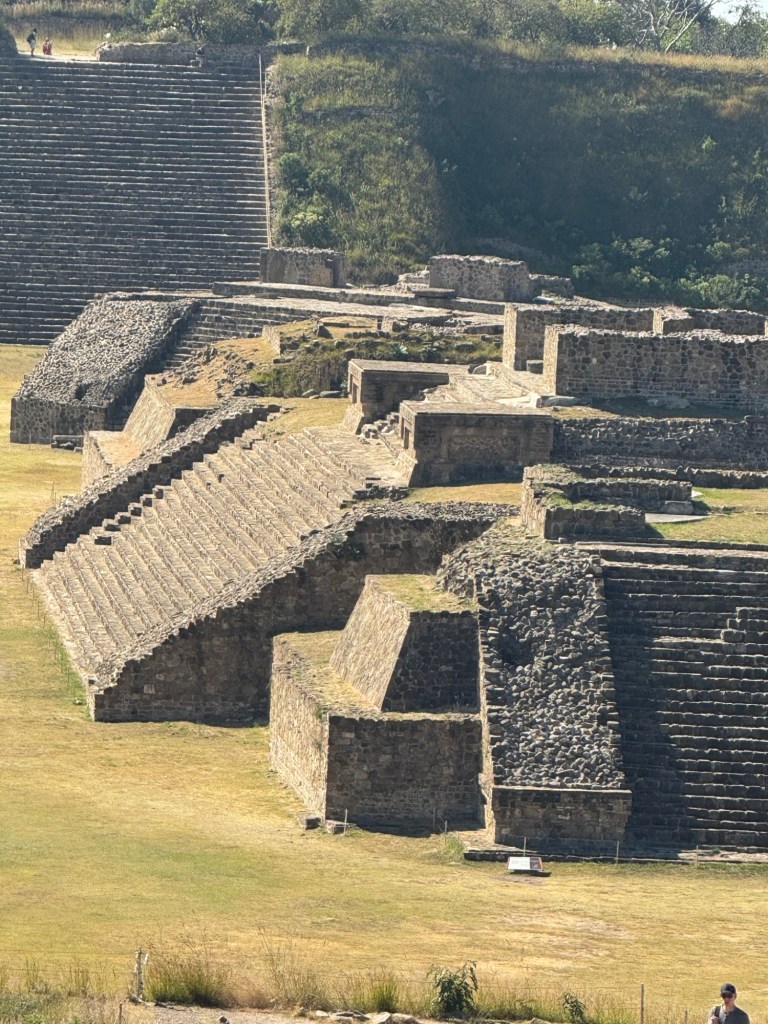
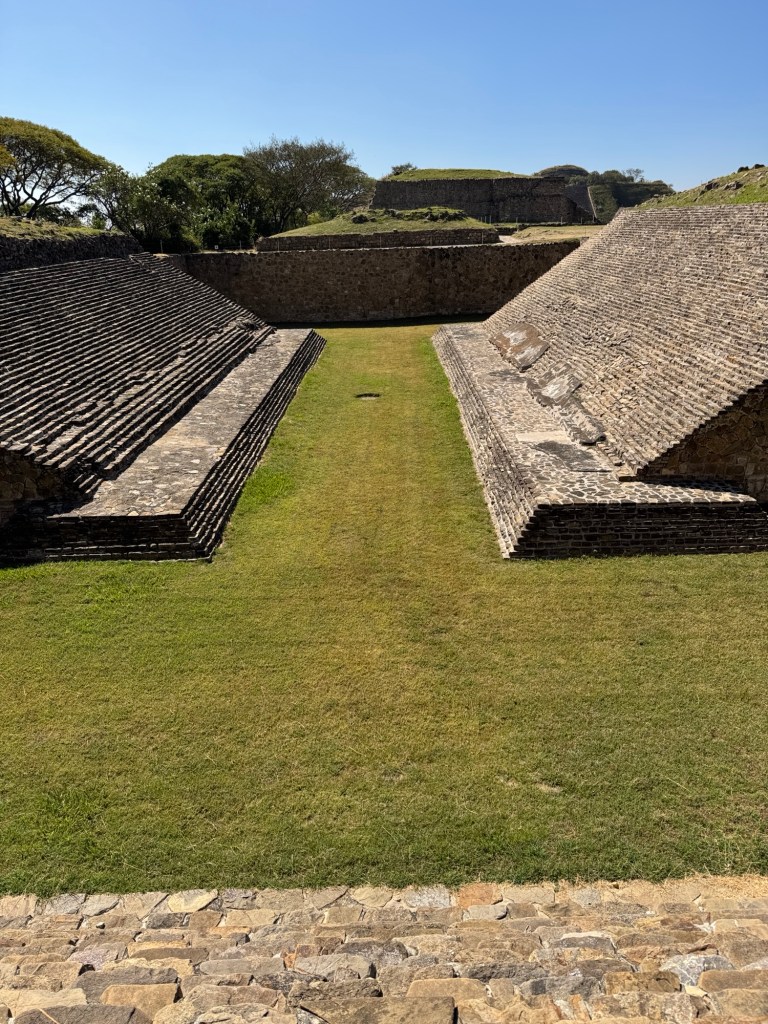
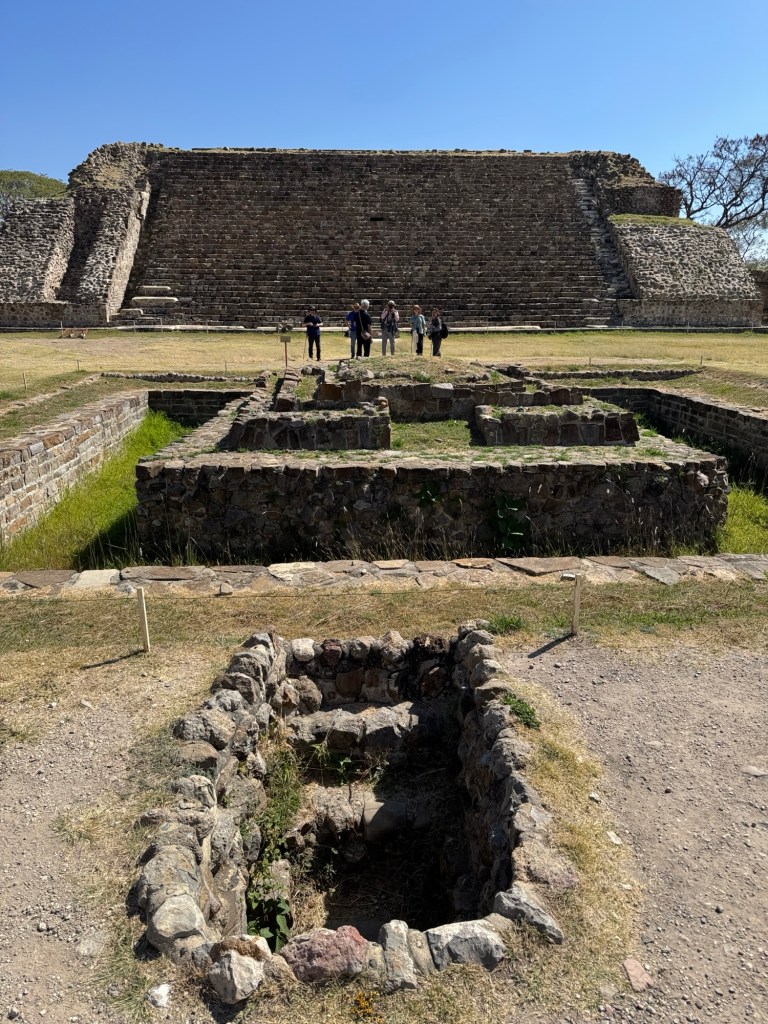
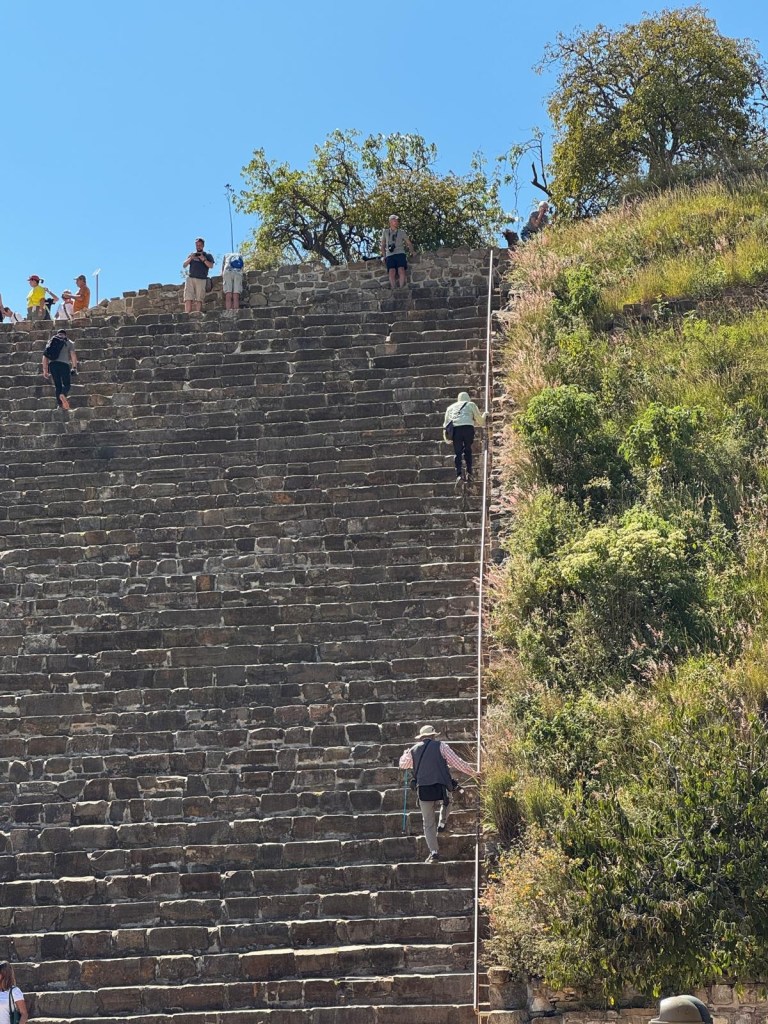
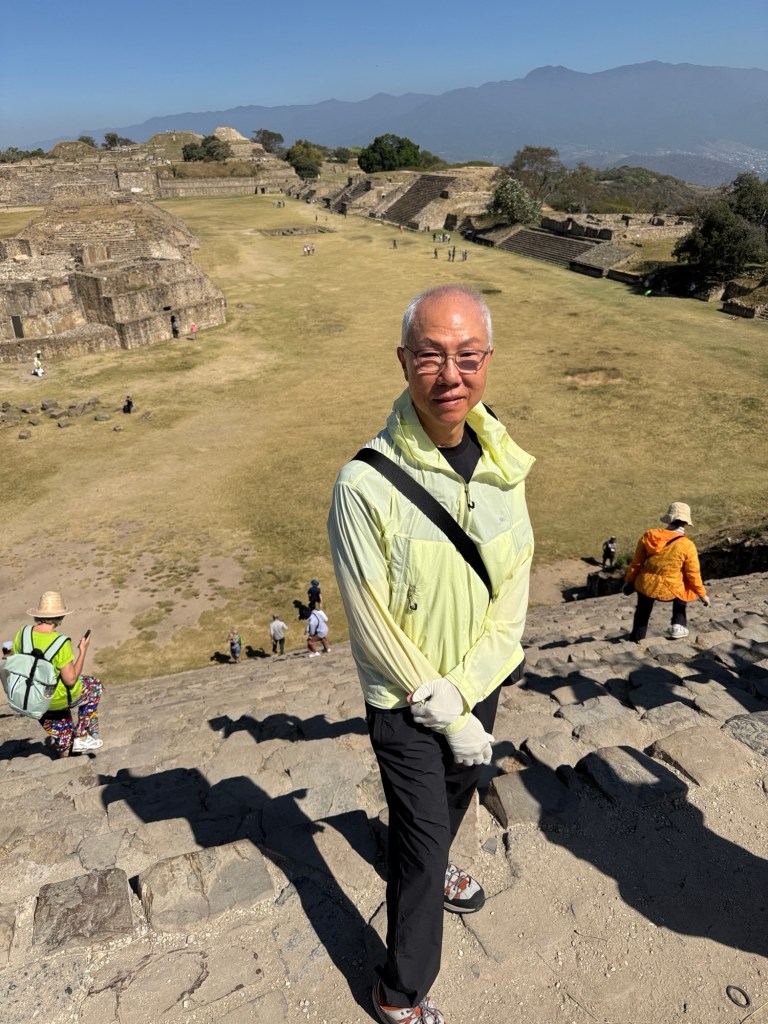
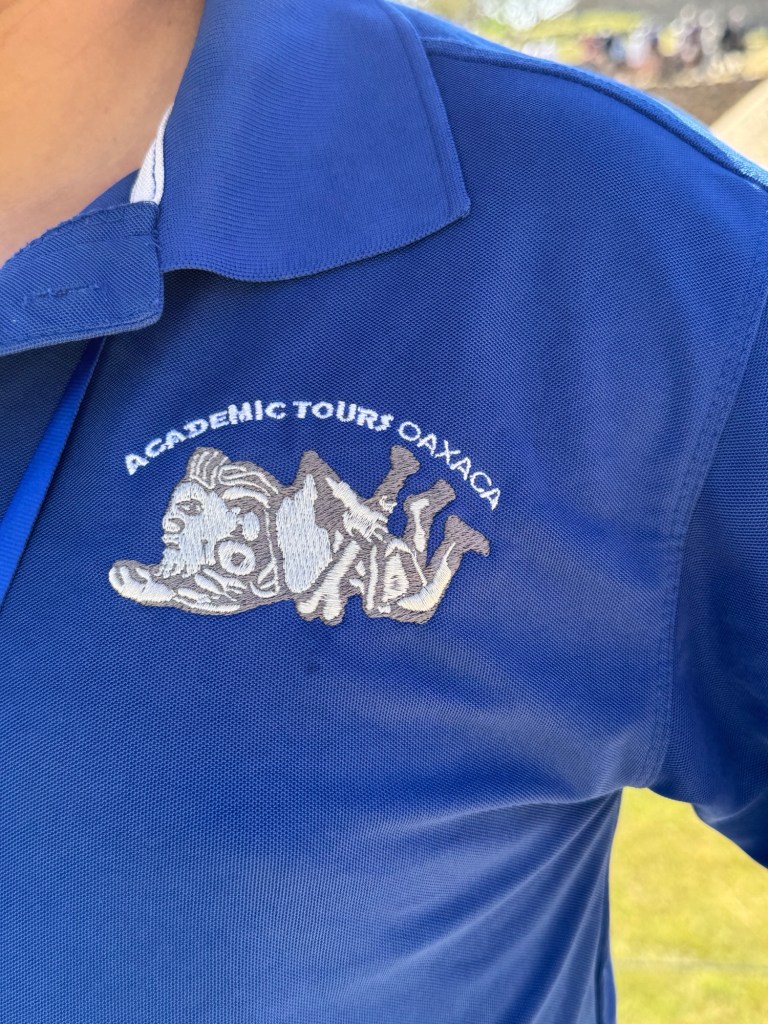
All the small pyramids are aligned in an axis except the last one. Because the last pyramid housed the astronomical study place, so it had to face a certain direction not in line with the axis of the other pyramids. The grand ball court. The Maya did not kick or threw the ball. They hit with their hip so they had protected leather belt at hipEntry of tunnel on either side Joined to the hole in the middle of the pyramidAnother pyramid to climb On top, there is no hand rail so slightly more difficult Carlos wears this T shirt. A ruler holds a femur bone of his ancestor signifying a transfer of power and status
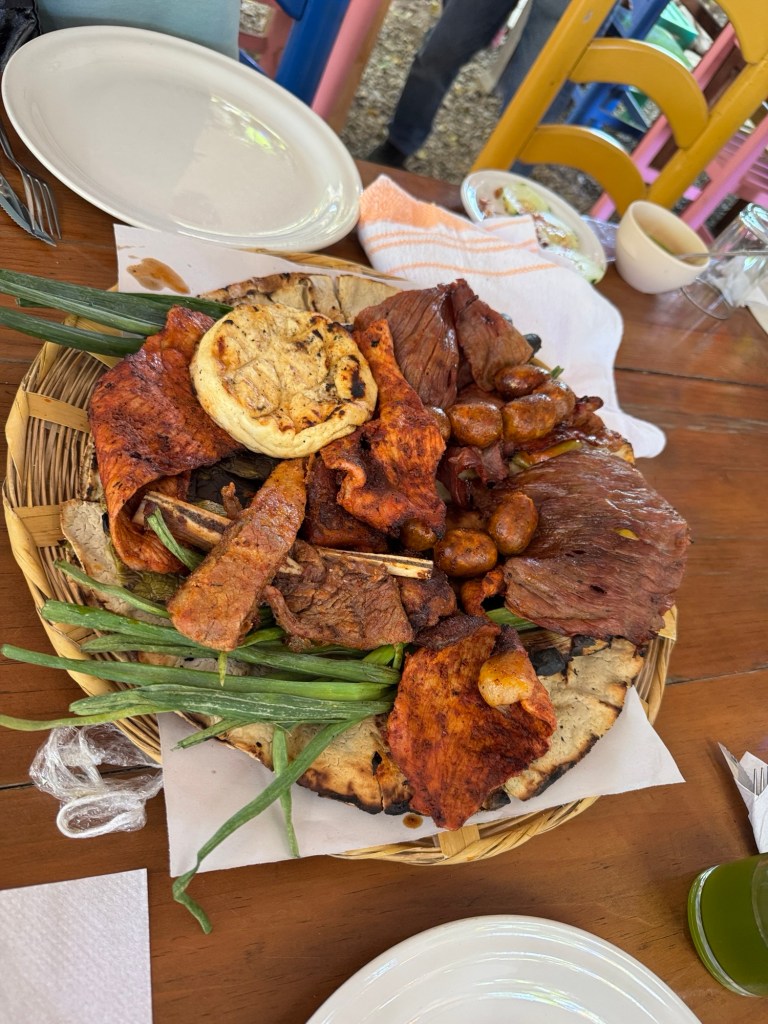
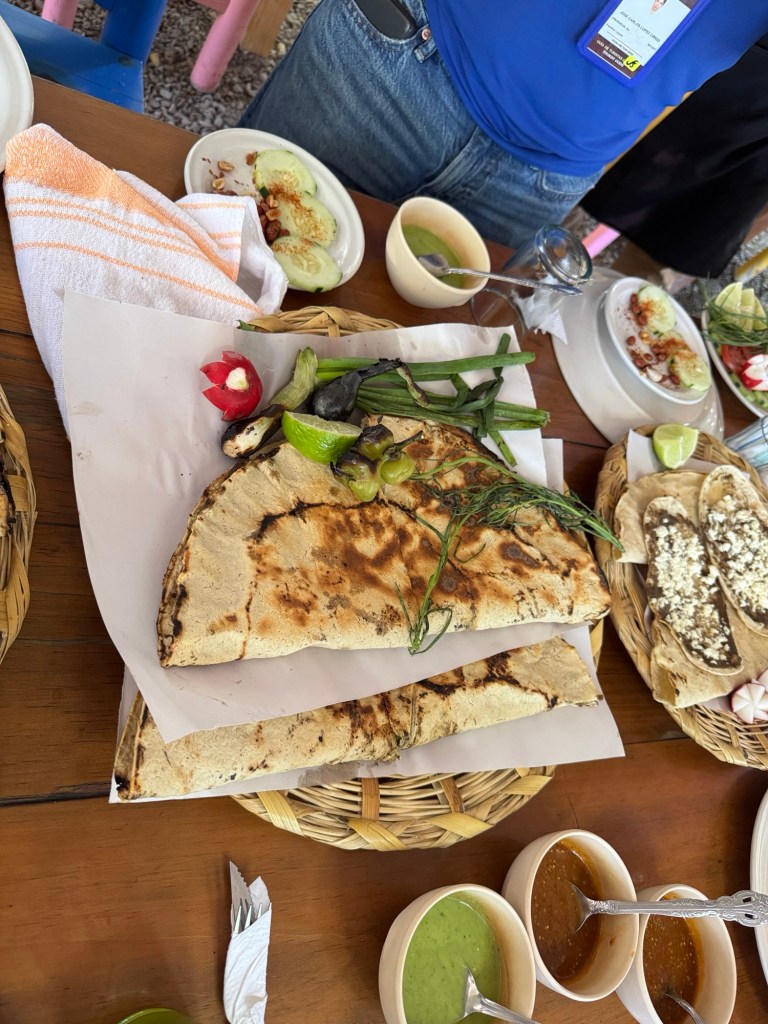
We had lunch in a local restaurant to try the ‘giant pizza’. Carlos is a 暖男 central heaters who will take care of everyone around him and ordered a lot of food for us, and said there was no problem if we couldn’t finish them . The food would go to the dogs, no wasting,
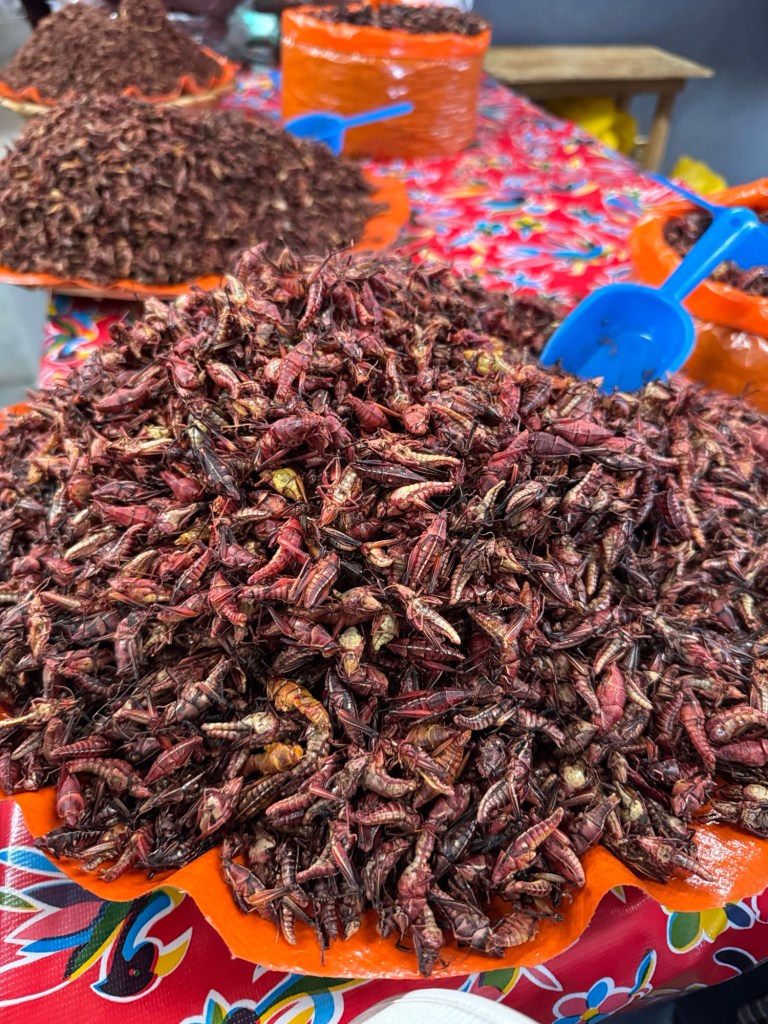
In the afternoon we went to a market to try the scorpion. Most of us tried them, not delicious but exotic…..
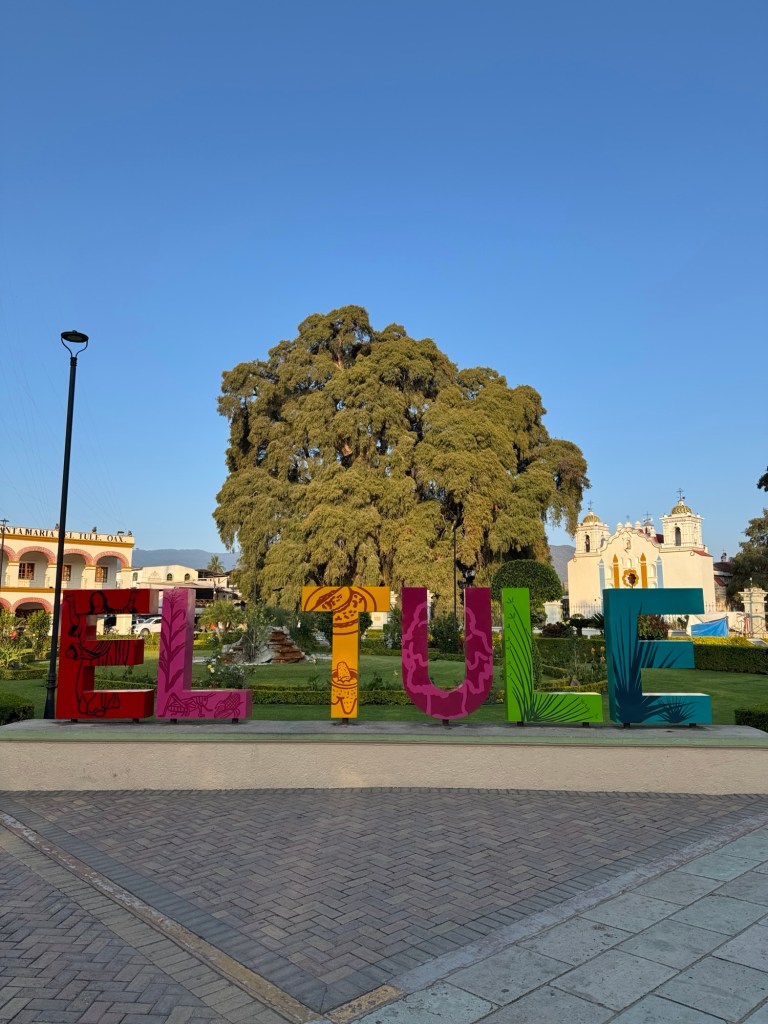
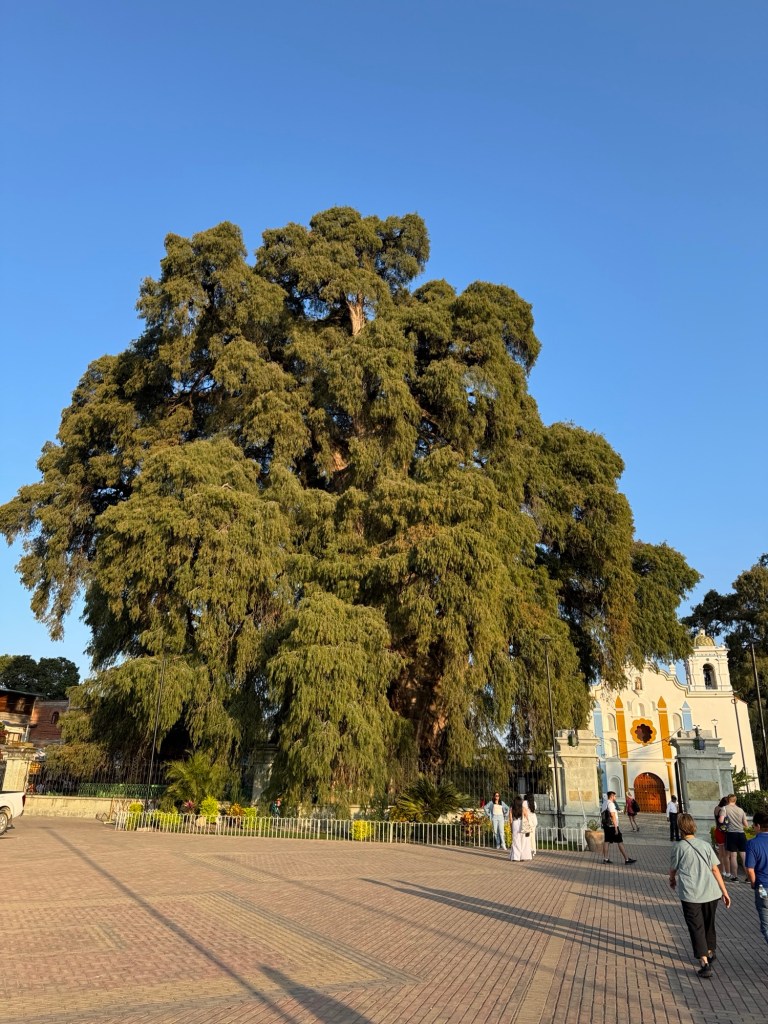
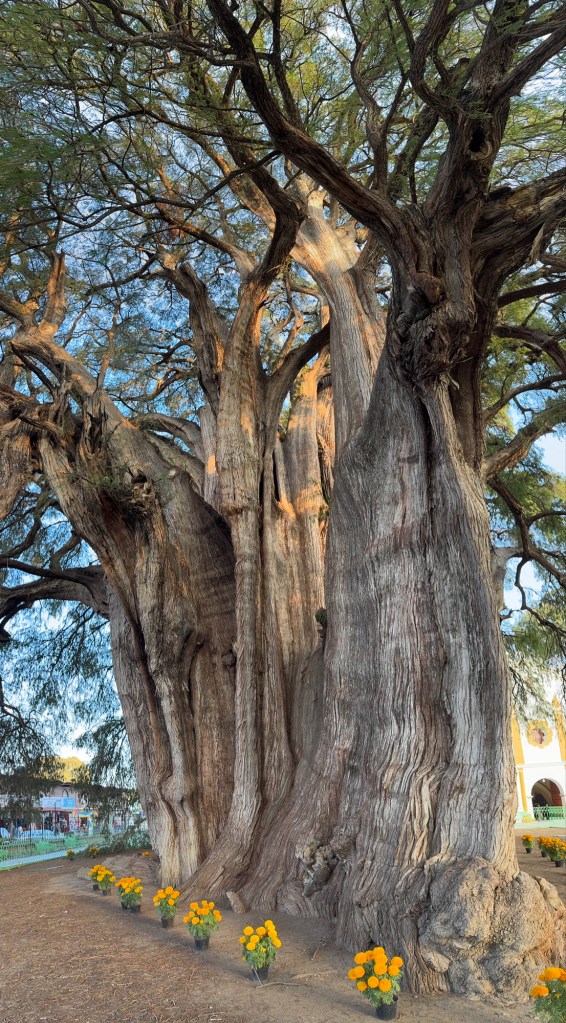
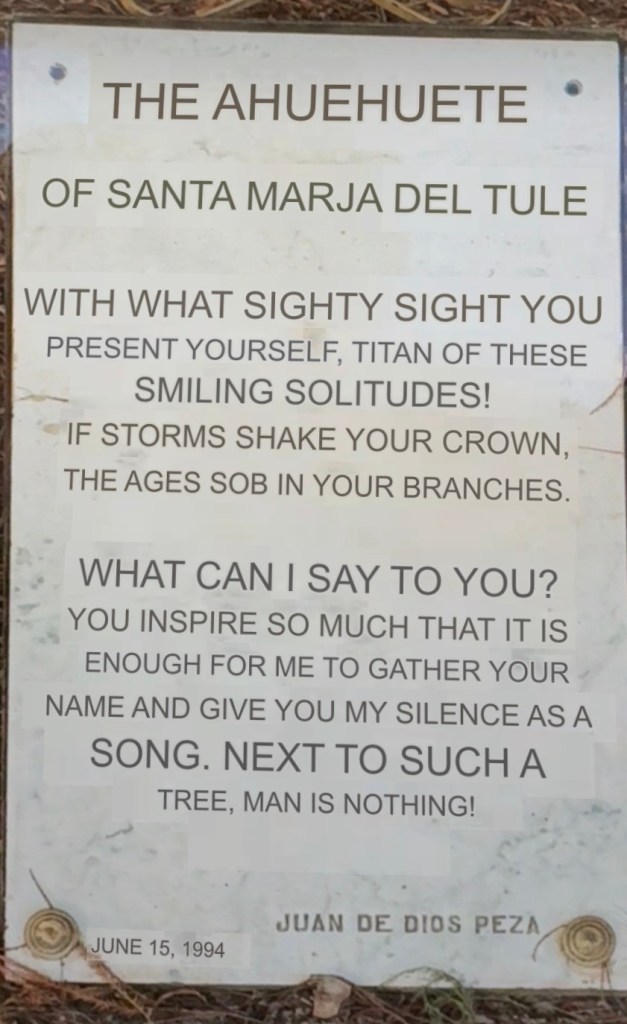
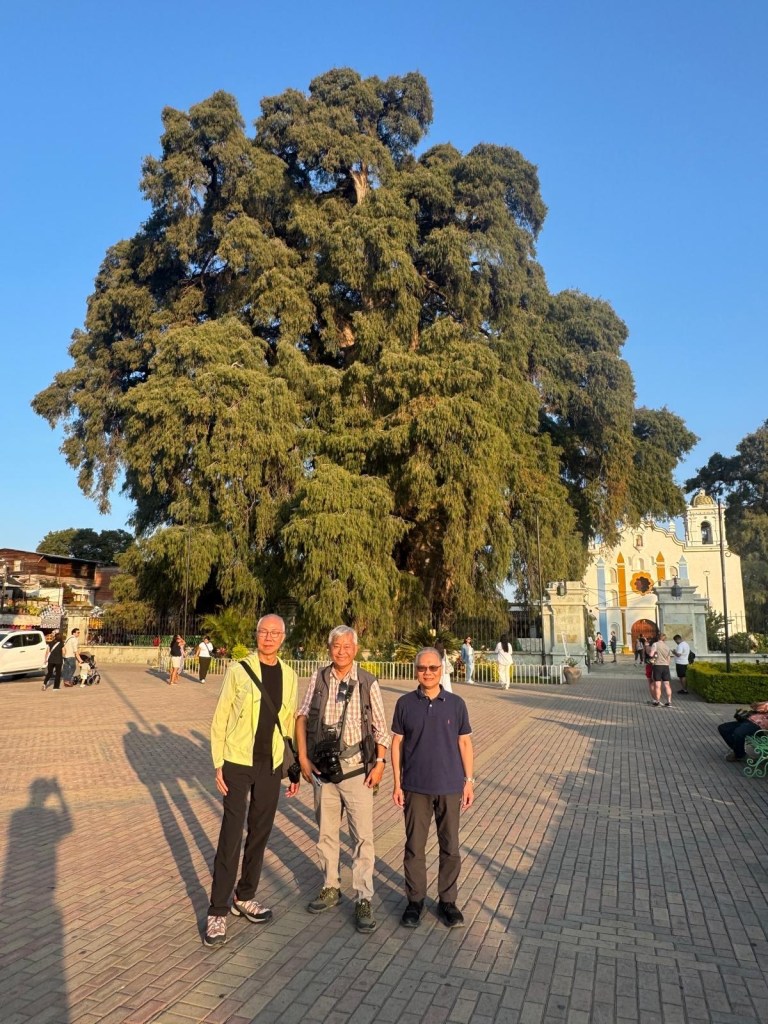
Before dinner we went to visit a 2000 years old tree. This is another surprise from this trip. 800 years old cactus and then a 2000 years old tree. Couldn’t have asked for more
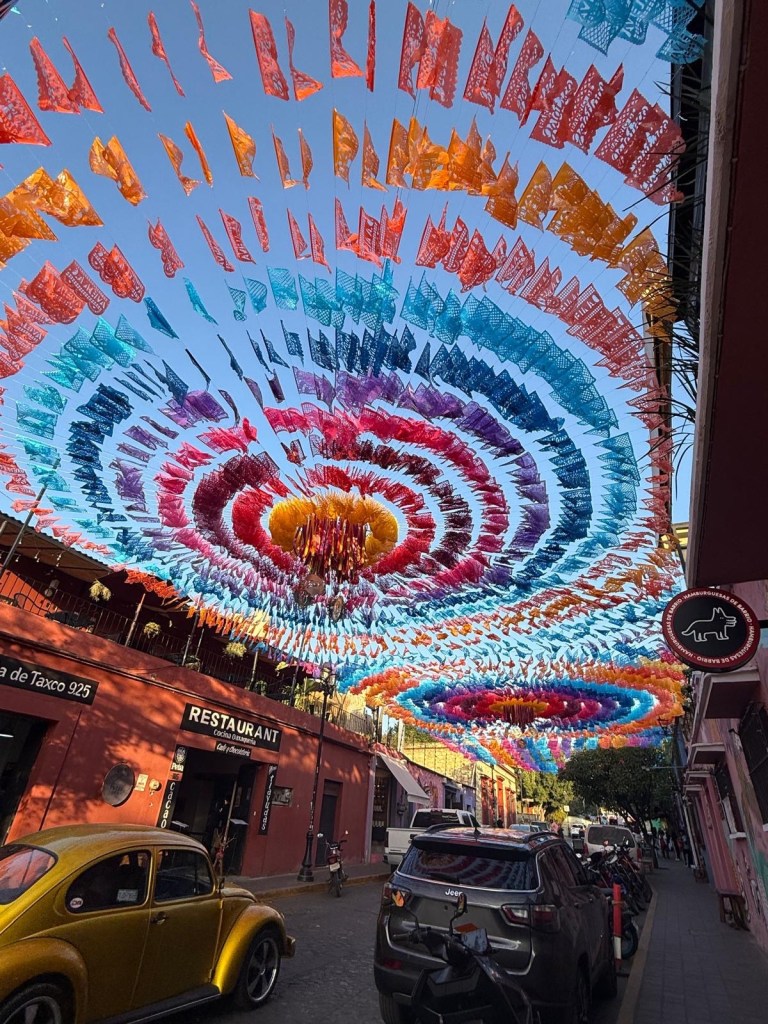
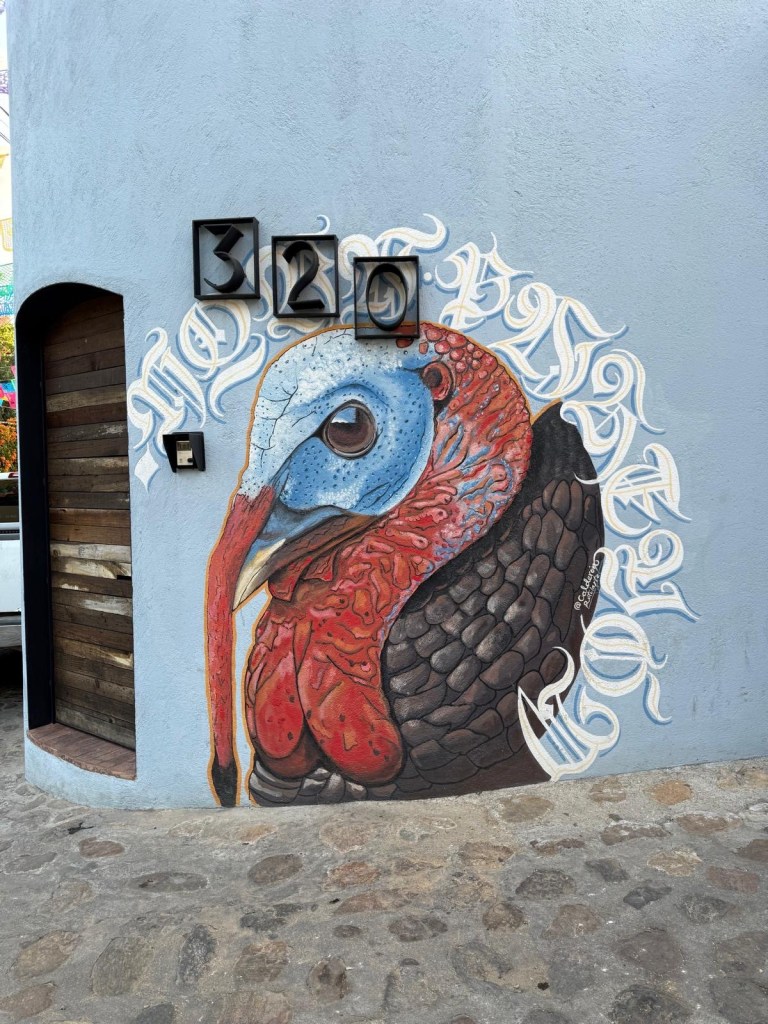
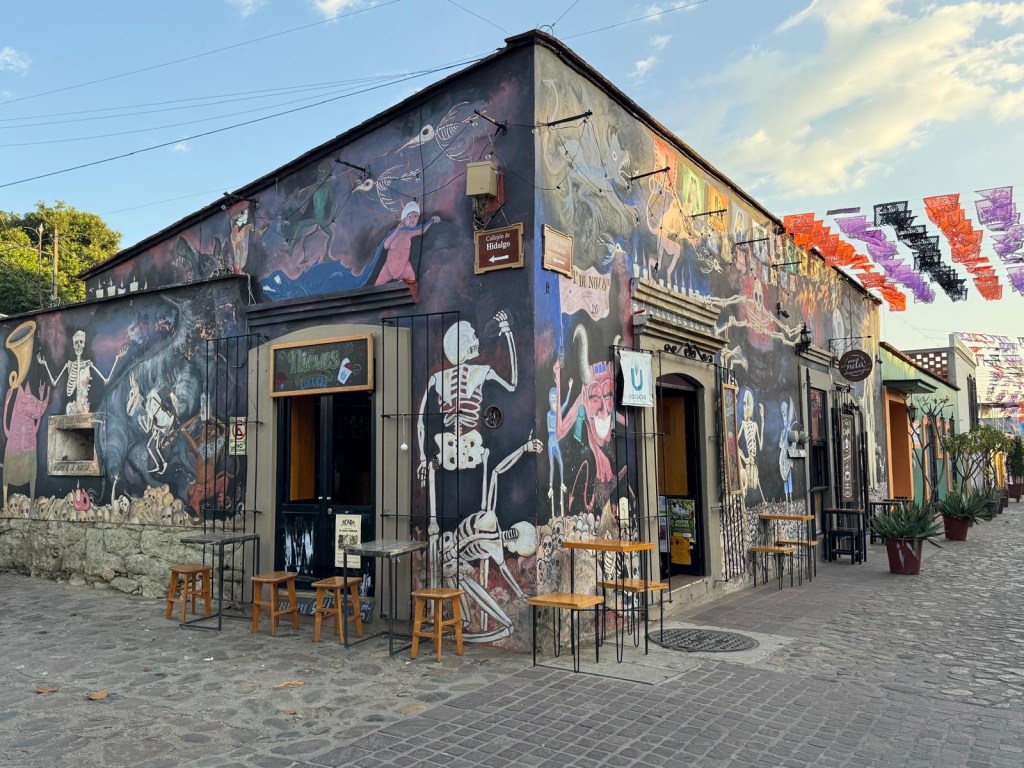
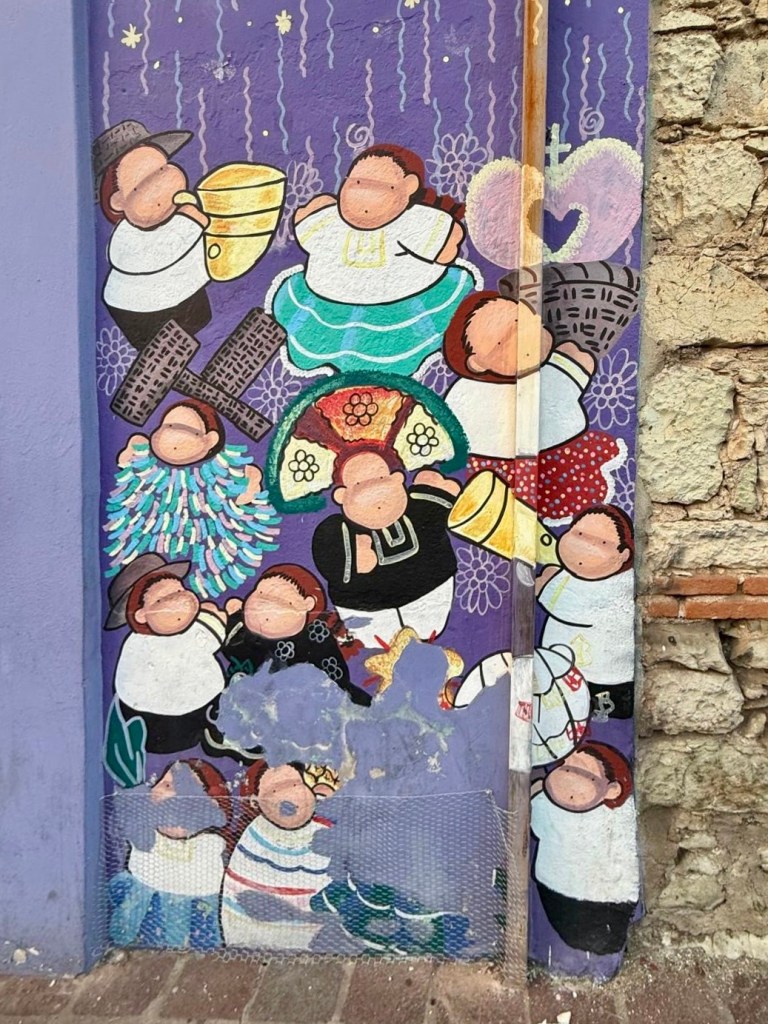
While we were visiting the old tree, Pearl was not feeling and went back to hotel to have a rest. Luckily she was fine and could go out to take some beautiful pictures of the street murals near the hotel.
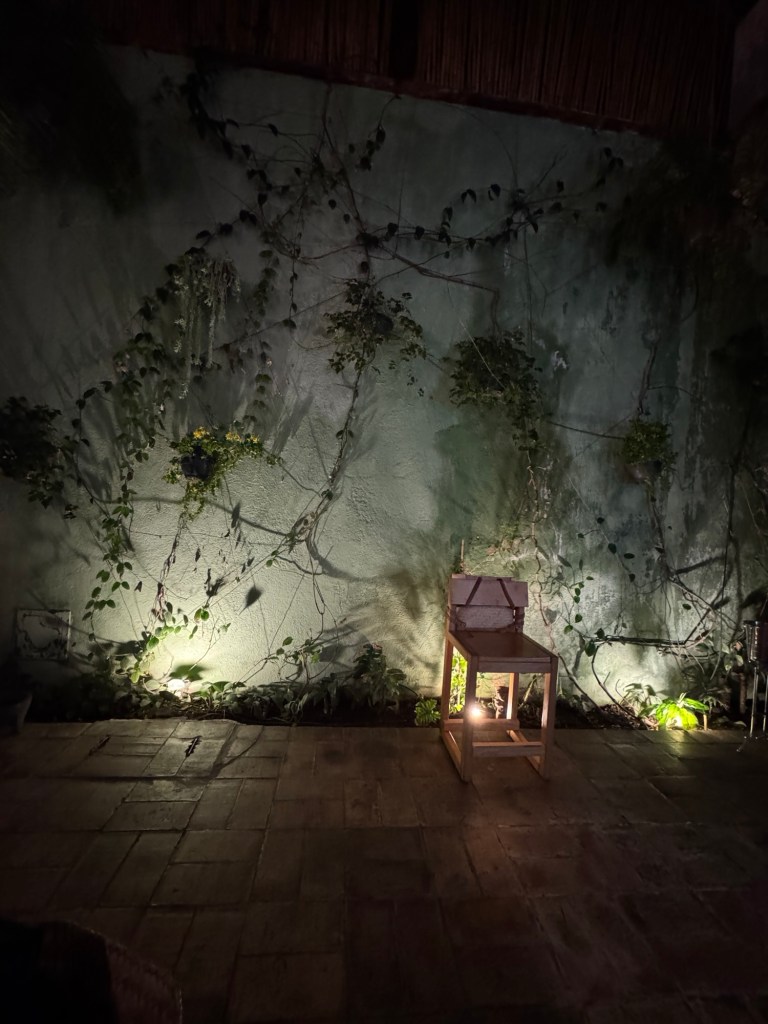
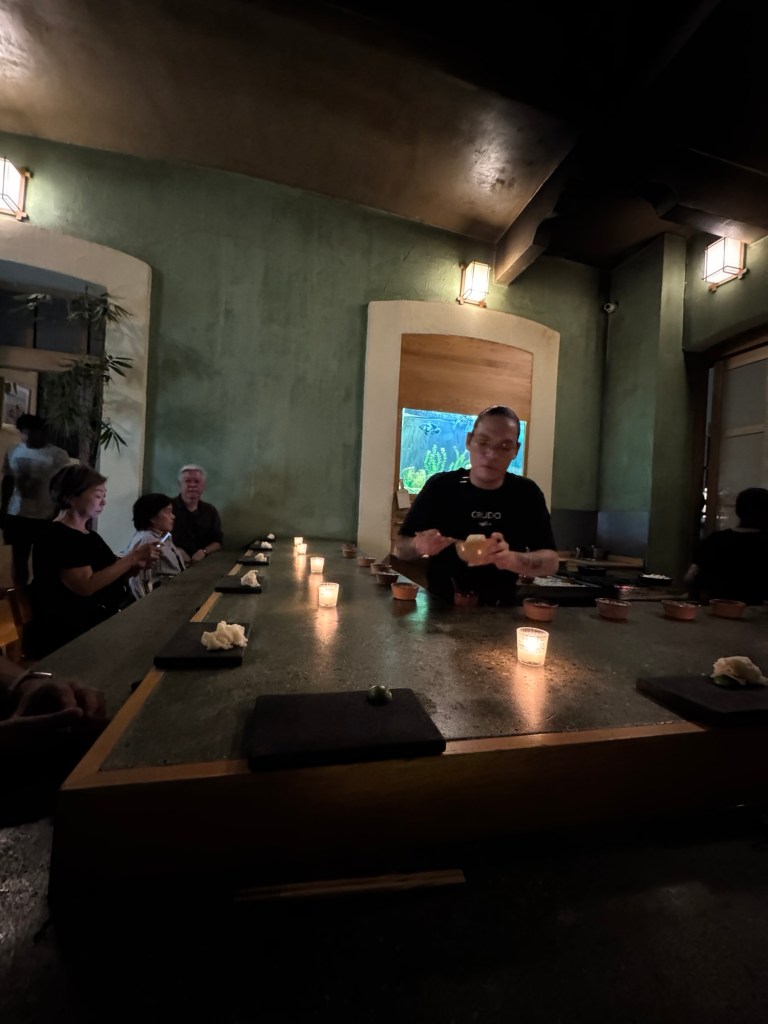
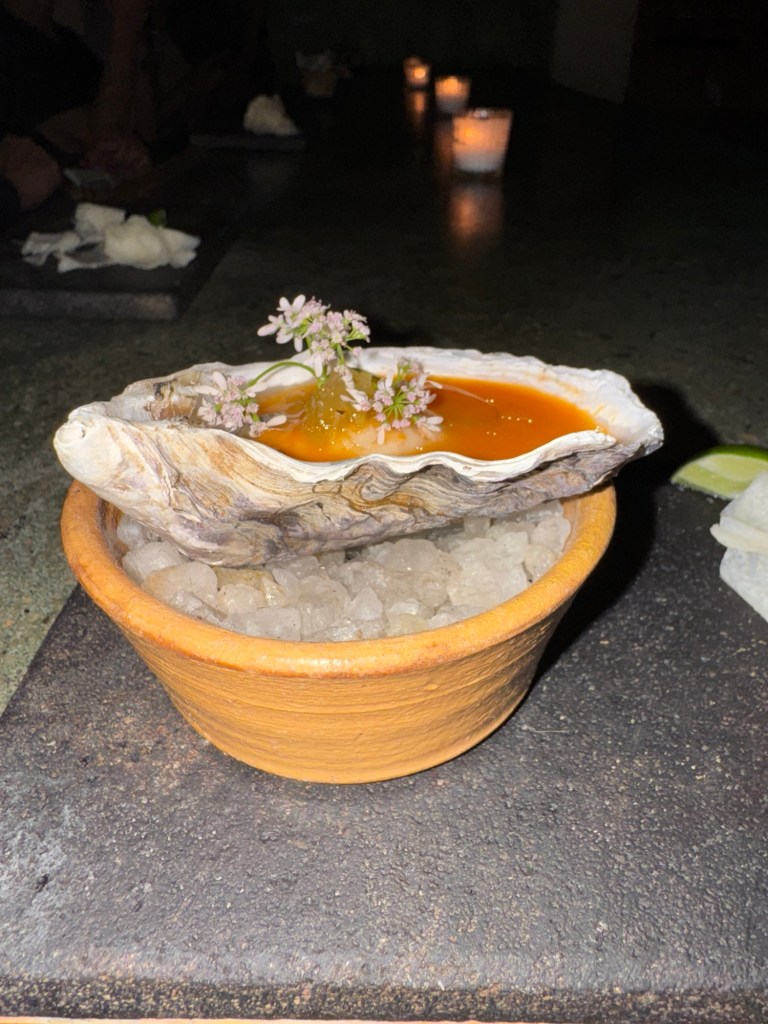
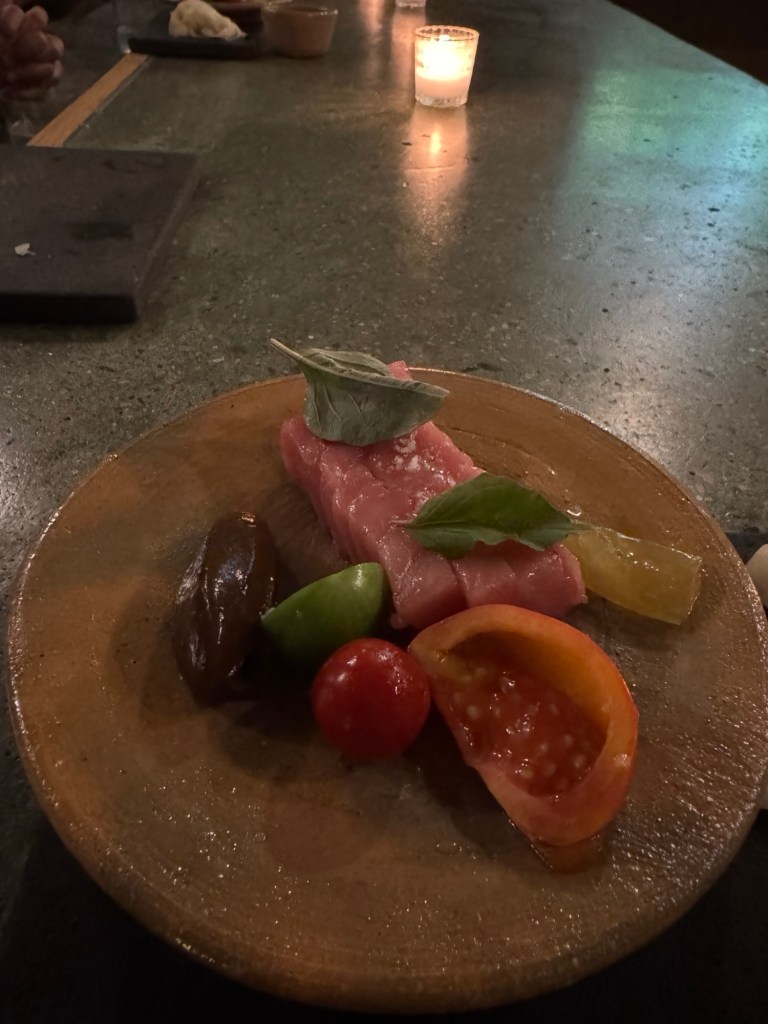
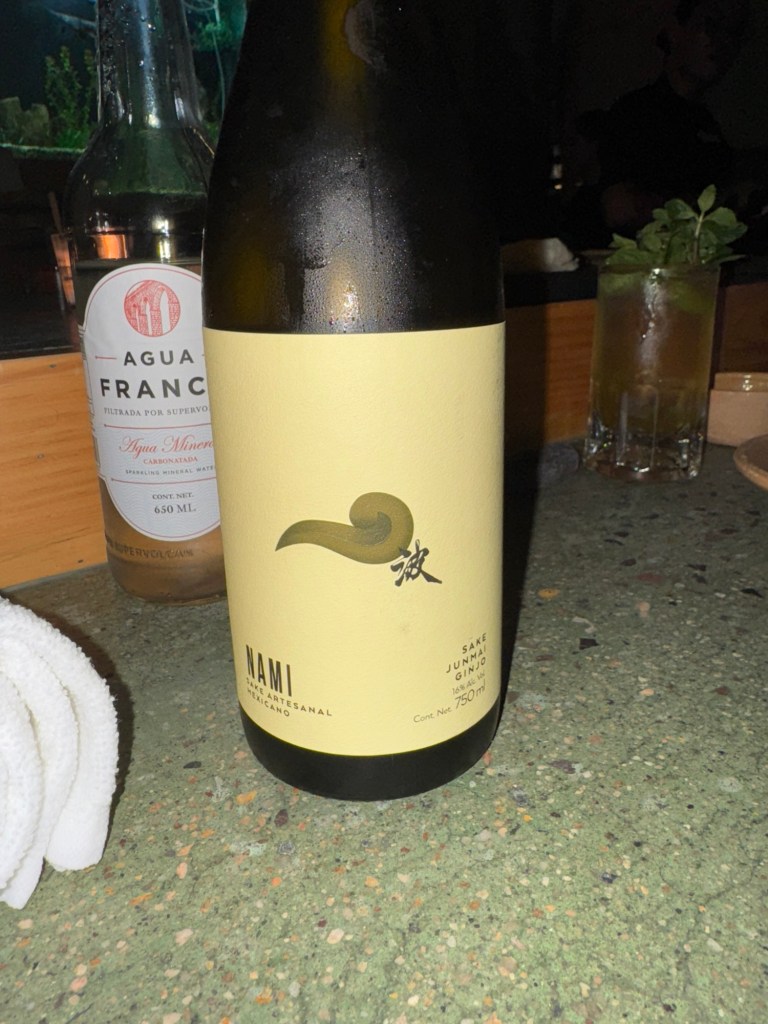
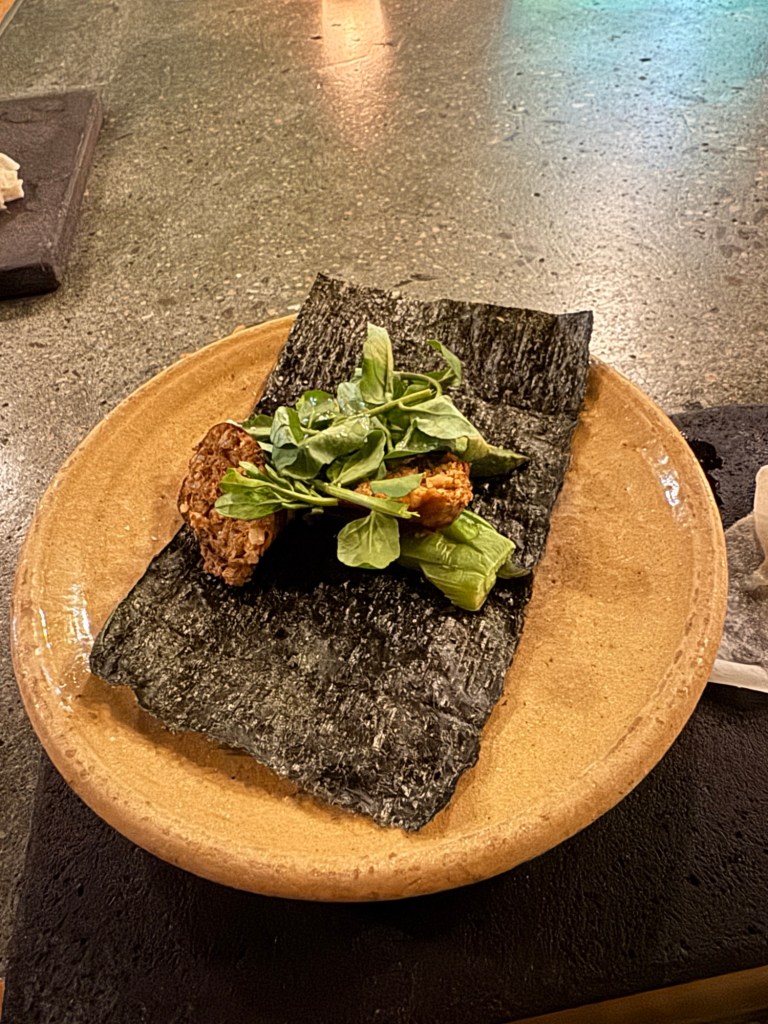
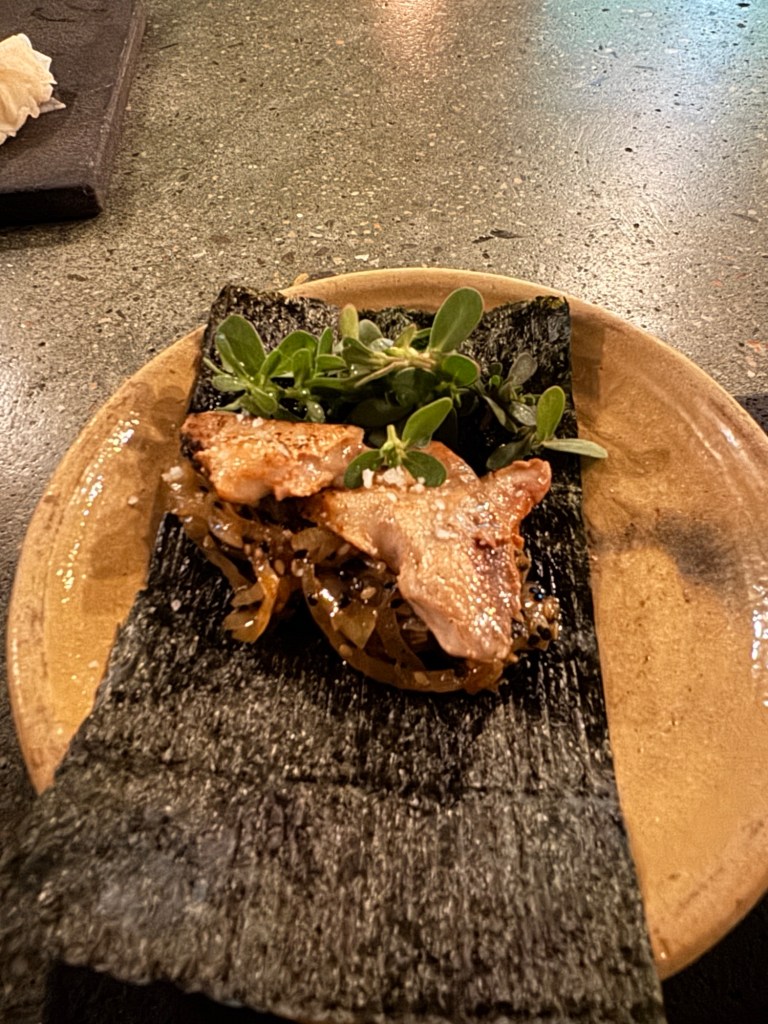
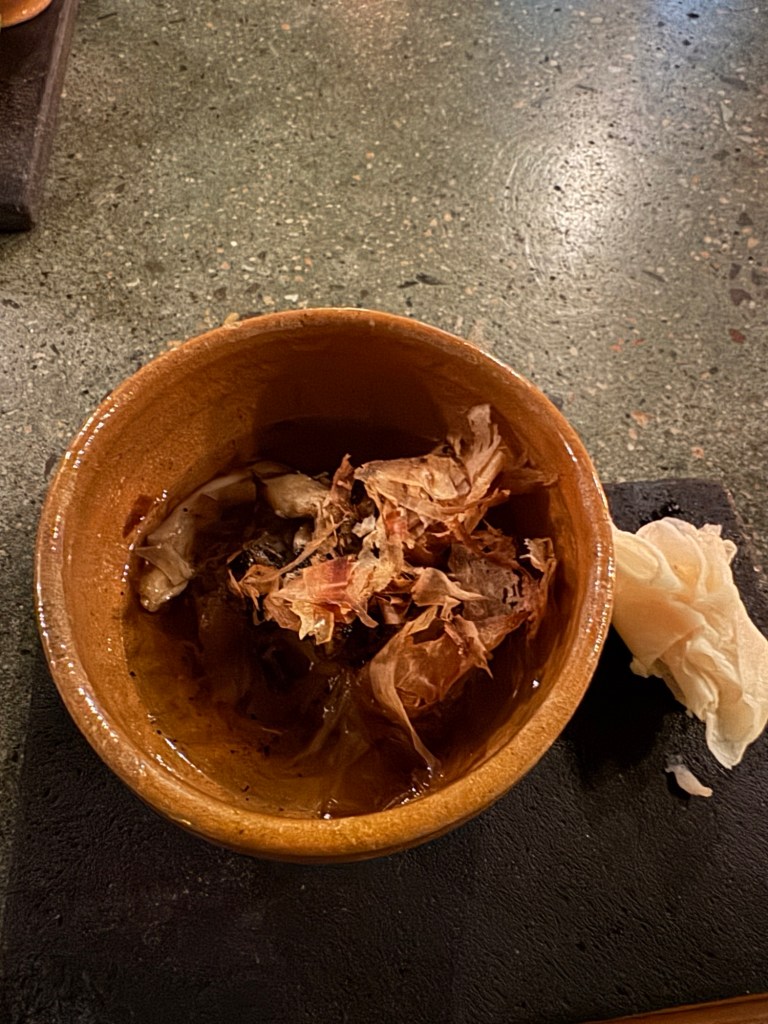
For dinner we try another Michelin restaurant, a fusion one with Japanese and Mexican food. The chef had worked in Japan for a few years. The combination makes the best Mexican food so far but the Japanese food is down graded.
Day 10 November 20 Thursday
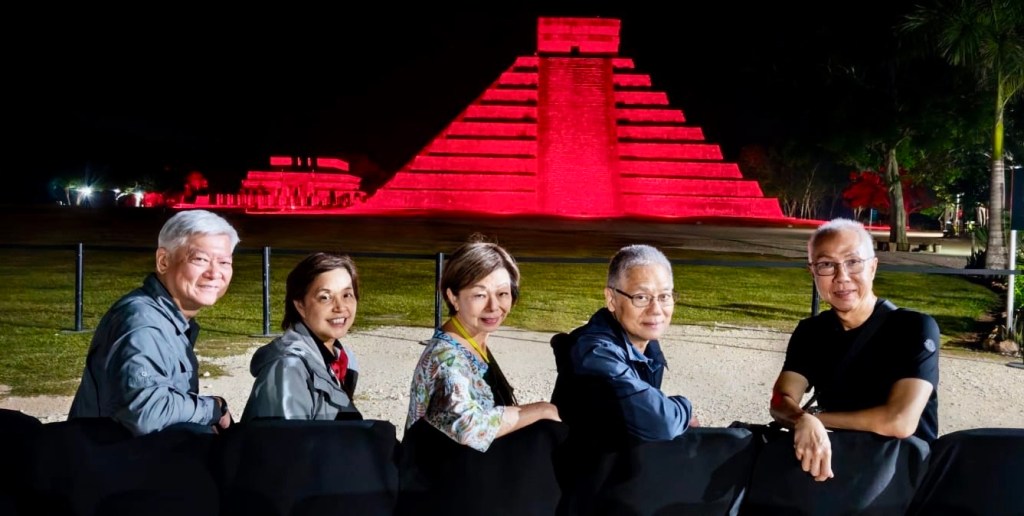
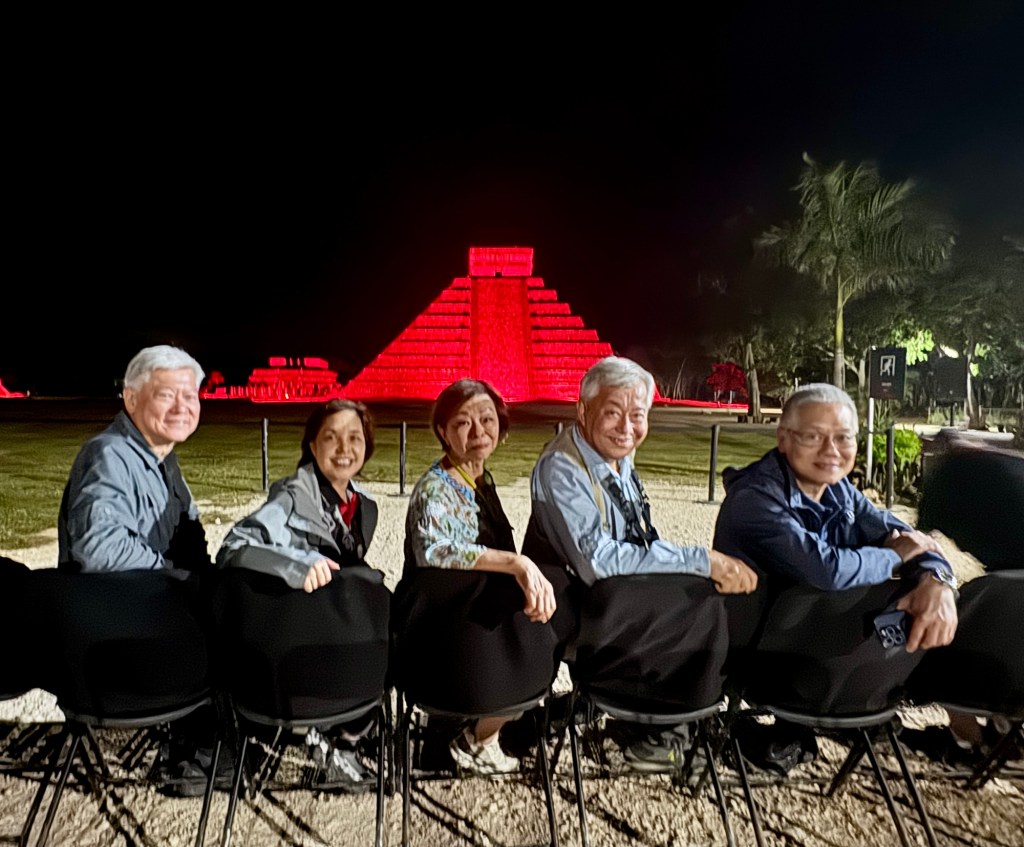
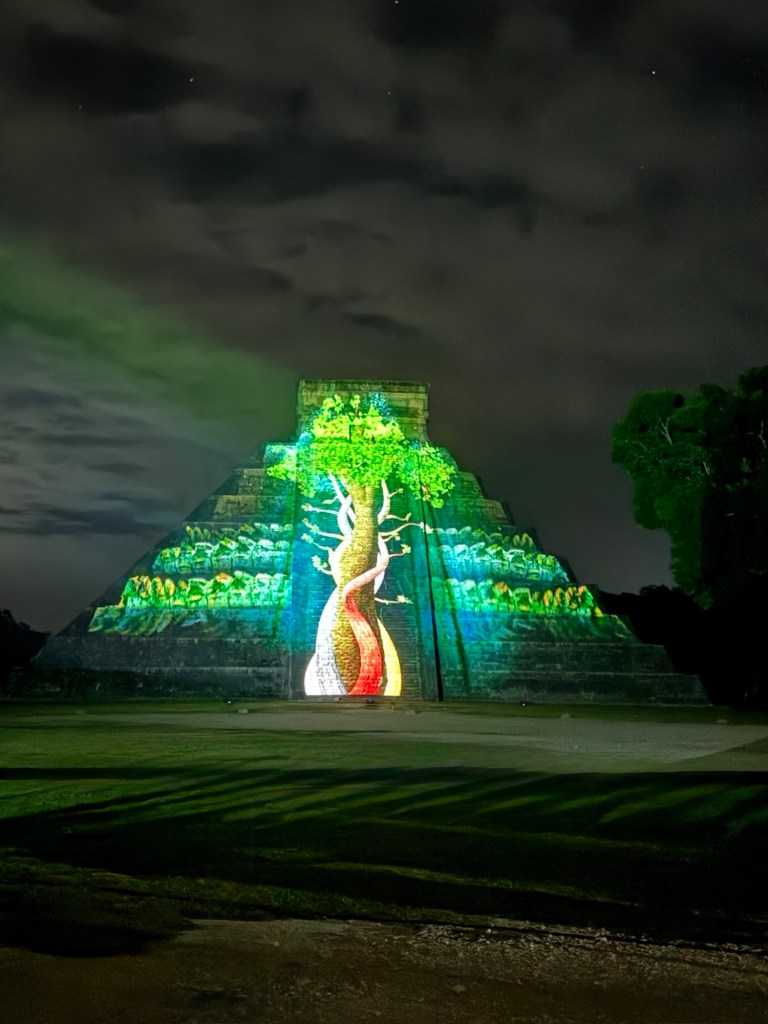
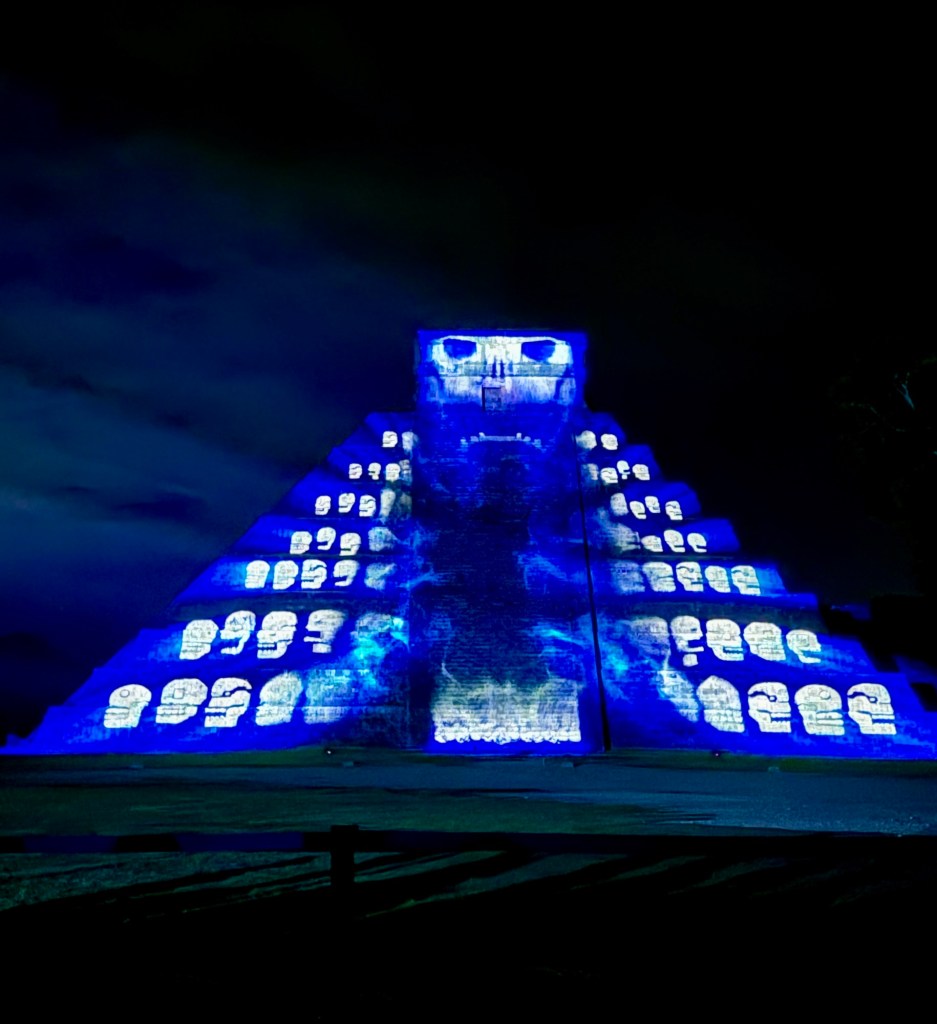
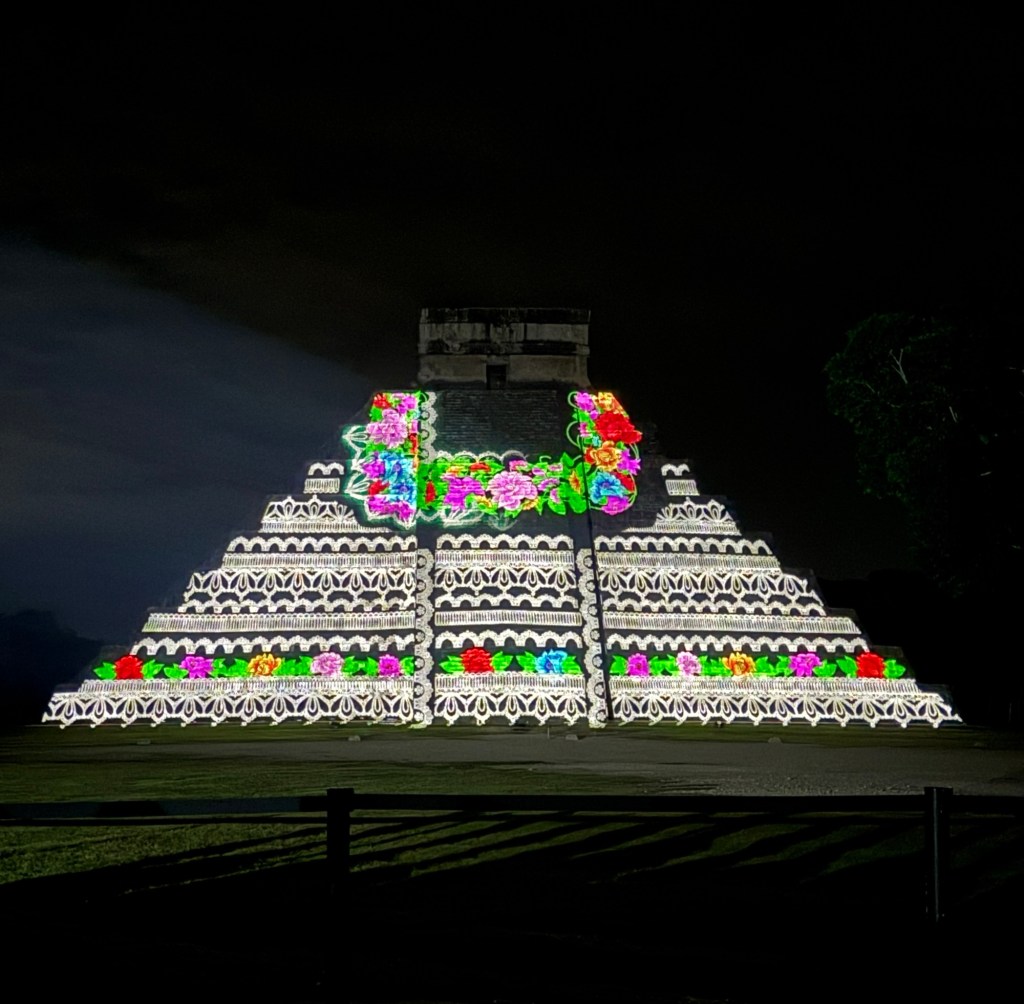
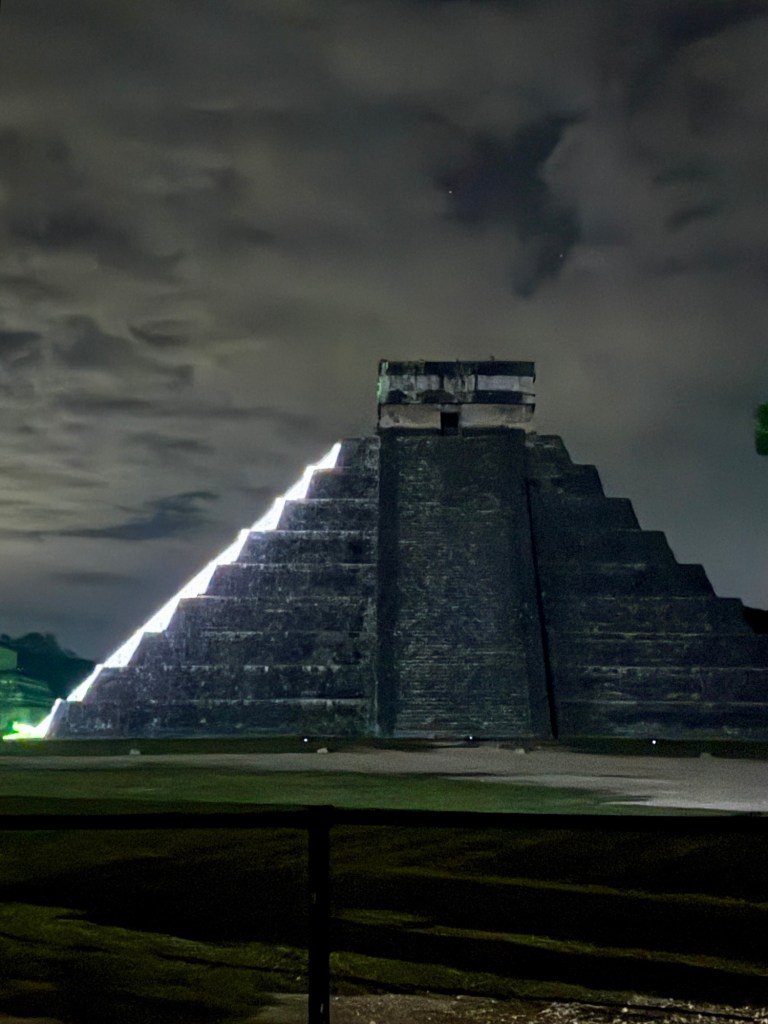
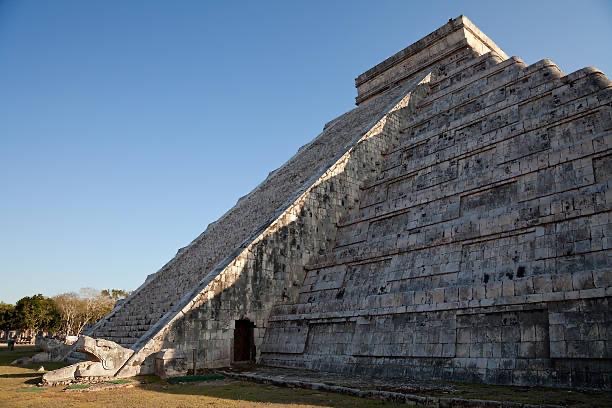
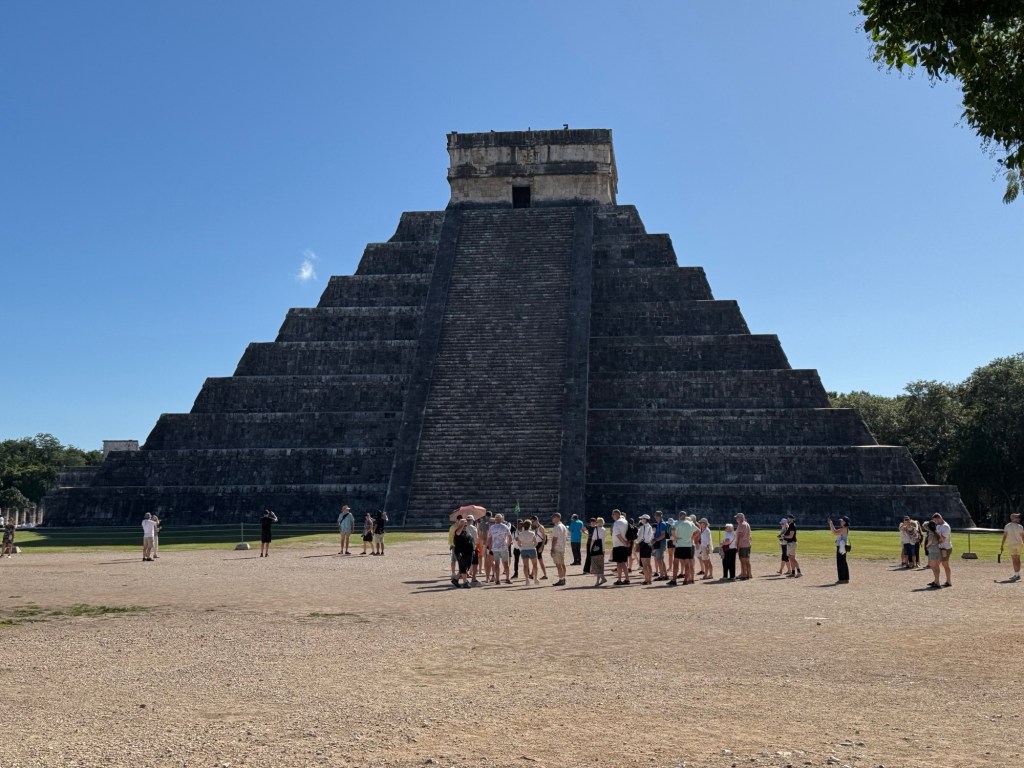
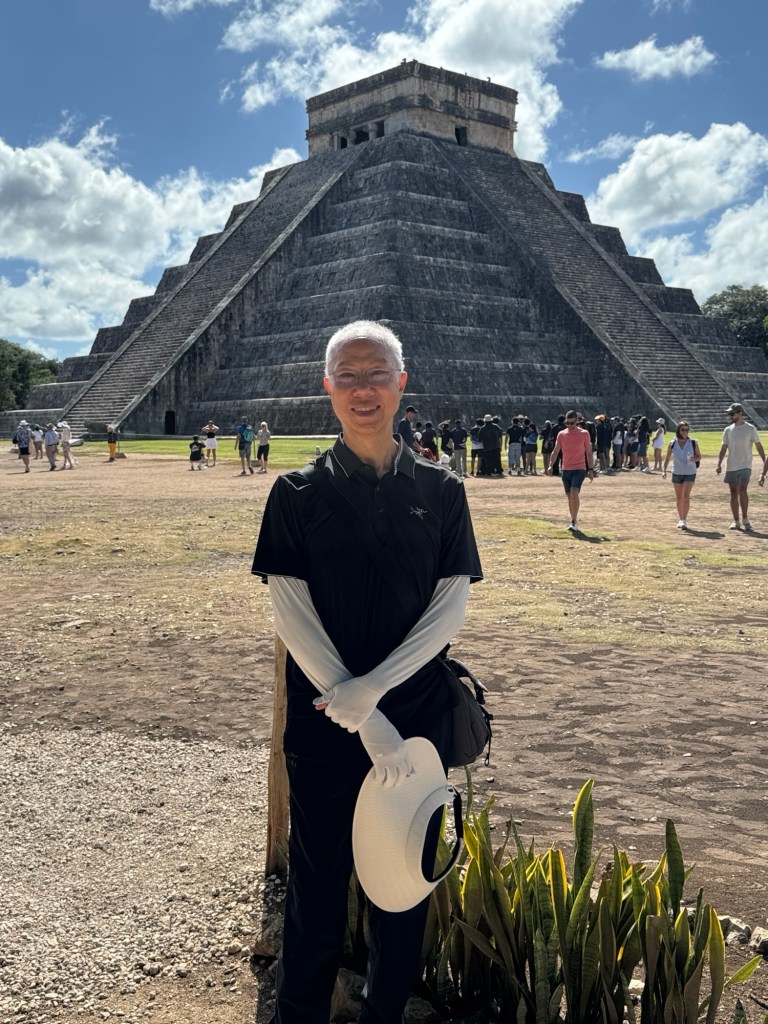
We flew to Cancun in the morning and met our fourth guide Mr. Jesus Becerra. Then we took a long drive to Chichén Itza. In the long drive there were very few cars on the road and many a times our car is the only one in the tropical setting long and winding road. Felt like a criminal escaping and hiding in some exotic South American countryside! It was evening when we checked in our hotel. Before dinner we went to see the Chichen Itzá light and sound show. There was a technical problem so we had to wait for an hour but we had more time to take pictures. Day and Night of the Pyramids.
In spring and winter equinox the sunlight will cast a shadow of the 9 levels of steps to create a light of a snake descending from heaven to earth. The 9 inverted triangles here. However in reality only seven inverted triangles are seen, not nine, as 👇
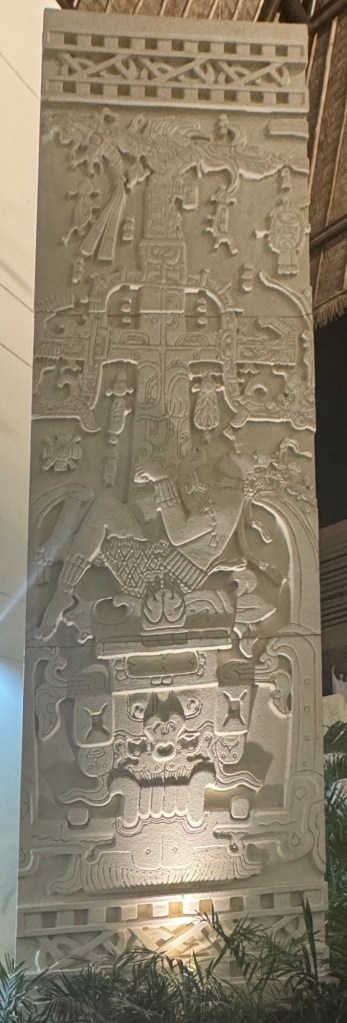
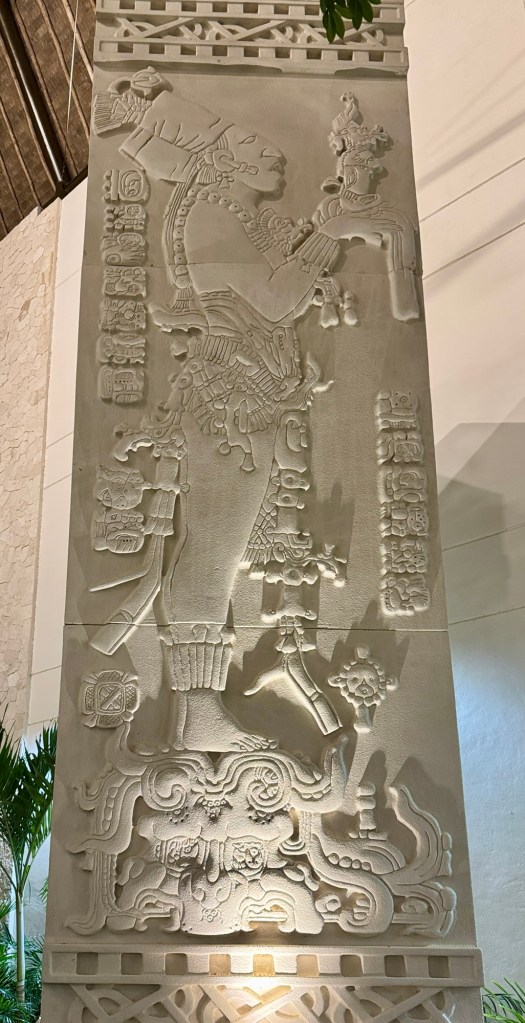
The hotel has several stone sculptures representing the lid of sarcophagus of King Pakal of Palenque. He became a king at age 12 and reigned for 68 years, probably the longest in human history.
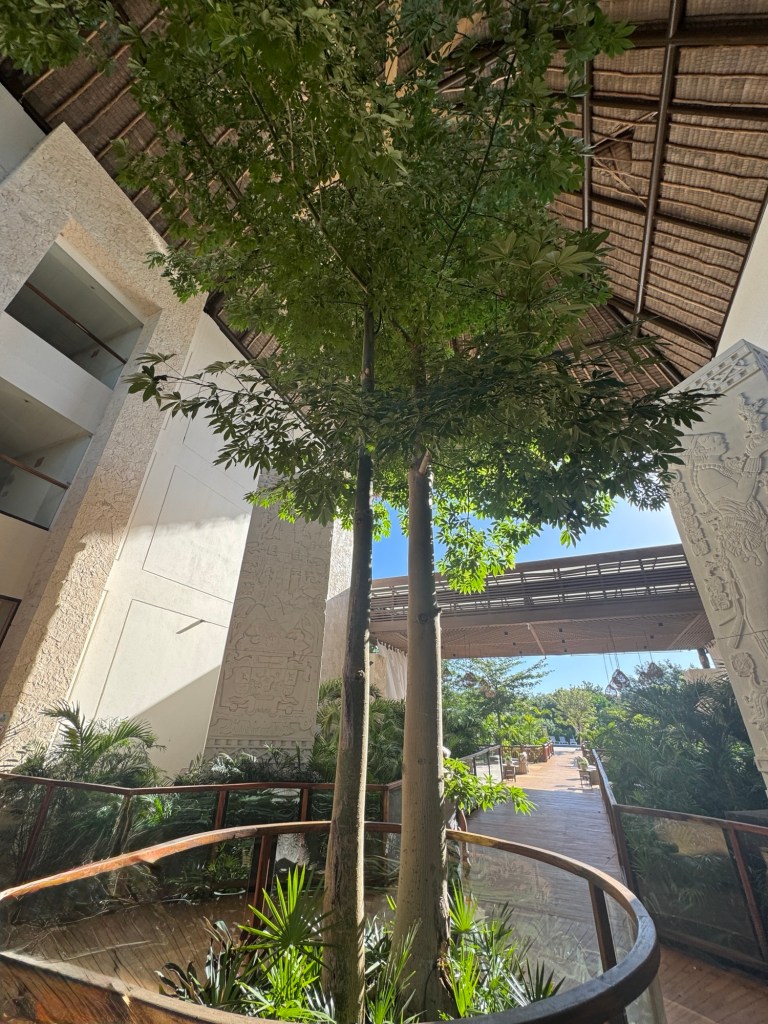
This showed the world tree (Ceiba tree) rose from the under world with branches reaching heaven . King Pakal was positioned at the base of the tree signifying his transition from a mortal king to an ancestral god climbing up the tree to heavenPakal’s sonA ceiba tree in the hotel
After the light show we had a late dinner in our hotel
Day 11 November 21 Friday
In the morning we went to Chichén Itza, but all the pyramids were off limit to tourists. However the complex was large and we spent almost 2 hours here.
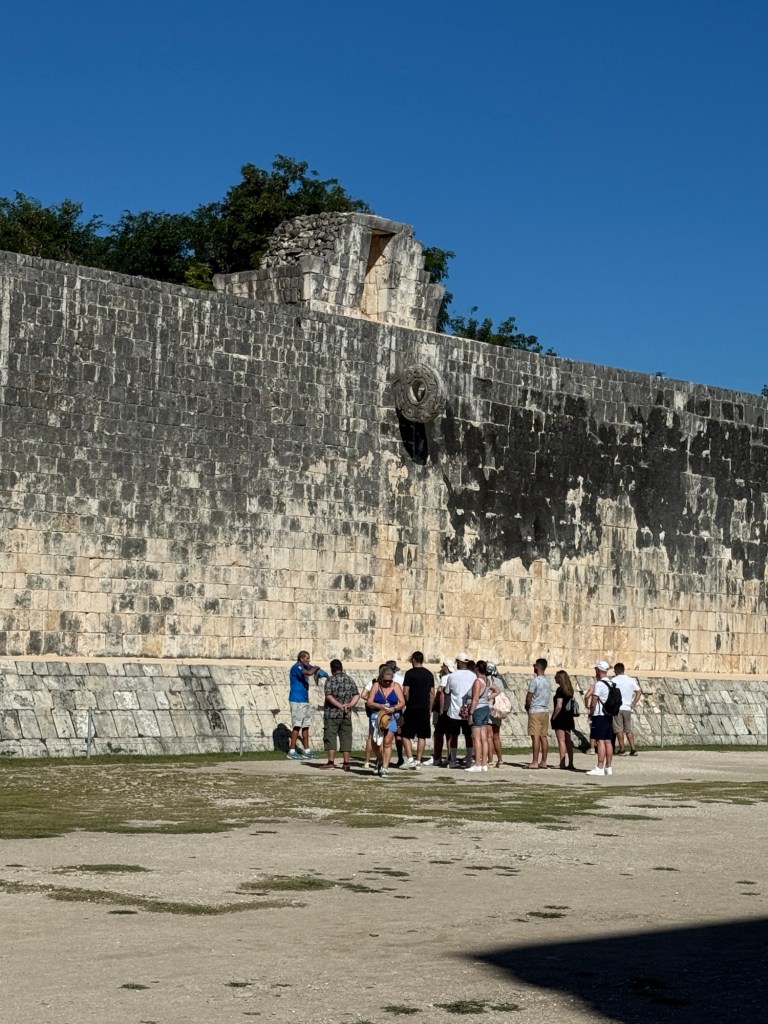
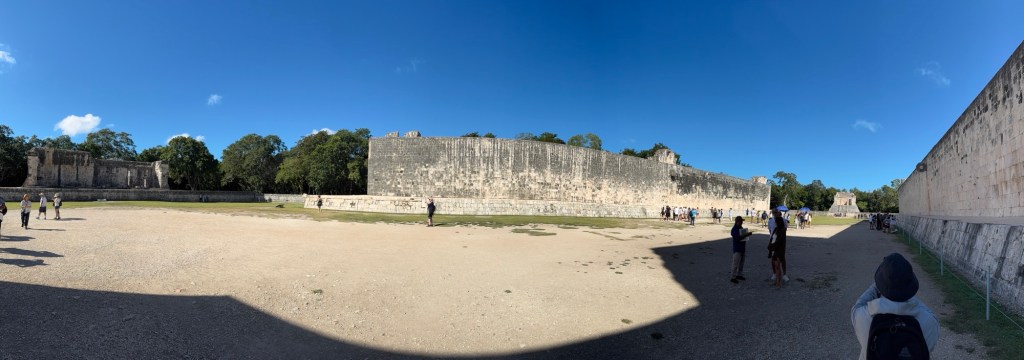
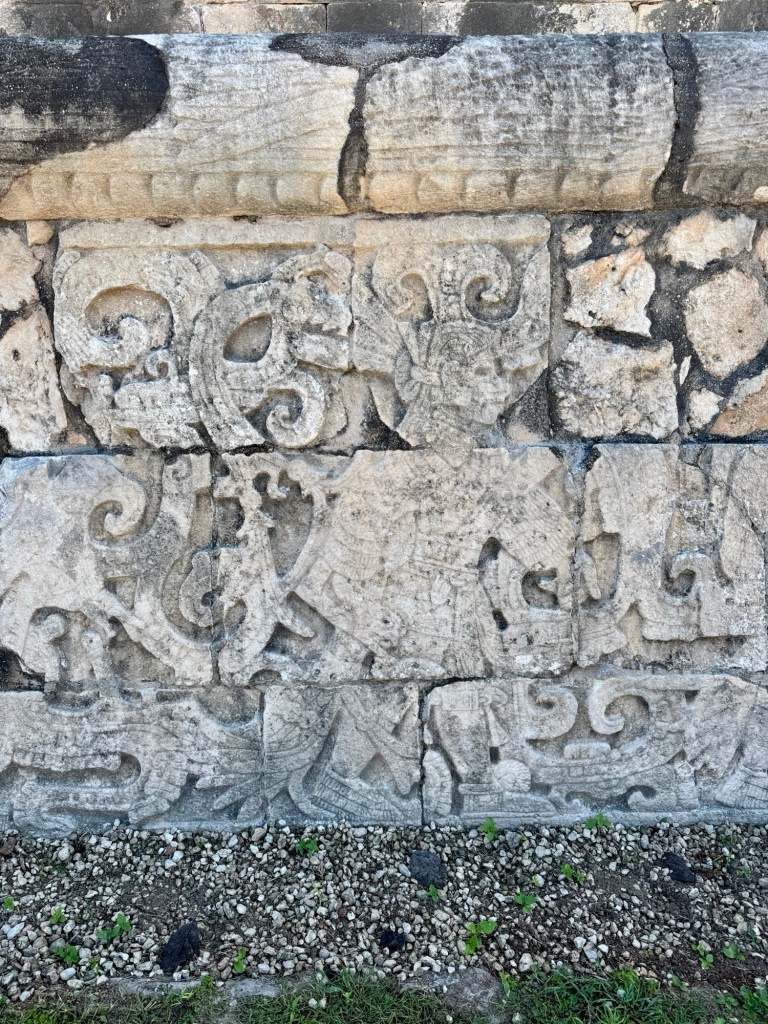
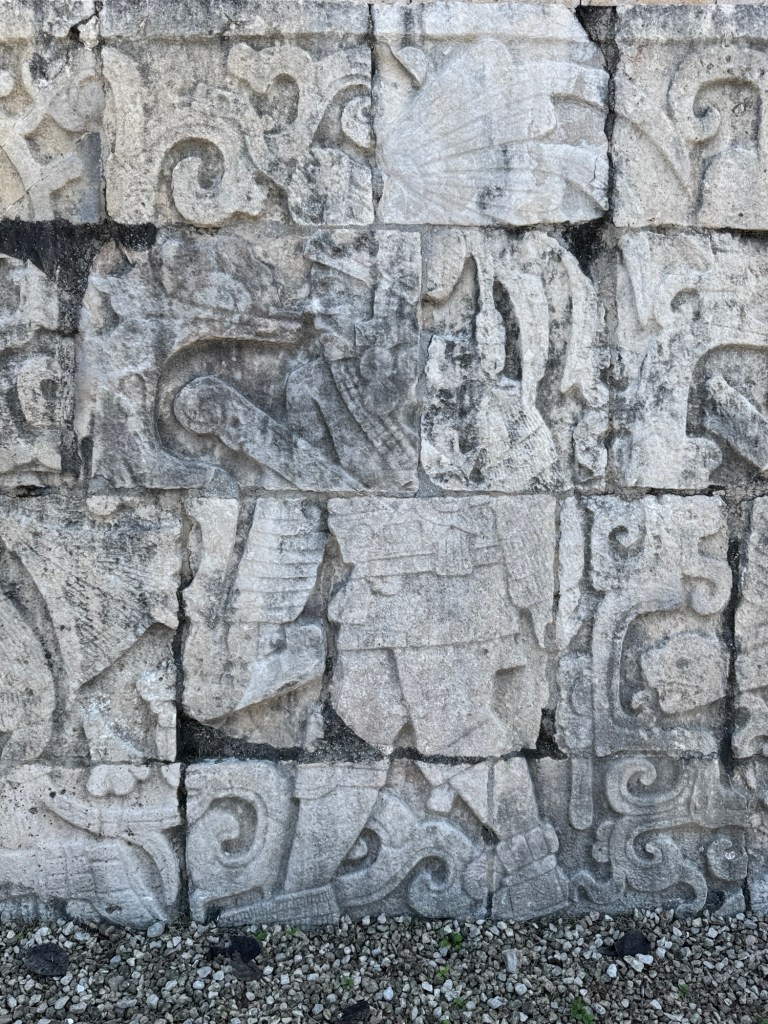
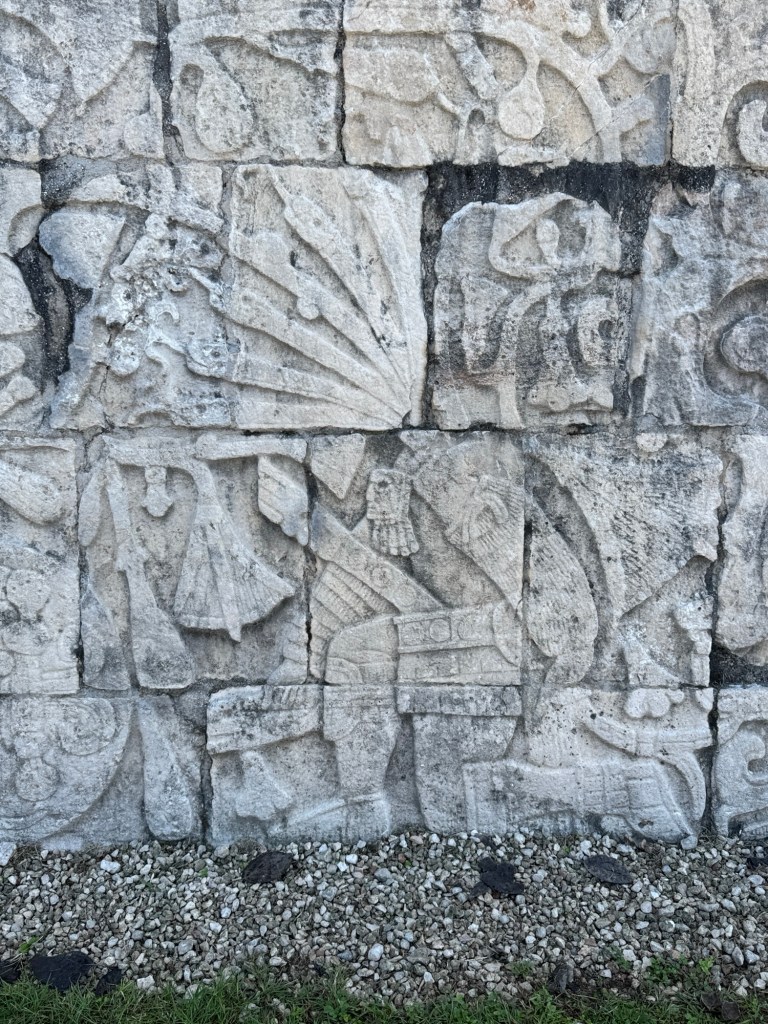
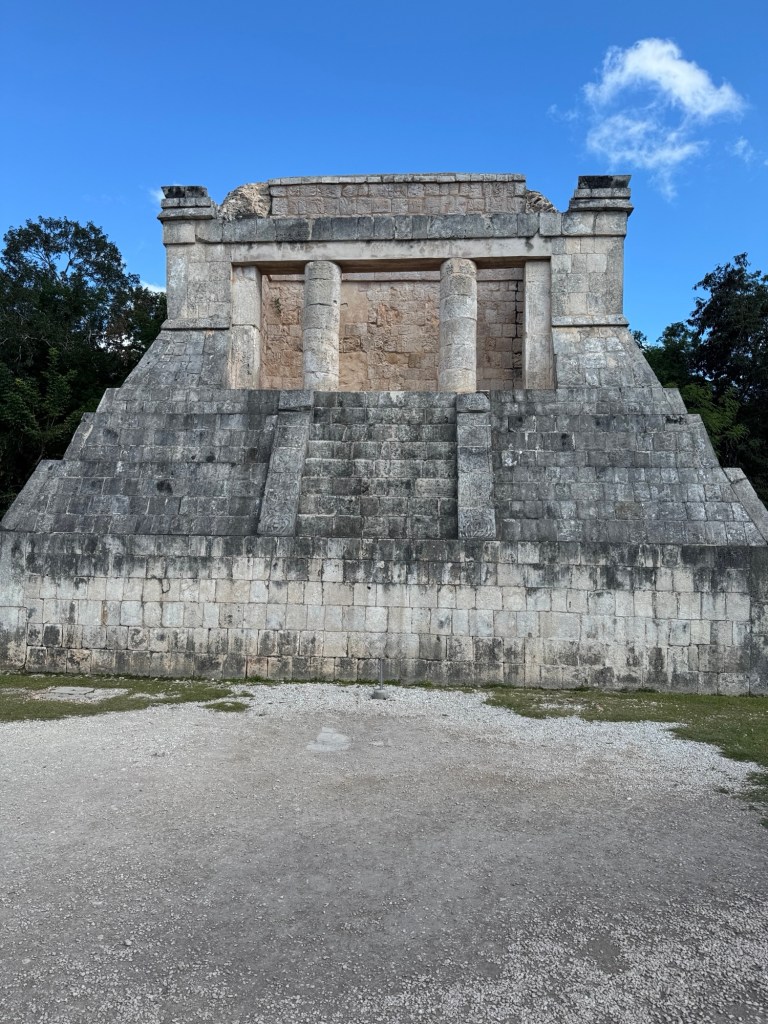
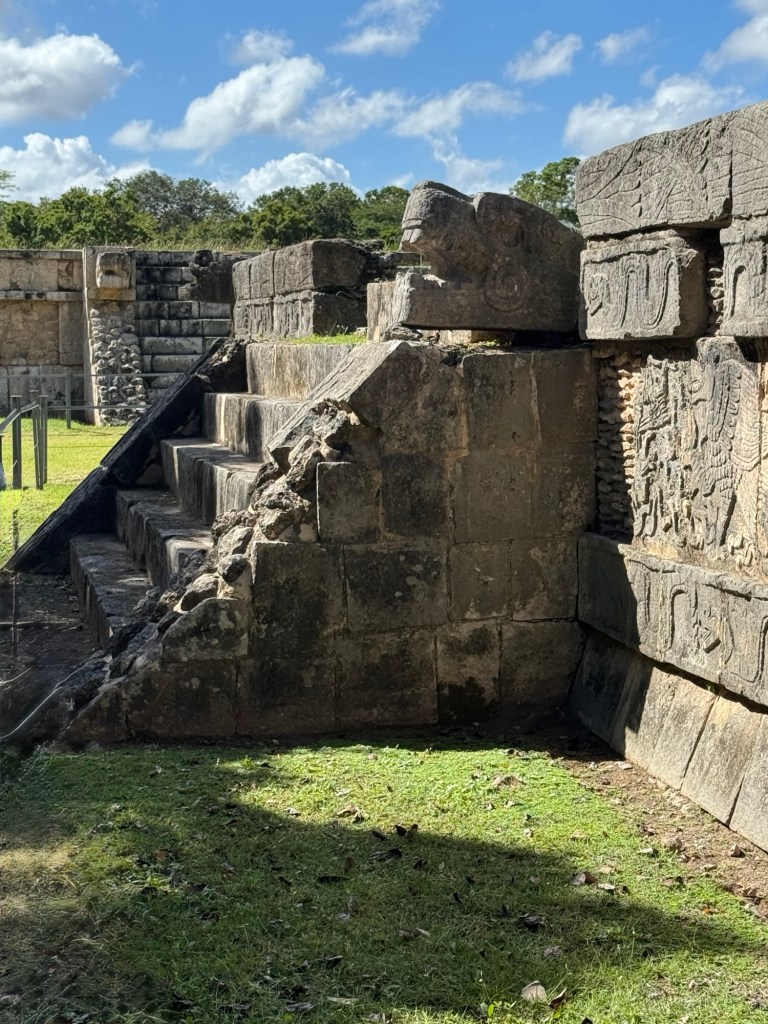
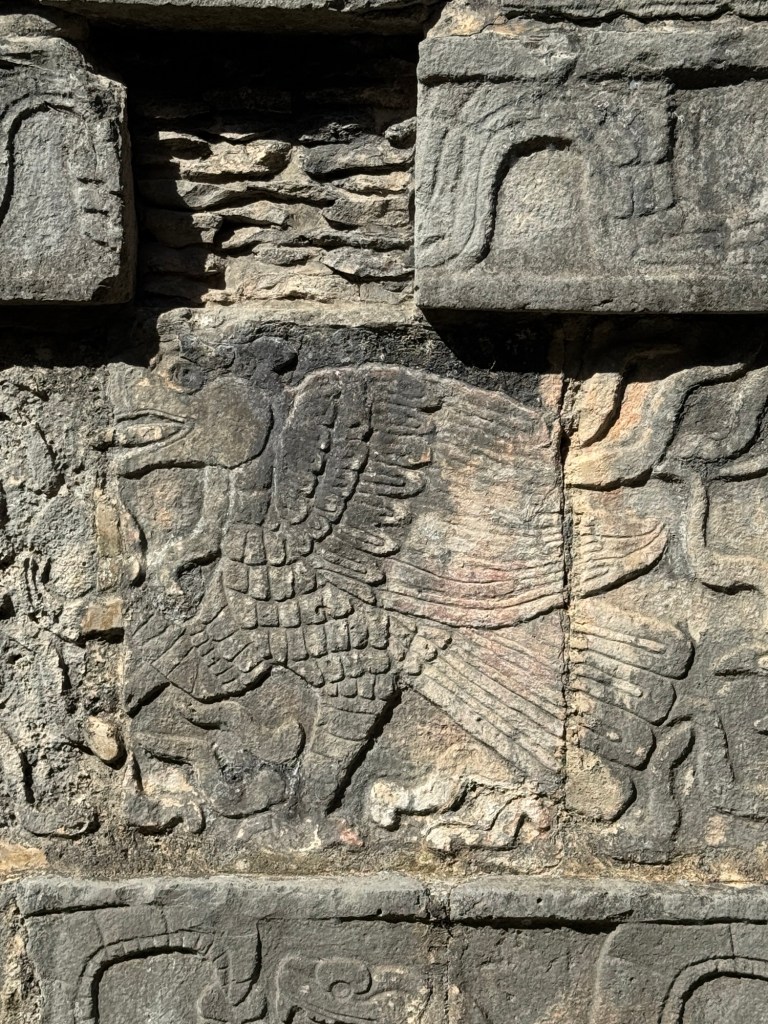
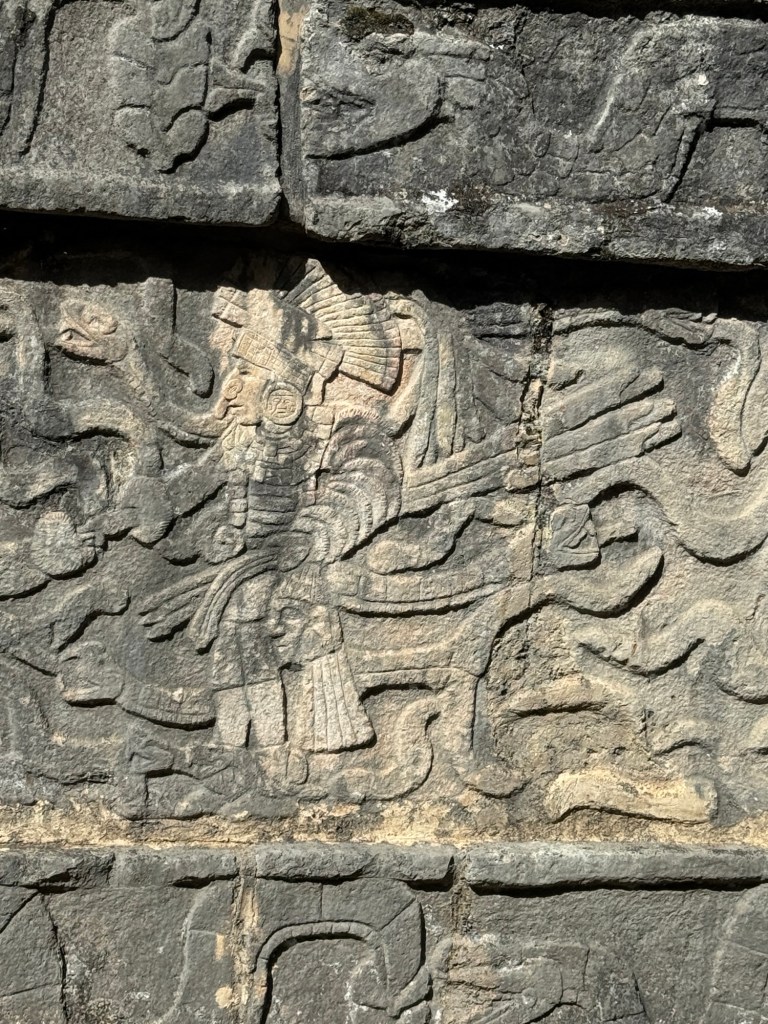
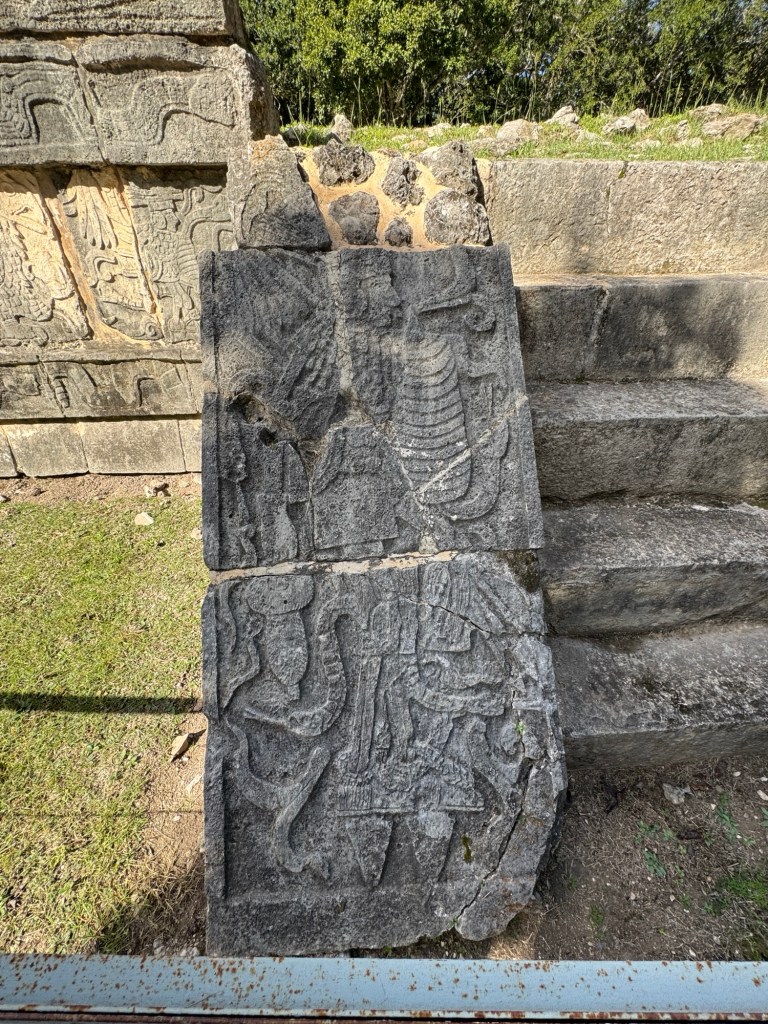
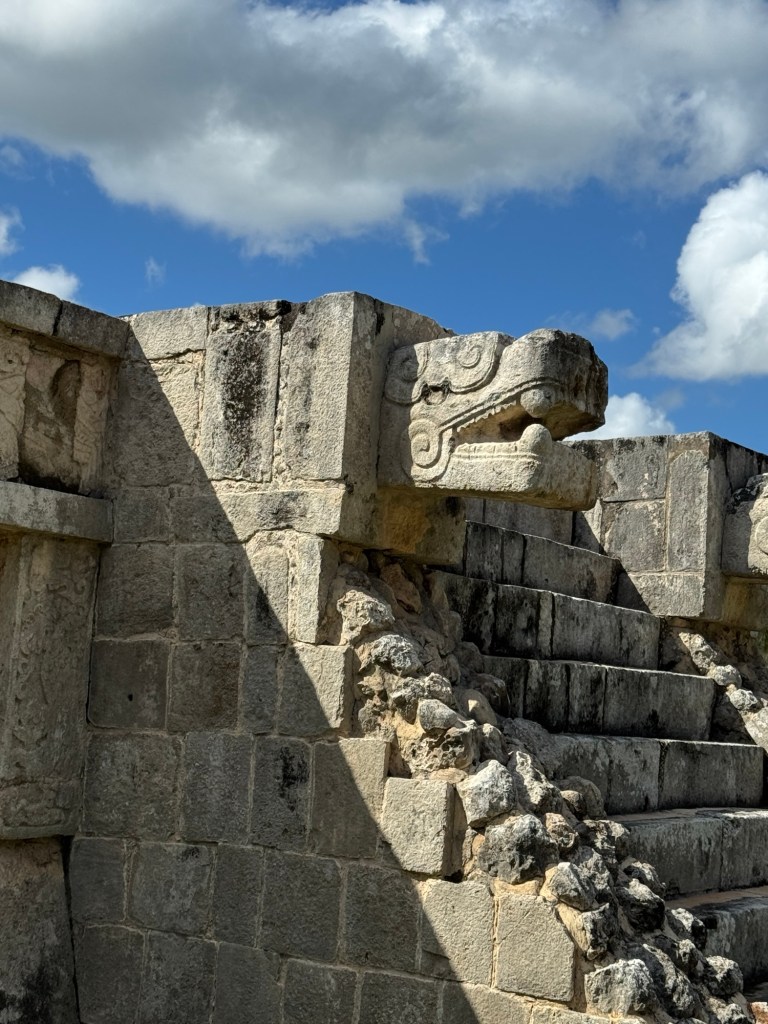
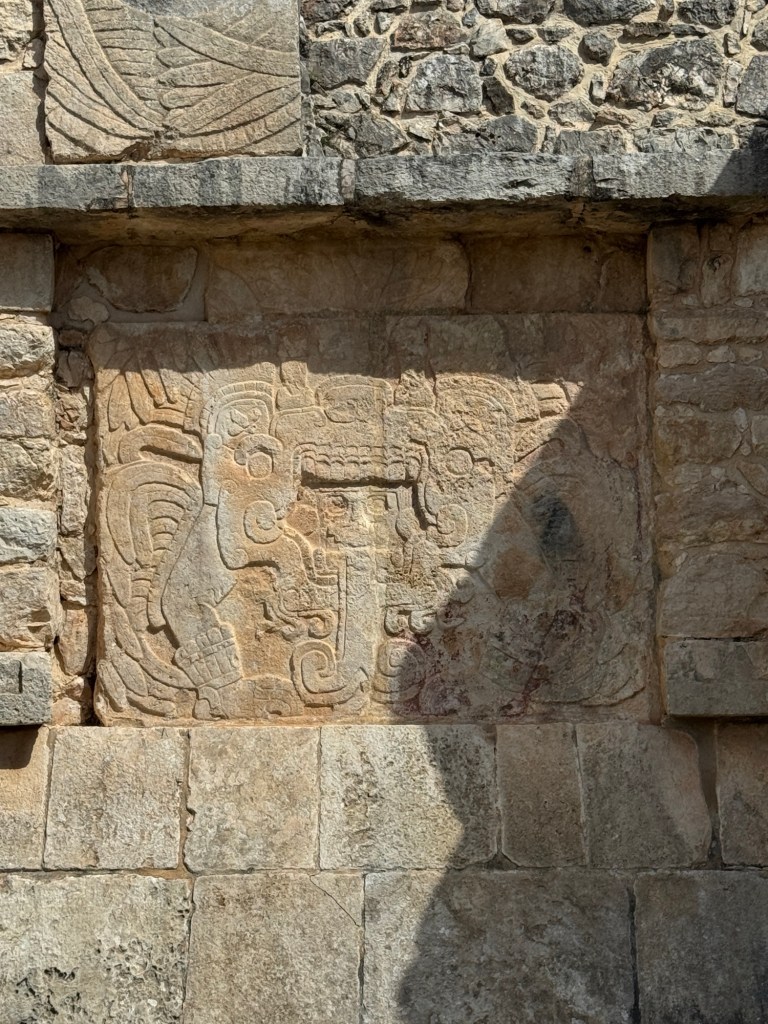
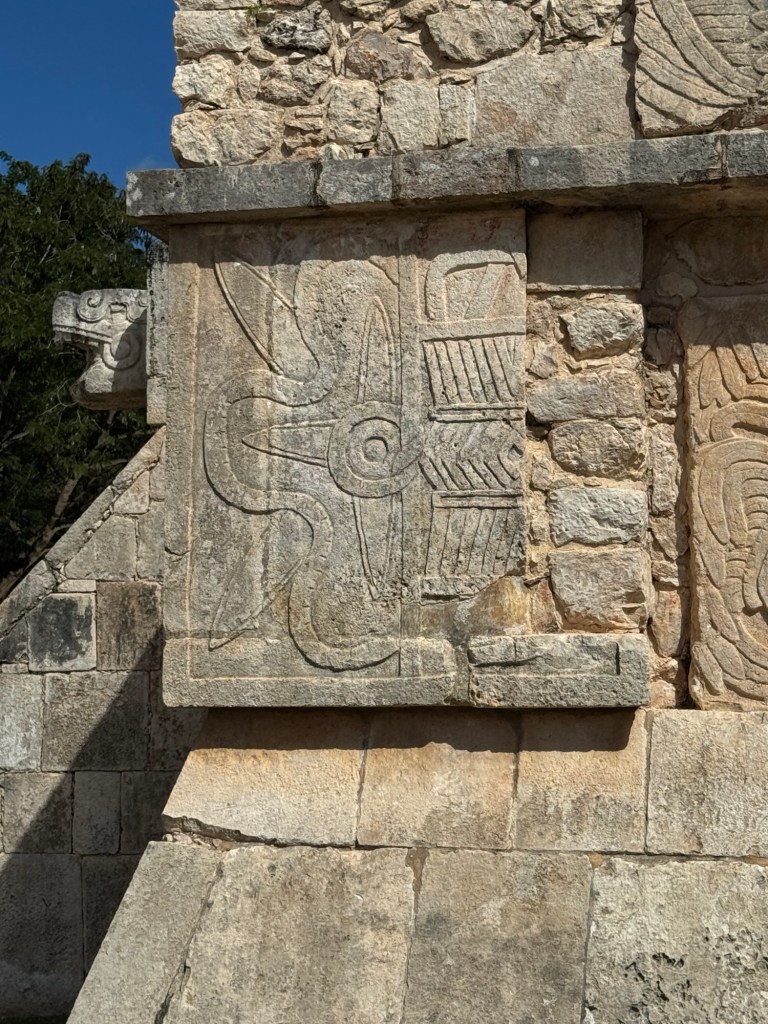
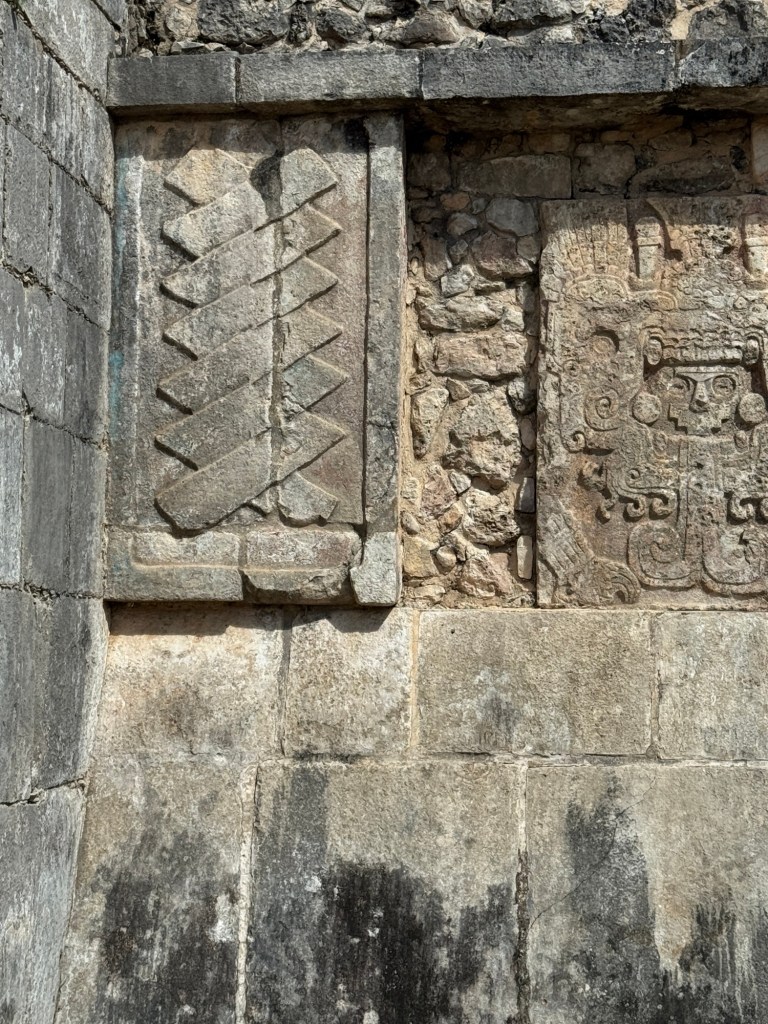
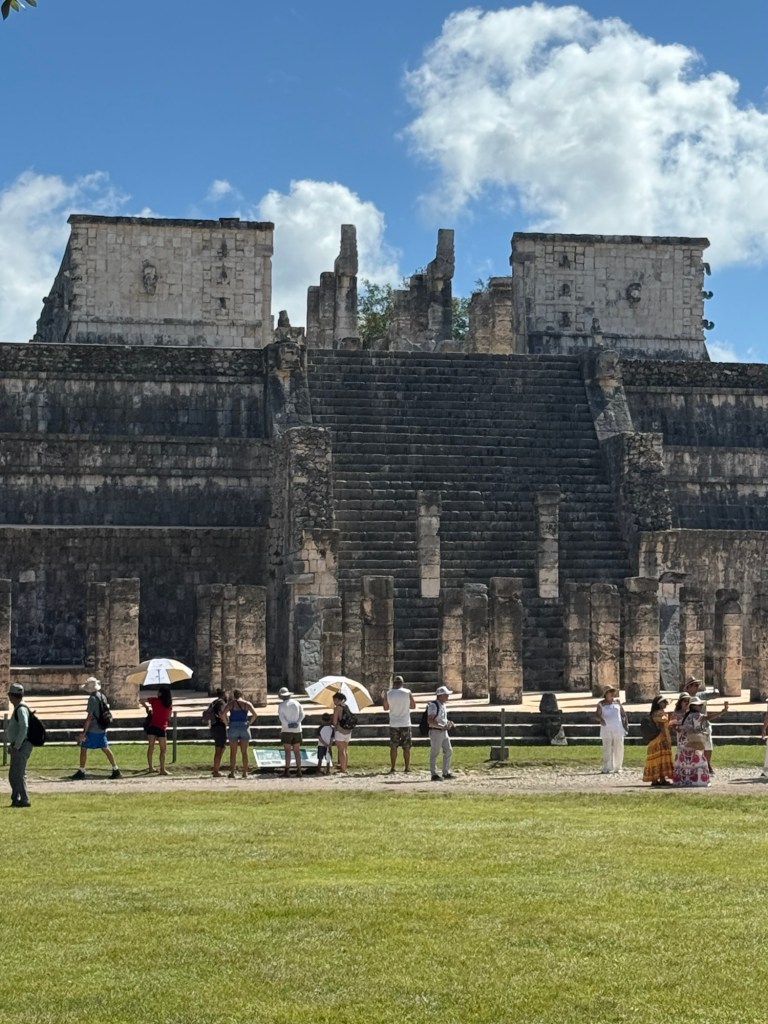
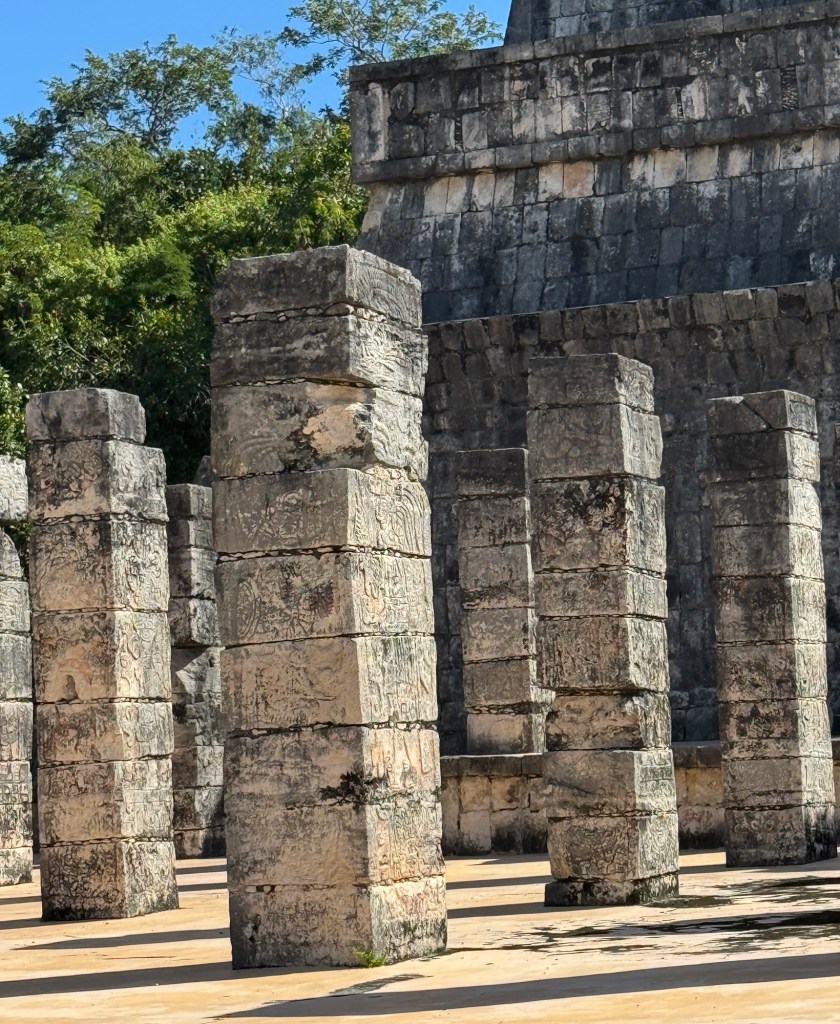
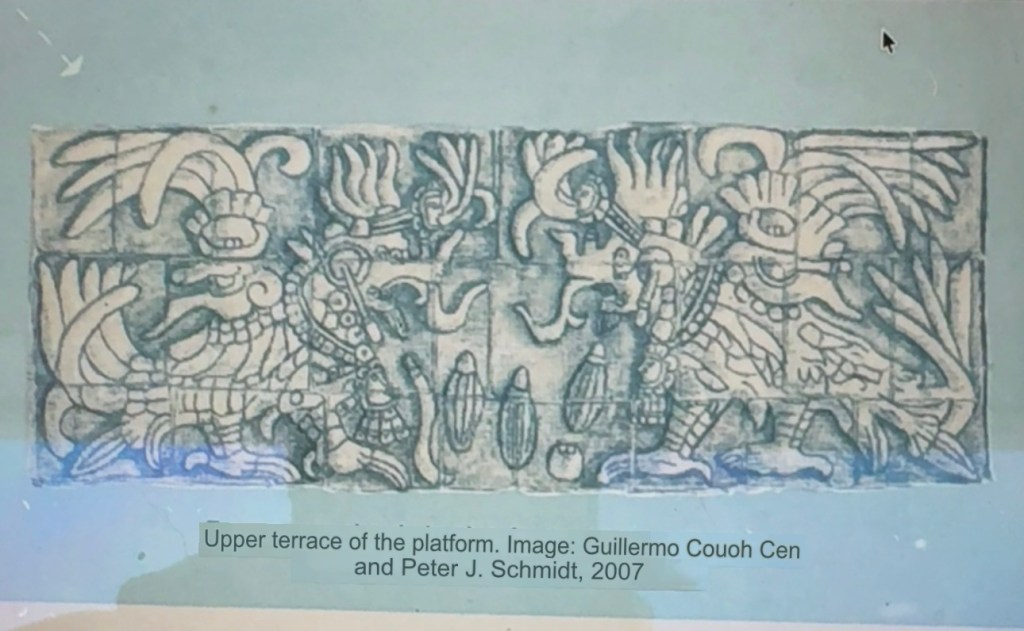
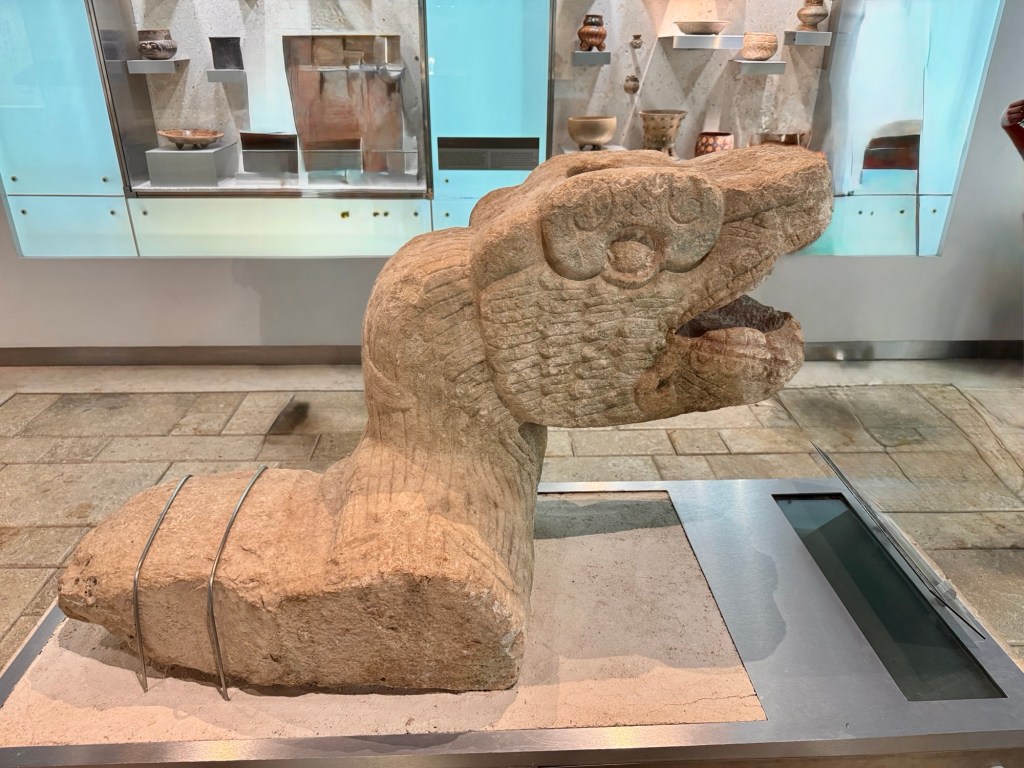
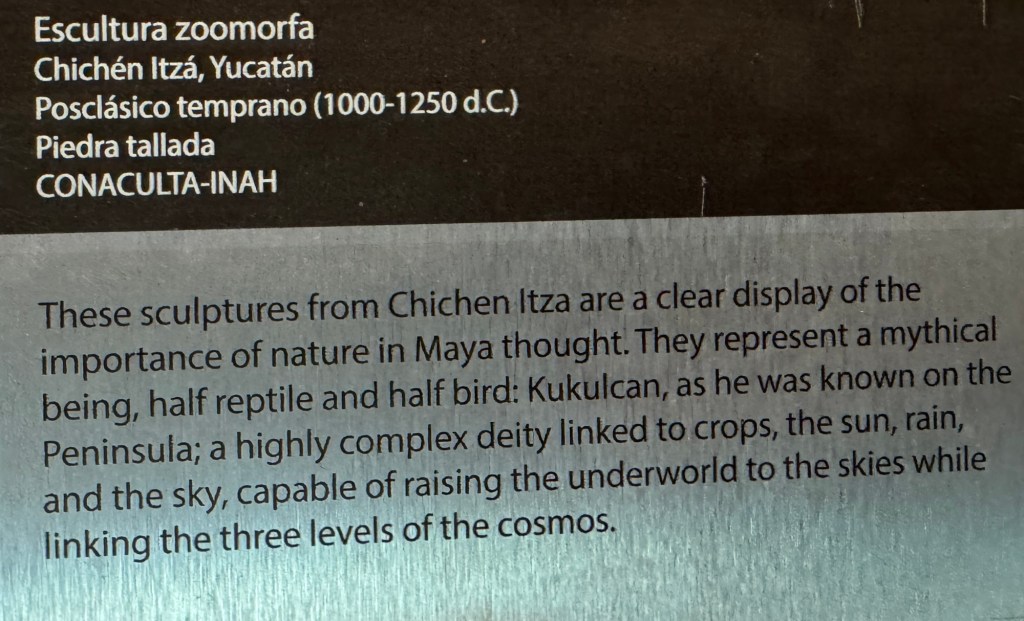
The ball court here was huge. It is not for ball games but an execution ground On the stone walls there were many carving showing Warriors.A warrior with a staffThis man’s head was chopped off and serpents sprouting from the cut service Temple of the beared manThis is part of the ancient city’s complex, which served as a major religious, military, political, and commercial center for the Maya civilization. There are many carvings in the walls.Eagle eating a human heart in the Eagle and Jaguar platform.Here is a dead soldier because there is no eyes Another dead soldier because we can only see skeletons in the legs And of course serpents are everywhere including this Venus platform This is the god Man Bird Serpent that refers to Kukulcan Quetzalcoatl as Venus in its phase of morning starThis carving is another version of the serpent head with feather like motif and scalesThis is the woven mat or Pop symbol and has several meanings. One is the representation of the Mayan and Toltec visions of the world and universe. The geometric, rhomboid (diamond) pattern is believed to have been inspired by the skin of the diamond-backed rattlesnake and can represent the four cardinal directions and the central point of the universe.The Temple of the Warriors flanked by a vast complex of columns known as the Group of a Thousand Columns, many of which are carved with images of warriors. Reconstructed picture
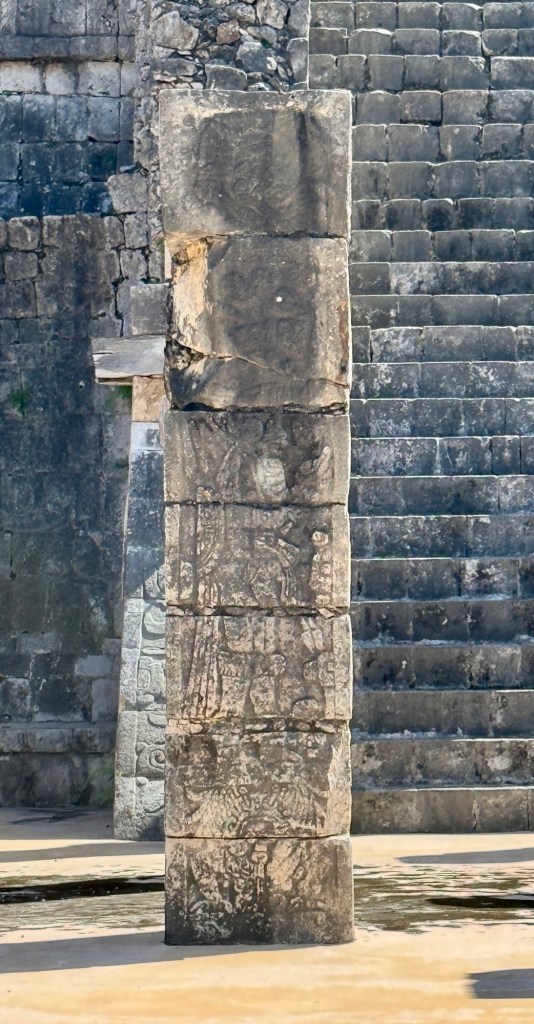
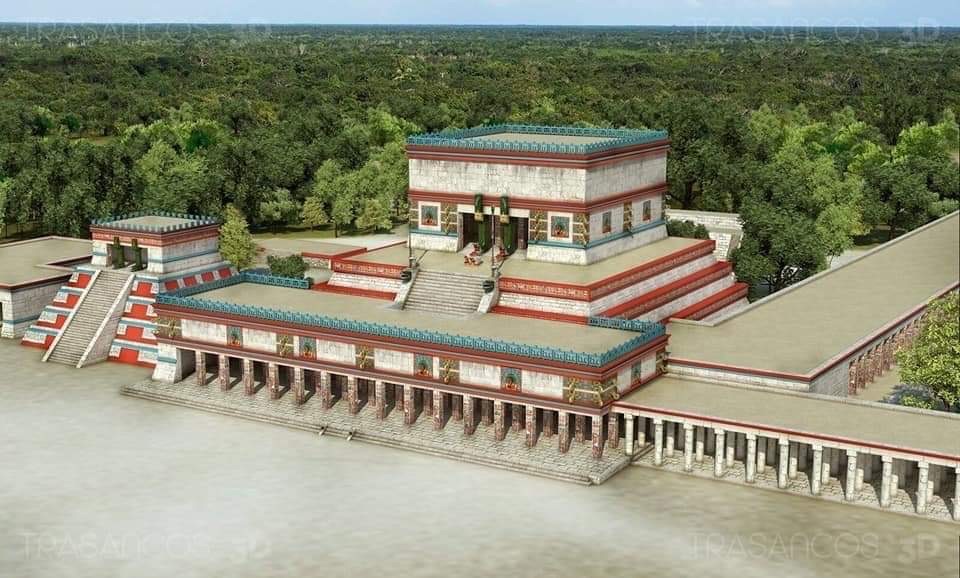
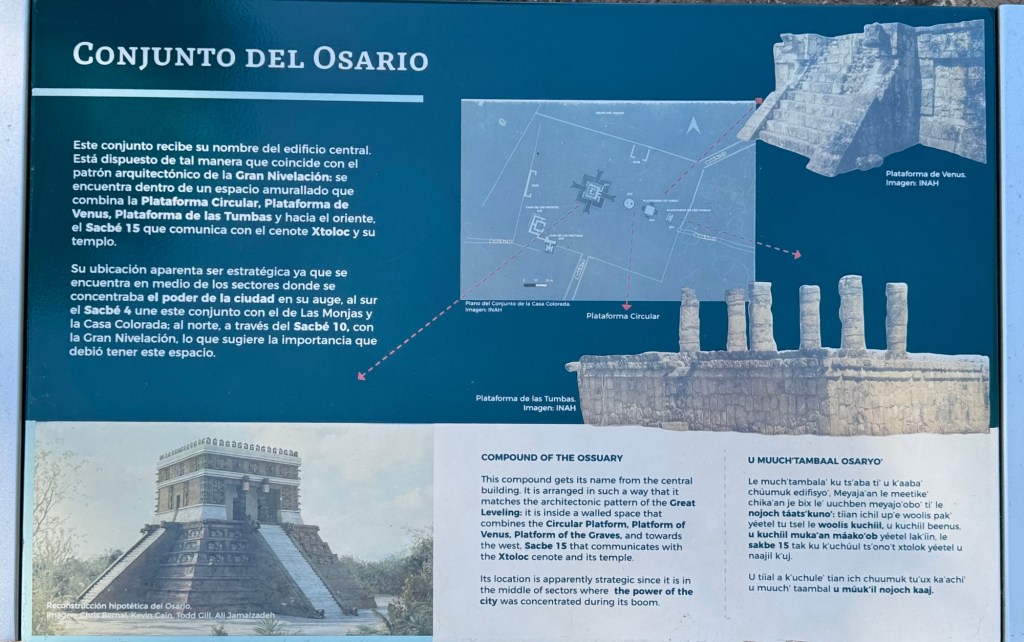
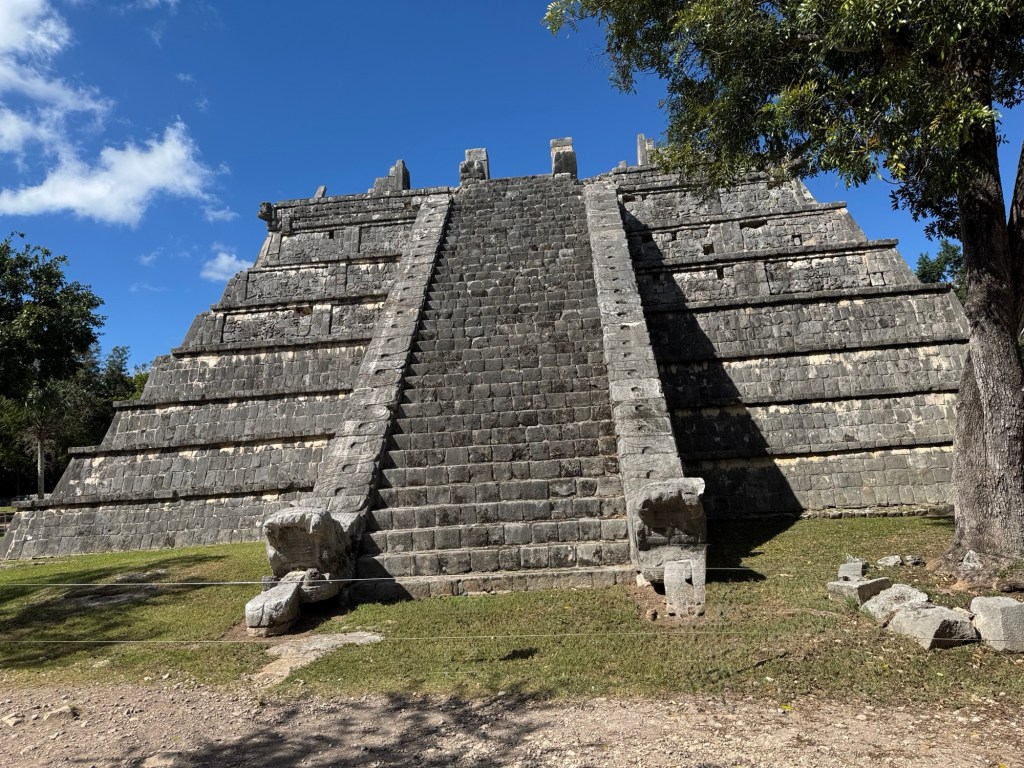
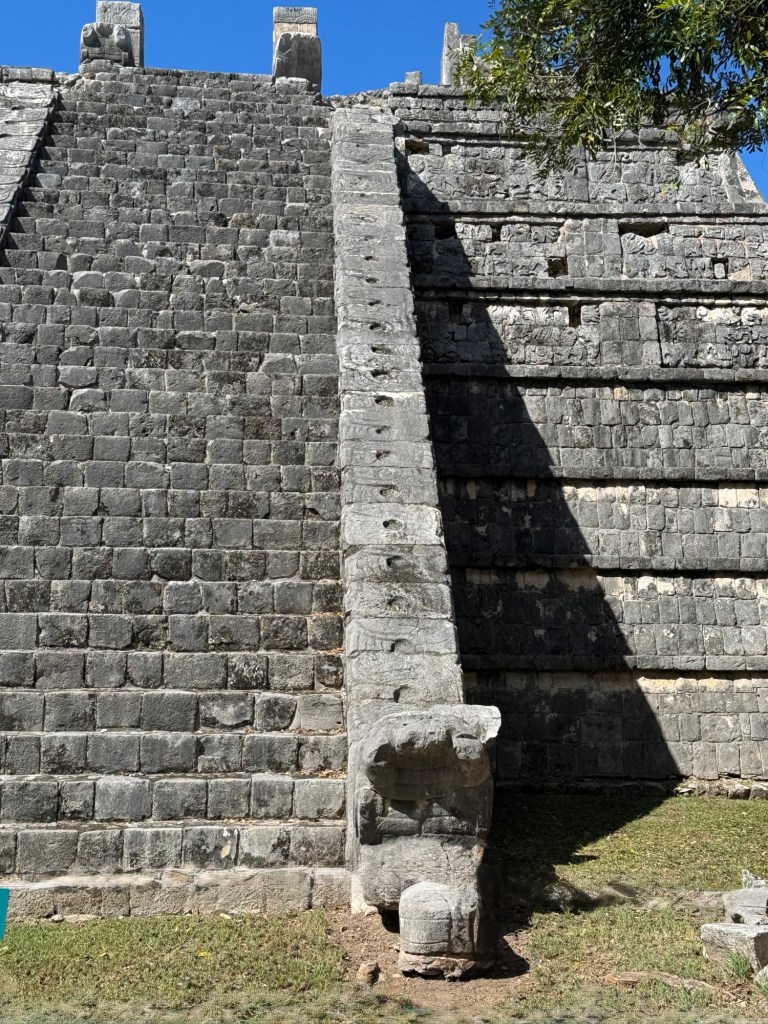
Then we visited another compound of the ossuary
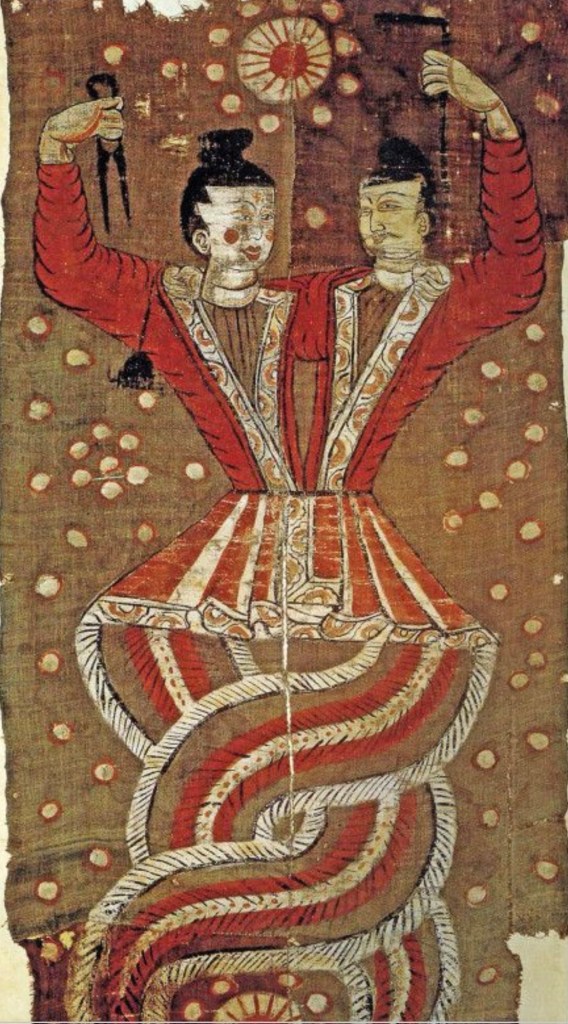
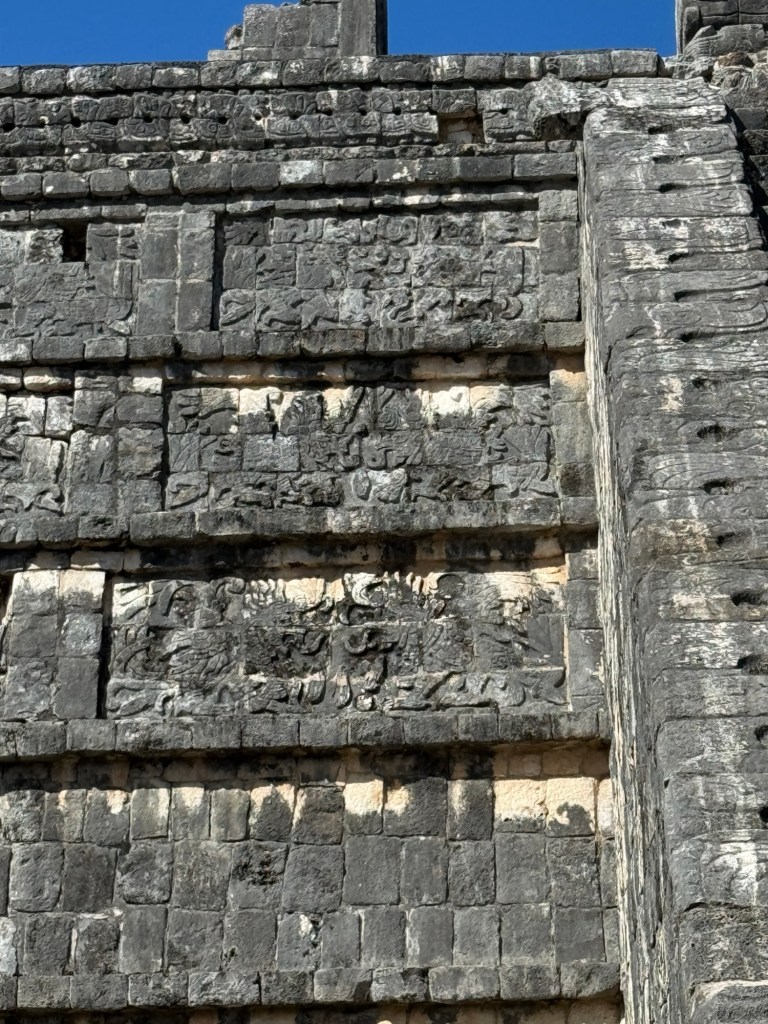
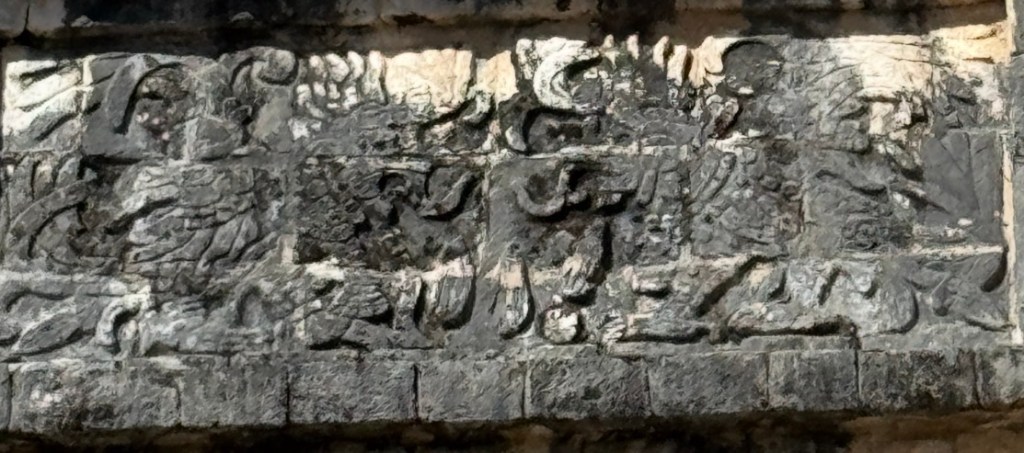
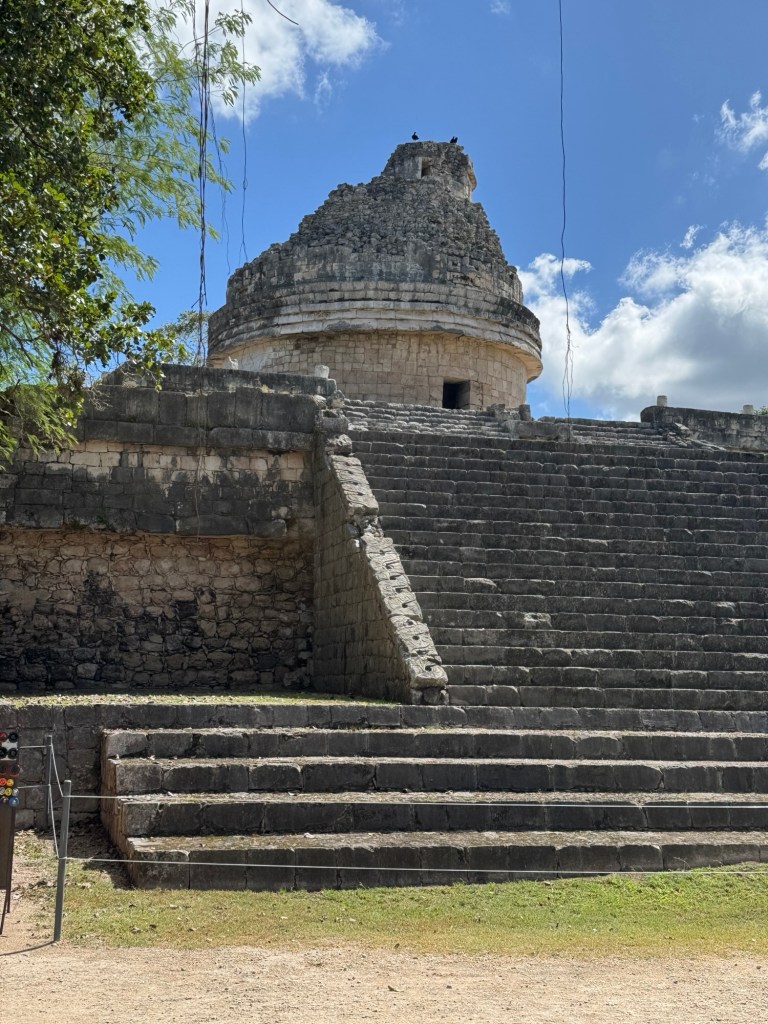
The double snake represents fertility. Our 伏羲女媧 also had the snake courtship picture 👇There are many fine carvings in the wall but most became unrecognisable except this oneLast stop is the observatory, already acquired the round top of the present observatory
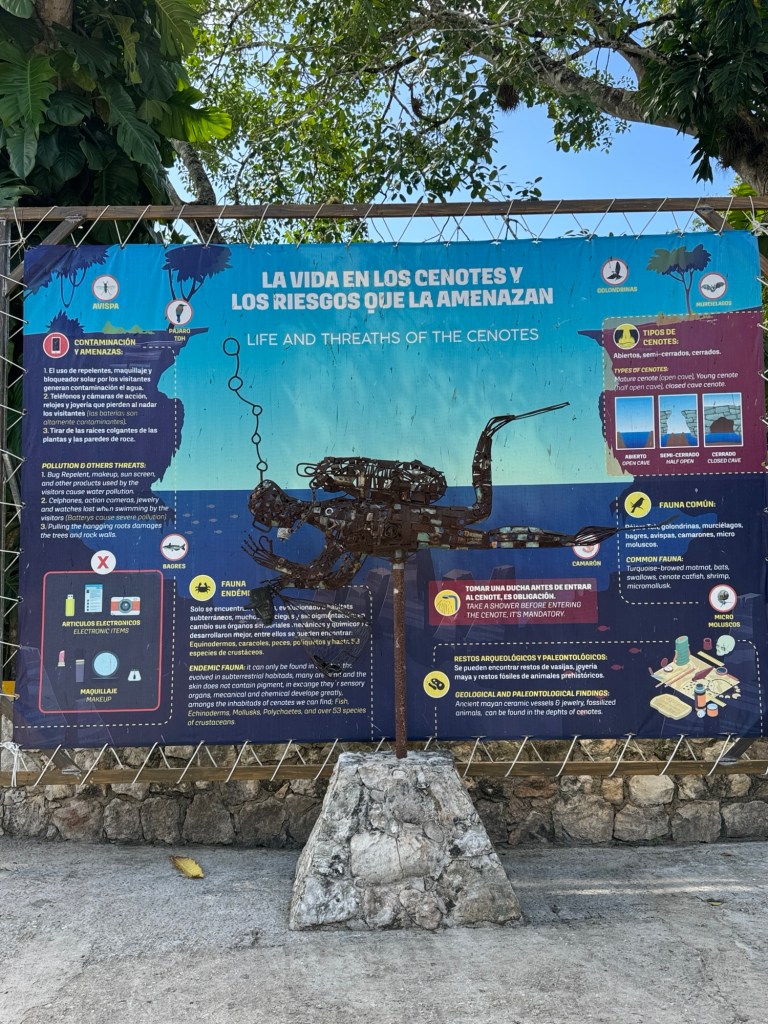
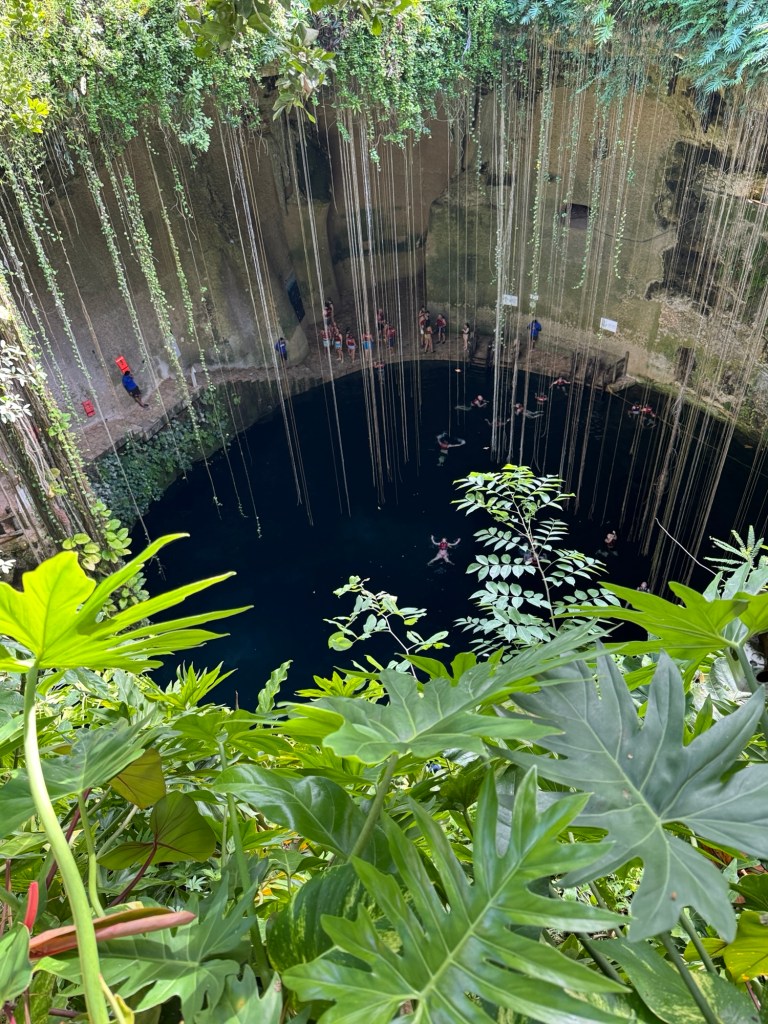
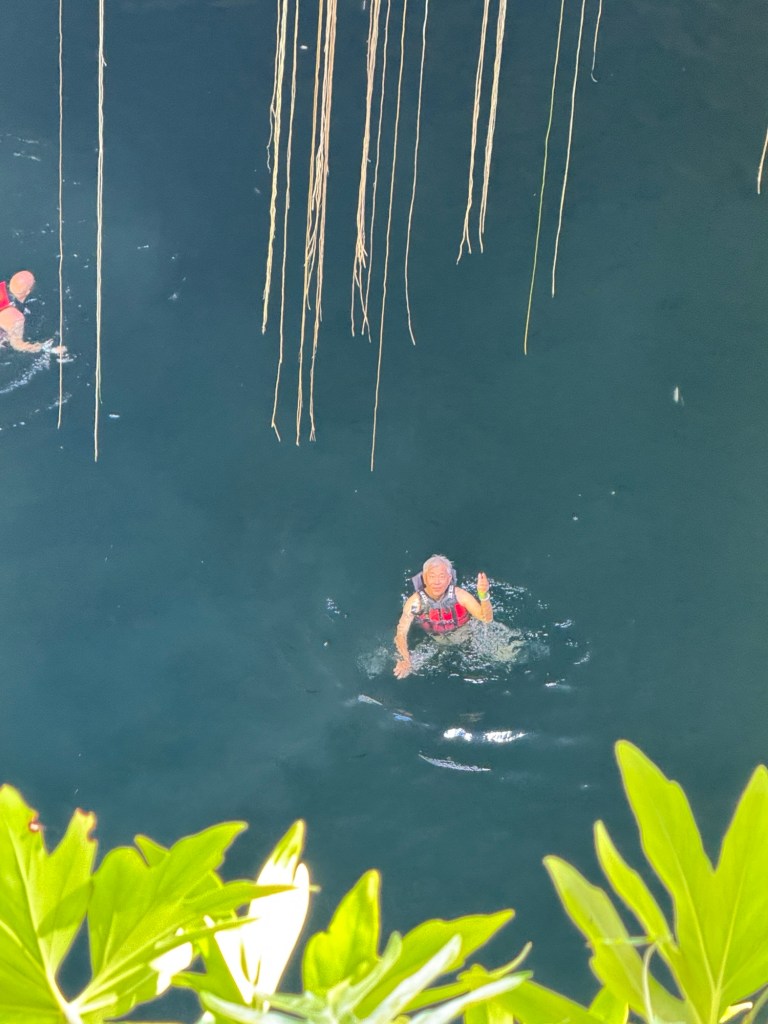
After this we went to see a sinkhole where people can swim. Only Yue Wa went to swim but his belongings in the locker was stolen. Luckily he only had a small pack but unfortunately he packed his phone too. It was good that he had 2 phones. The police was informed but they asked him to come to the scene the following day for a witness statement. They could not do it on line. Of course there is no point in spending time sothe case was dropped.
Have seen many photos of sinkholes and on TV too but this is my first time to see a real one.Happily swimming before knowing the theft
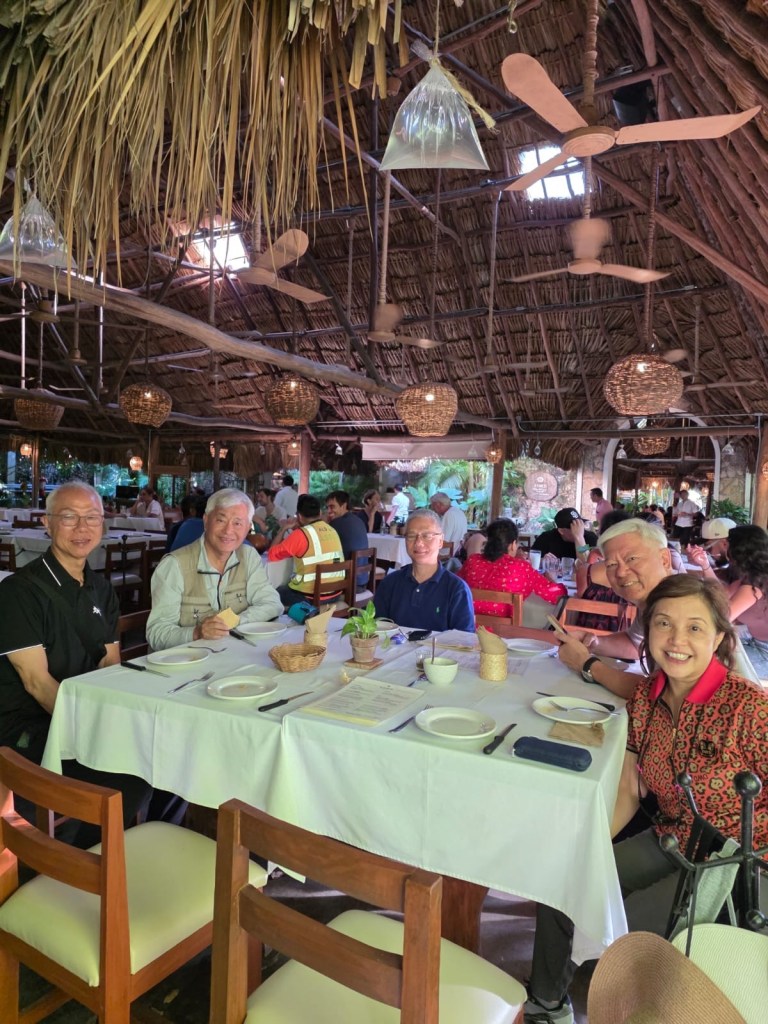
Then we had a late lunch afterwards
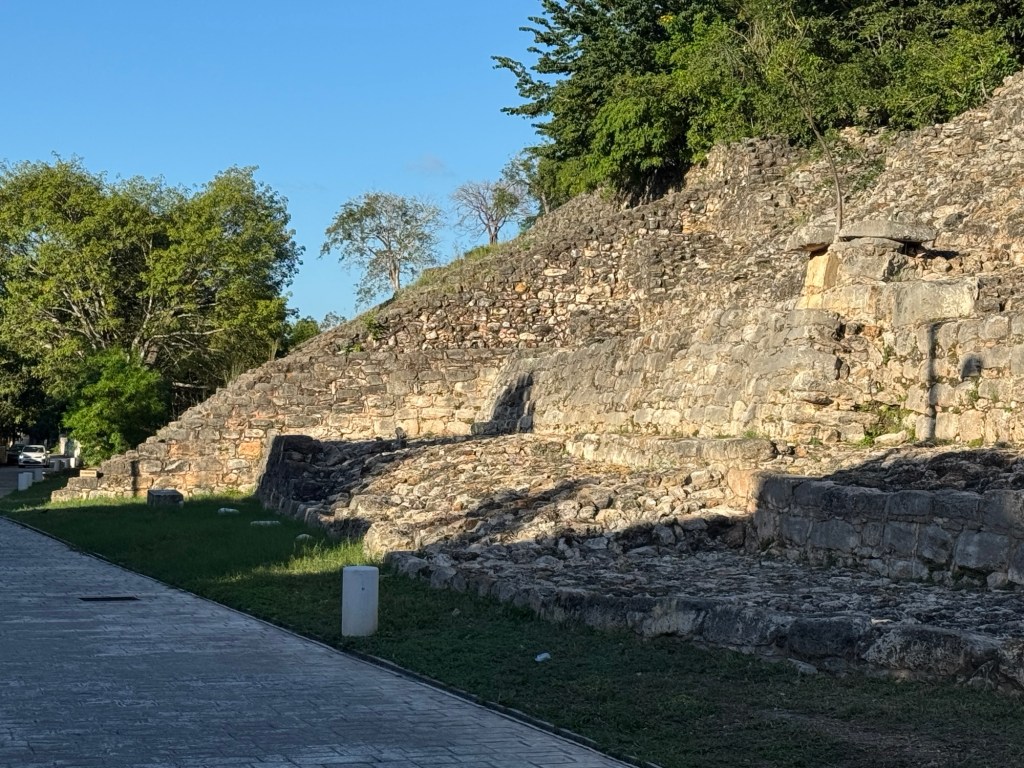
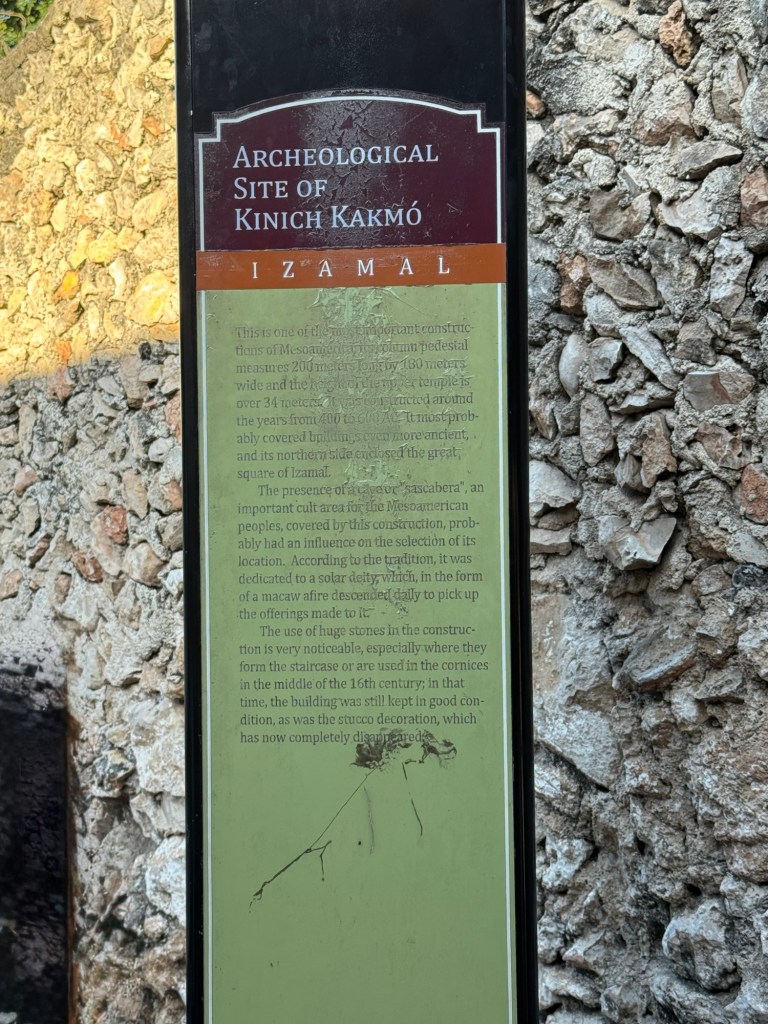
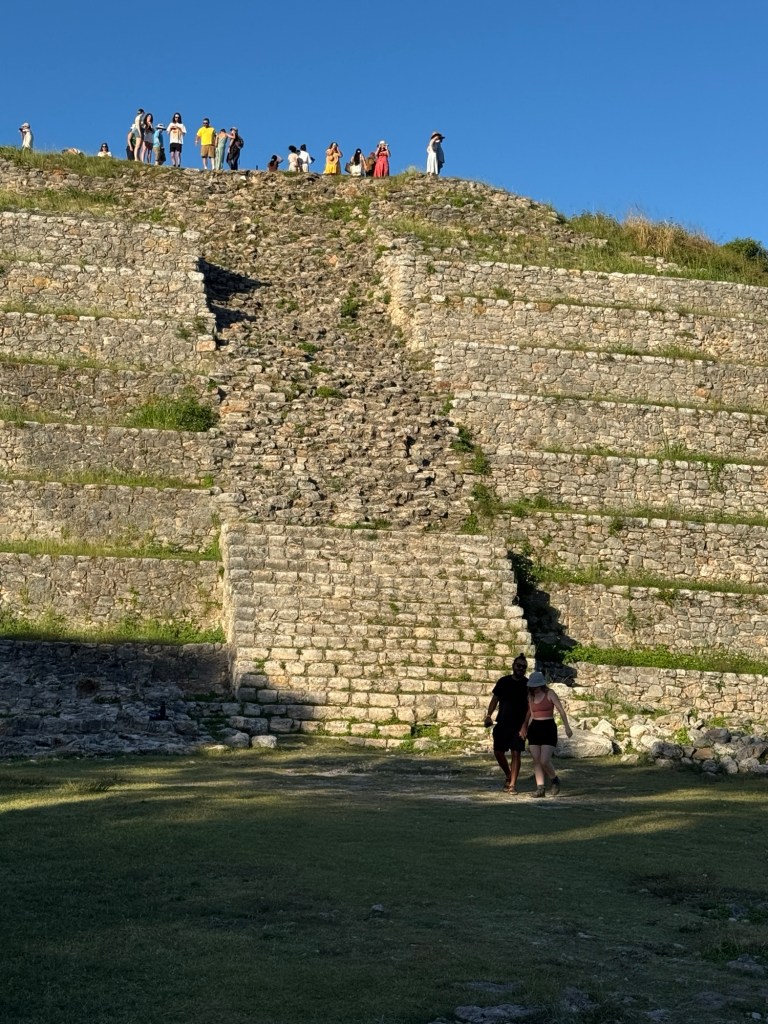
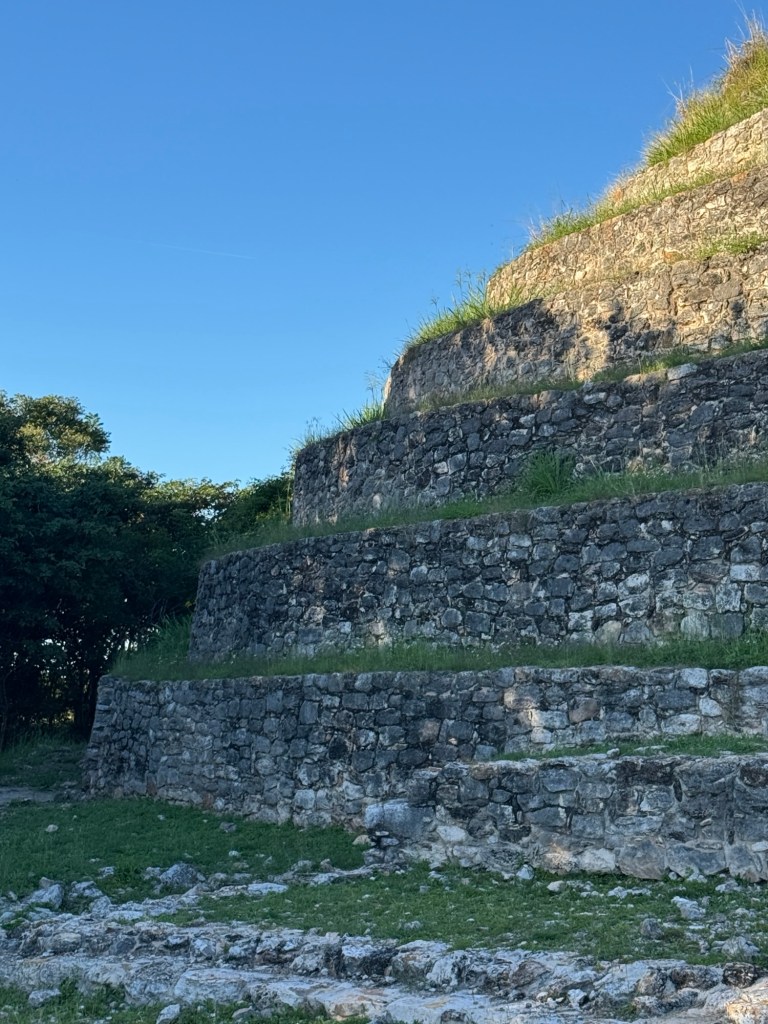
In the afternoon we went to Izamal where we could see many ruins of Pyramids like this in a street corner 👇
A small pyramid, easy to climbWith roundish corners
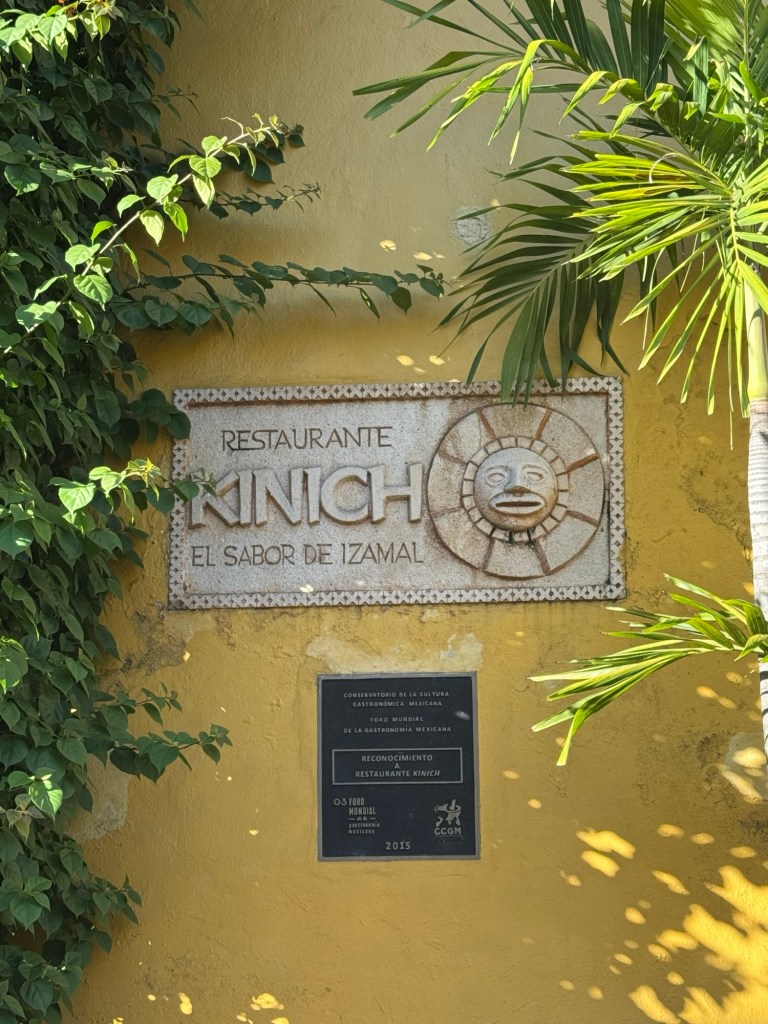
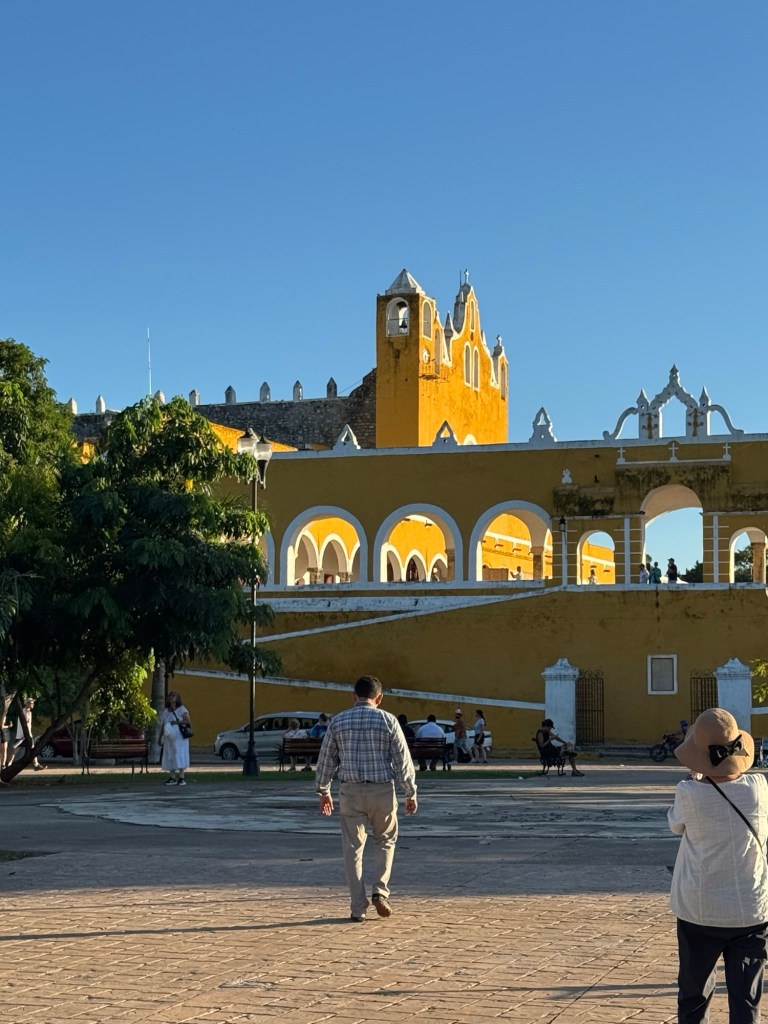
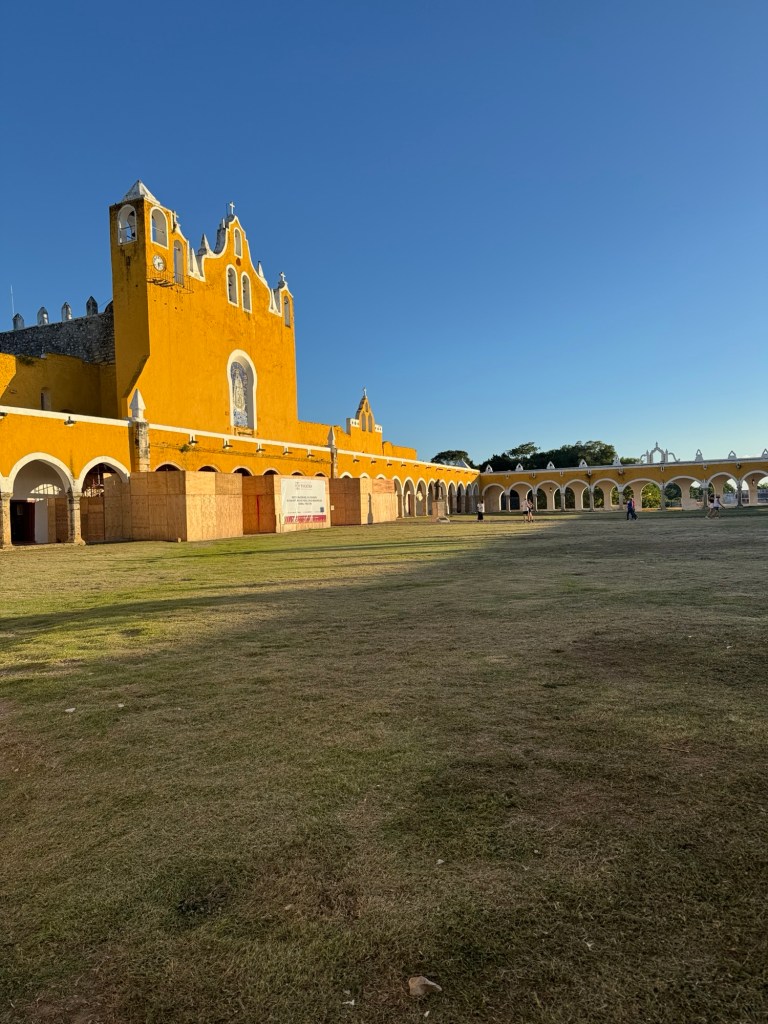
Then we went to see the Convento de San Antonio de Padua in the “Yellow City” of Izamal.
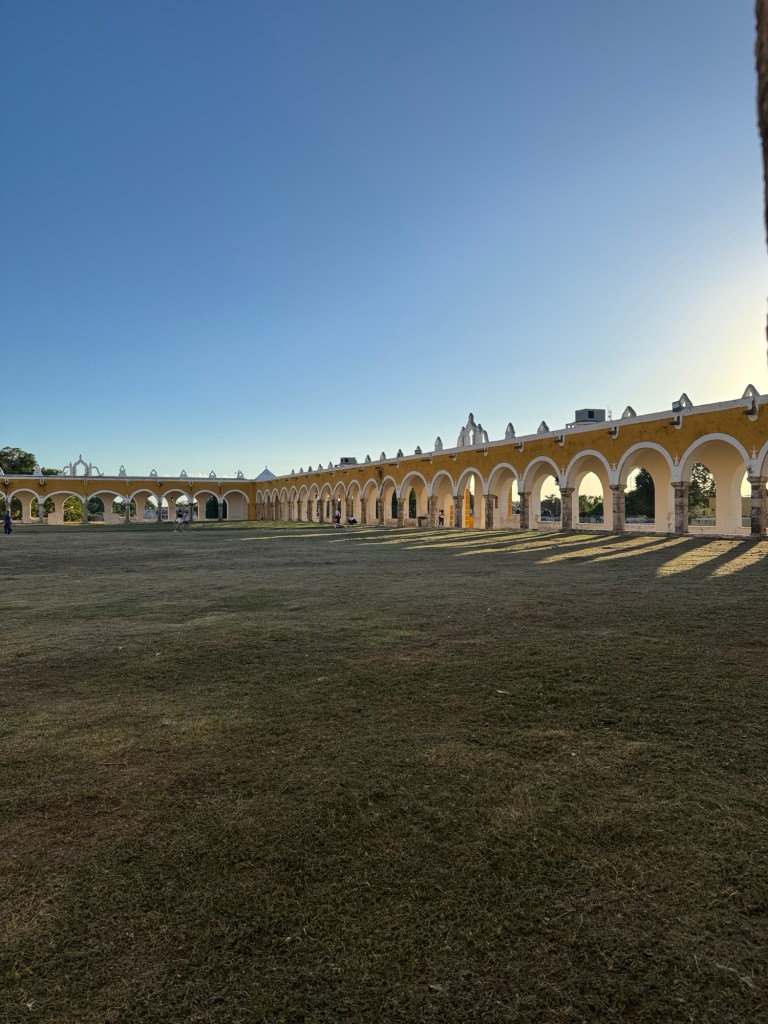
Izamal is known as the “Yellow City” because most buildings, including the convent, are painted a bright yellow ochre with white trim. The convent was deliberately constructed on top of the ruins of a large Maya pyramid called P’ap’hol-chaak, using the stones from the destroyed temple as a symbol of the Spanish conquest and the imposition of Christianity over indigenous beliefs.The convent features the second-largest atrium in the world, after St. Peter’s Square in the Vatican
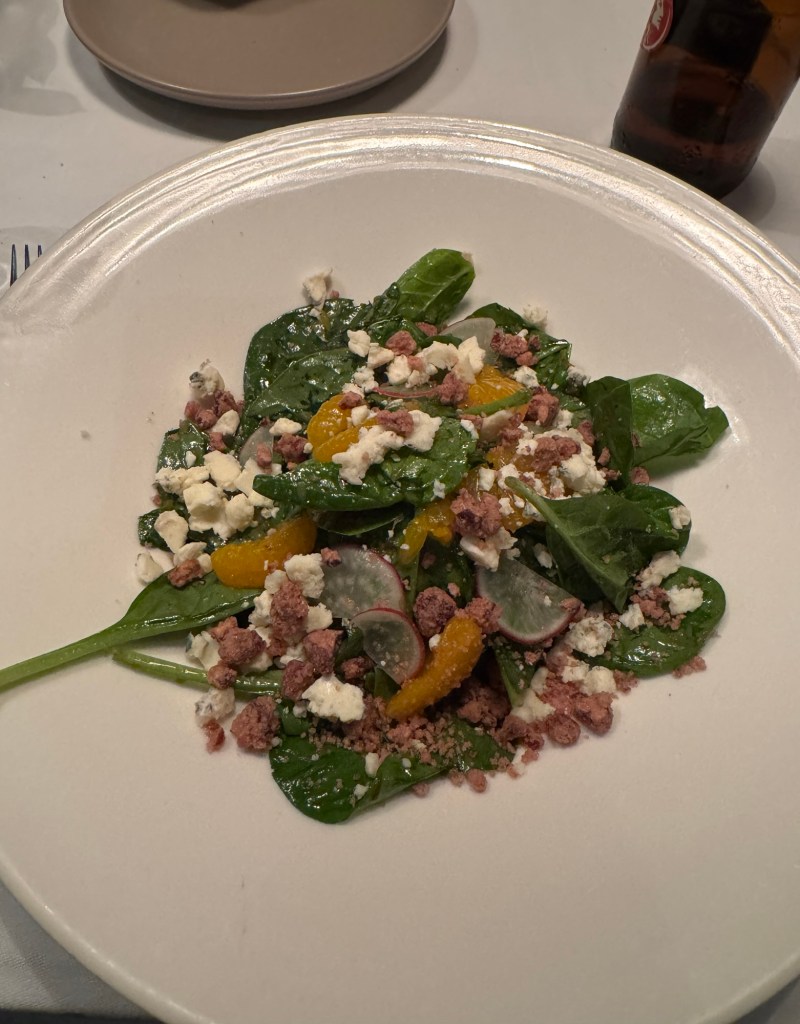
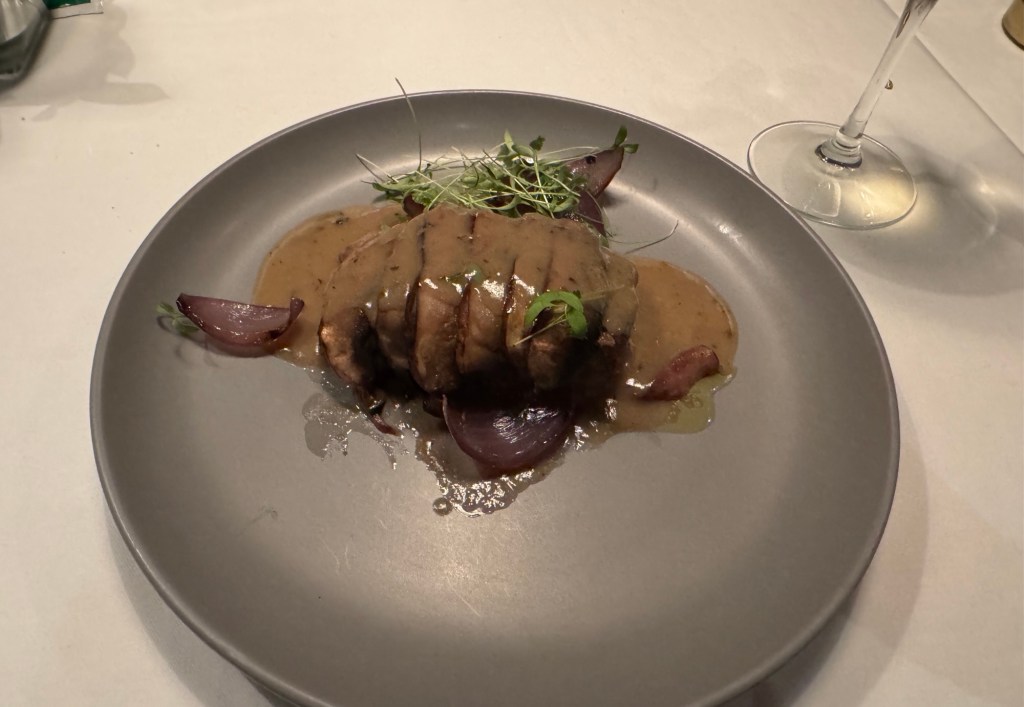
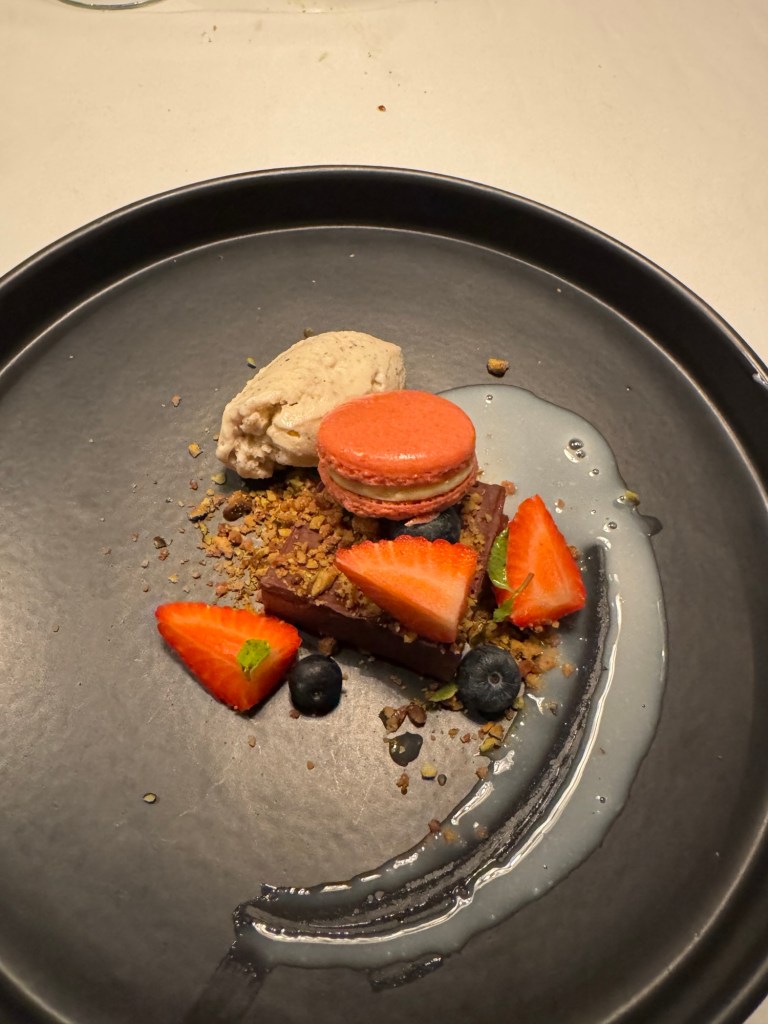
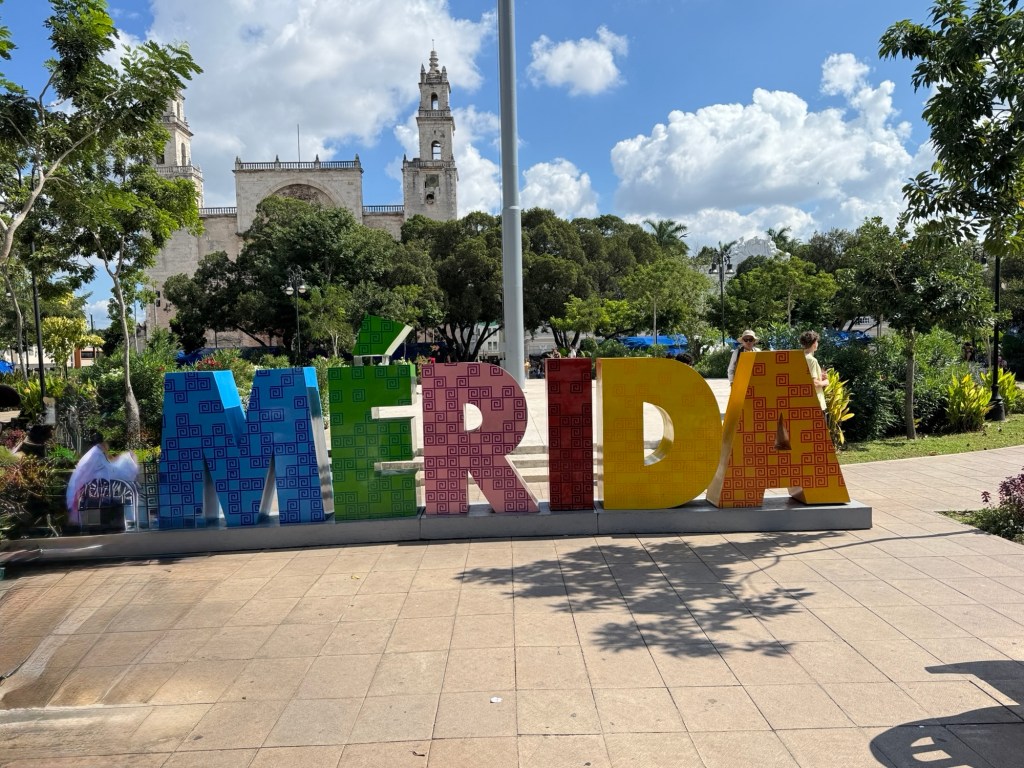
In the evening we took an hour drive to Mérida and checked in a our last hotel of this trip: Rosas & Xoxolate Boutique Hoteland had dinner there
Day 12 November 22 Saturday
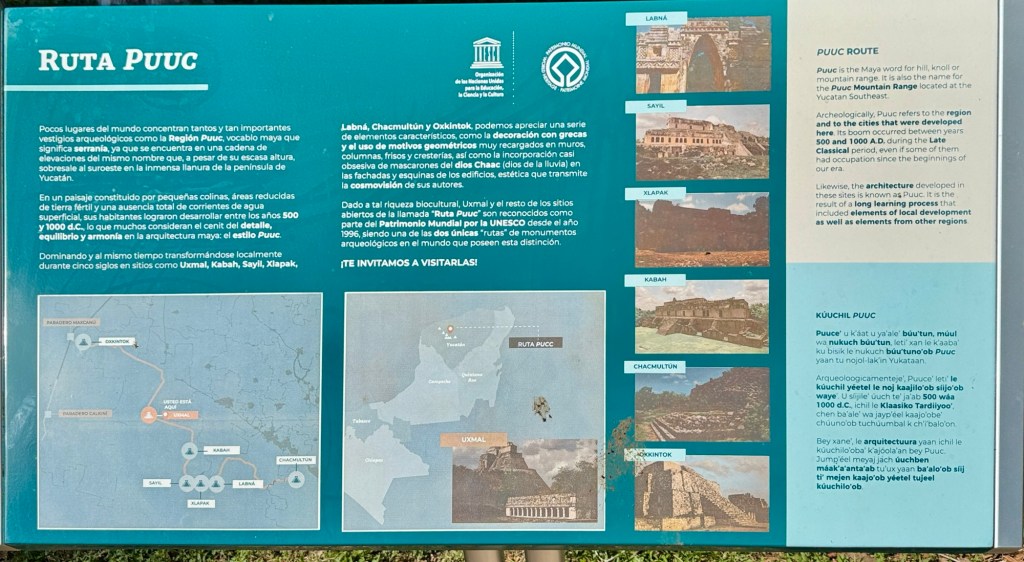
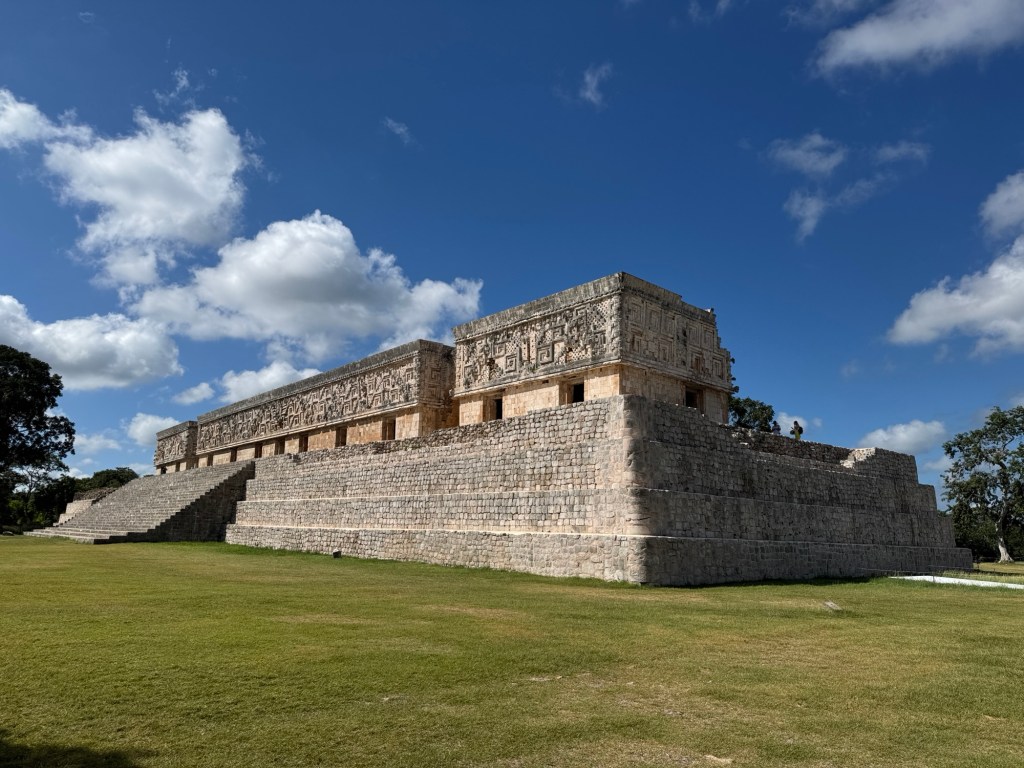
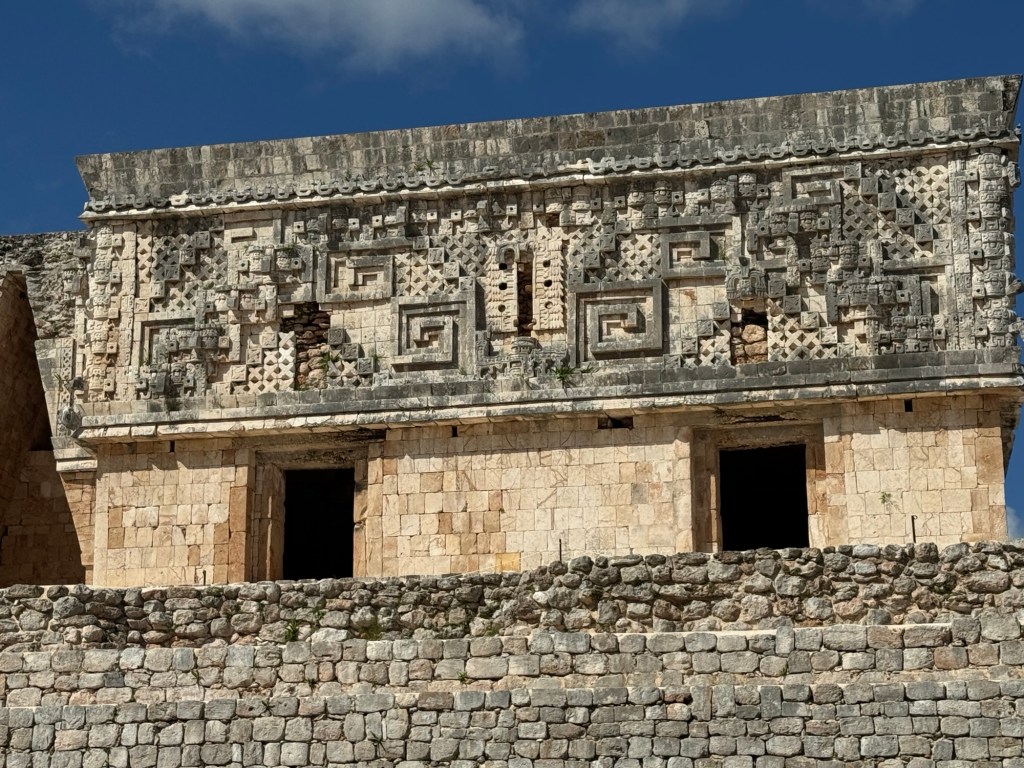
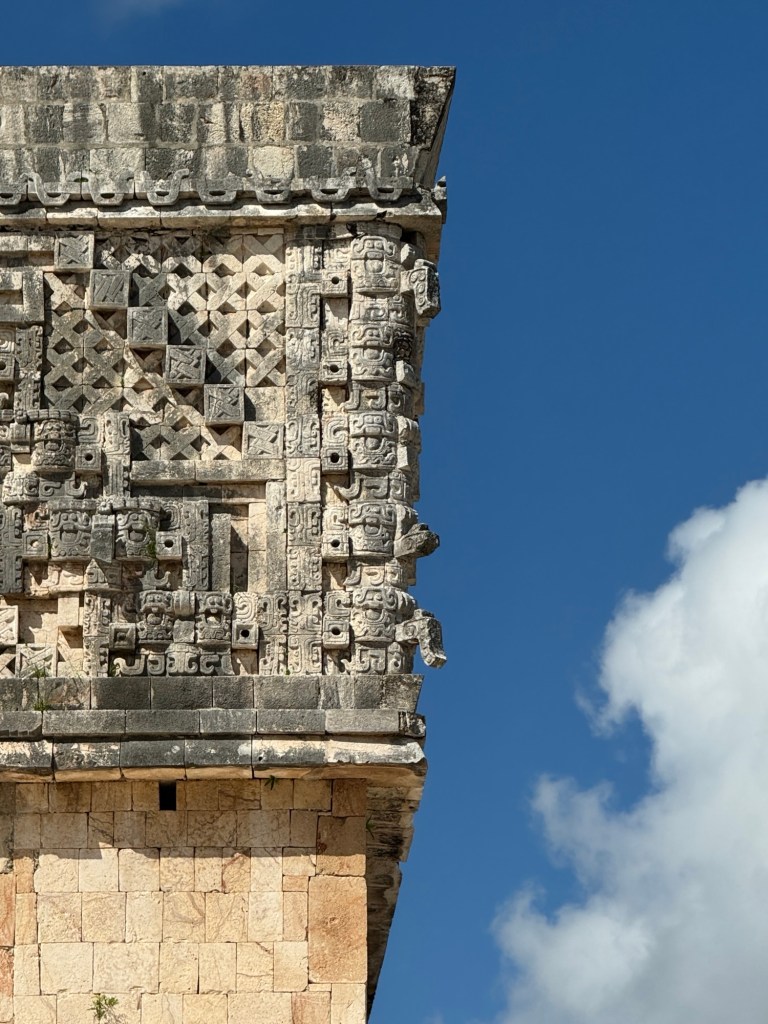
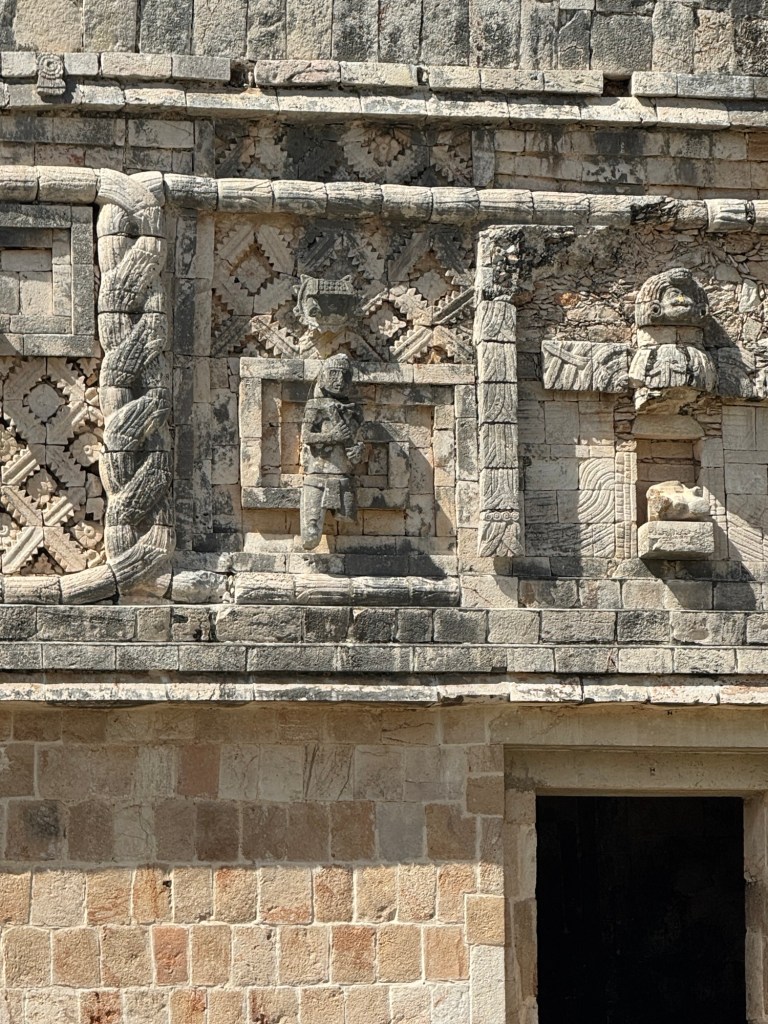
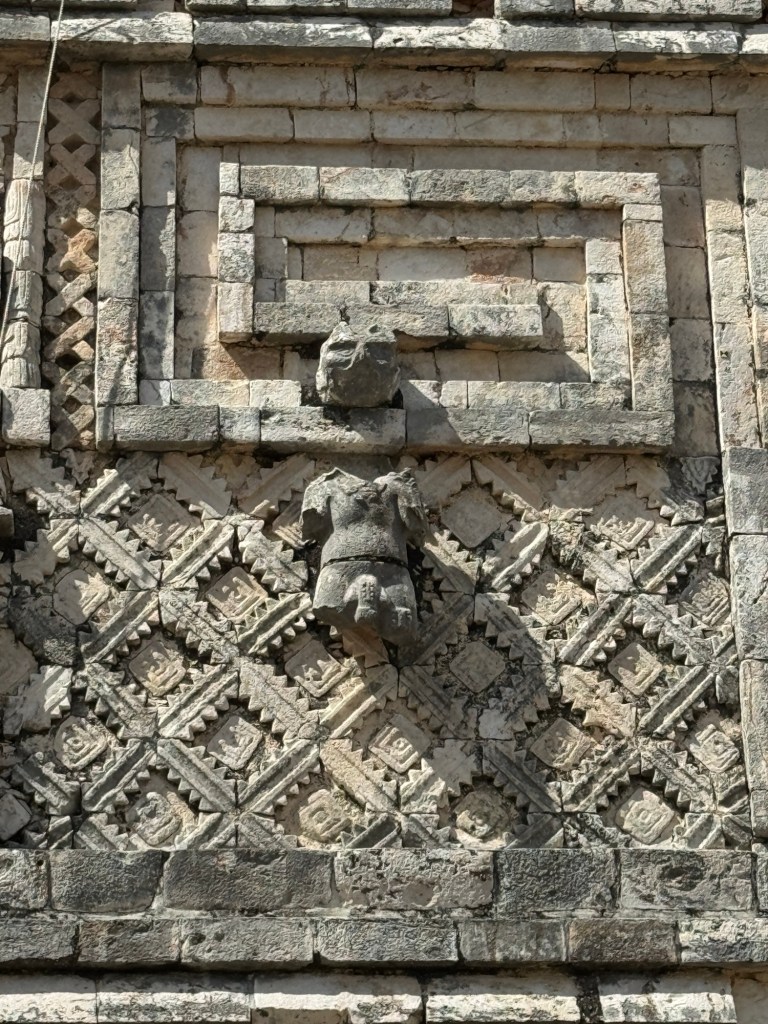
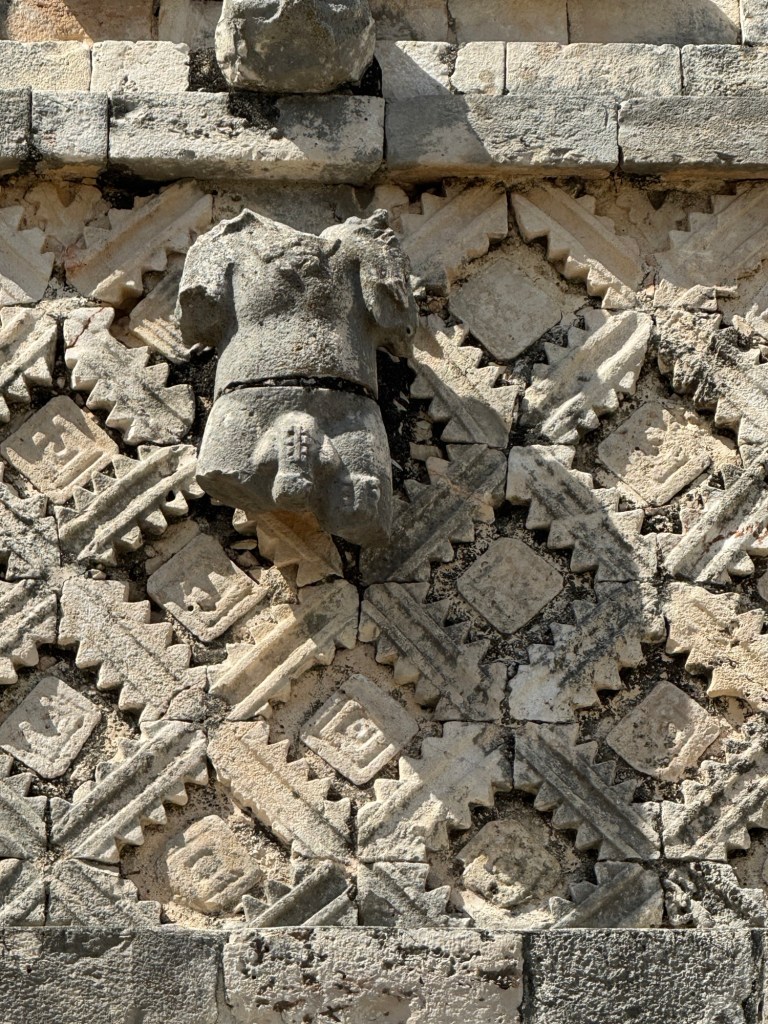
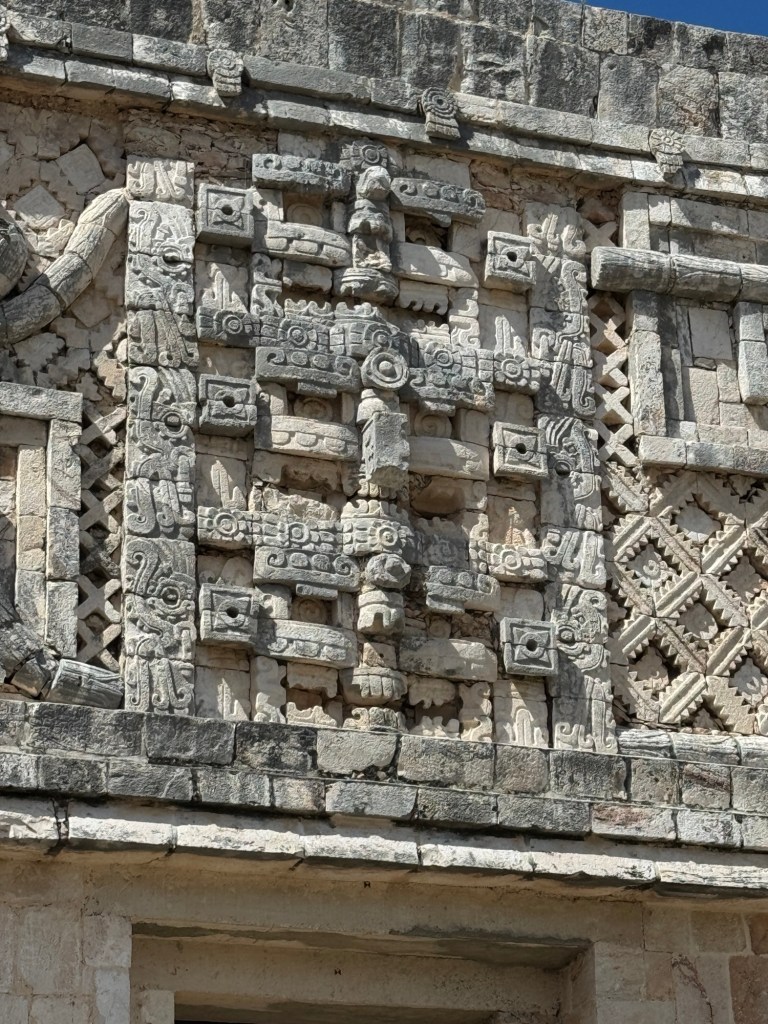
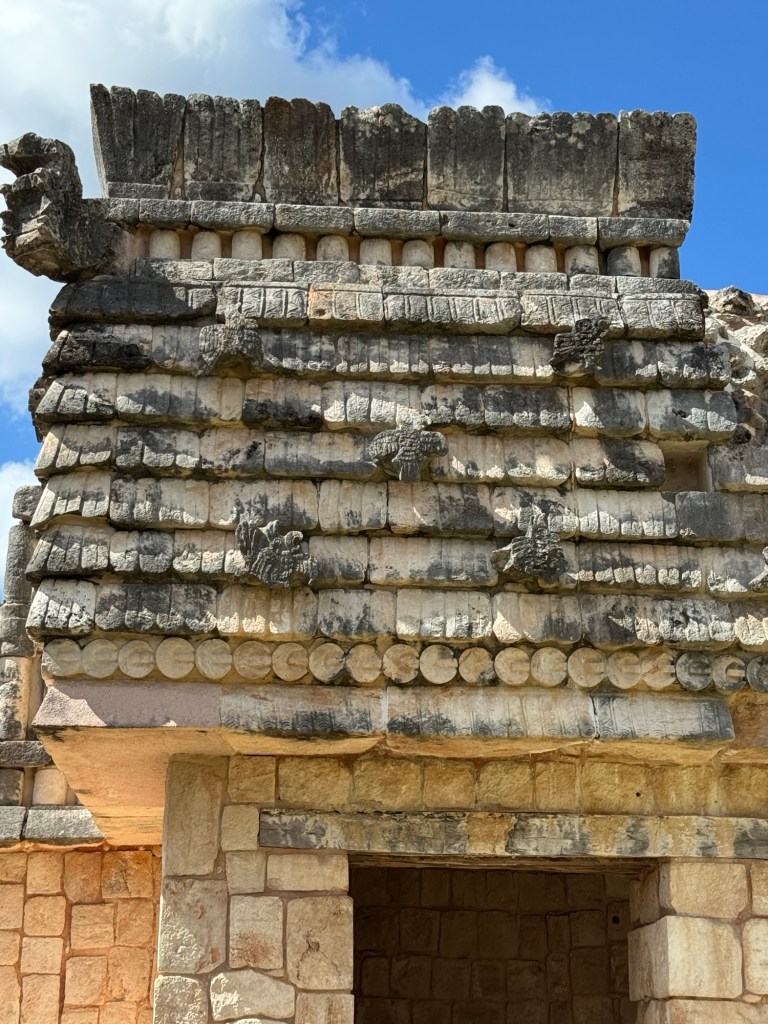
In the morning we went to Uxmal, a World Heritage Site. This site is part of the mountain range known as the Puuc Route. The Puuc style is characterized by smooth lower walls and highly decorated upper facades featuring intricate stone mosaics, masks, and symbolic motif.
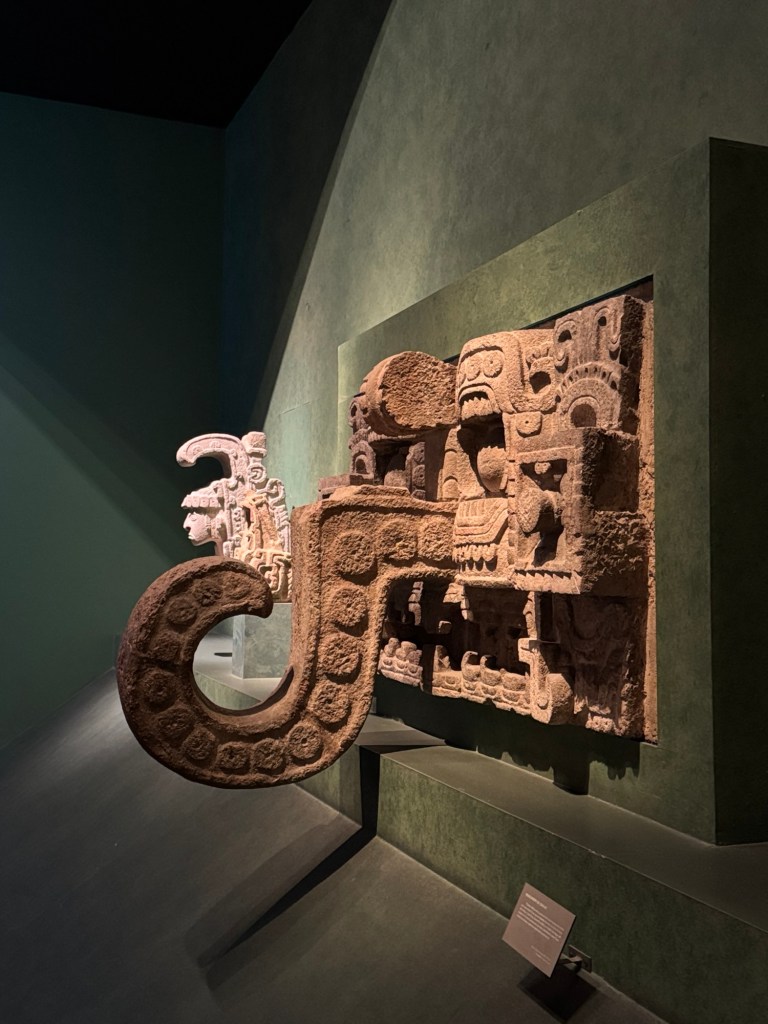
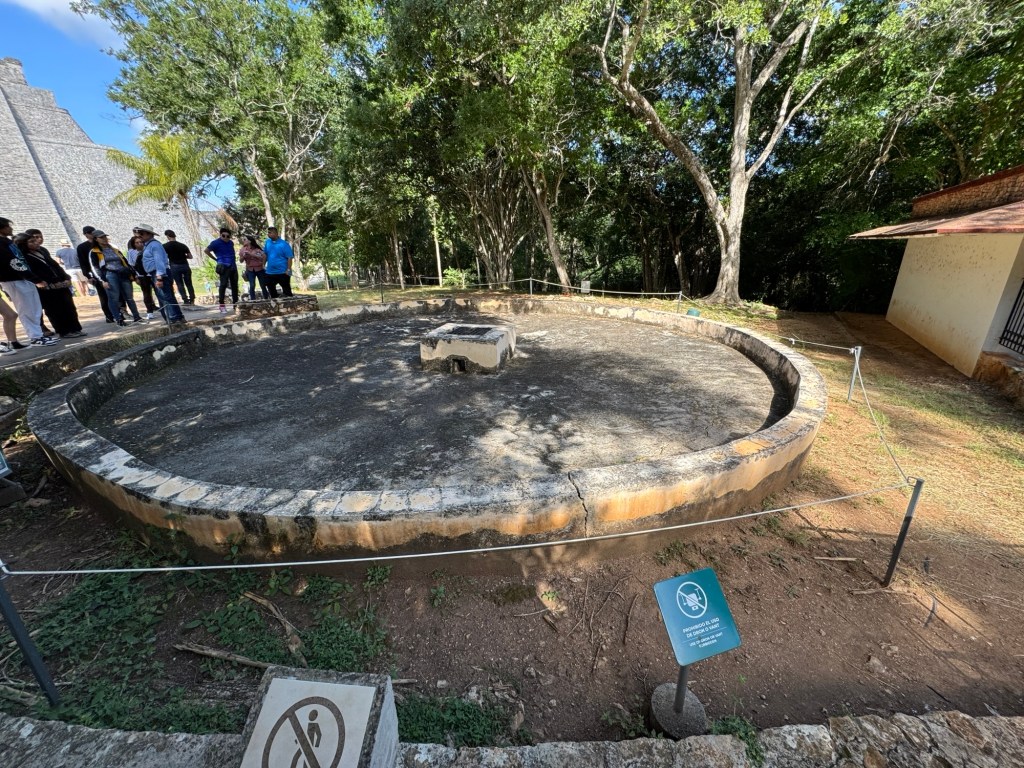
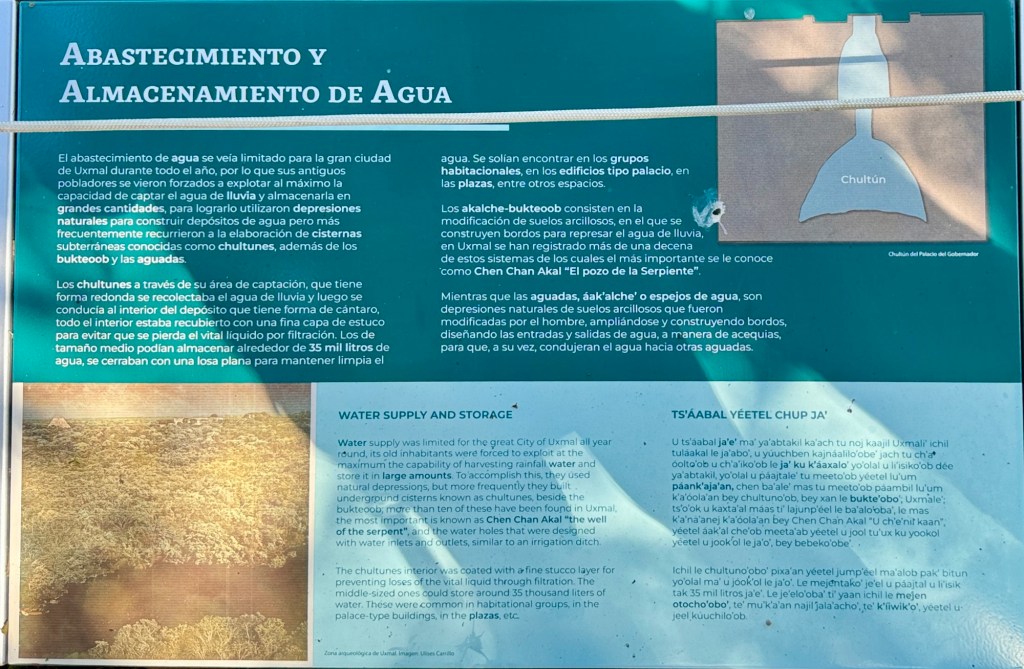
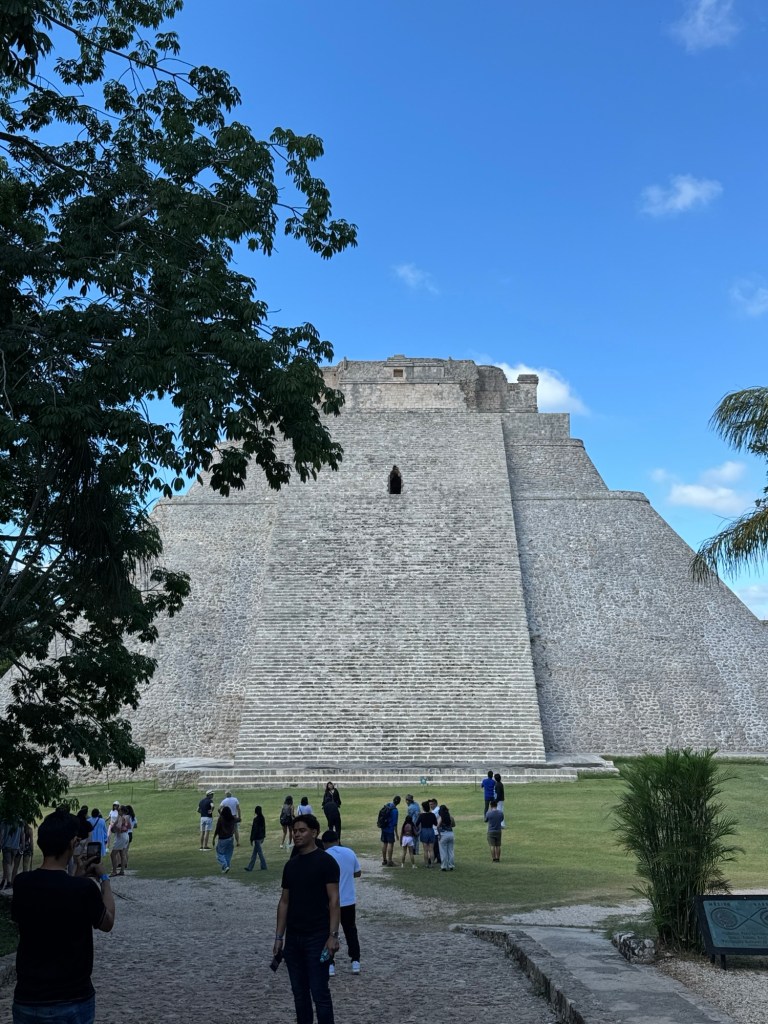
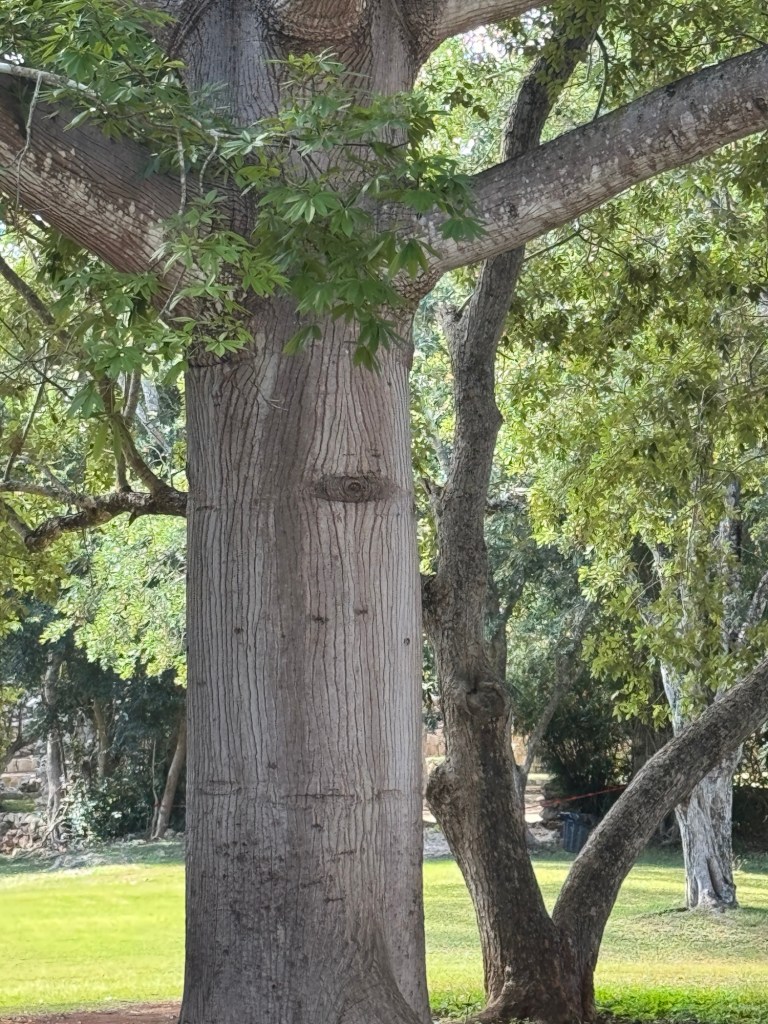
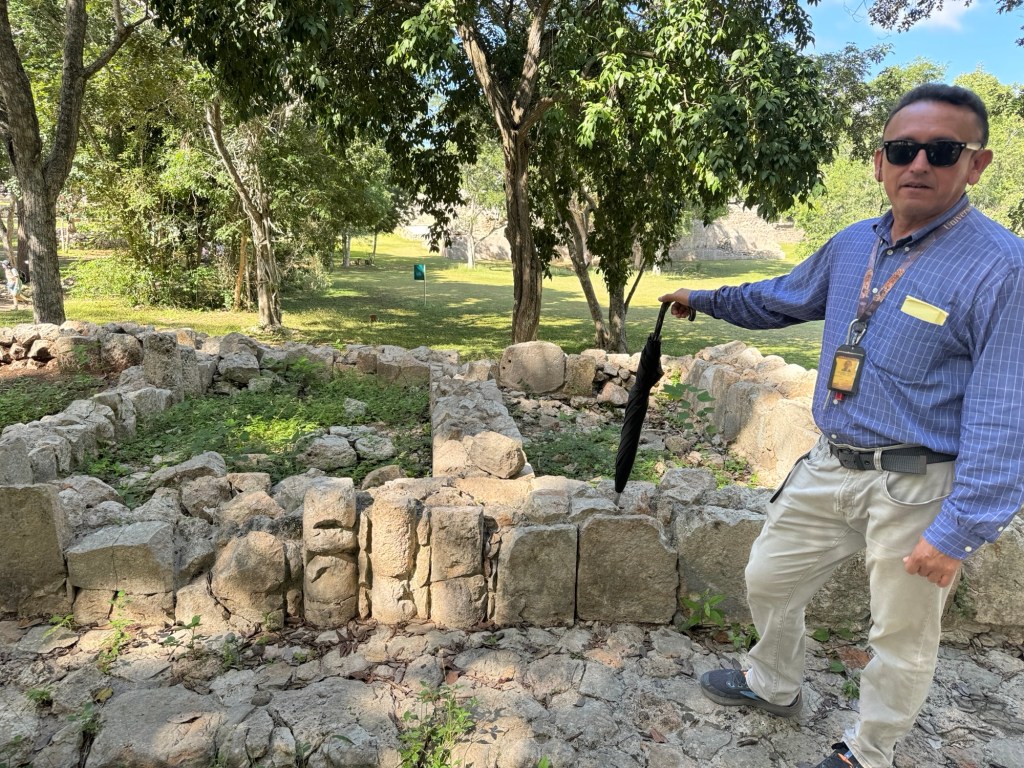
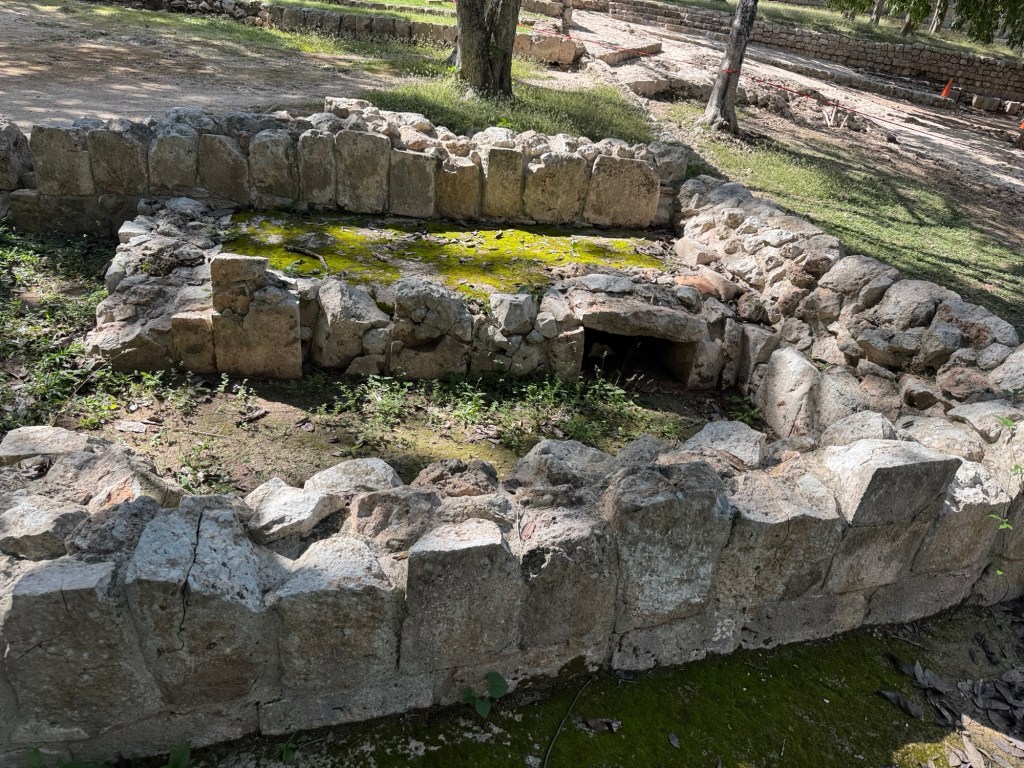
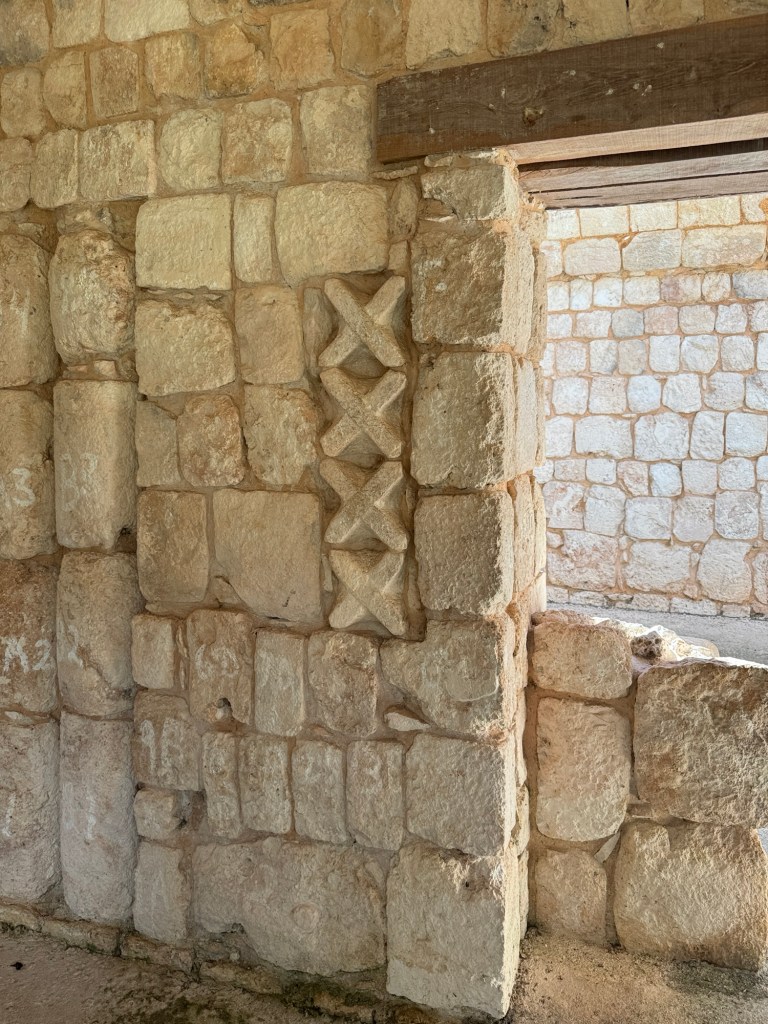
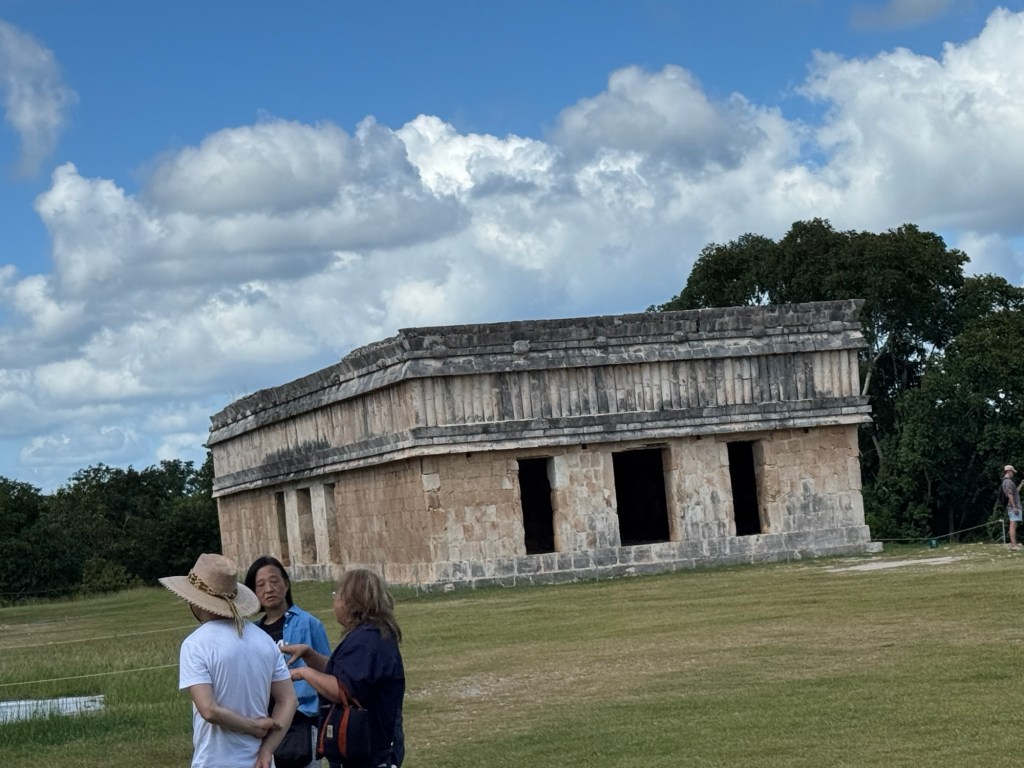
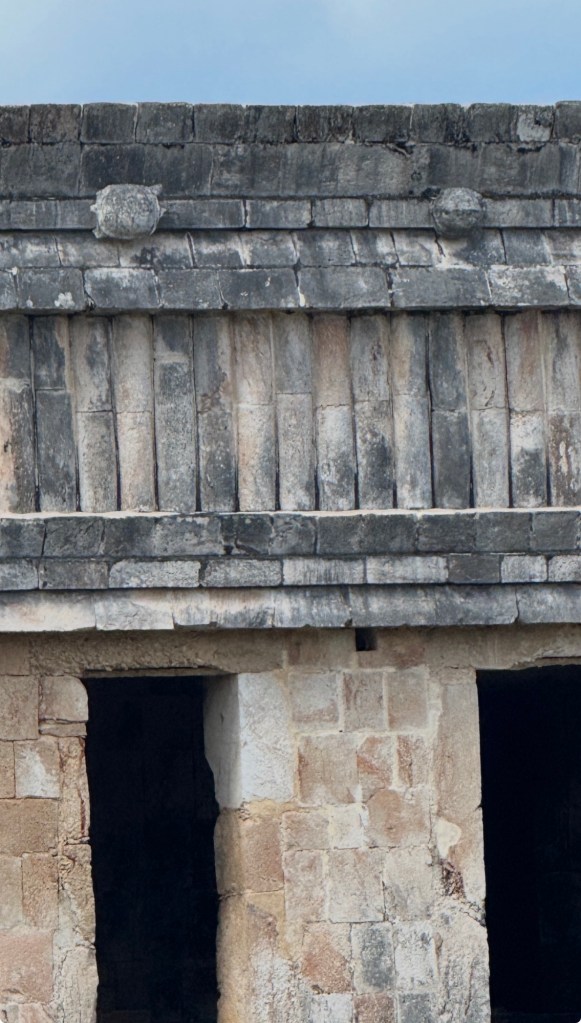
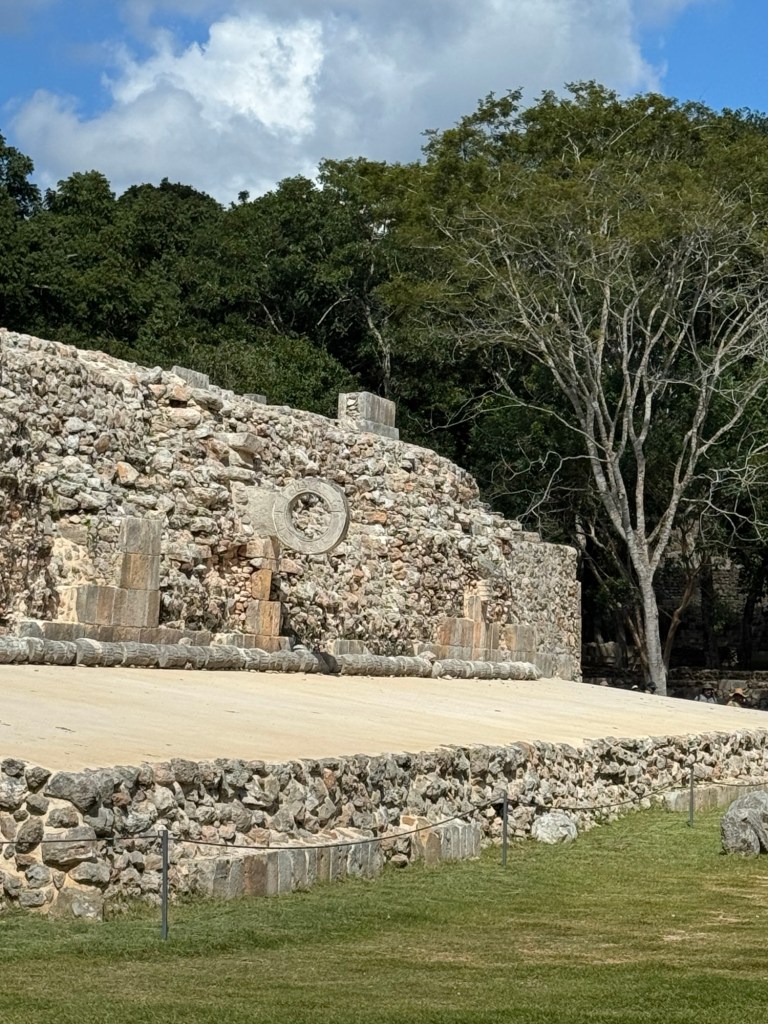
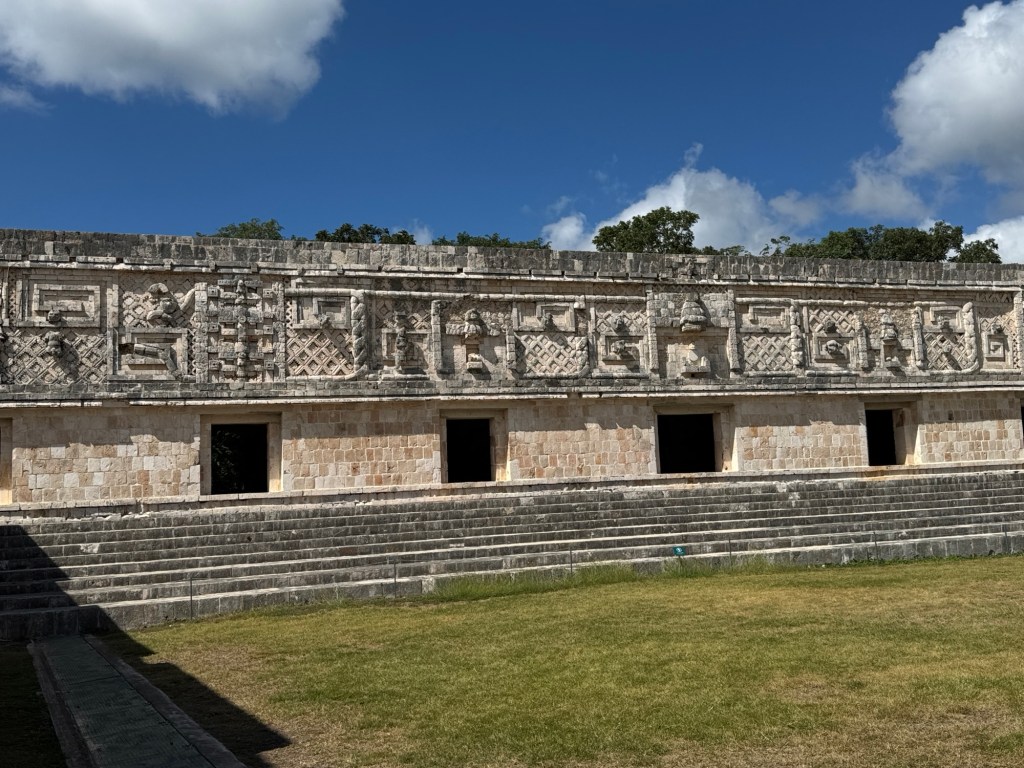
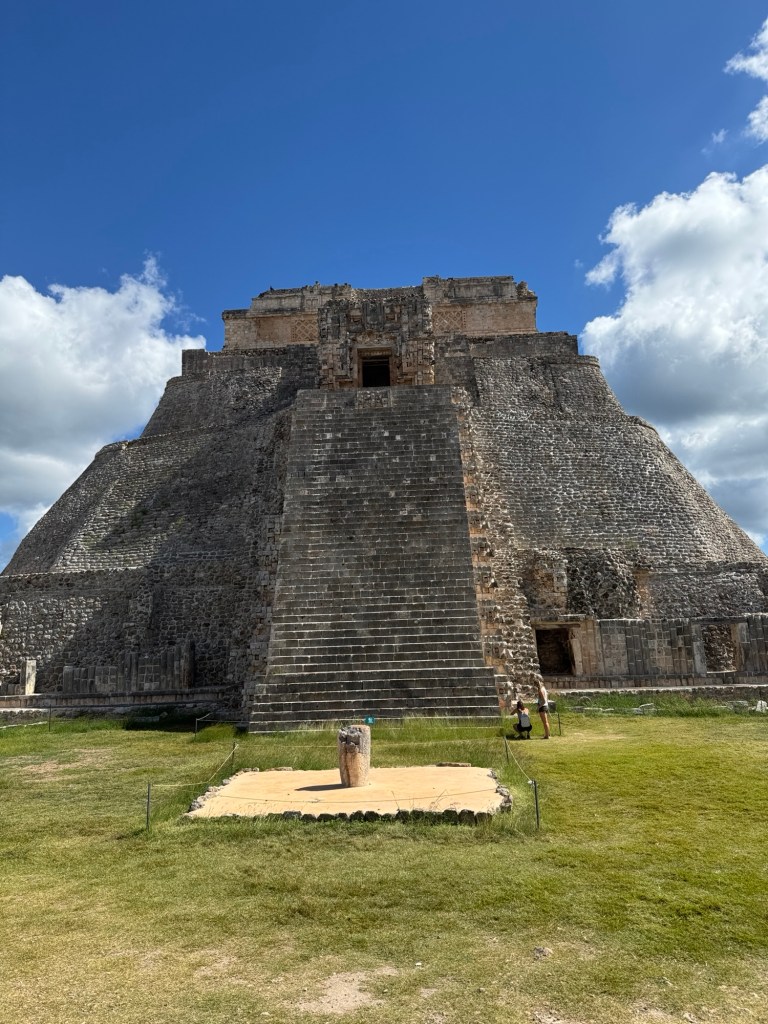
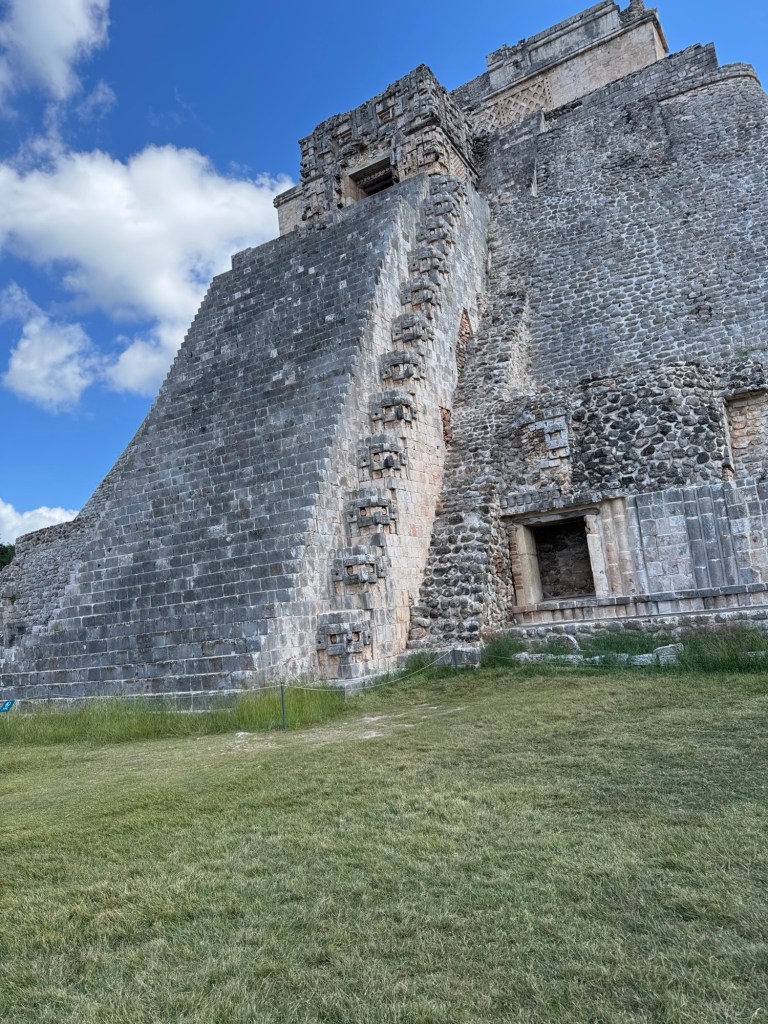
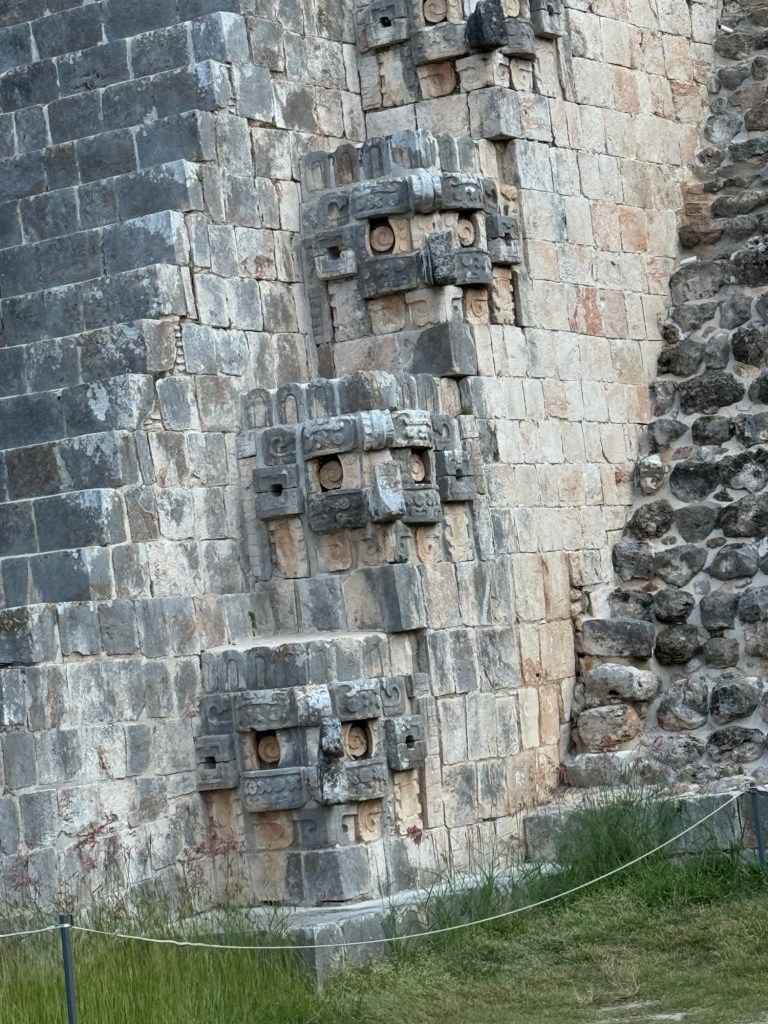
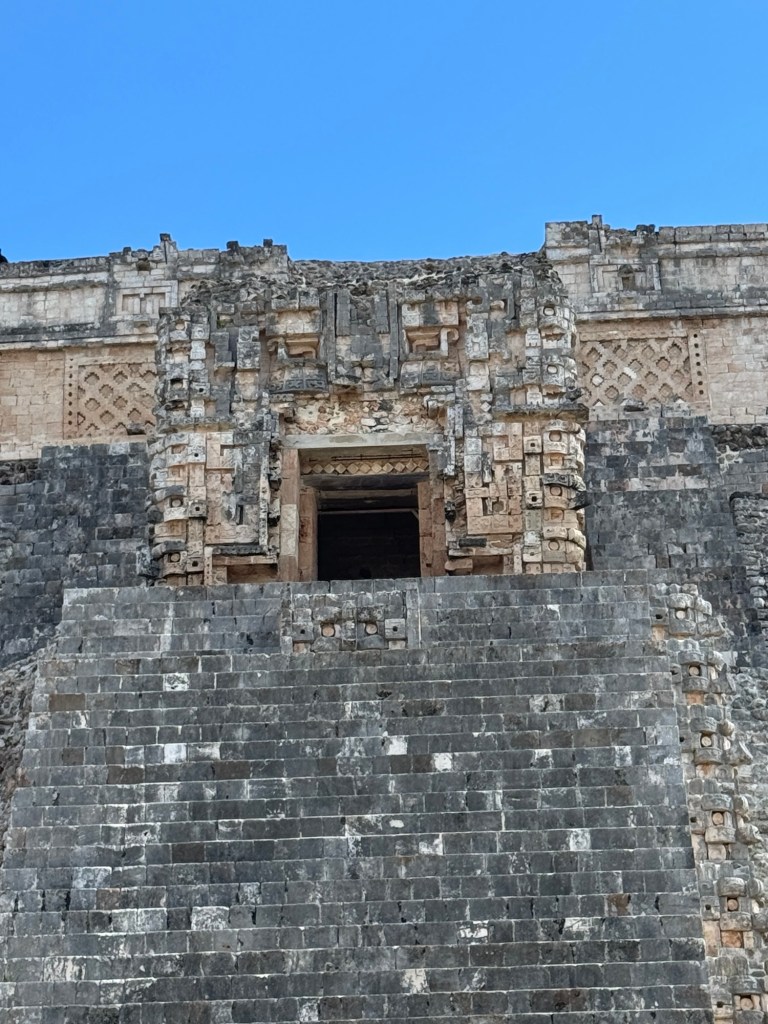
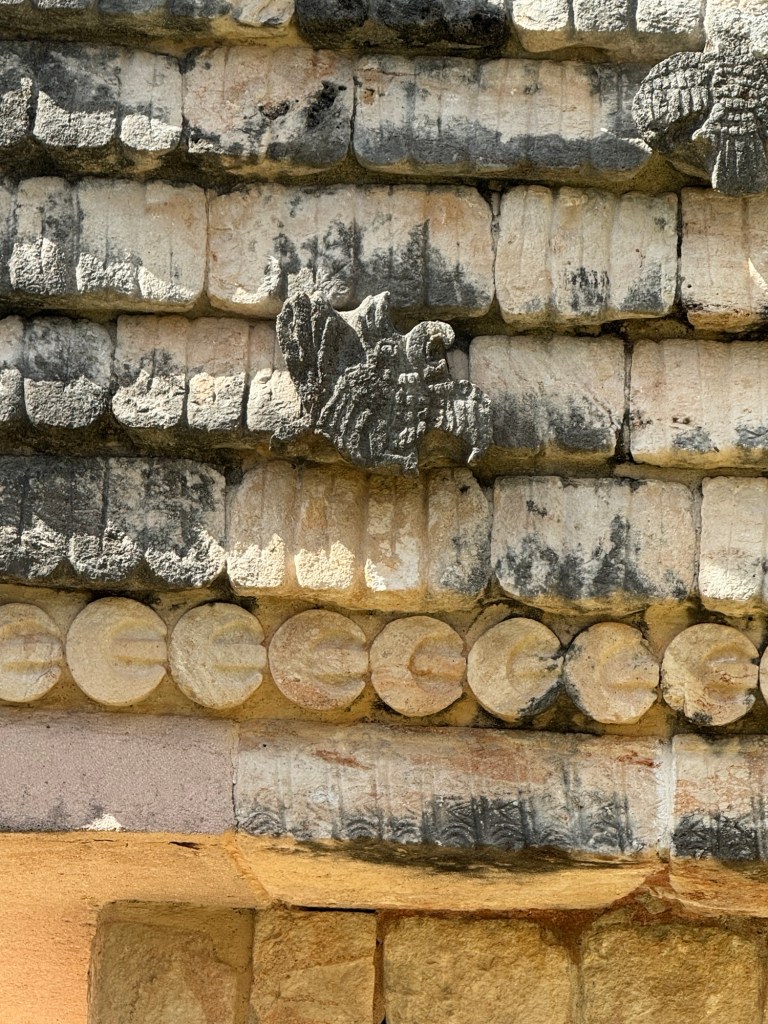
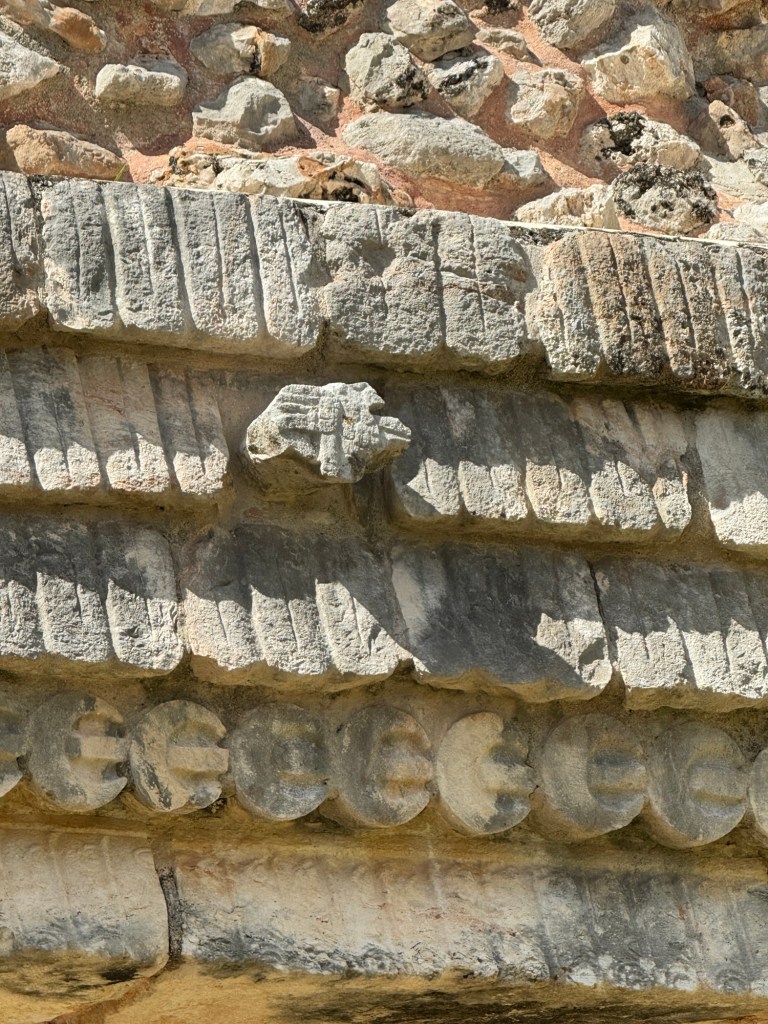
Water is important in the mountains so here is this the well of the serpent to store rain water Pyramid of the Fortune Teller. The hole was made by archaeologists for study.This ceiba tree is tall and looks more appropriate for the name: the world treeJesus pointed out that these were recycled stones for a buildingThis is a bed roomThe ‘X’ motif seen in the image is a common decorative element in Maya architecture, sometimes interpreted as a representation of the rain god Chaac, who was highly significant in the arid region. Governor’s Palace (Palacio del Gobernador) at the ancient Maya city of Uxmal. Typical Puuc style building- plain 4 tiers platform with upper façade features delicately worked stone, with a recurring motif of masks of the rain god Chaac. This angle showed the long nose of Chacc better Near by is a small temple known as House of the TurtlesThe small turtles in the upper part of the house. Turtles were important in Mayan mythology, often associated with the god of rainAnother Ball court This is Quadrangle of the Nuns. When it was discovered by a Spanish monk he thought it was European so he named it quadrangle for the nuns.One leg soldier A dead soldier obviously Blood letting marks in his penis and left thigh A series of Chacc again Pyramid of the Magician The tallest structure in Uxmal. It was built in five superimposed phases over several centuries, from around 600 to 1000 AD. According to local Maya folklore, the pyramid was magically built in a single night by a dwarf magician who was hatched from an egg by his sorceress mother.On side of the stairs is a line of Chacc again Close upThe doorway itself is a sophisticated representation of a “monster mouth” Above the door are some animal carvings BirdsDragonfly
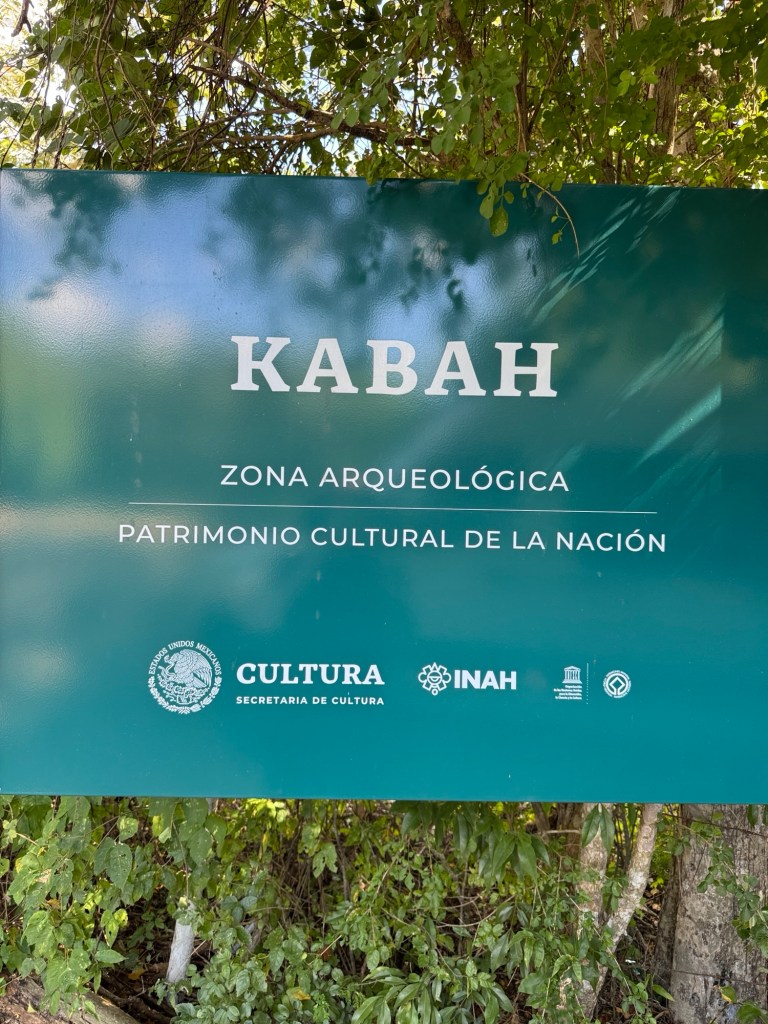
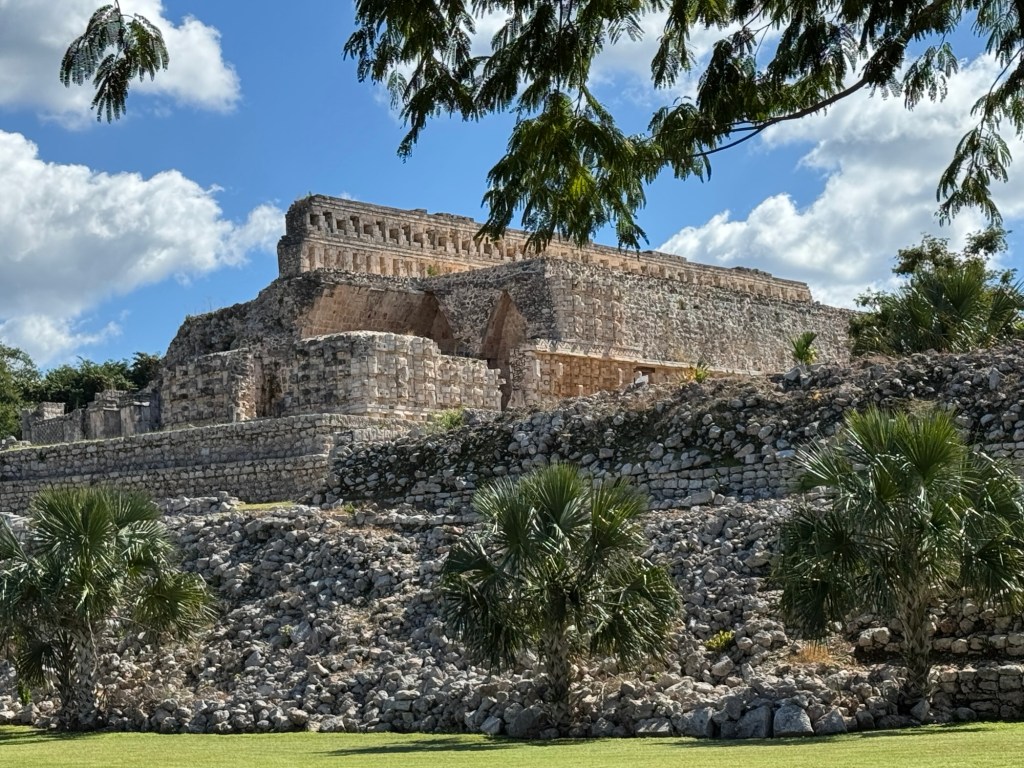
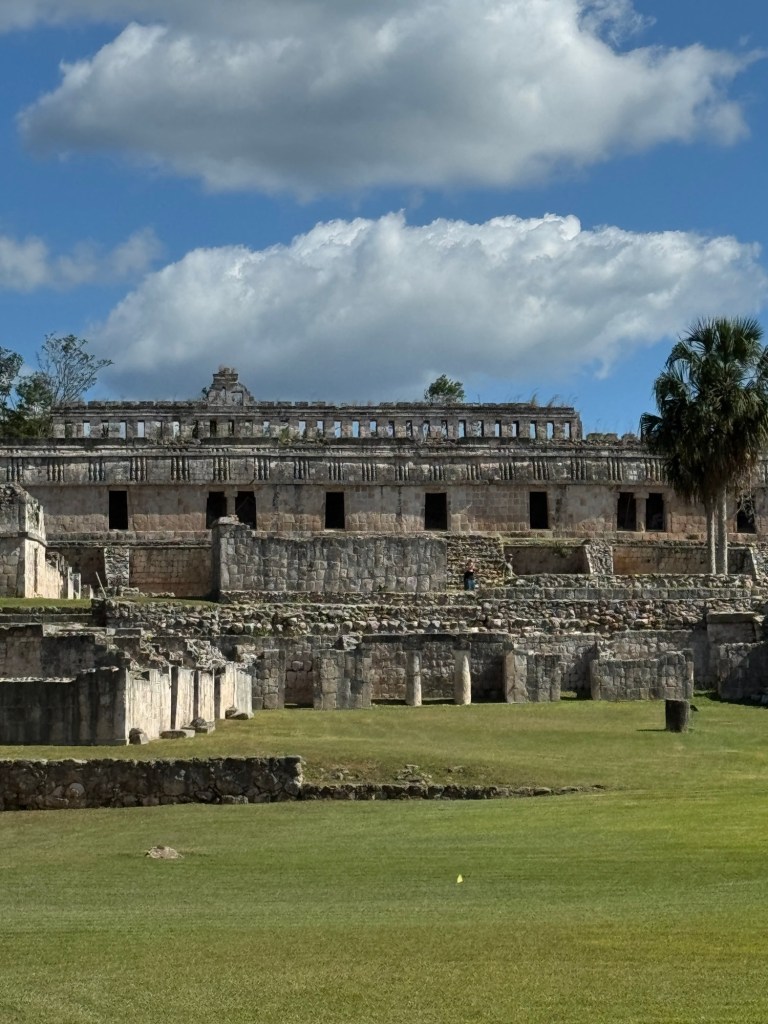
Then we went to another Pucc site, Kabah
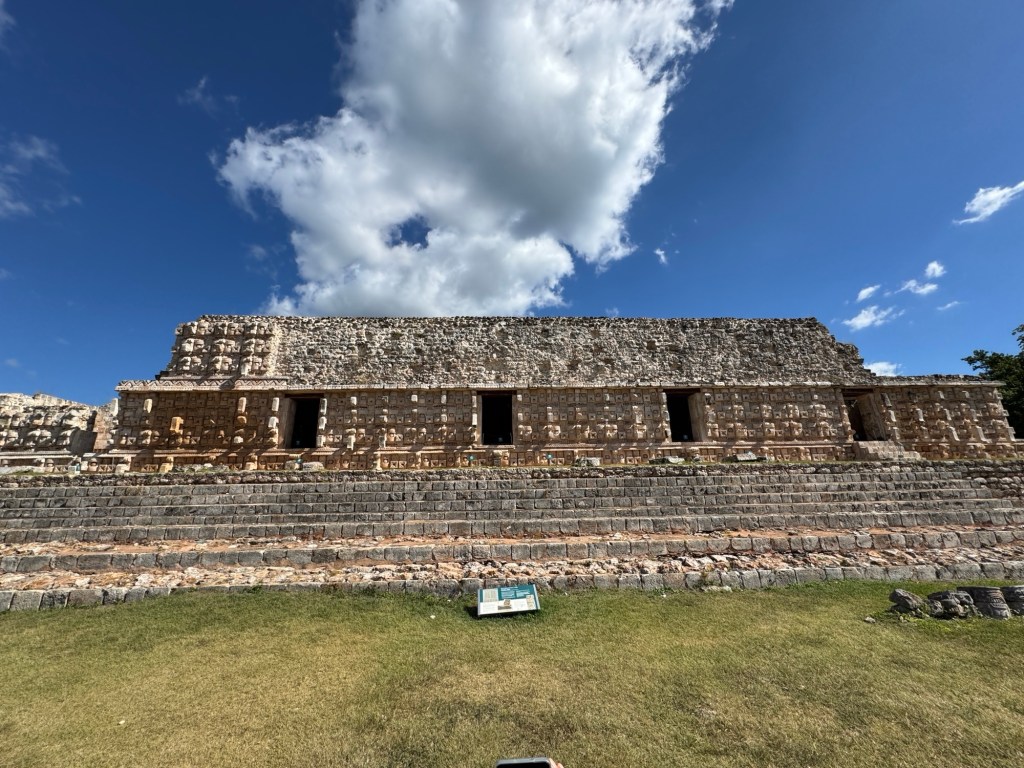
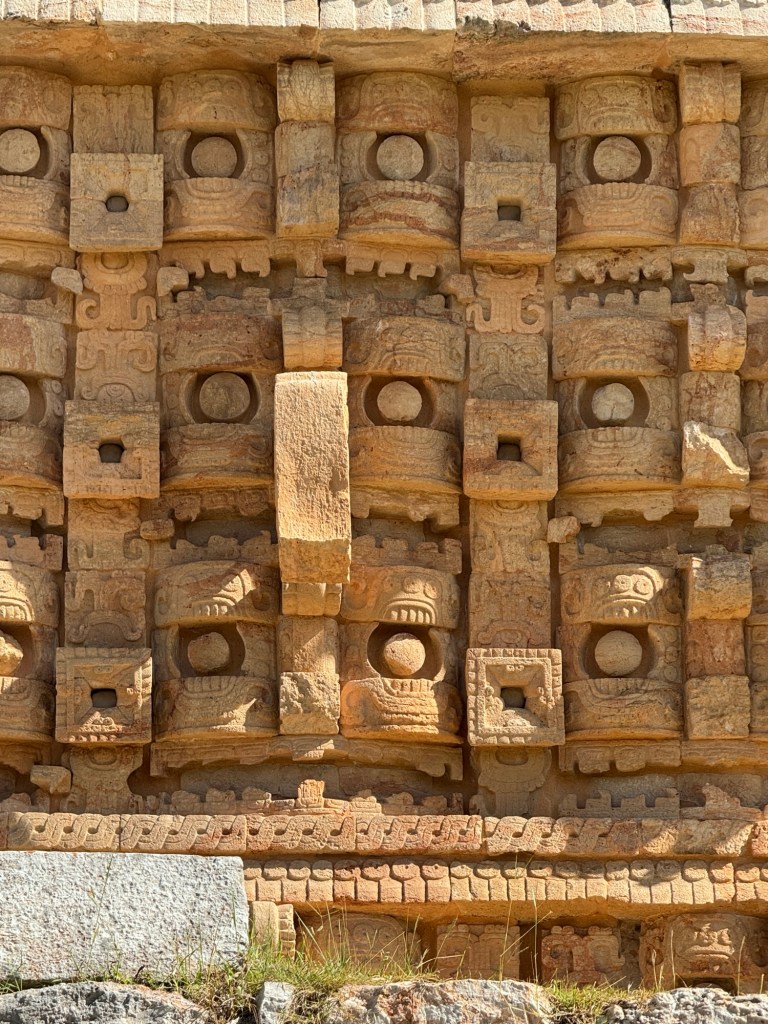
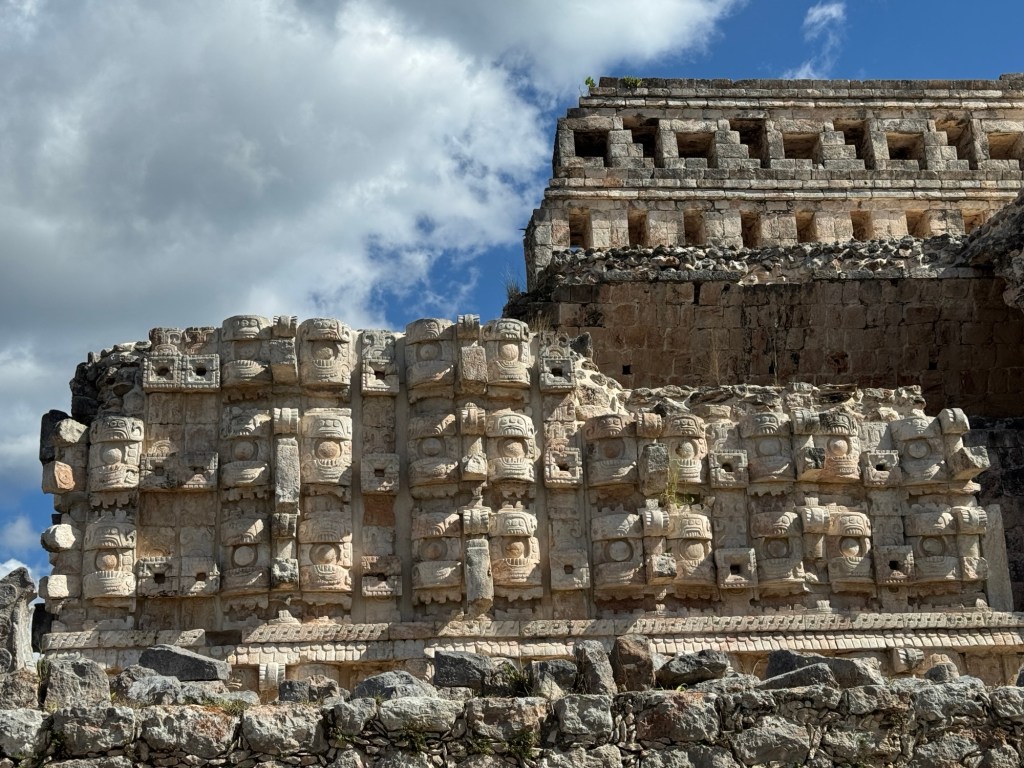
The site’s most famous structure is the “Palace of the Masks,” also known as the Codz Poop, which has a facade decorated with hundreds of stone masks of the rain god Chaac. The walls of the palace were almost full of carvings of Chaac
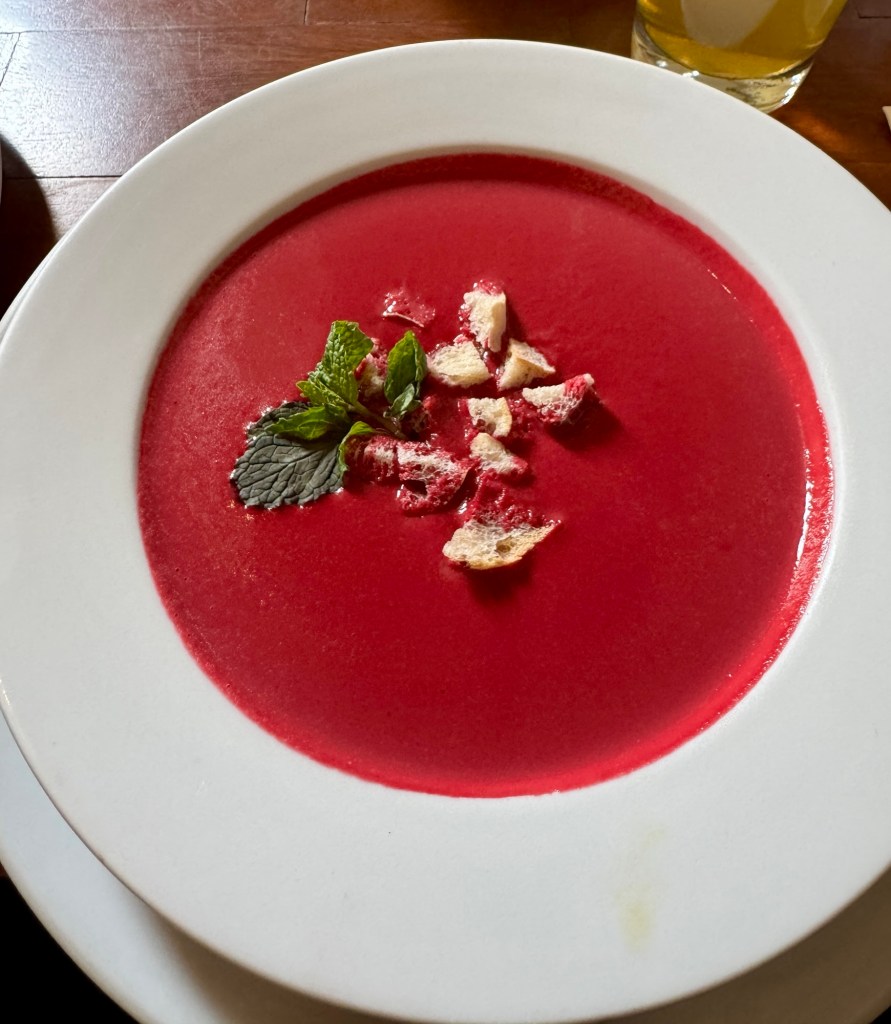
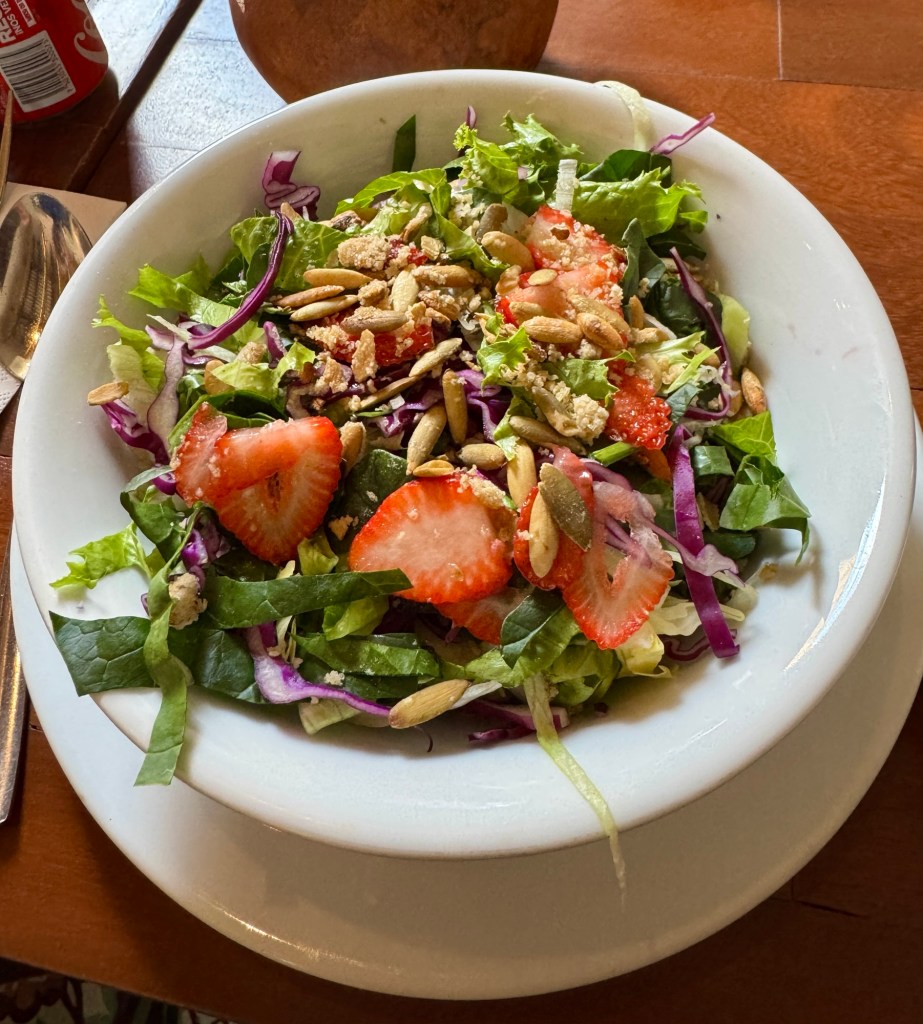
After this we took an hour to go back to Mérida and had dinner in a good restaurant near our hotel
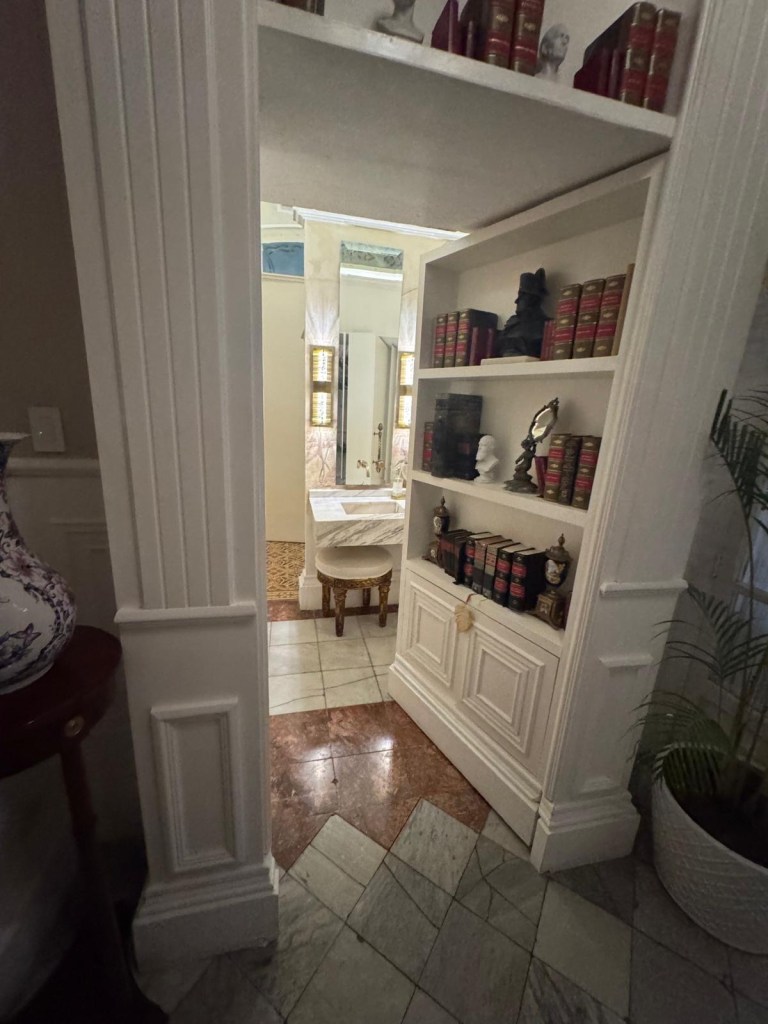
The toilet door is a book shelf so we must be directed by the staff to go to the toilet. A must see toilet on this restaurant
Day 13 November 23 Sunday
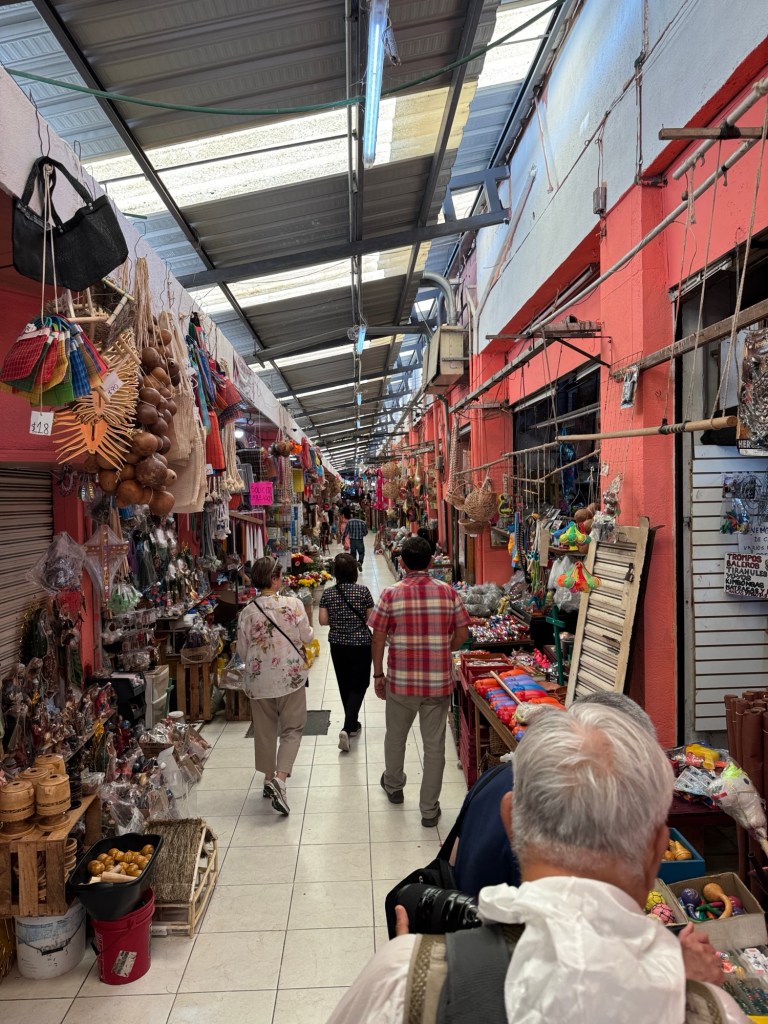
City tour in the morning, a local market
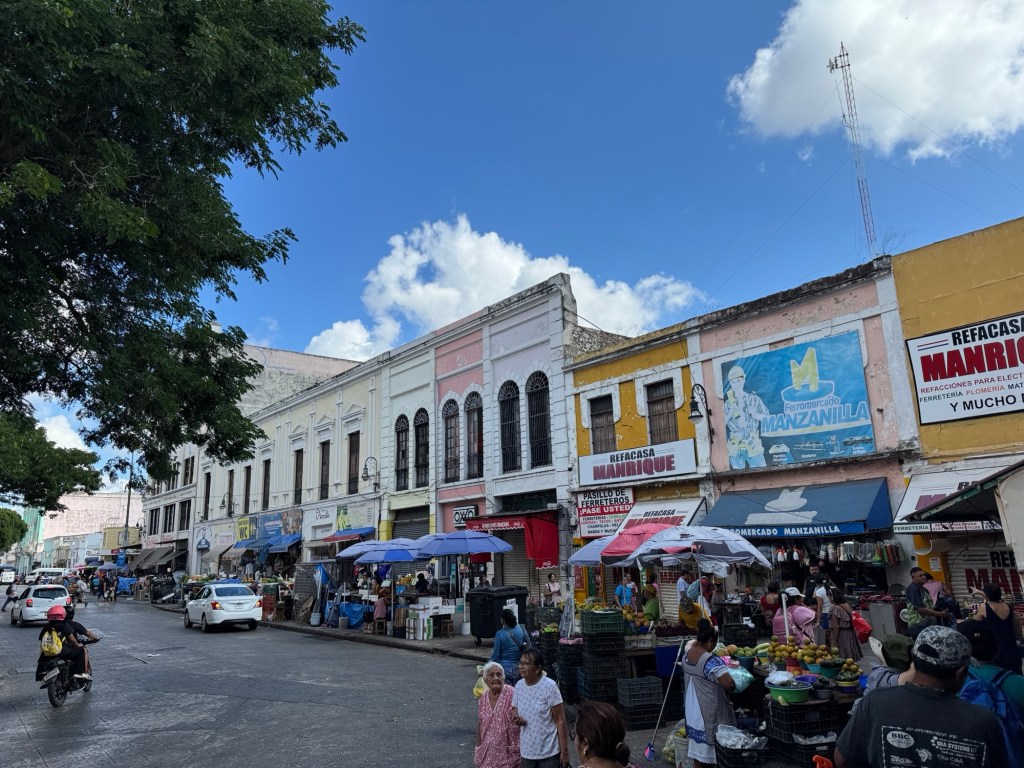
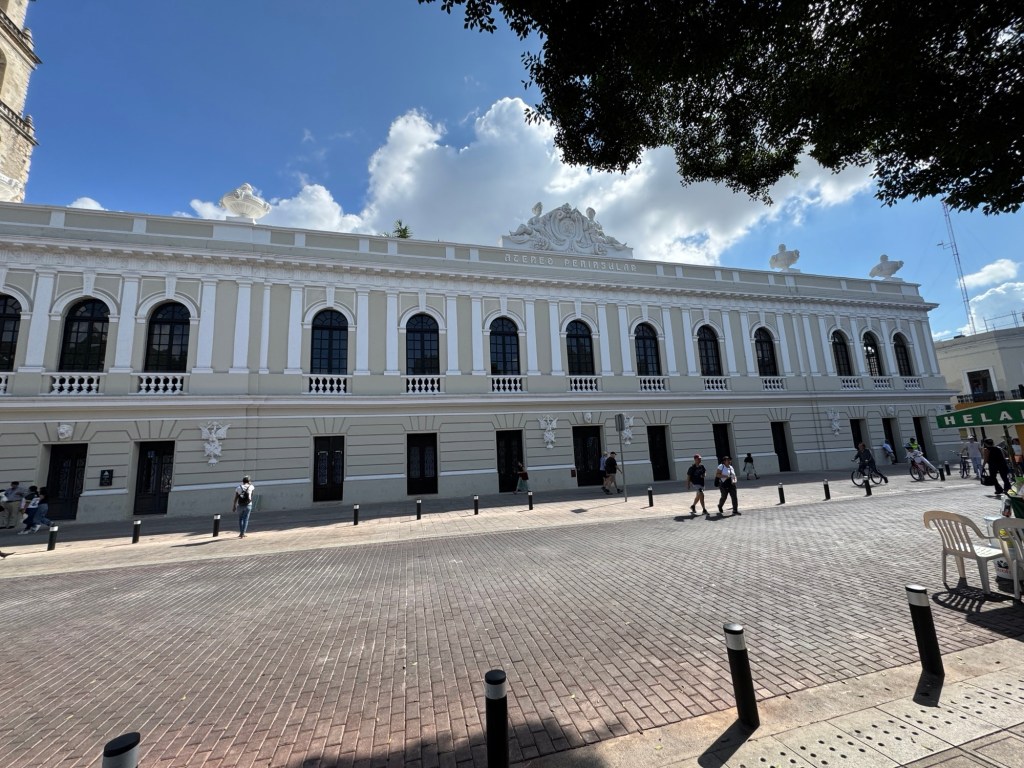
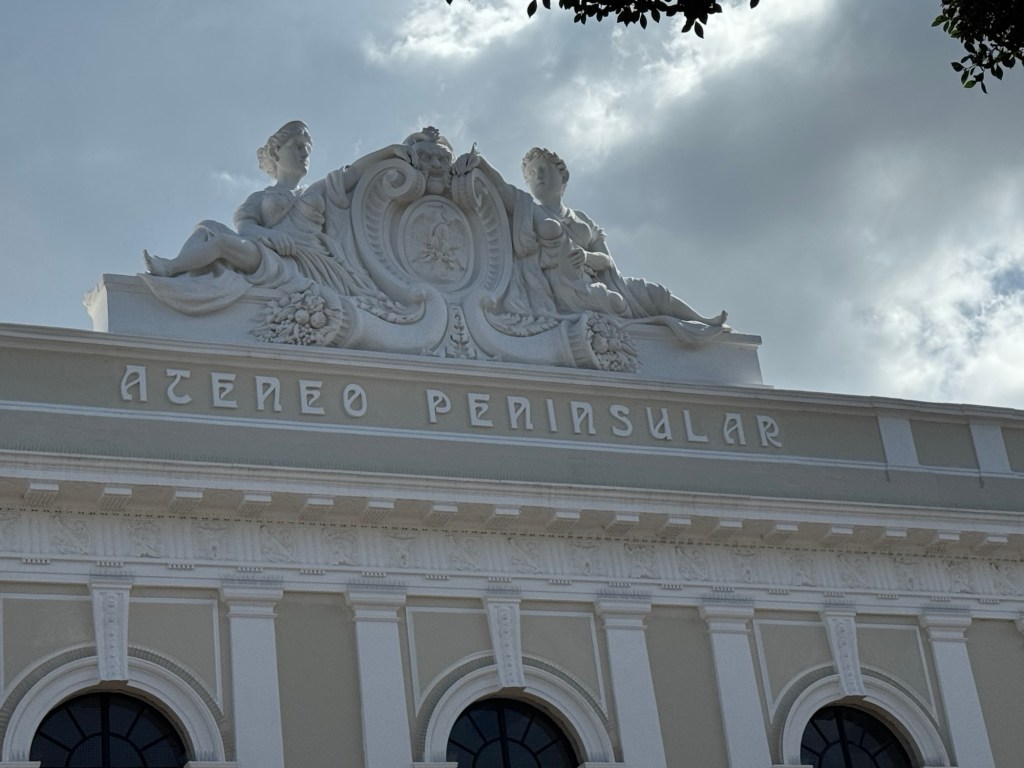
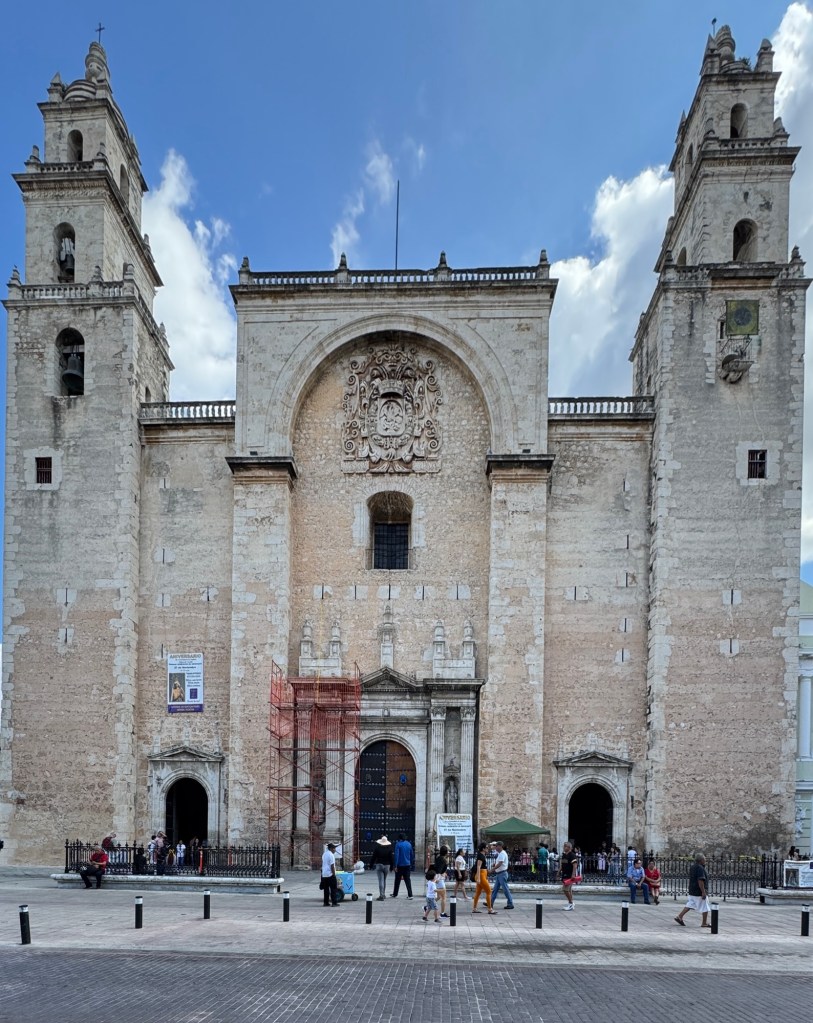
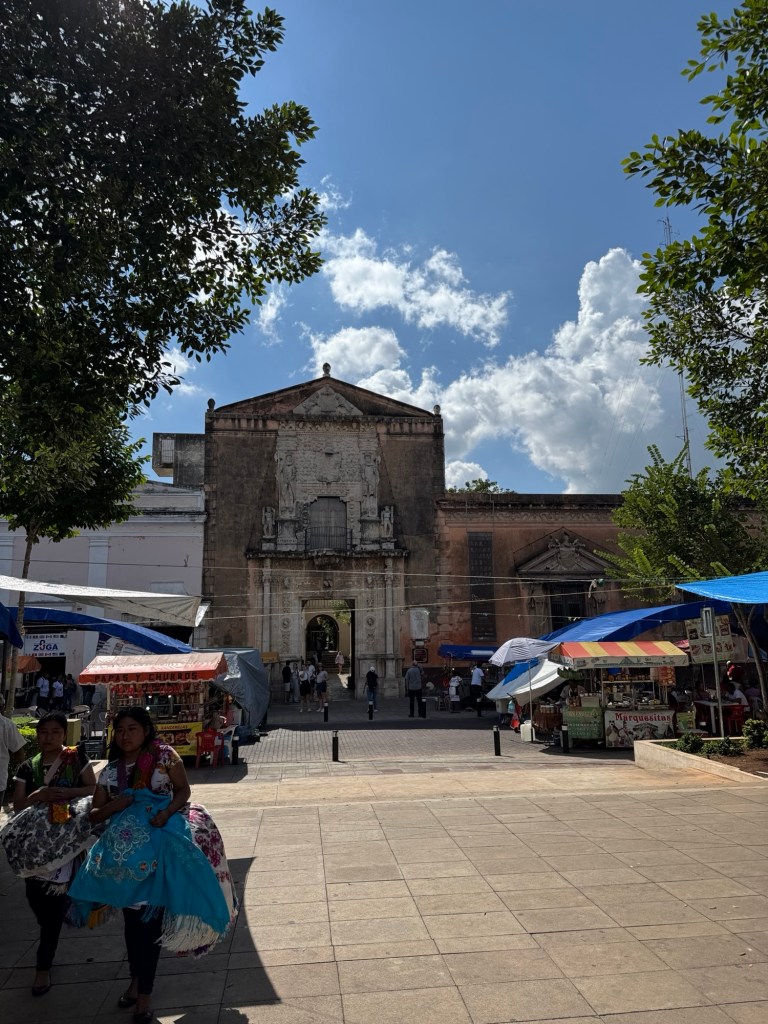
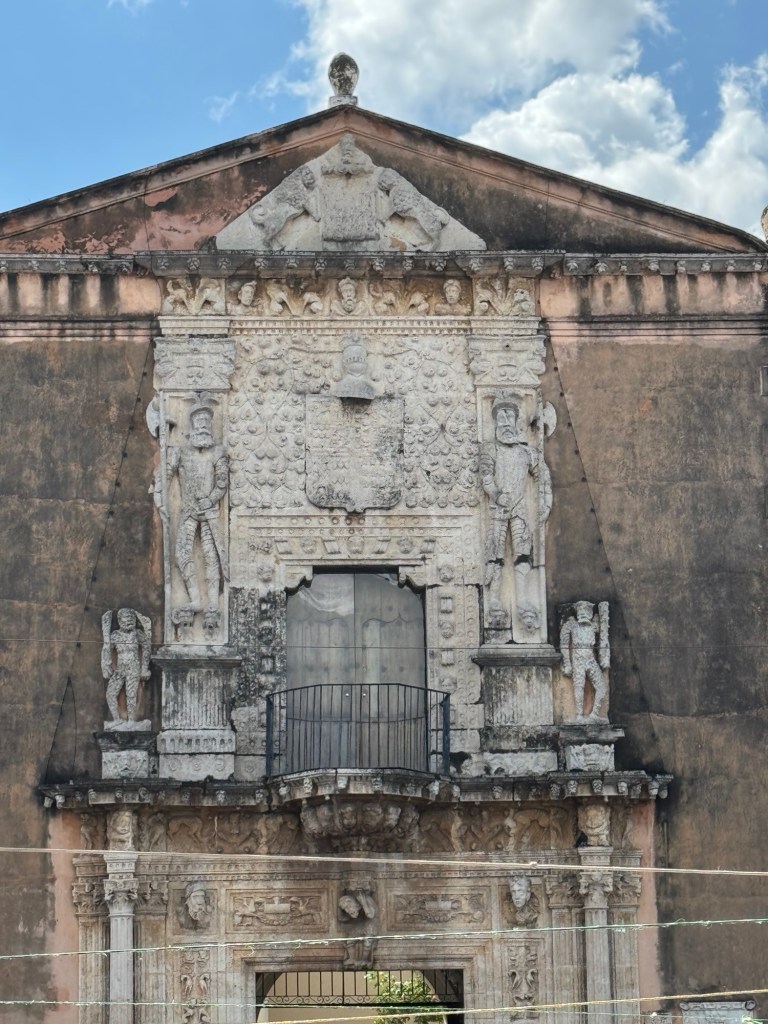
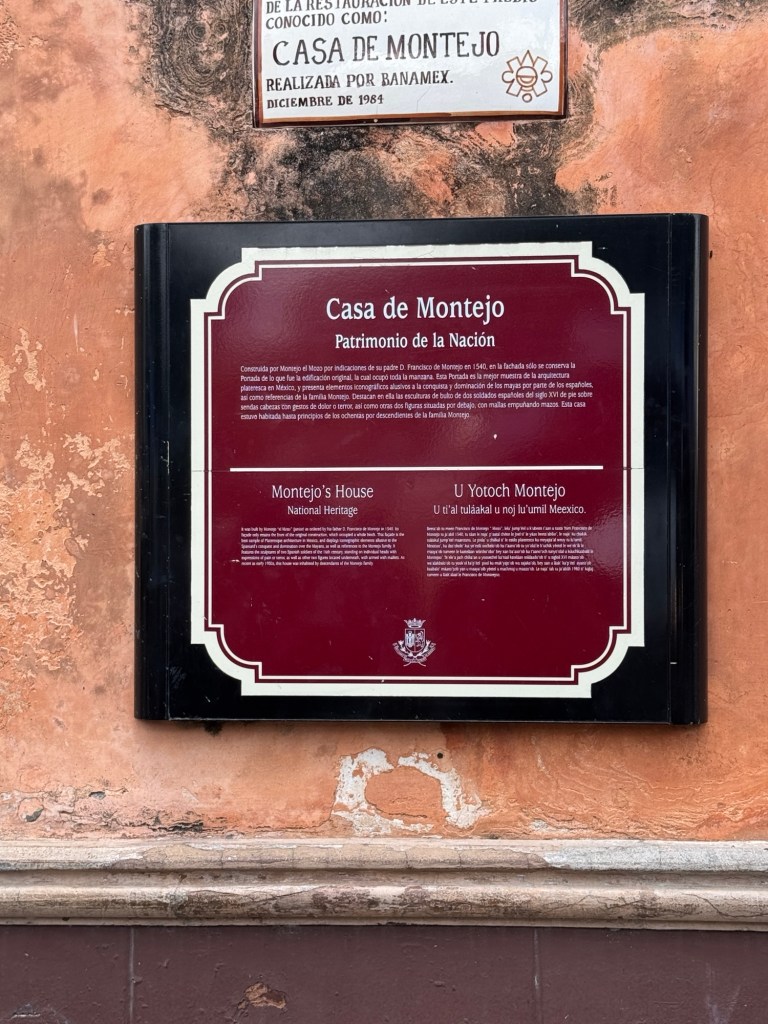
Not much to buy in this 女人街 style market Ateneo Peninsular in Mérida, which houses the Museo de Arte Contemporáneo Ateneo de Yucatán (MACAY). It is the principal institution for modern and contemporary art in the city,Catedral de San Ildefonso The architecture is primarily Renaissance style, with some Moorish elements in the towers. Museo Casa Montejo It was constructed between 1542 and 1549 as the residence for Francisco de Montejo, the Spanish conquistador who founded the city of Merida. Note the 2 figures of Spanish conquistadors standing on the heads of indigenous people, reflecting the colonial history of the region. The building is now a museum, owned and operated by Banamex since its acquisition and restoration in 1981, and is located facing the main square (zócalo) of Merida.
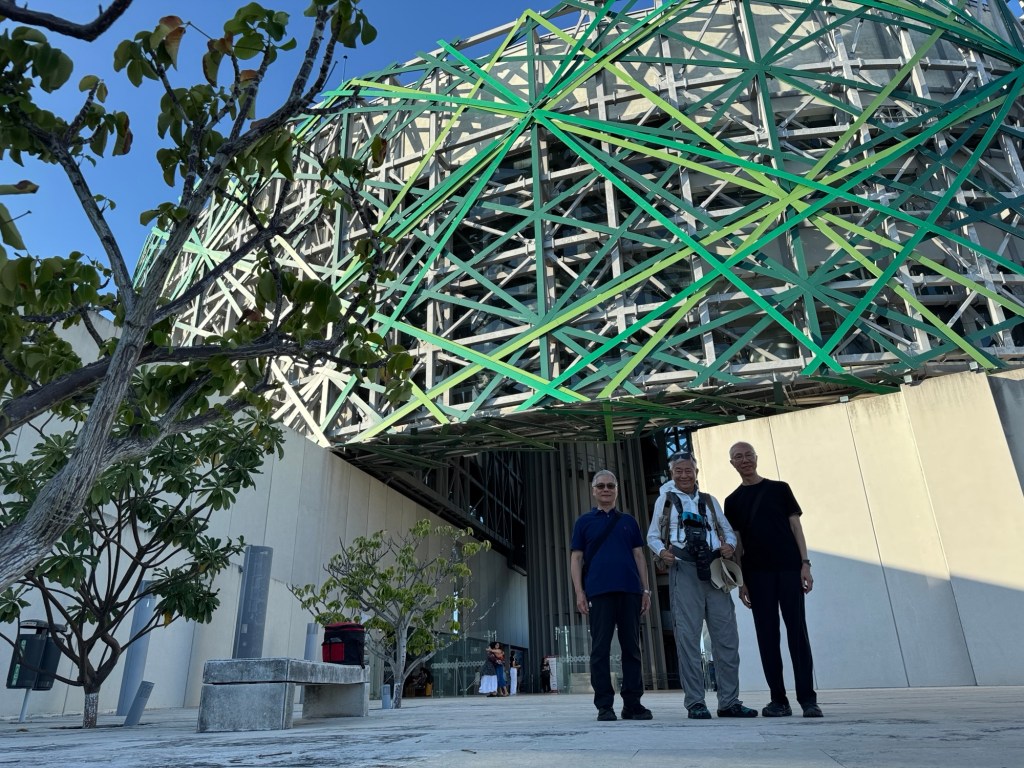
We had a quick lunch and in the afternoon. Some of us went to shopping in the downtown and 3 of us when to a museum.
This is the Mayan World Museum. Its modern architecture is designed to resemble a ceiba tree. But obviously it imitates the Beijing Birds Nest for the Beijing Olympics. The exhibits cover the history and culture of the Mayan people from their ancient origins to the present day. There are exhibits with strong accusations of the Spanish rule and destruction of the Maya culture which Jesus likes very much.But still there are lots of Maya things to see . This jade necklace is very similar to our Chinese ones.
For our last dinner in Mexico we decided to go to a Korean restaurant which some of us spotted yesterday. All of us had enough Mexican food.
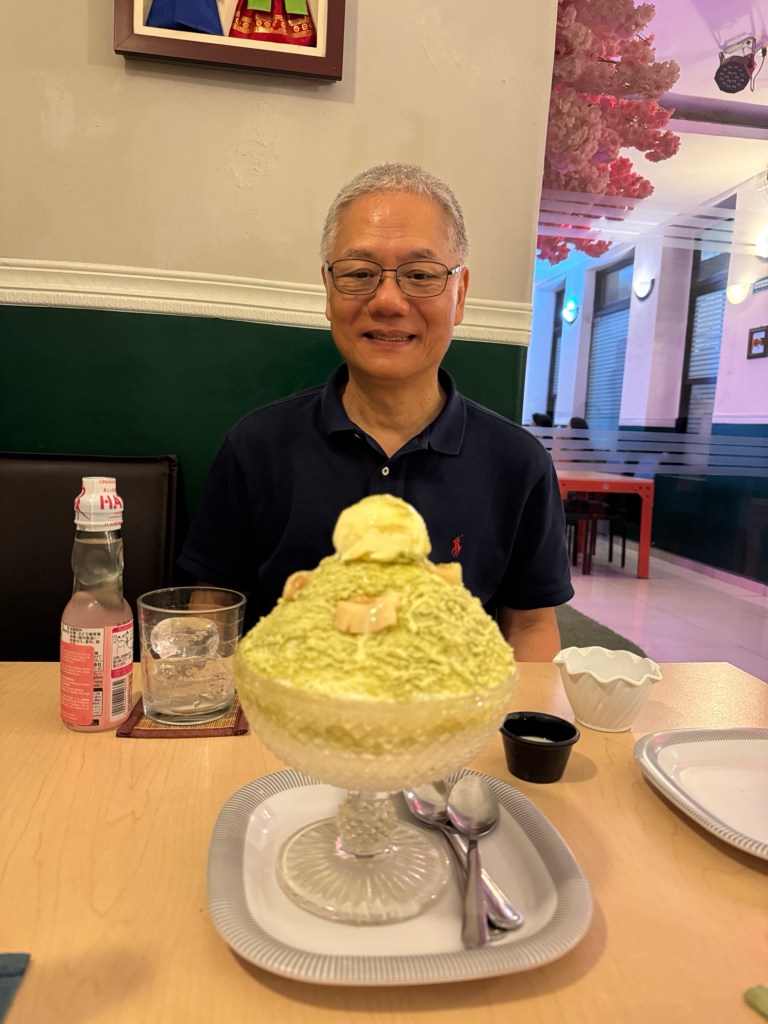
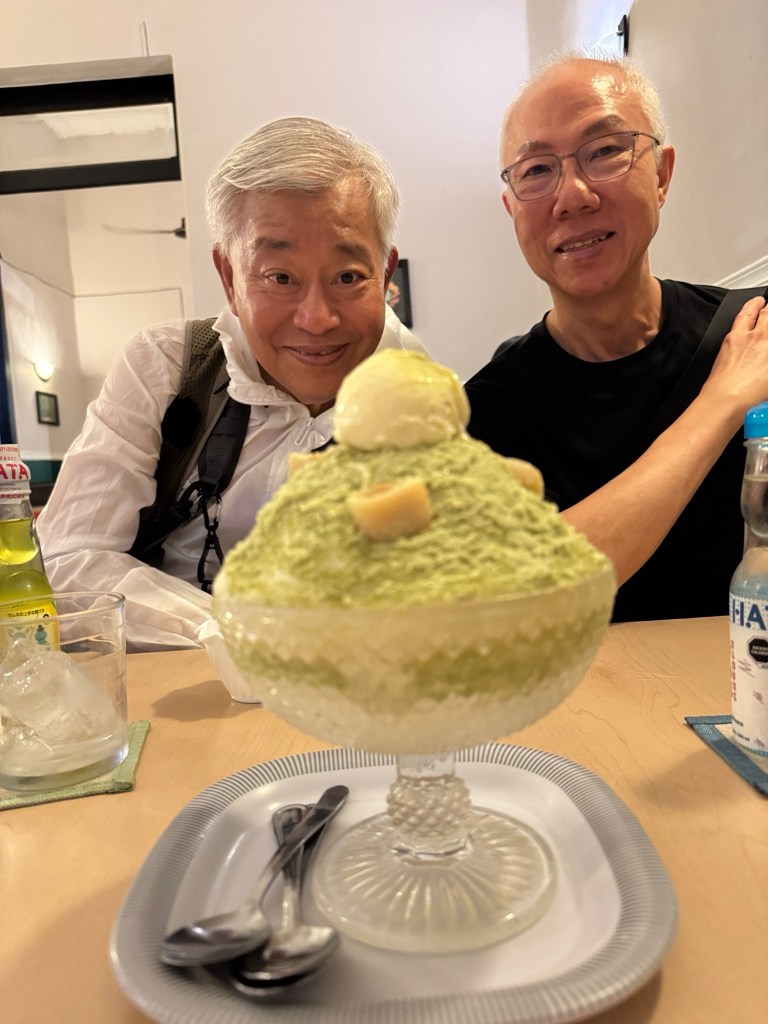
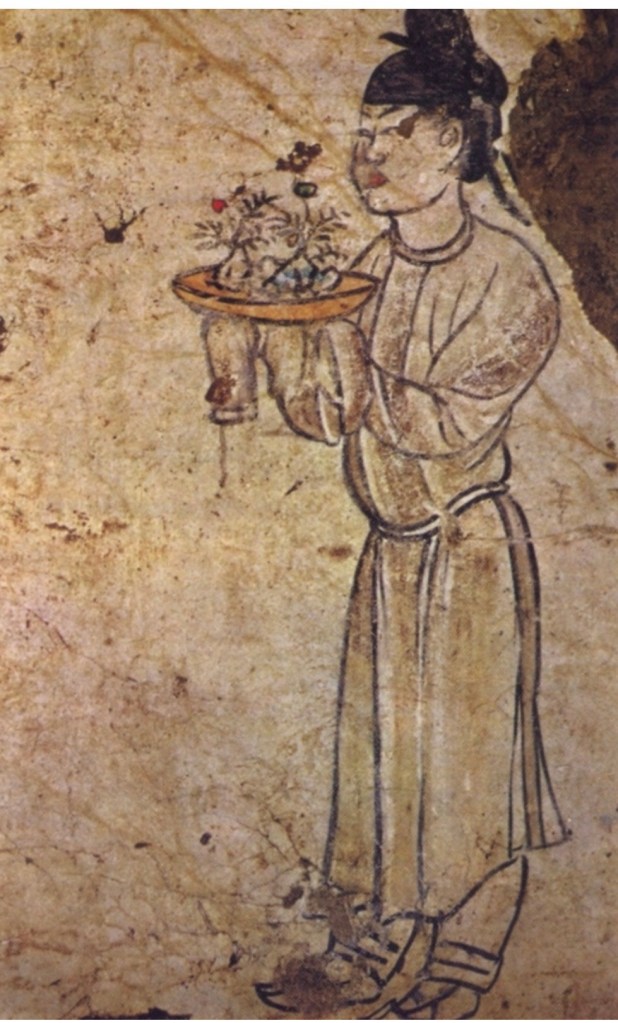
Before dinner we passed by the Korean restaurant and went in for tea with ice cream with shaved ice. The huge cup contained mostly shaved ice😀 Actually in Tang Dynasty we had shaved ice with fruits or other flavour. It was known as 酥山 👇Initially people thought this was 盆栽 decoration. Further studies confirmed it was shave ice!
Day 14 November 24 Monday
The last day is again a long journey back home. We drove to Cancun and flew to Dallas, then to HK. Such a long but fruitful trip.
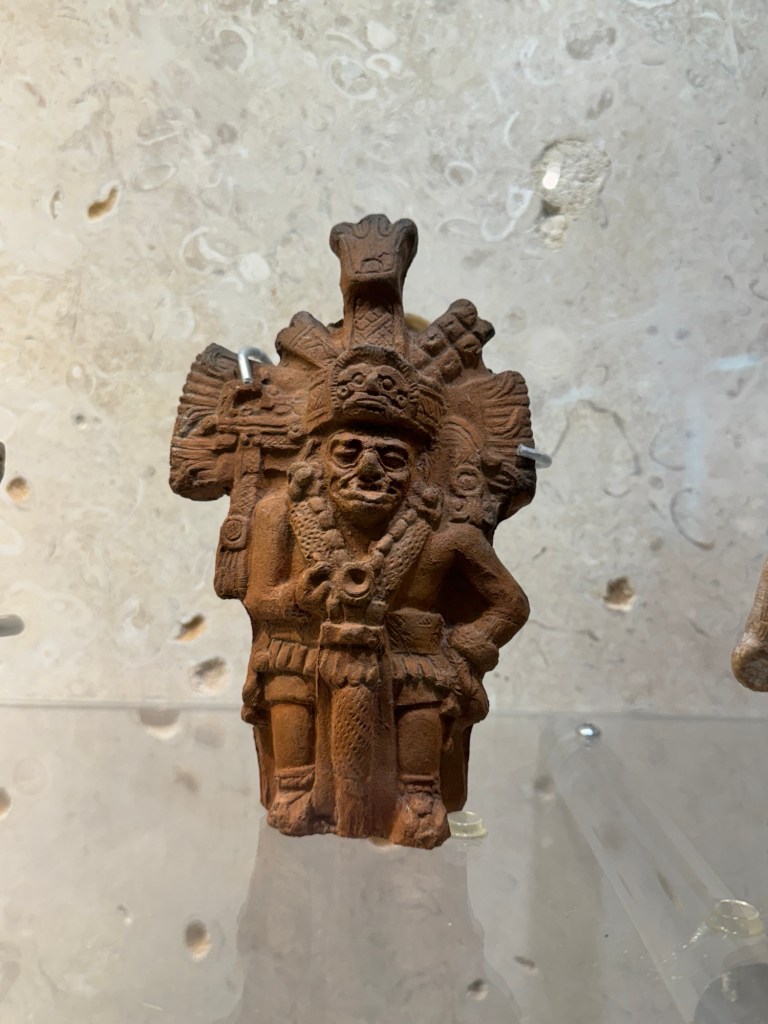
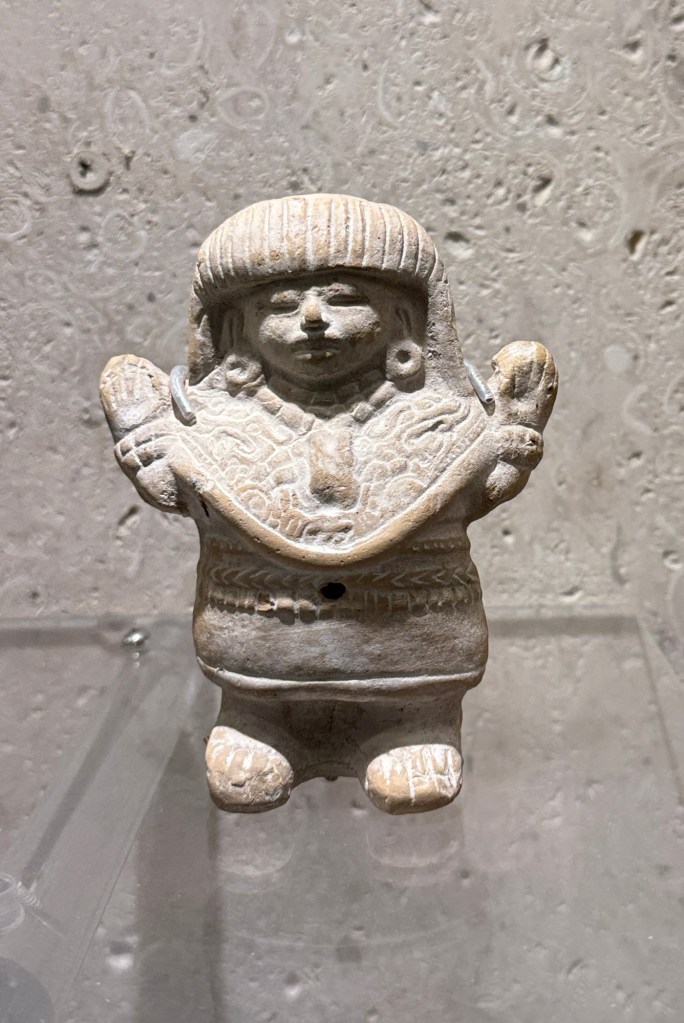
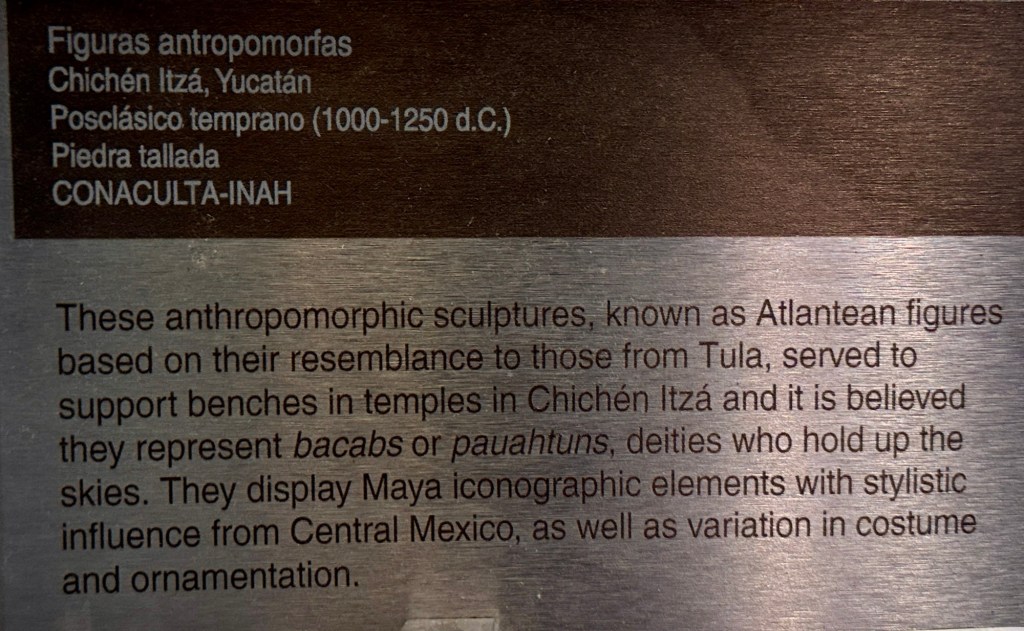
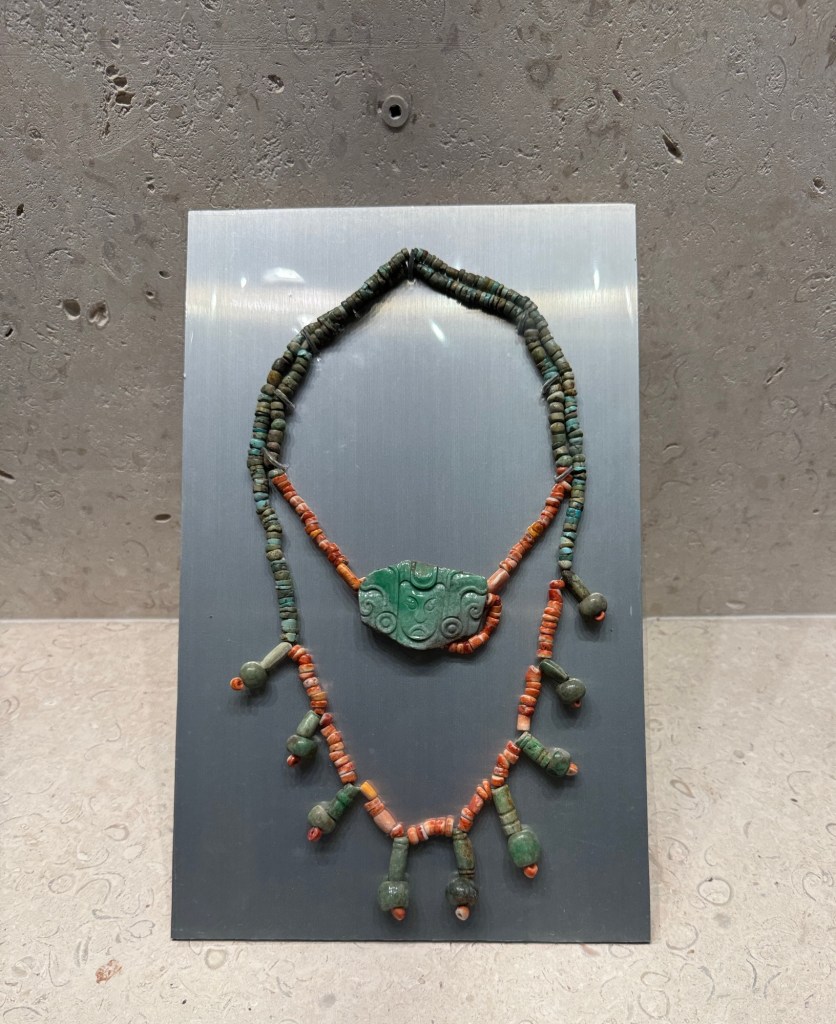
 India mythology